Cloudy Glasses After the Dishwasher? Causes, Fixes and Prevention
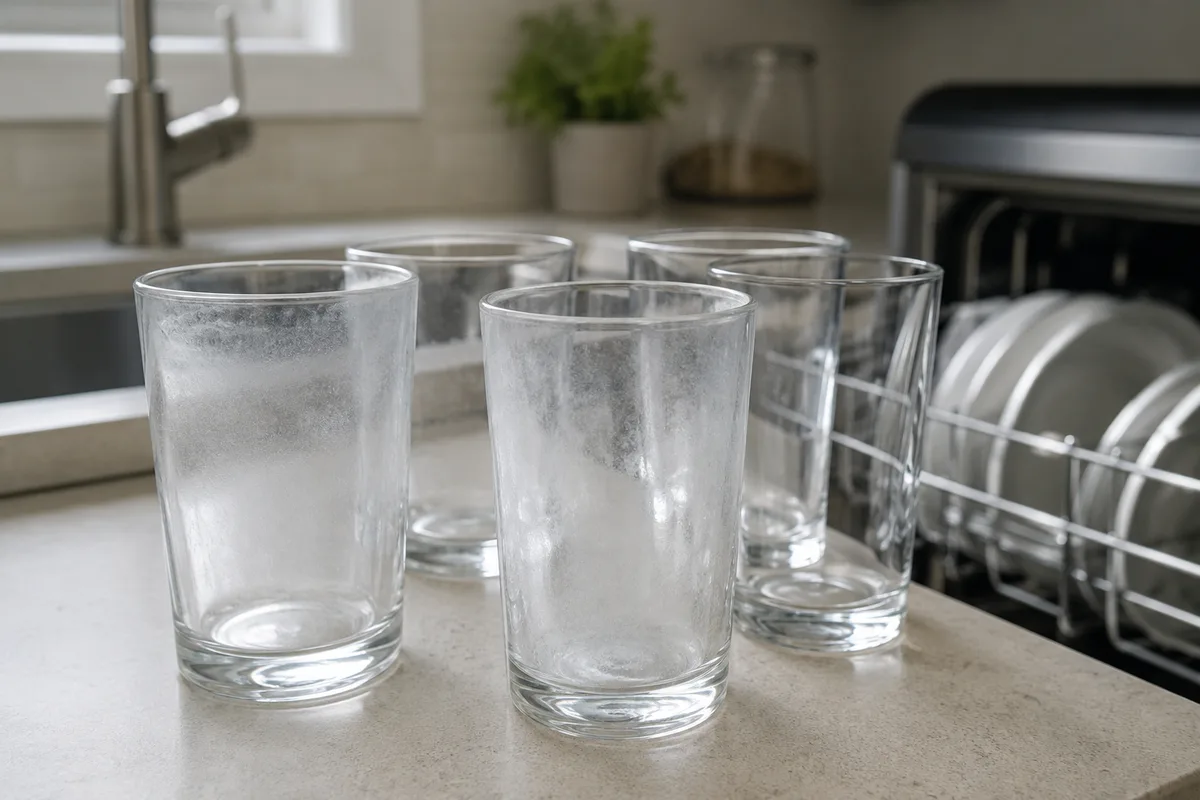
Cloudy dishwasher glasses can be caused by a removable mineral or detergent film—or permanent glass etching. A simple test can help you tell the difference before you start scrubbing.

You open the dishwasher expecting sparkling glasses and find them covered in a milky haze instead. Washing them again may change nothing.
The important question is not simply why the glasses look cloudy. It is whether the cloudiness is a removable film sitting on the surface or etching, which means the surface of the glass itself has been permanently altered.
That distinction determines whether the glass can be restored.
First, Find Out Whether It Is Film or Etching
A simple test can save a lot of unnecessary scrubbing.
Put a small amount of white vinegar on a soft cloth and gently rub a cloudy area of the glass. You can also soak the glass briefly in white vinegar and then rinse it.
If the haze noticeably disappears, mineral buildup from hard water is a likely cause.
If the glass stays cloudy even after the surface has been cleaned, the problem may be etching rather than residue. Etching creates permanent microscopic changes to the glass surface, so ordinary cleaning cannot make the affected area clear again.
This is why two glasses that look almost identical can have very different outcomes: one may need cleaning, while the other has already been damaged.
Hard Water Is a Common Cause of Cloudy Glasses
Hard water contains relatively high concentrations of dissolved minerals, particularly calcium and magnesium.
During a dishwasher cycle, water eventually evaporates or drains away. Some of those minerals can remain behind on glassware, producing a whitish or cloudy film.
The clue is that the haze is sitting on the glass rather than being part of it.
Hard-water residue may become more noticeable if your dishwasher also has mineral buildup inside the tub or if the machine’s water-softening settings are not appropriate for your local water.
If you regularly see white marks on glasses, dishes, faucets, shower doors, or other surfaces where water dries, hard water becomes an especially reasonable suspect.
Hard water can affect laundry too. If your towels have gradually become rough or stiff after repeated washing, see why towels go hard after washing.
Detergent Can Be Part of the Problem Too
More detergent does not automatically mean cleaner glassware.
The correct amount depends partly on water hardness, the detergent itself, the dishwasher, and the wash conditions. Using significantly more detergent than necessary can contribute to poor glassware results, particularly when the household water is already soft.
At the other extreme, hard-water conditions may require different detergent or dishwasher settings to control mineral deposits effectively.
Instead of guessing, check the detergent instructions and your dishwasher manual. If your machine has adjustable water-hardness or rinse-aid settings, make sure they match the water conditions in your home.
This is one of those situations where adding more product every time the glasses look dull can make troubleshooting harder rather than easier.
What Exactly Is Glass Etching?
Etching is different from a deposit.
Rather than adding a removable layer to the glass, repeated dishwasher conditions can gradually alter its surface. The result is a frosted, cloudy, or sometimes slightly iridescent appearance that does not wipe away.
GE Appliances describes dishwasher etching as a permanent milky discoloration related to changes at the surface of the glass.
Several factors can contribute, including excessive detergent under some water conditions, long or aggressive wash cycles, high temperatures, and the characteristics of the glass itself.
Once genuine etching has occurred, there is no household cleaner that can restore the missing glass surface.
Prevention therefore matters much more than treatment.
Can You Fix Cloudy Glasses?
If the problem is mineral film, often yes.
Start with the least aggressive approach. White vinegar can help dissolve mineral deposits because its acidity reacts with many of the compounds that create hard-water haze.
For individual glasses, soaking or wiping them with white vinegar followed by normal washing and thorough rinsing may remove the film.
If many items are developing the same residue, however, treating each glass individually only addresses the symptom.
Check the dishwasher itself.
Mineral buildup inside the machine, inappropriate detergent use, incorrect rinse-aid settings, poor loading, or water-hardness settings can allow the problem to keep returning.
Regular dishwasher maintenance also matters. A machine with residue inside the tub, filter, or spray system may deliver poorer results even when the glassware itself is perfectly dishwasher-safe.
If your dishwasher has also started producing unusual odors, Curiworld’s guide to why dishes can smell like wet dog after the dishwasher explains what to check in the filter, drain, and hidden parts of the machine.
How to Prevent Glasses From Becoming Cloudy
Once you know which type of cloudiness you are dealing with, prevention becomes much easier.
Know Your Water
If you live in a hard-water area, check whether your dishwasher includes a water-softening system or adjustable hardness setting.
The owner’s manual should explain how the setting works and whether dishwasher salt is required.
Use the Right Amount of Detergent
Avoid automatically filling the detergent compartment to the maximum.
Follow the detergent manufacturer’s guidance and adjust according to your dishwasher and water conditions rather than assuming more detergent will improve cleaning.
Use Rinse Aid Appropriately
Rinse aid helps water move off glassware more evenly during the final stages of the cycle, reducing spots and residue.
Your dishwasher may allow you to change the rinse-aid dosage if glasses consistently emerge spotted or filmed.
Choose Gentler Cycles for Delicate Glassware
Long, very hot cycles are not always the best choice for glasses.
If the manufacturer marks the glassware as dishwasher-safe, a glassware, light, eco, or shorter suitable cycle may reduce unnecessary exposure to aggressive washing conditions.
Do Not Overdo Pre-Rinsing
Modern dishwashers generally do not require dishes to be scrubbed clean before loading.
Scrape away large pieces of food instead. Curiworld’s look at everyday things you may be using incorrectly explains why completely pre-washing dishes before putting them in a modern dishwasher is often unnecessary.
Keep the Dishwasher Clean
Check and clean the filter according to the manufacturer’s instructions and inspect the spray arms for blocked openings.
A clean machine gives detergent, water, and rinse aid a better chance to work as intended.
What If Only Some Glasses Become Cloudy?
That is an important clue.
Different types of glass do not react identically to repeated dishwasher cycles. Two glasses washed side by side can age differently because their composition, manufacturing process, thickness, surface treatment, and previous wear are not identical.
So if one set becomes permanently cloudy while other glassware stays clear, the dishwasher may not be malfunctioning.
The affected glasses may simply be more vulnerable to etching.
Check whether the manufacturer describes them as dishwasher-safe. Delicate, decorative, vintage, crystal, hand-painted, or sentimental glassware may be better washed by hand unless its care instructions specifically say otherwise.
Before Replacing Cloudy Glasses, Try the Vinegar Test
The appearance alone does not tell you whether a cloudy glass is ruined.
Test the haze first.
If vinegar removes it, you are probably dealing with mineral film and should investigate water hardness, detergent, rinse aid, and dishwasher maintenance.
If repeated cleaning does nothing and the surface remains permanently dull, etching becomes the more likely explanation.
That small distinction changes the whole solution.
Cloudy glasses do not necessarily mean your dishwasher is failing—and they do not necessarily mean the glassware is permanently damaged. Work out whether the haze is on the glass or in the glass itself, then fix the cause rather than running the same cloudy glasses through another cycle.








Join the discussion