Your Refrigerator Is Making Noise — Here’s What It May Be Telling You
Refrigerators naturally hum, click, buzz, gurgle and pop. Learn what common refrigerator noises usually mean, simple checks you can make and which changes deserve closer attention.
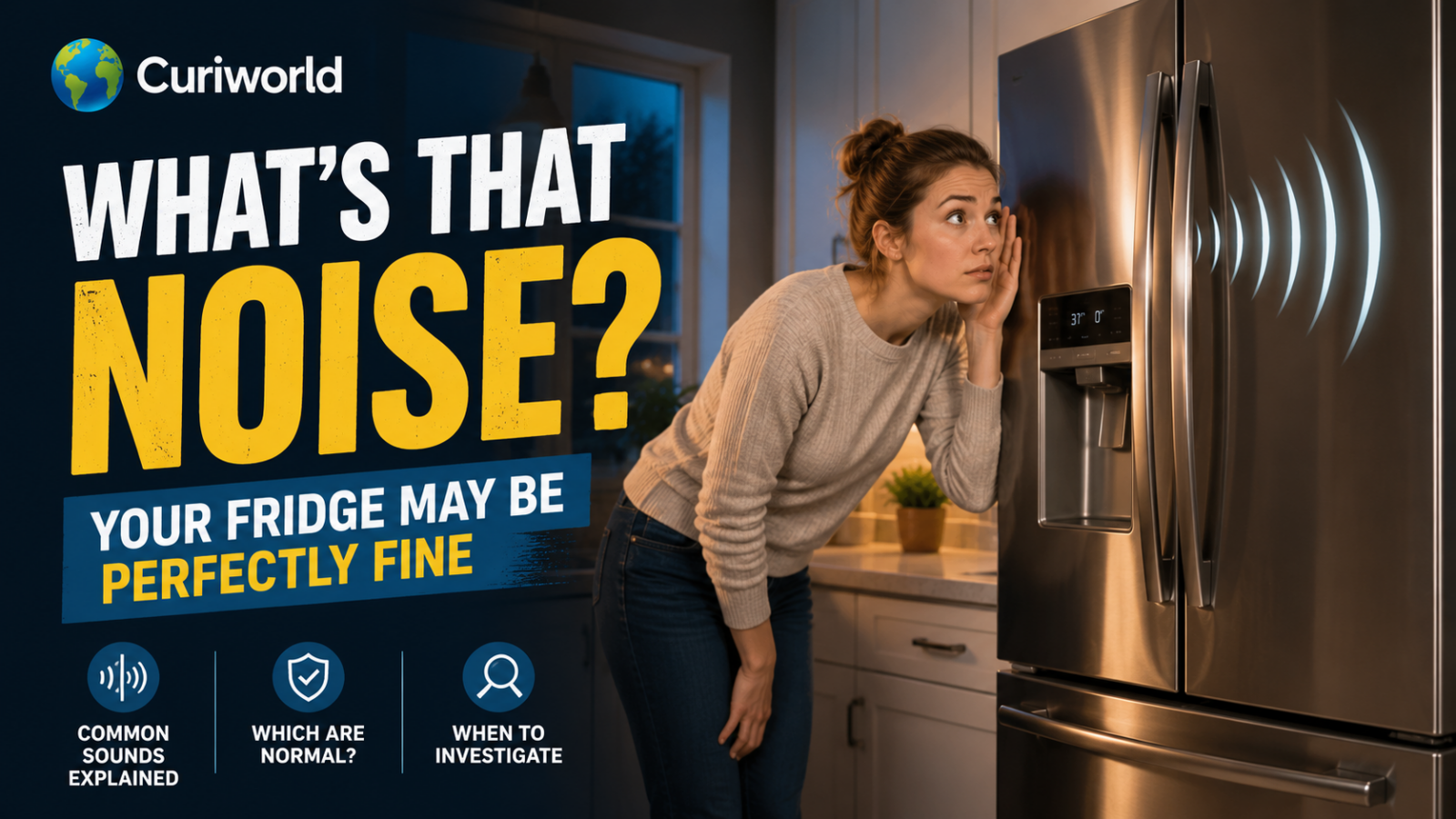
The kitchen is quiet.
Then the refrigerator clicks.
A few seconds later, it hums. Maybe there is a faint gurgle from somewhere behind the freezer. Later, you hear a pop that sounds suspiciously like something just cracked inside the appliance.
It is easy to assume that a noisy refrigerator is a refrigerator about to fail.
Often, it isn’t.
Refrigerators are not silent appliances. Compressors start and stop, fans move air, refrigerant travels through tubing, defrost systems deal with ice and water, and ice makers fill and empty. Modern refrigerators can also sound noticeably different from older models.
The more useful question is not simply “Why is my refrigerator making noise?”
It is:
What kind of noise is it, when does it happen, and is the refrigerator still cooling normally?
Those three clues can help separate an ordinary operating sound from something worth investigating.
First: A Refrigerator That Makes Noise Is Not Necessarily Broken
Your refrigerator works around the clock.
Even when the kitchen is empty and nobody has opened the door for hours, the appliance may be cooling, circulating air, defrosting, making ice, or responding to temperature changes.
That creates sound.
Whirlpool notes that refrigerators can normally produce buzzing, humming, clicking, gurgling, popping, rattling, hissing, dripping, and airflow sounds during different stages of operation.
GE Appliances similarly lists clicking, fan-speed changes, refrigerant-related gurgling, and several other noises as part of normal refrigerator operation.
So before scheduling a repair, listen more carefully.
The character of the noise matters.
A Low Hum Is Usually Part of the Job
A steady hum is probably one of the most familiar refrigerator sounds.
The compressor and fans operate to maintain the temperatures inside the refrigerator and freezer. That can produce a low humming or whirring noise.
You may notice it more when:
- the refrigerator has recently been installed;
- the doors have been opened repeatedly;
- you have just loaded a large amount of groceries;
- the kitchen is unusually warm;
- or the appliance is working to restore its normal temperature.
Modern refrigerators may also use variable-speed components that adjust their operation rather than simply switching between completely on and completely off.
That can make the sound change in pitch or intensity.
A gentle hum that comes and goes while the refrigerator continues cooling normally is generally much less concerning than a sudden, extremely loud mechanical noise.
Clicking Isn’t Automatically Bad News Either
A click from a major appliance gets your attention.
But refrigerators contain components that switch on and off during ordinary operation.
A click may occur when the compressor starts or stops. Controls and valves can also produce clicking sounds.
If your refrigerator has an ice maker or water dispenser, the water valve can make a clicking or buzzing noise as it operates.
Some models can produce repetitive clicks as valves regulate cooling between compartments.
Context matters.
An occasional click followed by normal operation is very different from rapid clicking accompanied by a refrigerator that cannot start cooling.
If the sound has suddenly changed and the refrigerator is no longer maintaining temperature, consult the troubleshooting information for your exact model.
That Gurgling Sound May Actually Be Refrigerant
This is one of the stranger sounds a refrigerator can make.
You walk past it and hear something resembling water bubbling through a pipe.
There may be nothing wrong.
Refrigerant moves through the refrigerator’s sealed cooling system. That movement can create gurgling or bubbling sounds, particularly as pressures change during or after a cooling cycle.
Defrost water moving toward the drain pan can produce similar watery noises.
Whirlpool and GE both identify refrigerant movement as a source of normal gurgling sounds.
So a gentle occasional gurgle from a refrigerator that is otherwise operating normally is generally not a reason to panic.
Popping and Cracking Can Sound Worse Than They Are
A sudden POP from the refrigerator can be surprisingly loud in a quiet house.
One common explanation is thermal expansion and contraction.
Materials inside the refrigerator change slightly as temperatures shift. Interior walls and components can expand or contract during cooling and defrosting.
That movement can create popping or cracking sounds.
It may be particularly noticeable:
- during initial cooling;
- after a defrost cycle;
- after the refrigerator has been open for a while;
- or when temperatures inside the appliance change relatively quickly.
If you have an ice maker, ice dropping into the storage bin can add its own collection of cracking and clattering sounds.
An occasional pop is therefore very different from continuous grinding, scraping, or violent banging.
Hissing or Sizzling Can Be Part of Defrosting
A refrigerator has to manage frost.
During an automatic defrost cycle, water can come into contact with warm components and create a brief sizzling or hissing sound.
You may also hear dripping water.
That can sound alarming if you have never noticed it before, but it can be part of normal operation.
What changes the situation is visible water where it should not be.
If you hear dripping and also discover water pooling under or around the refrigerator, do not dismiss it simply because dripping noises can sometimes be normal.
Find the source of the water.
Buzzing Has Several Possible Sources
A refrigerator buzz can come from the compressor, fans, or water system.
A brief buzz associated with ice-making or water dispensing may simply be the water valve operating.
There is one easy thing worth checking, however.
Does your refrigerator have an ice maker but no connected water supply?
If it does, check your owner’s manual.
On refrigerators where the ice maker is enabled without a water connection, the water valve may attempt to operate and create buzzing or clicking noises.
Manufacturers including Whirlpool and Samsung advise turning the ice maker off when it is not connected to a water supply.
That is a much simpler explanation than assuming the compressor is failing.
Rattling May Not Be Coming From Inside the Refrigerator
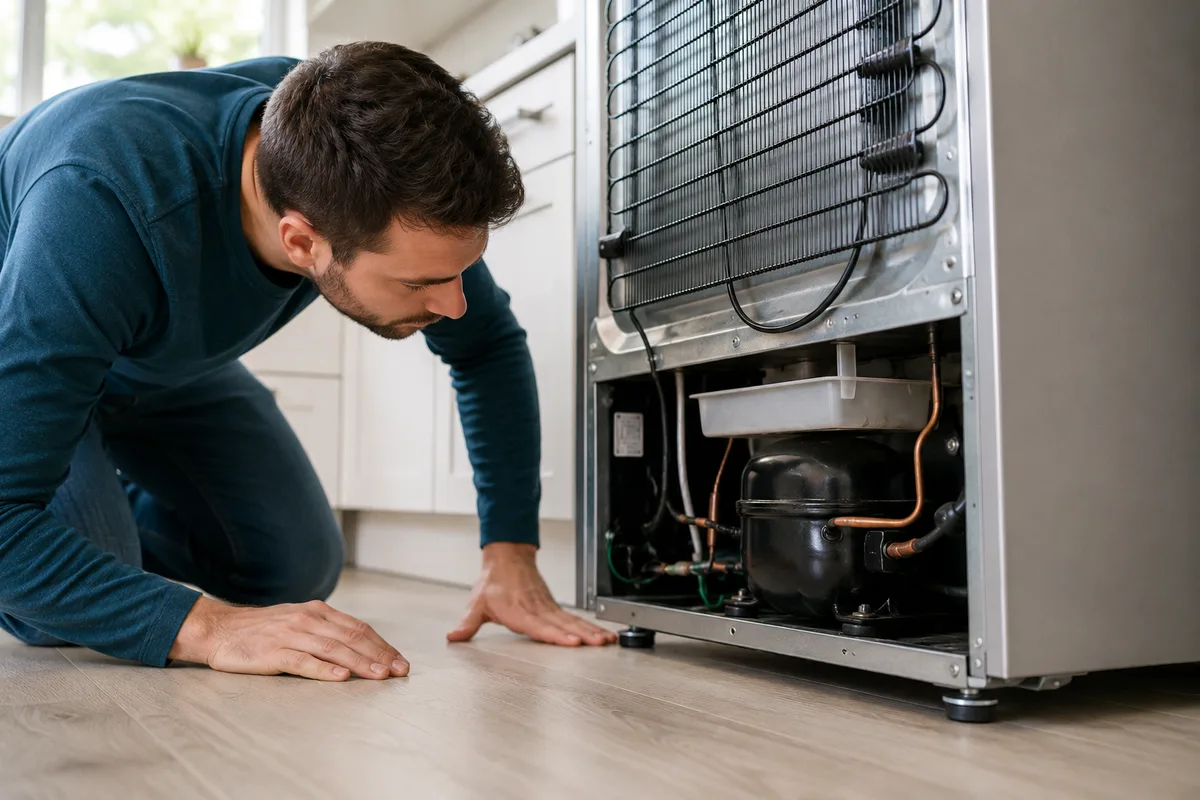
Before blaming the appliance, look around it.
A refrigerator produces small amounts of vibration while components are operating.
That vibration can make another object rattle.
Check for:
- bottles touching one another;
- items stored on top of the refrigerator;
- loose objects against the side;
- the refrigerator touching nearby cabinetry;
- a water line vibrating against another surface;
- or an appliance that is not sitting firmly and level.
Try gently moving loose objects away from the refrigerator.
If the rattle disappears, you may have found the entire problem without touching a screwdriver.
Whirlpool specifically identifies items on top of the refrigerator and improper leveling as possible sources of rattling or vibration.
A Refrigerator That Isn’t Level Can Sound Much Louder
This is worth checking because it is simple.
The refrigerator should sit securely according to the installation instructions for the specific model.
If it rocks slightly or is not properly leveled, ordinary compressor and fan vibration can become more noticeable.
The floor matters too.
Hard floors, cabinets, and nearby surfaces can transmit or amplify vibration, making a relatively ordinary sound seem much louder.
Do not guess at how the appliance’s leveling feet or rollers should be adjusted. Refrigerator designs differ.
Use the installation instructions for your model.
What About a Whirring or Whooshing Sound?
Refrigerators need to move air.
Fans circulate cold air through compartments and help move heat away from components.
A soft whirring, blowing, or whooshing sound can therefore be perfectly normal.
You may even notice the sound changing when a door opens or closes because fan behavior varies by refrigerator design.
Modern variable-speed fans can also change speed depending on cooling demand.
What deserves more attention is a new sound that resembles:
- scraping;
- grinding;
- repeated contact with something;
- or a fan striking an obstruction.
A smooth airflow sound and a harsh mechanical scraping sound are not the same thing.
Ice Makers Are Surprisingly Noisy
If your refrigerator makes ice, remember that it contains a small automated system performing several physical tasks.
Water enters.
It freezes.
Ice is released from the mold.
The cubes fall into a storage bin.
The system fills again.
Those events can produce buzzing, clicking, cracking, clattering, and thumping noises at different times.
The sound of ice suddenly dropping into an empty bin can be especially dramatic at night.
Before diagnosing a mysterious refrigerator noise, ask whether it happens around the same time the ice maker operates.
If the ice maker is also producing cubes that taste or smell unusual, see why freezer ice can develop strange tastes or odors.
That single observation can explain a lot.
New Refrigerators Can Sound Different From Old Ones
This causes unnecessary worry surprisingly often.
You replace a refrigerator that has been in the kitchen for 15 years.
The new appliance arrives.
It makes sounds the old refrigerator never seemed to make.
That does not necessarily mean the new refrigerator is defective.
Modern refrigerators may use different compressor technology, fan controls, valves, defrost systems, and energy-management strategies.
Whirlpool notes that energy-efficient refrigerators may run longer at lower, more efficient speeds than older appliances.
That means longer operation does not automatically mean the refrigerator is struggling.
The owner’s manual for your exact model is particularly valuable during the first few days because manufacturers often document normal sounds specific to that refrigerator.
When Does Refrigerator Noise Become More Concerning?
Instead of judging a refrigerator only by volume, look for changes and accompanying symptoms.
Pay more attention when a new or unusually loud noise occurs together with:
- food becoming warmer than usual;
- the freezer failing to keep food frozen;
- repeated starting and stopping;
- persistent grinding or scraping;
- a burning smell;
- visible leaking;
- unusually strong vibration;
- error codes or warning lights;
- or a sudden major change from the appliance’s normal sound pattern.
The combination is more informative than the noise alone.
A refrigerator that quietly gurgles while maintaining the correct temperature is one situation.
A refrigerator that suddenly begins grinding while the freezer warms up is another.
A Few Safe Checks You Can Make First
You do not need to disassemble the refrigerator to perform some useful troubleshooting.
Listen for the location
Is the noise coming from:
- inside the freezer;
- the rear of the appliance;
- underneath;
- the ice maker;
- the water-line area;
- or something touching the refrigerator?
Even an approximate location helps.
Check for loose objects
Move objects sitting on top of or directly against the refrigerator.
Inside, make sure bottles and containers are not vibrating against one another.
Check stability
Does the refrigerator rock when gently pushed?
If so, consult the model’s installation instructions for proper leveling.
Notice when the sound occurs
Does it happen:
- immediately after closing the door;
- when the compressor starts;
- during ice making;
- after dispensing water;
- during defrosting;
- or continuously?
Patterns are useful.
Check the temperature
The most important job of the refrigerator is still refrigeration.
If temperatures remain normal and the sound corresponds with an ordinary operating cycle, that is reassuring.
If cooling performance has changed, investigate further.
If the appliance sounds normal but the ice itself tastes or smells strange, the troubleshooting path is different. See what to check when freezer ice tastes or smells weird.
Don’t Remove Panels Just to Find a Noise
Listening and observing are useful.
Taking the appliance apart without knowing what you are doing is not.
Refrigerators contain electrical components and a sealed refrigeration system. Some troubleshooting and repair work should be left to qualified service personnel.
If a basic external check does not identify the problem, use the troubleshooting section of the manufacturer’s manual for your exact model.
The model number matters because refrigerator designs vary considerably.
A sound that is completely normal for one configuration may not have the same source in another.
The Most Useful Question: Is the Sound New?
Refrigerators develop a familiar rhythm.
After living with one for a while, you probably stop noticing its ordinary hums and clicks.
That makes a new sound useful information.
Ask:
Has it always made this noise?
Has the sound suddenly become much louder?
Did it begin after moving the refrigerator?
Did it start after connecting or disconnecting the water supply?
Did it appear at the same time as a cooling problem?
A sound that has quietly occurred for years without any performance issue is usually less suspicious than a harsh new noise accompanied by other symptoms.
A Quick Sound Guide
Humming or gentle whirring: Often the compressor or fans operating normally.
Occasional clicking: Controls, valves, compressor cycling, or ice-maker operation can be responsible.
Gurgling or bubbling: Often refrigerant or defrost water moving through the system.
Popping or cracking: Can result from interior materials expanding and contracting or from ice-maker operation.
Hissing or sizzling: May occur during the defrost cycle.
Brief buzzing: Can come from the compressor, fan, ice maker, or water valve.
Rattling: Check the water line, loose objects, nearby surfaces, and whether the refrigerator is level.
Whooshing: Often airflow from operating fans.
Ice dropping or clattering: Usually exactly what it sounds like—the ice maker doing its job.
Grinding or scraping: Worth investigating, particularly if it is new, persistent, or accompanied by poor cooling.
The exact normal sounds vary by model, so this guide should not replace the manufacturer’s documentation for your refrigerator.
The Bottom Line
A refrigerator making noise is not automatically a refrigerator asking for repair.
In many cases, the sound is evidence that the appliance is doing its job.
Compressors hum.
Fans whir.
Refrigerant can gurgle.
Interior materials pop as temperatures change.
Defrost systems hiss and drip.
Ice makers click, buzz, and drop ice with surprisingly little concern for how quiet your kitchen is.
What matters most is the pattern.
Listen to what the sound resembles, where it comes from, when it happens, whether it is new, and whether the refrigerator is still cooling normally.
If the appliance is maintaining temperature and the sound matches an ordinary operating event, you may simply be hearing machinery at work.
But if a new, persistent, or unusually loud sound appears alongside poor cooling, leaking, a burning smell, repeated mechanical scraping, or another obvious malfunction, check the manufacturer’s troubleshooting guidance for your model and consider professional service.
Sometimes the refrigerator is making noise because something is wrong.
Quite often, though, it is simply reminding you that keeping everything cold is not a silent job.








Join the discussion