That Smell From Your Shower Drain Is Trying to Tell You Something
A bad shower-drain smell can come from trapped hair and grime, a dry P-trap or a deeper plumbing issue. The smell, drainage speed and timing can help reveal what to check first.
The bathroom looks clean. The towels are fresh. The shower was scrubbed recently.
But every time you walk in, there it is again.
A sour, musty, or unmistakably sewer-like smell seems to be coming from the shower drain.
If the odor is not limited to the drain and the room—or even the whole home—has a persistent damp or earthy smell, broaden the investigation with the common causes of a musty-smelling house.
Before reaching for a bottle of drain cleaner, pay attention to what the smell is telling you. A shower drain can develop an odor for several different reasons, and the right fix depends on where that odor is actually coming from.
Sometimes the culprit is surprisingly simple: hair, soap residue, and grime have accumulated inside the drain.
In other cases, the drain’s water seal has dried out, allowing sewer odors to travel back into the bathroom.
And if the smell keeps returning despite cleaning and regular shower use, the problem may be deeper in the plumbing.
Here is how to narrow it down without turning your drain into a chemistry experiment.
Start With the Smell Itself
Not every unpleasant shower-drain odor points to the same problem.
A musty or dirty smell can be associated with moisture, mildew, soap residue, hair, and other material accumulating around or inside the drain.
A strong sewage-like odor deserves a different kind of attention, especially if the shower has not been used recently.
A bad smell combined with slow drainage is another useful clue. A partial clog can trap hair, grime, and personal-care products inside the drain.
Before doing anything else, make sure the shower drain is actually the source.
Bathrooms contain plenty of other places where odors can develop: wet towels, bath mats, shower curtains, caulk, sink drains, toilets, and damp areas around fixtures.
Get close enough to the shower drain to determine whether the odor becomes noticeably stronger there.
If it does, start investigating the drain itself.
A Dry P-Trap Can Let Sewer Odors Into the Bathroom
Underneath a properly installed shower drain is a plumbing trap.
Its job is simple but important.
The trap retains a small amount of water after the shower drains. That water creates a barrier between your bathroom and the sewer system.
As long as the barrier remains in place, sewer gases should not have a direct path through the drain and into the room.
But water can evaporate.
This is particularly relevant to showers that are rarely used, such as:
- guest bathrooms;
- basement showers;
- vacation homes;
- bathrooms in temporarily vacant properties;
- and other infrequently used fixtures.
If enough water evaporates from the trap, the protective seal can disappear.
Suddenly, a shower that looks perfectly clean can smell terrible.
Try the simplest check first
If the shower has not been used for a long time, run water through it for a few minutes.
That gives the trap an opportunity to refill.
Then see what happens to the odor.
If the sewer smell disappears and does not immediately return, a dry trap was a plausible explanation.
If the shower is used every day and still produces a strong sewer smell, however, simple evaporation becomes less convincing.
That is when you should keep investigating.
Hair and Soap Residue Can Create Their Own Odor
Think about everything that goes down a shower drain during an ordinary week.
There is hair.
Soap.
Shampoo.
Conditioner.
Skin residue.
Shaving products.
And whatever else is rinsed from your body and washed toward the drain.
Not all of that material necessarily travels cleanly through the plumbing.
Hair can become caught near the drain and begin collecting additional residue. Soap and personal-care products can stick to the surrounding surfaces. Over time, that mixture can develop an unpleasant smell.
This is different from a dry P-trap.
A dry trap allows sewer odor to enter through the plumbing. Buildup can create an odor inside the drain itself.
That distinction matters because pouring water into a perfectly functional trap will not remove a mass of hair and grime sitting above it.
A Slow Drain Is an Important Clue
Watch what happens the next time you shower.
Does the water disappear quickly?
Or does it begin pooling around your feet?
A shower that smells bad and drains slowly deserves a closer look for a partial clog.
Hair is a particularly effective starting point for this kind of buildup. Once caught in the drain, it can collect additional material and create a larger obstruction.
You may also notice:
- water taking longer to disappear;
- bubbling around the drain;
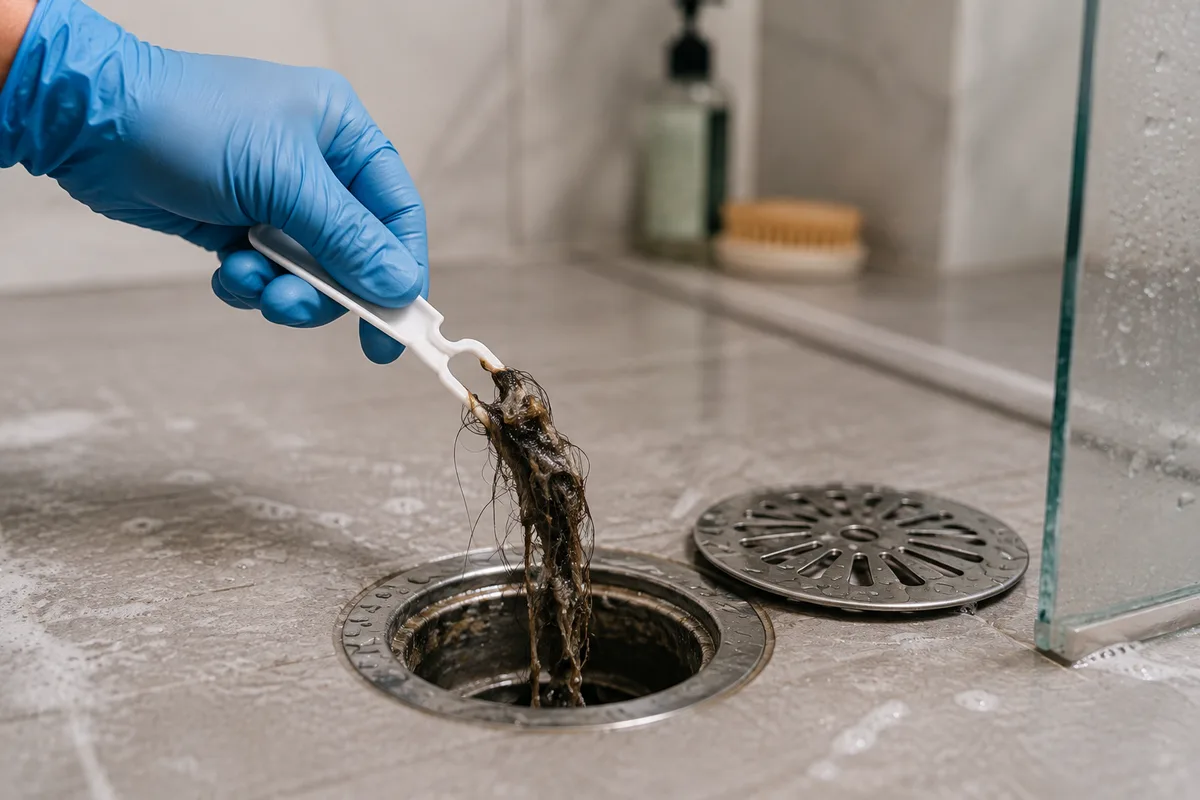
- visible hair underneath the drain cover;
- odor becoming stronger when the drain is wet;
- or the problem gradually getting worse.
For material that is accessible near the drain opening, mechanical removal is often a sensible first step.
If the drain cover is designed to be removed, carefully take it off and inspect underneath.
Wear gloves.
Remove accessible hair and debris with an appropriate drain-cleaning tool rather than forcing the material deeper into the pipe.
Then clean the removable drain cover and reachable surfaces according to the materials used in your shower.
It may not be glamorous.
But physically removing the material causing the smell is more useful than simply making that material smell like artificial lemon.
What About That Slimy Layer Inside the Drain?
Sometimes the drain is not completely clogged.
Instead, you may find a slippery layer of residue coating reachable surfaces.
This buildup can contain a mixture of soap residue, personal-care products, grime, and biological material.
It can smell even when water still drains reasonably well.
Cleaning the accessible surfaces can therefore matter just as much as removing a large clump of hair.
The Metropolitan Council Environmental Services specifically identifies buildup of grime, mildew, and personal-care products inside drains and plumbing as a possible source of household sewer odors.
The important word here is buildup.
If material is physically attached to the drain, simply pouring something past it may not remove it effectively.
Where accessible, gentle mechanical cleaning gives you a chance to remove the source rather than temporarily alter the smell.
The Safest First Steps Are Usually the Simplest
A bad drain smell often sends people straight to the strongest product under the kitchen sink.
Start more methodically instead.
1. Confirm the odor comes from the shower drain
Do not treat the plumbing until you know the plumbing is actually responsible.
2. Think about when the shower was last used
If it has been sitting unused, refill the trap by running water.
3. Check the drain cover
Look for hair, soap residue, and visible buildup.
4. Remove accessible debris
Use an appropriate mechanical tool and gloves.
5. Clean reachable surfaces
Pay attention to the underside of a removable drain cover and the accessible area immediately inside the drain.
6. Test the drainage speed
Run water and watch whether it clears normally.
7. Check other drains
Is the shower the only fixture that smells?
Or are you noticing a similar sewer odor from a sink, tub, or floor drain?
That final observation can help distinguish a localized dirty drain from a broader plumbing problem.
Do Not Start Mixing Drain Cleaners
This deserves its own section because a smelly drain can encourage some surprisingly risky DIY experiments.
One article recommends one product.
A video recommends another.
Someone in a comment section suggests combining them.
Do not assume that makes the mixture more effective.
Never mix household cleaning chemicals unless the product labels specifically state that doing so is safe.
Certain combinations can produce dangerous fumes or chemical reactions.
If you have already poured a commercial drain cleaner into the shower, follow its label instructions before using anything else.
And if you later call a plumber, tell them what was put into the drain.
For ordinary hair and accessible buildup, physical removal and cleaning may be a much simpler starting point than repeatedly adding chemicals.
What If the Smell Comes Back After Cleaning?
This is where the timeline becomes useful.
Suppose you remove the hair.
Clean the drain cover.
Run plenty of water.
The shower drains normally.
But a strong sewage odor comes back.
At this point, continuing to clean the same visible surfaces may not accomplish much.
A properly functioning, regularly used shower should normally maintain water in its trap.
Persistent sewer odor can therefore justify checking for other plumbing issues.
Potential problems can include a damaged trap, plumbing leak, or ventilation problem.
South Davis Sewer District advises that when sewer odors persist after a drain has been refilled, another issue such as a damaged trap, blocked vent, or plumbing leak may be involved.
Those are not problems you diagnose by pouring increasingly aggressive products down the drain.
They may require a licensed plumber.
Gurgling Changes the Picture
A bad smell is one clue.
A bad smell accompanied by unusual plumbing noises is more interesting.
If the shower or nearby fixtures frequently gurgle, especially when another fixture drains or a toilet flushes, make a note of it.
Plumbing drainage and venting systems are designed to move wastewater while maintaining the water seals in traps.
Persistent odor combined with unusual drainage behavior can indicate that the problem is not limited to a dirty drain opening.
The same applies when several fixtures begin acting strangely at the same time.
One smelly shower may be a local issue.
Several drains producing sewer odors, draining poorly, or behaving unusually deserve more attention.
Check for Moisture Around the Shower Too
Not every “shower drain smell” is actually coming from inside the pipe.
Bathrooms are wet environments, and moisture can escape into places where it takes a long time to dry.
Look around:
- shower corners;
- caulk lines;
- grout;
- the edge of the shower enclosure;
- flooring immediately outside the shower;
- nearby baseboards;
- bath mats;
- and walls adjacent to plumbing.
If the odor is more earthy or musty than sewer-like, hidden moisture may be part of the problem.
A bathroom can appear clean while moisture persists underneath a mat, behind failed caulk, or in another poorly ventilated area.
If the smell seems to extend beyond the bathroom, our guide to what a persistent musty smell in your house may be telling you explains how to investigate hidden moisture, humidity, leaks, and damp materials.
What If the Shower Smells Only After You Run Water?
Timing matters.
If the drain smells normal when dry but the odor appears after water begins flowing, observe what else happens.
Does the water drain slowly?
Does it disturb visible buildup?
Does the smell seem to rise directly from the drain?
Does another nearby fixture make noise?
Water movement can disturb material sitting inside a dirty drain, making an existing odor temporarily more noticeable.
But persistent sewer odor linked to drainage can also warrant a closer look at the plumbing system.
Do not try to diagnose a hidden vent or pipe defect based on smell alone.
Use the timing as one clue among several.
Can You Prevent the Smell From Coming Back?
Prevention depends on what caused it.
If hair repeatedly accumulates in the drain, a suitable hair catcher can reduce how much reaches the plumbing.
Remove collected hair regularly rather than waiting until the shower begins draining slowly.
Clean accessible drain surfaces as part of normal bathroom maintenance.
And do not forget rarely used fixtures.
Running water periodically through a guest shower can help maintain the water seal in its trap.
Most importantly, pay attention when something changes.
A shower that has always drained normally and suddenly becomes slow is telling you something.
So is a new sewer odor from a shower that is used every day.
Catching those changes early is easier than waiting until water stops draining altogether.
When Is It Time to Call a Plumber?
You do not need a plumber every time you find hair under a drain cover.
But there is a point where DIY troubleshooting stops being useful.
Professional inspection becomes more reasonable when:
- sewer odor persists despite the shower being used regularly;
- refilling the trap does not solve the problem;
- the odor repeatedly returns after accessible buildup has been removed;
- the shower remains slow after an accessible clog is cleared;
- several drains smell or drain poorly;
- you hear persistent gurgling;
- you suspect a damaged trap or vent problem;
- you see signs of a plumbing leak;
- or sewage begins backing up through a fixture.
The last situation is not a routine odor problem.
A sewage backup requires prompt attention.
The Bottom Line
A smelly shower drain does not automatically mean you have a major plumbing disaster.
Often, the first things worth checking are surprisingly ordinary.
Has the shower been unused long enough for the trap to dry out?
Is hair or grime collecting underneath the drain cover?
Is the water draining more slowly than it used to?
Does the smell resemble dirty buildup or actual sewage?
Are other drains behaving strangely too?
Those questions help separate a drain that needs cleaning from a plumbing system that needs investigation.
Start with the simple, observable causes. Refill a dry trap. Remove accessible hair and debris. Clean reachable drain surfaces. Avoid mixing cleaning chemicals.
Then watch what happens.
If the smell disappears, you have probably learned something useful about its source.
If a strong sewer odor keeps returning from a regularly used shower, especially alongside slow drainage, gurgling, leaks, or problems with other fixtures, stop trying to perfume the drain.
At that point, the smell is not the problem to cover up. It is the clue worth following.
Sources
South Davis Sewer District — What’s That Smell? Understanding Sewer Odors and P-Traps
Metropolitan Council Environmental Services — Report Sewer Odors







Join the discussion