Why Does Your Refrigerator Smell Bad Even After You Clean It?
If your refrigerator still smells after cleaning, the source may be hidden under drawers, inside the door gasket, in the freezer or drip pan. Here's how to find it.
You throw away the old food.
Wipe the shelves.
Wash the drawers.
Clean the walls.
Close the door.
Then a few hours later, you open the refrigerator again—and the smell is still there.
That usually means the odor source was not on the obvious surfaces.
A refrigerator can keep smelling after cleaning because odor may be trapped in hidden spills, door gaskets, removable bins, the drip pan, old ice, air filters, or even porous interior materials. Sometimes the source is still inside the fridge. Sometimes it is underneath or behind it.
The fastest way to fix the problem is to stop cleaning the same surfaces repeatedly and start locating where the odor is actually coming from.
Start With the Question Most People Skip: What Does the Smell Resemble?
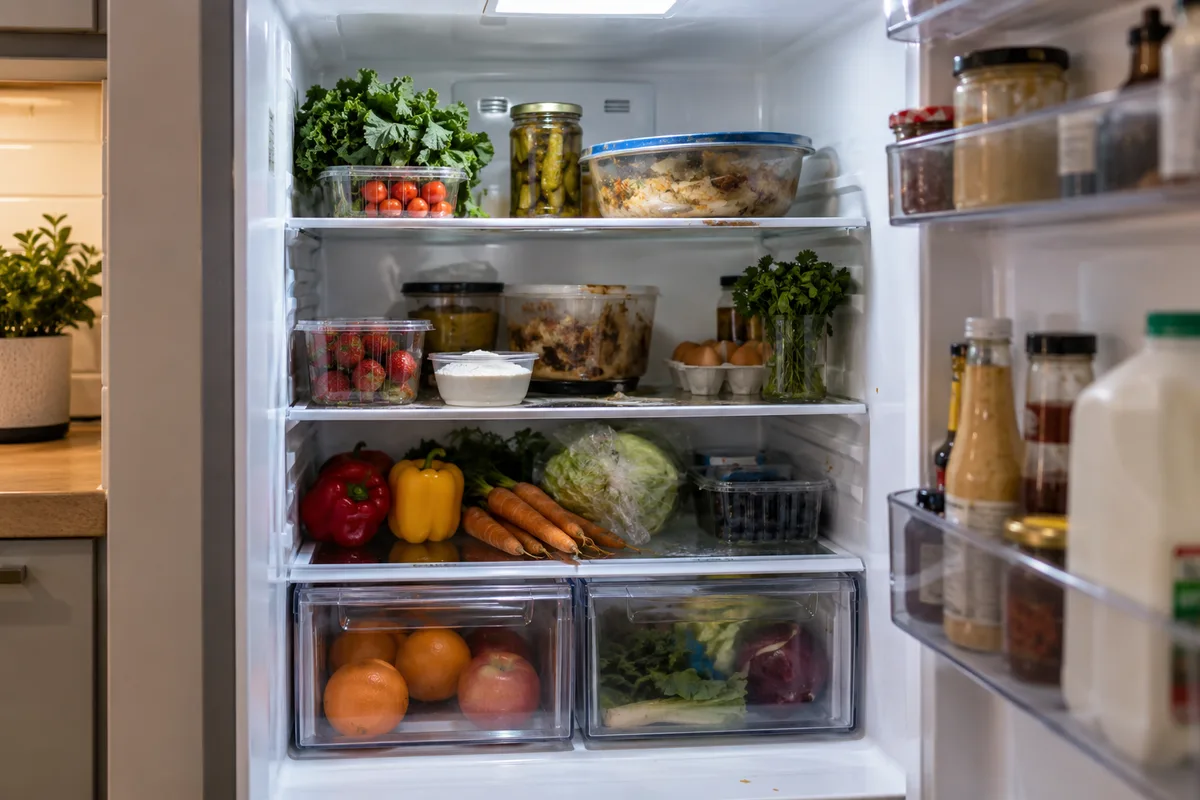
The type of odor can give you a useful clue.
A rotten-food smell suggests spoiled produce, meat juices, forgotten leftovers, or residue.
A sour or fermented smell may point toward dairy, sauces, produce, or liquid trapped under a drawer.
A fishy or onion-like smell often comes from strongly scented food that was not sealed well.
A musty smell can suggest moisture, residue, or an area that has not dried properly.
A plastic or chemical smell deserves a different kind of investigation, especially if the refrigerator is new or the smell appeared after maintenance.
You do not need to identify the exact molecule.
You are simply narrowing the search.
A Clean Shelf Does Not Mean the Refrigerator Is Clean
Visible shelves are only part of the interior.
Food can leak into places you do not notice:
- underneath crisper drawers,
- along shelf rails,
- around drawer tracks,
- behind removable bins,
- under glass shelf panels,
- inside door shelves,
- and around seams where liquid can collect.
Whirlpool specifically advises removing shelves, bins, and crisper drawers during odor cleaning rather than wiping only the exposed surfaces.
This matters because a tiny amount of dried meat juice or spilled milk can smell much stronger than it looks.
If the fridge still smells after an ordinary wipe-down, remove the parts that are designed to come out and inspect the surfaces underneath them.
Check the Door Gasket
The rubber seal around the refrigerator door is easy to overlook.
Its folds can collect:
- crumbs,
- sticky liquid,
- condensation,
- food residue,
- and grime.
The gasket may look clean from the front while material remains trapped deeper inside the folds.
Whirlpool recommends cleaning the gasket with mild soap and water and drying it thoroughly. GE also specifically lists gasket cleaning as part of refrigerator odor control.
Do not scrub aggressively or use harsh products that could damage the seal.
A damaged gasket creates a different problem: warm, moist air can enter more easily, increasing condensation and potentially making odor problems worse.
The Drip Pan Can Smell Even When the Inside Is Spotless
This is one of the most useful places to check.
Many refrigerators have a drip pan, sometimes called a drain pan, underneath the appliance.
Its job is to collect condensation and defrost water.
Under normal conditions, that water eventually evaporates.
But if food residue, dust, liquid, or organic material reaches the pan, it can develop a strong odor.
The refrigerator interior can therefore be completely clean while the smell is coming from below it.
LG and Whirlpool both specifically identify the drip pan as a possible odor source and recommend cleaning it according to the refrigerator’s design.
Before trying to remove it, check your model’s manual.
Some drip pans are accessible.
Others are not intended for routine user removal.
Do Not Forget the Freezer
A smell inside the refrigerator compartment may not begin there.
Air can circulate between refrigerator and freezer sections in many appliances.
Old ice, freezer-burned food, a torn package, or spilled liquid in the freezer can therefore affect the smell elsewhere.
Curiworld has a separate troubleshooting guide for freezer ice that tastes or smells strange, including how to distinguish food odor from water-filter or ice-maker problems.
If the refrigerator section looks clean, open the freezer and smell it separately.
Check:
- old ice,
- uncovered food,
- damaged freezer bags,
- spills frozen into the bottom,
- and the ice storage bin.
Strong-Smelling Food Can Affect the Whole Fridge
Some foods do not need to be spoiled to create a refrigerator odor.
Garlic.
Onions.
Fish.
Strong cheeses.
Certain sauces.
Cooked cabbage.
Leftovers stored in loose packaging.
Samsung and Whirlpool both recommend storing strong-smelling foods tightly wrapped or in sealed containers because food odors can spread throughout the appliance.
A refrigerator can therefore be hygienically clean and still smell because the odor source is fresh food that is poorly sealed.
This is especially common when the smell returns soon after cleaning.
The Crisper Drawer Deserves Its Own Inspection
Produce drawers create ideal hiding places.
A tomato splits.
A cucumber leaks.
A piece of spinach gets trapped underneath.
A berry rolls behind the drawer.
Days later, you clean the visible refrigerator and assume the job is done.
The smell remains.
Remove the drawer completely if your model allows it.
Look underneath.
Inspect the back corners.
Check the drawer tracks.
Also inspect any humidity-control components or removable covers that are meant to be cleaned.
Produce residue can decompose quickly and may be surprisingly difficult to locate visually.
What About the Drain Hole or Drain Channel?
Some refrigerators use a drain system to move defrost water toward the pan below the appliance.
If your model has an accessible drain channel or drain opening, residue can sometimes collect nearby.
But this is one area where model-specific instructions matter.
Do not start pushing tools, chemicals, or wires into a refrigerator drain based on generic internet advice.
If you suspect a drainage problem, check the manual for your exact appliance.
A blocked drain can also show up through symptoms other than odor, such as water collecting inside the refrigerator or under drawers.
Baking Soda Can Absorb Odor—But It Cannot Remove the Source
This is where a lot of refrigerator advice goes wrong.
Baking soda may help absorb some odors.
It does not clean spoiled food from under a drawer.
It does not remove residue from a gasket.
It does not wash a dirty drip pan.
It does not repair a drainage problem.
Think of odor absorbers as a finishing step.
Not the diagnosis.
If the source remains, the smell will keep returning.
Should You Use Vinegar or Bleach?
Follow the appliance manufacturer’s cleaning instructions.
Whirlpool recommends mild detergent and warm water for routine cleaning and specifically warns against harsh or abrasive cleaners on many refrigerator surfaces. GE likewise warns against certain aggressive cleaning products on liners, plastic parts, and gaskets.
This is not a situation where stronger automatically means better.
Never mix household cleaning chemicals.
In particular, do not combine bleach with ammonia, acids, vinegar, or other cleaners.
If your refrigerator manual recommends a specific cleaning solution, use that guidance for the model you own.
The Smell May Be Coming From Under the Refrigerator
If you clean the refrigerator interior carefully and the smell still seems strongest near the bottom, inspect the surrounding area.
Food can roll underneath.
Liquid can spill down the front and reach the floor.
Dust and debris can accumulate behind or beneath the appliance.
Whirlpool recommends routinely cleaning underneath the refrigerator because trapped material can contribute to odors.
Move the appliance only if it can be done safely and according to the manufacturer’s instructions.
Large refrigerators are heavy and can damage flooring or tip if moved improperly.
What If the Smell Seems Worse When the Refrigerator Runs?
That clue can help.
If the odor becomes more noticeable when the fan or compressor runs, moving air may be carrying the smell from a hidden area.
That does not automatically mean the motor is failing.
Start by checking:
- the freezer,
- air vents,
- the drip pan,
- filters,
- and areas around the appliance.
If the smell appears together with unusual buzzing, grinding, clicking, or cooling problems, Curiworld’s guide to normal and abnormal refrigerator noises can help separate ordinary appliance sounds from something that deserves service.
Check the Air Filter If Your Refrigerator Has One
Some refrigerators include an air or deodorizing filter.
If yours does, check:
- whether it is installed correctly,
- whether it is overdue for replacement,
- and whether the indicator is asking for a change.
Whirlpool notes that some models use replaceable air filters specifically for odor reduction.
Do not assume every refrigerator has one.
And do not buy a replacement filter until you confirm the model actually uses it.
Could the Water Filter Be Causing the Smell?
Possibly—but mainly if the odor is noticeable in the water or ice.
If the refrigerator itself smells bad when the door opens, the water filter is usually not the first thing to blame.
But if:
- refrigerator water tastes strange,
- ice smells odd,
- or the problem began after a filter change,
then the water system deserves attention.
A useful test is to compare:
- tap water,
- refrigerator water,
- built-in ice,
- and ice made from tap water in a separate tray.
That can help show whether the problem begins with the household water supply, the refrigerator system, or the freezer environment.
Why Does the Smell Come Back After a Day or Two?
If the odor disappears immediately after cleaning but returns quickly, one of three things is likely happening:
The source was never removed
A spill remains under a drawer or in the drip pan.
A current food item is producing the smell
Strong-smelling food is still poorly sealed.
The refrigerator itself has absorbed a stubborn odor
Severe or long-term odors can penetrate some interior materials.
Whirlpool notes that particularly strong odors can sometimes linger for weeks and may be absorbed into refrigerator insulation.
That is uncommon compared with ordinary food residue, but it explains why repeated surface cleaning is not always successful after severe spoilage.
What If Food Spoiled During a Power Outage?
This can create unusually persistent odors.
If meat, seafood, dairy, or other perishable food spoiled inside a warm refrigerator for an extended period, liquid can leak into drawers, seams, drain systems, or insulation-adjacent areas.
Clean every removable component according to the appliance instructions.
Inspect the freezer as well.
If a severe spoiled-food odor remains after thorough cleaning and airing, the manufacturer or a qualified appliance technician may be more useful than repeatedly applying deodorizer.
A Practical Troubleshooting Order
If your refrigerator still smells after cleaning, check it in this order:
- Remove spoiled or expired food.
- Seal strong-smelling food.
- Remove drawers and shelves and clean underneath them.
- Clean the door gasket and folds.
- Inspect the freezer and ice bin.
- Check the drip pan if your model allows access.
- Clean underneath and around the refrigerator.
- Check the air filter if the appliance has one.
- Investigate the water/ice system only if the odor is coming from water or ice.
- Consider professional service if the odor persists with leaks, cooling problems, electrical smells, or inaccessible contamination.
The order matters.
You want to eliminate simple, visible causes before replacing parts or calling for repair.
When the Smell Needs More Than Cleaning
Most refrigerator odors are food-related.
But some smells should not be treated as ordinary cleaning problems.
If you notice:
- a burning smell,
- melting-plastic odor,
- visible smoke,
- electrical arcing,
- unusual heat,
- repeated breaker trips,
- or a smell that clearly seems electrical rather than food-related,
disconnect the appliance if it is safe to do so and seek qualified service.
Do not keep using the refrigerator while trying to mask an electrical odor with deodorizer.
The Bottom Line
If a refrigerator still smells after you clean it, the most likely explanation is not that you “cleaned it wrong.”
It is that the source is somewhere you did not clean.
The hidden spots matter:
under drawers, inside gasket folds, in the freezer, in the drip pan, underneath the appliance, or around poorly sealed food.
Odor absorbers can help after the source is gone.
They cannot replace finding it.
The best troubleshooting question is therefore not:
“What can I put in the fridge to make it smell better?”
It is:
“Where is the smell actually coming from?”
Sources
Whirlpool Product Help — Removing and Preventing Refrigerator Odors






Join the discussion