Why Do Old Paintings Crack? What Craquelure Can Reveal About a Work of Art
Those tiny cracks across an old painting are more than signs of age. Craquelure can preserve clues about materials, technique and centuries of physical change.
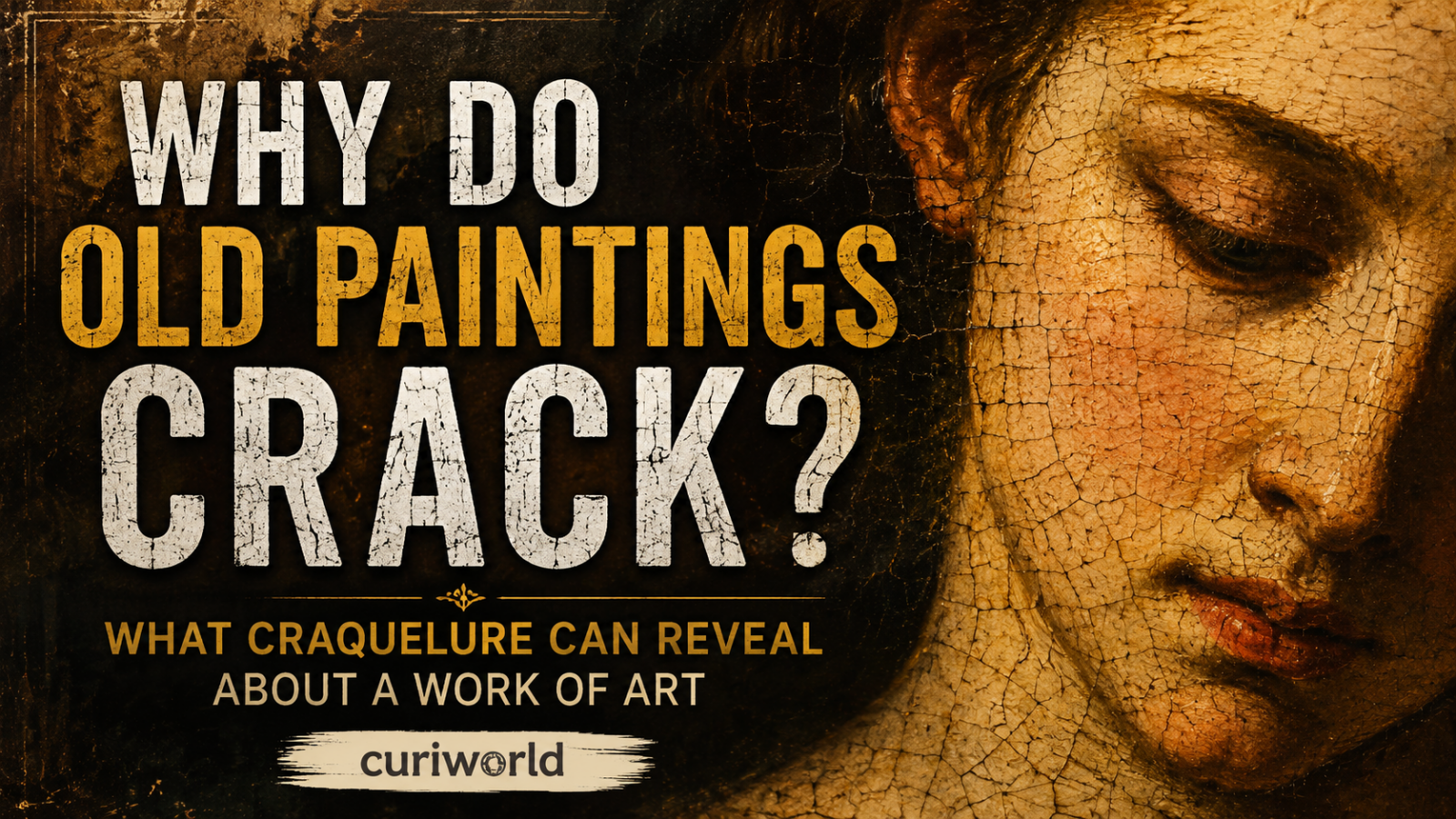
Look closely at an old painting and you may notice a delicate network of tiny lines running across its surface. From a distance, they can disappear completely. Up close, they may resemble a miniature map, dried earth, or a web of irregular geometric shapes.
These cracks have a name: craquelure.
Craquelure is strongly associated with historic paintings, but it is not simply a sign that “old paint dries out.” A traditional painting is made from several materials layered together, and those materials do not age, shrink, expand, or respond to their surroundings in exactly the same way.
Over decades or centuries, those differences can create stress within the painting. The resulting cracks can become a physical record of how the artwork was made, how its materials changed, and what happened to it after it left the artist’s studio.
What Is Craquelure?
Craquelure is the network of fine cracks that develops in the surface layers of a painting.
According to the National Gallery in London, these patterns can develop as paint layers age and shrink. Craquelure is especially familiar in traditional paintings made with materials such as oil paint and egg tempera.
The cracks may occur within the paint itself, in underlying preparation layers, or sometimes in the varnish covering the artwork. Dirt can also settle into them over time, making an otherwise subtle network of cracks easier to see.
Understanding why this happens requires remembering one important fact: a painting is not a single sheet of color.
A traditional painting may include:
- a canvas or wooden support,
- preparation or ground layers,
- several applications of paint,
- glazes or other finishing layers,
- and a protective varnish.
Each material behaves differently.
That difference is at the heart of craquelure.
Why Do Old Paintings Develop Cracks?
One of the main reasons is movement within the structure of the painting.
Paint gradually becomes harder and less flexible as it ages. The support beneath it, however, can continue to move.
Wood may expand and contract as environmental conditions change. Canvas can also respond to changes in humidity, temperature, tension, and handling.
The paint layer attached to that support cannot always adapt perfectly.
Imagine a thin, increasingly brittle coating attached to a surface that repeatedly expands, contracts, or bends by a very small amount. Each individual movement may be almost impossible to notice, but repeated stresses over many years can eventually produce cracking.
A painting therefore does not need to experience one dramatic accident to develop craquelure.
Sometimes centuries of tiny movements are enough.
Not All Craquelure Is Caused by Old Age
This is one of the most important distinctions to understand.
A cracked painting is not automatically an extremely old painting.
Conservators distinguish between cracks that develop as a painting ages and cracks connected with the drying behavior of its materials.
Age changes paintings in several other ways as well; see why old paintings can look so different today.
Age Cracks
Age-related cracks generally appear after the painting’s layers have dried.
As the support moves and the materials gradually lose flexibility, mechanical stress can accumulate. Temperature and humidity changes may contribute to this process by causing parts of the painting to expand or contract differently.
These cracks may develop slowly over many years.
Drying Cracks
Other cracks can begin much earlier.
Drying cracks can form when one layer of paint contracts while drying but the layer beneath it behaves differently. Problems with the composition, thickness, or relationship between paint layers can also contribute.
In other words, a painting does not necessarily need to be centuries old before cracks appear.
This is why the simple rule “cracks equal age” does not work.
Why Do Different Paintings Have Different Crack Patterns?
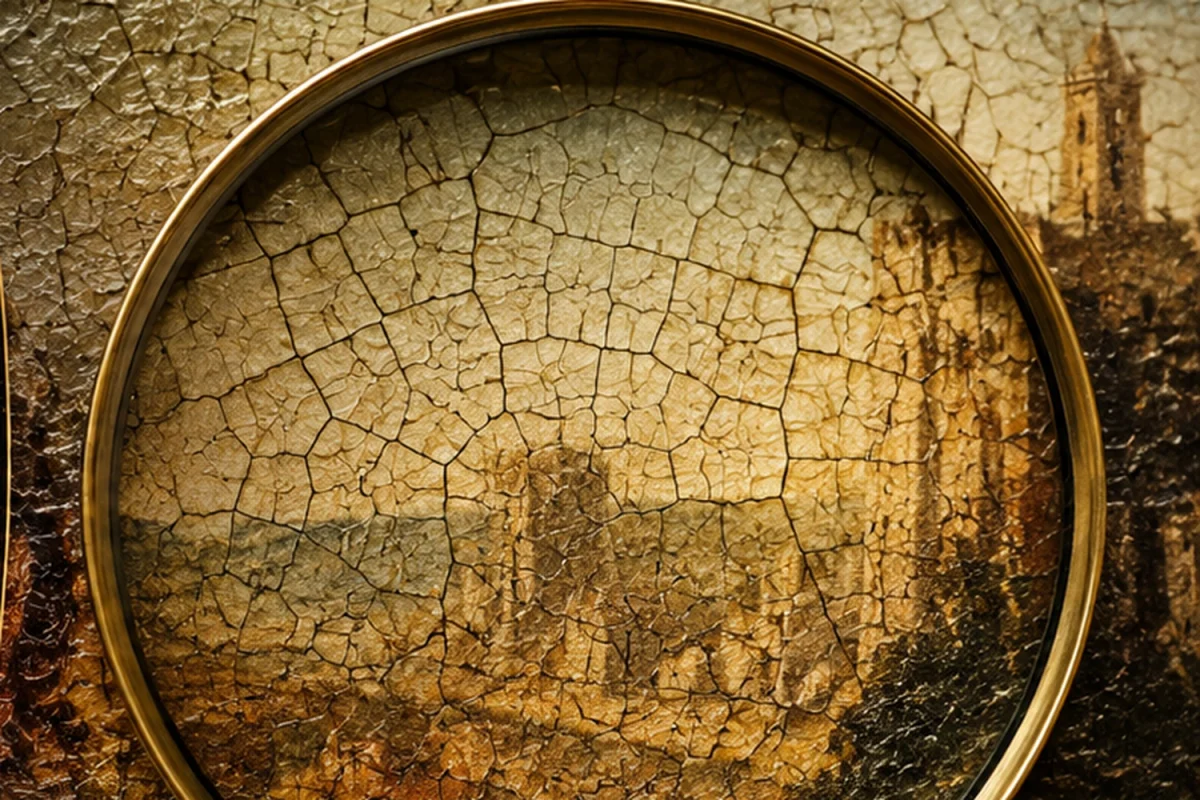
Craquelure does not look exactly the same on every painting.
Some artworks develop extremely fine, tightly packed networks. Others show wider cracks with larger spaces between them. Some patterns appear geometric, while others branch unpredictably across the surface.
The structure of the artwork plays an important role.
A painting on a rigid wooden panel behaves differently from one painted on flexible canvas. Thick applications of paint respond differently from thin glazes. Ground layers may also shrink, swell, or move differently from the colors placed above them.
Even neighboring areas of the same painting can behave differently if the artist used different materials or techniques.
That is why conservators do not simply ask whether a painting is cracked.
They examine how it is cracked.
The size, direction, distribution, and shape of the cracks may provide clues about the physical processes that affected the artwork.
What Can Craquelure Reveal About a Painting?
Craquelure cannot tell the complete story of an artwork by itself, but it can contribute valuable evidence.
The Painting’s Support
Crack patterns can sometimes reflect movement originating beneath the paint.
Canvas and wood have different physical properties, so the relationship between the visible cracks and the underlying support can help conservators understand how the painting has behaved over time.
This becomes particularly useful when craquelure is examined alongside other evidence from the artwork.
How the Paint Layers Aged
The surface may also contain clues about whether stress developed while the paint was drying or much later.
That difference matters.
A crack produced by the contraction of drying paint represents a different physical process from a crack caused by decades of movement in a canvas or wooden support.
Conservators therefore study the relationship between cracks, paint layers, grounds, and the support instead of treating every visible line as the same phenomenon.
The Artist’s Materials and Technique
In some cases, cracking can reveal something about how layers of paint were applied.
Different pigments, binding materials, thicknesses, and painting techniques can influence how a surface behaves as it dries and ages.
An upper paint layer that contracts differently from the material beneath it may create a distinctive pattern.
Craquelure can therefore preserve indirect evidence of decisions made during the painting process.
It cannot tell us what the artist was thinking, but it can help specialists investigate how the physical object was constructed.
Craquelure Can Record a Painting’s Life After the Studio
A painting continues to change long after the artist finishes it.
It may spend decades in a private home, then move to a gallery, storage facility, museum, or another climate entirely.
During that time it may experience variations in temperature and humidity. It can be transported, reframed, cleaned, restored, exposed to light, or subjected to changes in the tension of its canvas.
The Getty Conservation Institute’s Conserving Canvas glossary describes several forms of cracking and deterioration associated with the physical behavior of paintings and their supports.
This means the surface of an old painting can preserve traces of more than its creation.
It may also preserve evidence of its journey through time.
Does Craquelure Prove That a Painting Is Old?
No.
Craquelure may be consistent with an old painting, but it cannot establish age or authenticity by itself.
Because cracking can arise from different materials, drying processes, environmental conditions, and mechanical stresses, the existence of cracks alone is not enough to determine when a painting was created.
This makes craquelure useful evidence — but not definitive proof.
Specialists investigating an artwork may consider many other factors, including:
- the canvas or wooden support,
- pigments,
- binding materials,
- ground layers,
- brushwork,
- varnish,
- previous restoration,
- documented ownership history,
- and scientific examination.
A crack pattern becomes much more meaningful when it can be interpreted alongside these other forms of evidence.
Craquelure is therefore better understood as one clue in a much larger investigation.
Can Fake Paintings Have Craquelure?
Yes.
Because people often associate cracks with age, imitation craquelure has sometimes been deliberately created to make objects appear older.
This is another reason why visible cracking cannot authenticate a painting on its own.
A convincing examination requires much more than looking for an old-looking surface. Specialists may study whether the crack pattern is physically consistent with the materials, construction, and supposed history of the work.
Something that looks old is not necessarily old.
And genuine age is rarely established by a single visual feature.
Does Cracking Mean a Painting Is Falling Apart?
Not necessarily.
A network of stable age cracks can remain visible for a very long time without the painting immediately being in danger.
The more important question is whether the paint is still securely attached to the layers beneath it.
A crack becomes more concerning when sections of paint begin to lift, curl, detach, or flake away from the support.
That distinction matters.
A stable hairline crack and a loose fragment of original paint are very different conservation problems.
Historic or valuable paintings should not be cleaned, flattened, coated, or repaired with household products simply because cracks are visible. Treatments that seem harmless can alter original materials or make later conservation work considerably more difficult.
Where deterioration appears active, examination by a qualified paintings conservator is the safer approach.
Why Museums Do Not Simply Remove Every Crack
It may seem logical to assume that restoration should make an old painting look completely smooth again.
Conservation does not usually work that way.
The goal is not necessarily to erase every sign that an object has aged. Treatment decisions consider the stability of the artwork, the originality of its materials, its historical significance, and whether intervention could cause additional damage.
Stable craquelure can be part of the physical history of a painting.
Removing or disguising it aggressively may require altering original surfaces that have survived for hundreds of years.
That makes the distinction between damage that threatens the painting and age-related change that remains stable especially important.
Why Craquelure Makes Old Paintings Even More Fascinating
Craquelure is usually described as a form of physical deterioration, and technically it represents changes within the materials of a painting.
Yet those tiny lines can also make an old work more interesting.
A centuries-old painting carries at least two histories.
The first is the history created deliberately by the artist: the composition, brushwork, colors, materials, and subject.
The second begins when the finished painting starts interacting with the world around it.
Paint hardens. Layers contract. Canvas moves. Wood expands and shrinks. Environmental conditions change. The artwork travels, is displayed, stored, cleaned, conserved, and passed from one generation to another.
Some of that history becomes visible on the surface.
Craquelure is part of that record.
What Those Tiny Cracks Really Tell Us
The cracks running across an old painting are more than a simple sign that paint has become old.
They are the visible result of different materials interacting over time.
Paint layers harden and contract. Canvas and wooden supports move. Environmental conditions change. Stress develops between materials that cannot always move together.
Eventually, parts of that history may appear on the surface as craquelure.
Those patterns cannot independently tell us exactly when a painting was made, who painted it, or whether it is authentic.
But when conservators study them alongside the artwork’s materials, structure, technique, and condition, craquelure can become an important source of information.
The tiny cracks that seem like imperfections may therefore be something more interesting: a physical record of a painting’s long life.








Join the discussion