10 Everyday Things You’re Probably Using Wrong
Some everyday habits feel so obvious that we never question them. These ten small corrections can save effort, improve results and avoid unnecessary risks.
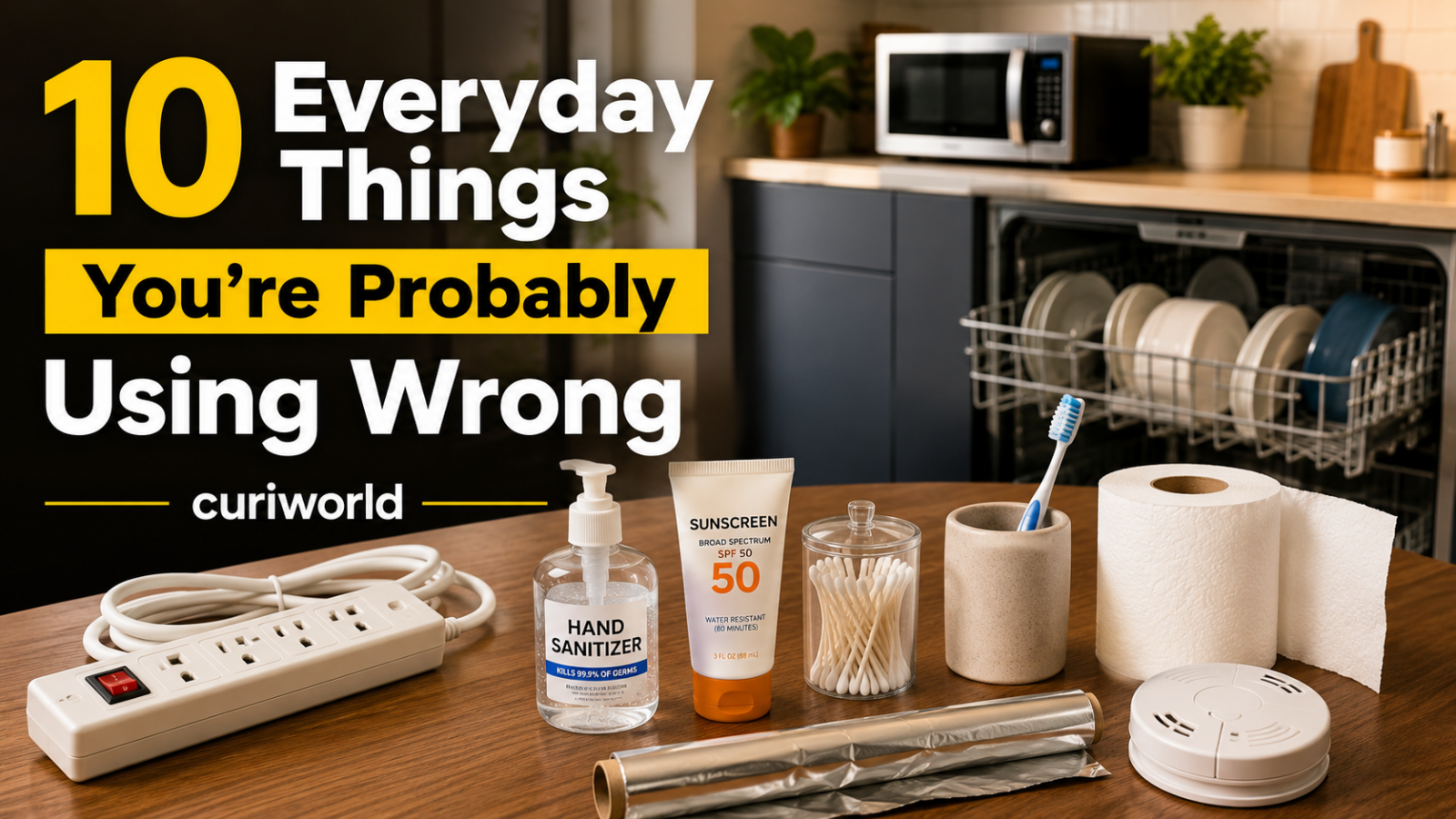
The easiest habits to get wrong are often the ones that feel too ordinary to question. You rinse a plate before putting it in the dishwasher, scrub harder with your toothbrush because harder must mean cleaner, or wipe away hand sanitizer before it has fully dried.
Some of these habits simply waste time. Others can reduce how well a product works, and a few create genuine safety problems.
Here are ten everyday objects that may deserve a small change in how you use them.
1. Your Dishwasher: Stop Washing the Dishes Before It Does
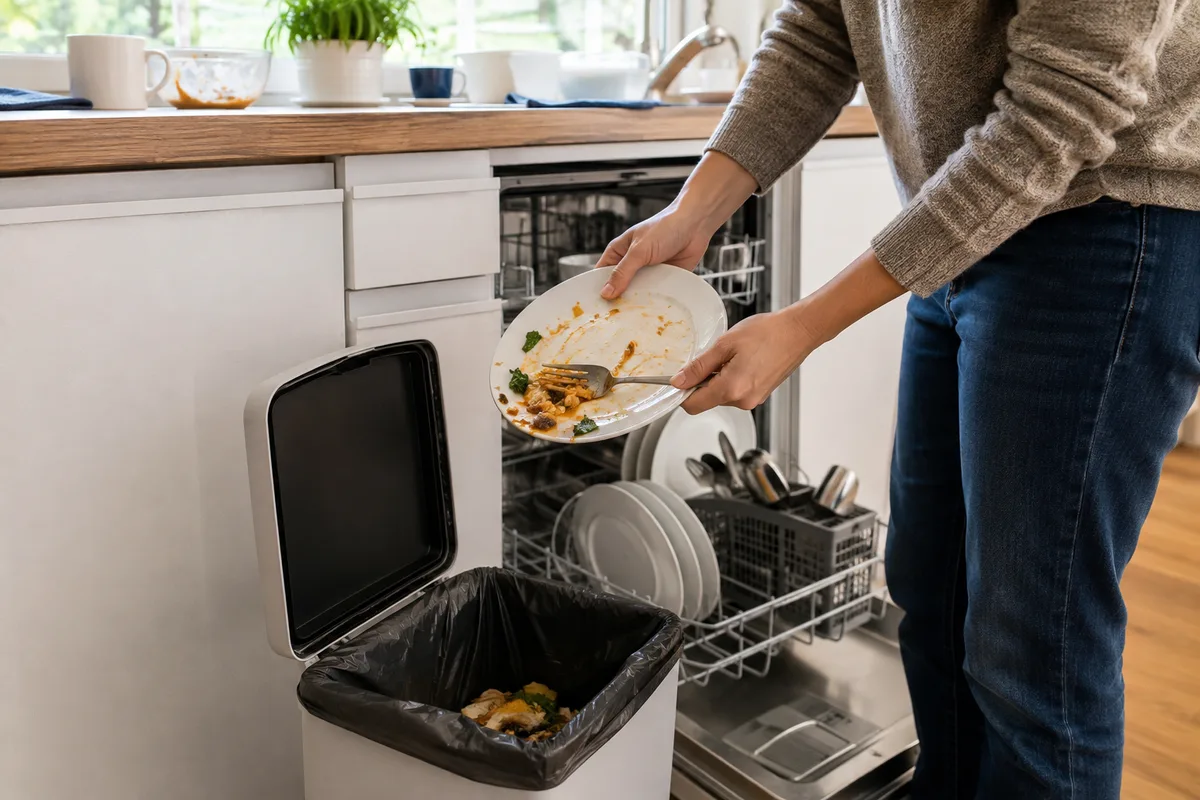
Giving every plate a thorough rinse before loading the dishwasher can feel responsible. With a modern dishwasher, however, it may simply duplicate the work.
ENERGY STAR recommends scraping food from dishes rather than pre-rinsing them. Rinsing beforehand increases total water and energy use, while modern dishwashers and detergents are designed to handle food residue themselves.
That does not mean loading plates with half a meal still attached. Scrape off bones, large pieces of food and anything likely to clog the filter. Then let the machine handle the remaining residue.
There is another efficiency mistake hiding in half-empty loads. Dishwashers use roughly similar amounts of energy and water regardless of how many dishes are inside, so running reasonably full loads makes better use of each cycle.
Better habit: Scrape, load properly and let the dishwasher wash.
Dishwasher habits can cause other surprising problems too, including dishes that smell like wet dog after a wash cycle.
2. Your Microwave: The Beep Does Not Always Mean the Heating Is Finished
Microwaves can create hot and cold spots in food. That matters for both eating quality and food safety.
The U.S. Food and Drug Administration recommends covering food, stirring it and rotating it during microwave cooking to encourage more even heating. It also advises allowing the recommended standing time after cooking, because heat continues to spread through the food after the microwave stops.
This is especially important when reheating dense foods, casseroles or ready-to-cook products where the center may remain cooler than the edges.
If the package says “let stand for two minutes,” that instruction is not decorative filler.
Better habit: Stir or rotate when appropriate, follow package directions and respect standing time.
3. Your Extension Cord: Treating It Like Permanent Wiring
An extension cord can quietly become part of the furniture. A lamp gets plugged into it, the cord disappears behind a cabinet, and months later nobody remembers why it was there.
That is not how extension cords are intended to be used.
The U.S. Consumer Product Safety Commission advises using extension cords only when necessary and on a temporary basis rather than as a substitute for inadequate permanent wiring. It also warns against overloading cords, covering them with rugs and continuing to use damaged or unusually hot cords.
A cord also needs to be suitable for the appliance and environment. Outdoor applications require cords intended for outdoor use, while appliances with substantial power demands need appropriately rated equipment.
Better habit: Think of an extension cord as a temporary bridge, not a permanent electrical outlet.
4. Your Hand Sanitizer: Wiping It Off Too Soon
A quick splash of sanitizer followed by two seconds of rubbing may feel like enough. It is not the technique recommended by the Centers for Disease Control and Prevention.
CDC guidance says to use enough sanitizer to cover all surfaces of the hands and rub the hands and fingers together until they are dry, which should take about 20 seconds. The agency specifically advises against rinsing or wiping sanitizer away before it dries.
The product matters too. When soap and water are unavailable, the CDC recommends an alcohol-based sanitizer containing at least 60% alcohol.
Sanitizer is not a universal replacement for handwashing. Soap and water are preferable when hands are visibly dirty or greasy and are more effective against certain germs.
Better habit: Use enough, cover the whole hand and keep rubbing until dry.
5. Your Sunscreen: One Morning Application Is Not an All-Day Shield
A high SPF number can create a false sense that one application will last through an entire day outdoors.
It does not.
The American Academy of Dermatology recommends broad-spectrum, water-resistant sunscreen with an SPF of at least 30. For most adults, roughly 1 ounce — about enough to fill a shot glass — is needed to cover exposed skin, although the amount varies with body size.
More importantly, outdoor protection needs to be renewed. Sunscreen should generally be reapplied approximately every two hours and after swimming or sweating. Areas such as the ears, neck, tops of the feet and scalp are also commonly missed.
Higher SPF does not eliminate the need to reapply.
Better habit: Apply enough, cover forgotten areas and reapply while outdoors.
6. Your Cotton Swabs: The Ear Canal Is Not Their Cleaning Zone
Cotton swabs seem almost perfectly shaped for cleaning ears, which helps explain why the habit is so common.
The ear itself has other plans.
Earwax is part of the ear’s normal self-cleaning and protective system. Jaw movement and normal skin growth gradually move older wax toward the ear opening.
Pushing a cotton swab into the canal can do the opposite of what you intended: it may push wax farther inward. Objects inserted into the canal can also injure the ear canal or eardrum.
That does not mean every earwax problem should be ignored. Persistent fullness, pain, drainage, bleeding or hearing changes deserve appropriate medical evaluation.
Better habit: Keep cotton swabs out of the ear canal and let the ear’s normal cleaning process do its job.
7. Your Toothbrush: More Pressure Does Not Mean More Cleaning
Brushing harder can create the satisfying impression that you are doing a more thorough job.
Your gums may disagree.
The American Dental Association recommends a soft-bristled toothbrush and gentle pressure. It also recommends brushing for two minutes twice a day rather than trying to compensate with aggressive scrubbing.
The angle matters as well. Positioning the toothbrush at about a 45-degree angle to the gumline and using short, gentle strokes helps clean the tooth surfaces without turning brushing into a scrubbing contest.
And that toothbrush is not meant to last forever. It should generally be replaced every three to four months, or sooner if the bristles become visibly matted or frayed.
Better habit: Brush gently and thoroughly instead of turning brushing into a pressure test.
8. Your Toilet: It Is Not a Trash Disposal System
If something disappears when you flush, it can be tempting to assume the plumbing has successfully dealt with it.
The problem may simply have moved somewhere you cannot see.
The U.S. Environmental Protection Agency advises flushing toilet paper rather than wipes and other disposable household items. Materials that do not break down like toilet paper can contribute to problems in household plumbing, septic systems and municipal wastewater infrastructure.
Paper towels, disinfecting wipes and similar products belong in the trash unless local wastewater authorities explicitly provide different instructions.
A toilet is very good at moving waste out of sight. That does not make everything flushable in practical terms.
Better habit: Keep the flushing rule simple: human waste and toilet paper.
9. Your Aluminum Foil: You Probably Don’t Need to Choose a Side
Few kitchen debates are as persistent as shiny side versus dull side.
For standard aluminum foil, the distinction generally does not matter.
The different appearance comes from the manufacturing process rather than one side being designated as the “cooking side.” With ordinary foil, either side can generally face the food.
There is an important exception: specialty non-stick foil may have a designated coated side. In that case, the package instructions matter.
So the popular rule that the shiny side always goes toward — or always away from — the food is too simplistic.
Better habit: For ordinary foil, use either side. For specialty foil, check the package.
10. Your Smoke Alarm: Waiting for the Chirp Is Not a Test
A smoke alarm can sit silently on a ceiling for years, which makes it easy to treat silence as evidence that everything is working.
It is not.
Current U.S. Consumer Product Safety Commission guidance says smoke and carbon monoxide alarms should be tested monthly to make sure they are operating properly.
The test button exists for a reason. A low-battery chirp is a warning that something needs attention; it is not a substitute for routine testing.
Smoke alarms should also be installed in appropriate locations, including sleeping areas and each level of the home.
This is the least entertaining correction on the list, but probably the one most worth remembering.
Better habit: Pick one date each month and make the test button part of your routine.
The Smallest Habits Are Often the Least Questioned
What links these mistakes is not carelessness. Most of them feel perfectly logical.
More scrubbing seems cleaner. More rinsing seems hygienic. A silent smoke alarm seems fine. A shiny side and a dull side look as if they must have different jobs.
That is exactly why ordinary habits are worth reconsidering occasionally. Sometimes the smarter way to use something is easier than the habit we invented for it. Sometimes it saves water or effort. And occasionally, as with electrical cords, smoke alarms or objects placed inside the ear, a small correction can remove an unnecessary risk.
The useful lesson is not to distrust everything in your home. It is to question the routines you perform so automatically that you have never checked whether they make sense.
Sources
ENERGY STAR — Dishwashers — ENERGY STAR dishwasher guidance
U.S. Food and Drug Administration — Refrigerator Thermometers: Cold Facts about Food Safety — FDA food-safety guidance





Join the discussion