The Ocean Can Glow Blue at Night — Here’s How It Happens
Some oceans and shorelines can glow electric blue at night because tiny organisms produce bioluminescence when the water is disturbed. The effect is real—and it comes from chemistry, not reflected light.
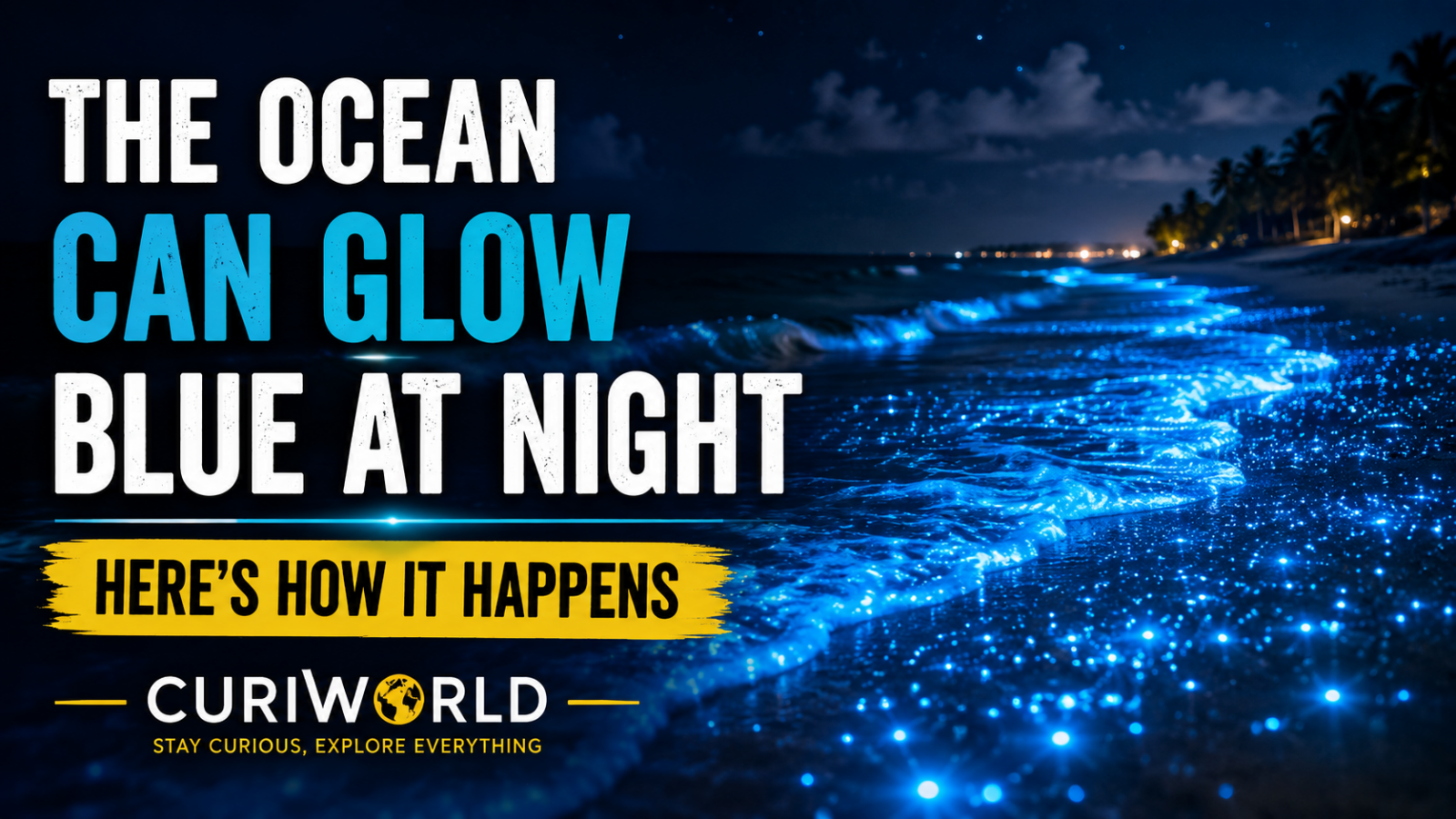
The ocean does not need moonlight, camera effects, or a hidden artificial source to glow blue at night. In the right conditions, the water can light up on its own.
That electric-looking shimmer usually comes from tiny living organisms near the surface. When waves break, a paddle moves through the water, or footsteps disturb the shoreline, they can release flashes of blue light that make the sea look almost unreal.
The effect is real, but it is also often misunderstood. The ocean is not “storing” daylight and releasing it after dark. It is not simply reflecting the sky, either. In most cases, the blue glow is a form of bioluminescence — light produced by living organisms through a chemical reaction.
It Starts With Tiny Marine Organisms
The blue glow most people notice near beaches is often linked to bioluminescent plankton, especially certain single-celled organisms called dinoflagellates.
These organisms float in the upper layers of the ocean. During the day, they may be completely invisible to casual observers, or they may contribute to water that looks reddish, brownish, or unusually murky. At night, though, the scene can change dramatically.
When the water is disturbed, these plankton can emit brief flashes of light. That is why the glow often appears in places where the water is moving: wave crests, splashes, boat wakes, swimmers’ hands, or even footprints at the water’s edge.
The result is one of the strangest and most beautiful sights in nature: dark water that suddenly seems full of neon-blue sparks.
Bioluminescent water is one of those natural phenomena that can make a real landscape look almost artificial. For more places with that same impossible-looking quality, explore 15 places on Earth that don’t look real—but actually are.
The Glow Is a Chemical Reaction
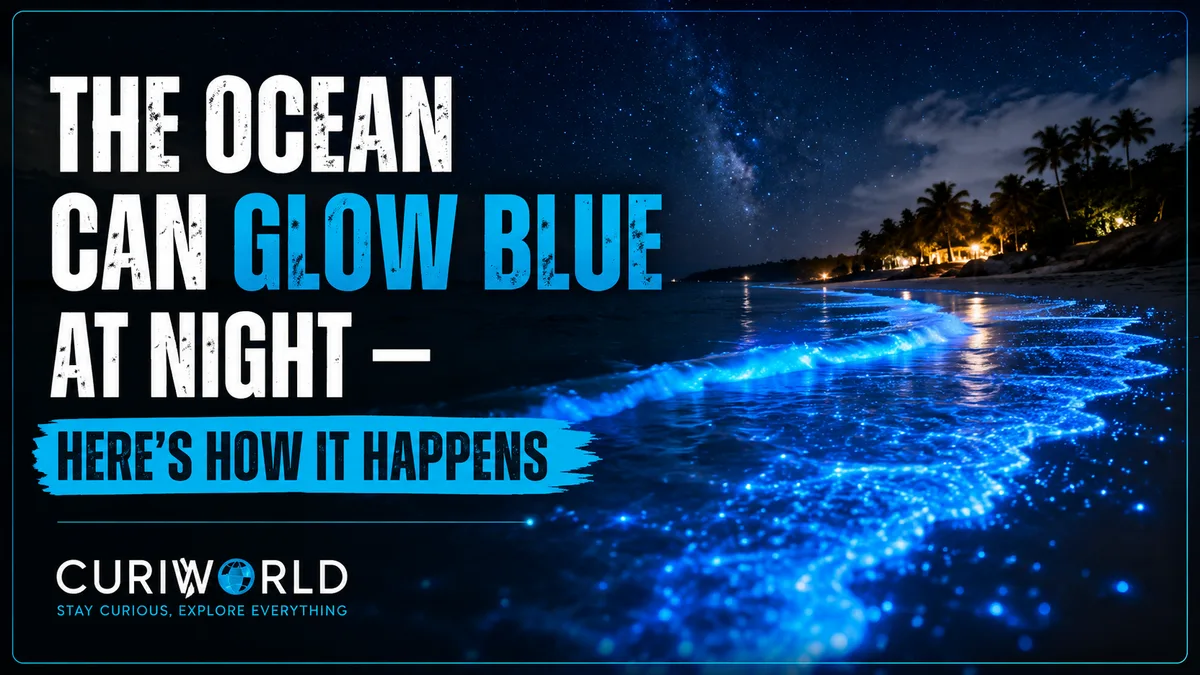
Bioluminescence is not the same thing as simple reflection. It is a light-producing chemical process inside a living organism.
According to Woods Hole Oceanographic Institution, the reaction typically involves molecules called luciferin and luciferase. When those compounds react with oxygen, light is produced. The exact chemistry can vary among organisms, but the basic idea is the same: the organism generates its own light rather than merely bouncing light back to your eyes.
That is why the glow can happen in darkness.
The water does not need sunlight in that moment. It needs living organisms capable of producing light.
Why Is the Glow Usually Blue?
One of the most interesting parts of the phenomenon is the color. If living organisms can produce light in different colors, why does the ocean so often glow blue or blue-green?
The answer has to do with water itself.
Blue and blue-green wavelengths travel through seawater better than most other visible colors. Longer wavelengths, such as red, are absorbed more quickly. In the ocean, blue light simply carries farther and remains more visible.
That makes blue a practical color for marine bioluminescence. If an organism is going to produce light underwater, blue-green is one of the most effective choices.
This is also why the effect can look especially vivid in dark coastal conditions. Against black water and a night sky, even brief blue flashes stand out sharply.
Why Disturbing the Water Makes It Light Up
People often describe bioluminescent water as if it turns on when touched, and that is not a bad way to picture it.
Many bioluminescent plankton emit light when they are mechanically disturbed. That disturbance can come from:
- breaking waves;
- a fish swimming through the water;
- a kayak or paddleboard;
- a boat wake;
- swimmers moving their arms and legs;
- or even a hand dragged through the surface.
Scientists think this glow often serves as a defense mechanism. A sudden flash may startle a predator or attract a larger predator that could threaten the original attacker. In other words, the light may function less like decoration and more like an alarm system.
So when a wave glows blue as it curls onto shore, what you are seeing is not the wave itself creating light. You are seeing living organisms in the water reacting to movement.
Not All Glowing Ocean Water Means the Same Thing
“Glowing ocean” can sound like a single phenomenon, but different things can produce different visual effects.
The best-known coastal example is the blue sparkle caused by bioluminescent plankton. But marine bioluminescence is much broader than that. Many fish, squid, shrimp, jelly-like animals, and other ocean organisms can produce their own light too.
In the deep ocean, bioluminescence is extremely common. There, the purpose of the light may be very different from the dramatic beach displays that capture people’s attention online. Marine animals can use bioluminescence to:
- attract prey;
- avoid predators;
- camouflage themselves;
- communicate;
- or help find mates.
That is one reason the deep ocean is often described as full of living lights. What looks magical from the surface is part of a much wider biological survival toolkit.
Why You Don’t See It Every Night
If bioluminescent organisms are real and widespread, why is the ocean not glowing all the time?
Because the effect depends on conditions.
A visible coastal display usually needs the right combination of:
- enough bioluminescent organisms in the water;
- darkness;
- suitable water conditions;
- and some kind of movement to trigger the glow.
If there are only small numbers of bioluminescent plankton, the effect may be too weak to notice. If there is too much artificial light nearby, the glow may be washed out. If the water conditions change, the organisms may disperse or become less concentrated.
That is why spectacular displays can feel unpredictable. A beach may seem ordinary one week and otherworldly the next.
Is It the Same as the Ocean Looking Blue During the Day?
No — and this is one of the most useful distinctions to make.
The ocean usually looks blue in daylight because of the way water interacts with sunlight. That is a question of light absorption and scattering.
The nighttime blue glow discussed here is different. It is not the everyday color of the sea. It is bioluminescence — light generated by organisms.
So even though both effects may look blue, they do not happen for the same reason.
That distinction matters because many people naturally assume the glowing effect is just an unusual version of ordinary ocean color. In reality, it is a biological phenomenon, not simply an optical one.
Is Bioluminescence Dangerous?
The glow itself is not a warning sign by definition. Bioluminescence is a natural process.
That said, the conditions associated with visible coastal bioluminescence can vary. Some glowing events are tied to dense plankton blooms, and not every bloom should be treated casually. The visual effect alone does not tell you whether the surrounding water is safe for swimming or exposure.
That is why it is wise to separate the beauty of the phenomenon from assumptions about safety. If local authorities issue beach or water-quality advisories, those should matter more than the glow.
In other words, bioluminescent light is natural. That does not automatically mean every glowing shoreline should be treated like an invitation to jump in.
Why the Phenomenon Feels So Surprising
Part of what makes glowing water so memorable is the contrast between expectation and reality.
We expect the sea at night to be dark. We expect light to come from the moon, a flashlight, a harbor, or a camera exposure. We do not expect a wave to flash electric blue because microscopic organisms were jostled into a chemical reaction.
The scale also contributes to the effect. A single organism is tiny. A visible shoreline display happens when huge numbers of them are concentrated together. That creates the strange experience of seeing something microscopic transformed into a landscape-level spectacle.
It feels cinematic, but it is really biology.
The Ocean’s Blue Night Glow Is Living Light
When the ocean glows blue at night, the water is usually revealing a hidden layer of life rather than performing a trick of reflection.
Tiny organisms, often dinoflagellates near the surface, produce light through a chemical reaction. Movement in the water triggers that response, and blue-green wavelengths travel especially well underwater, which is why the glow so often appears in that color.
That is the heart of the phenomenon: not “glowing water” in the abstract, but living light released into darkness.
The next time you see video of bright blue waves at night, the mystery is still beautiful — just less mysterious. What looks like a scene from science fiction is one of the ocean’s most remarkable biological signals.
Sources
NOAA Ocean Exploration — What Is Bioluminescence? — https://oceanexplorer.noaa.gov/ocean-fact/bioluminescence/
Woods Hole Oceanographic Institution — How Does Bioluminescence Work? — https://www.whoi.edu/ocean-learning-hub/ocean-facts/how-does-bioluminescence-work/








Join the discussion