Your Clothes Are Clean — So Why Do They Still Smell?
Clothes can still smell bad after washing because of too much detergent, an overloaded or dirty washer, lingering sweat, wet laundry sitting too long, or clothes being stored before they are completely dry.
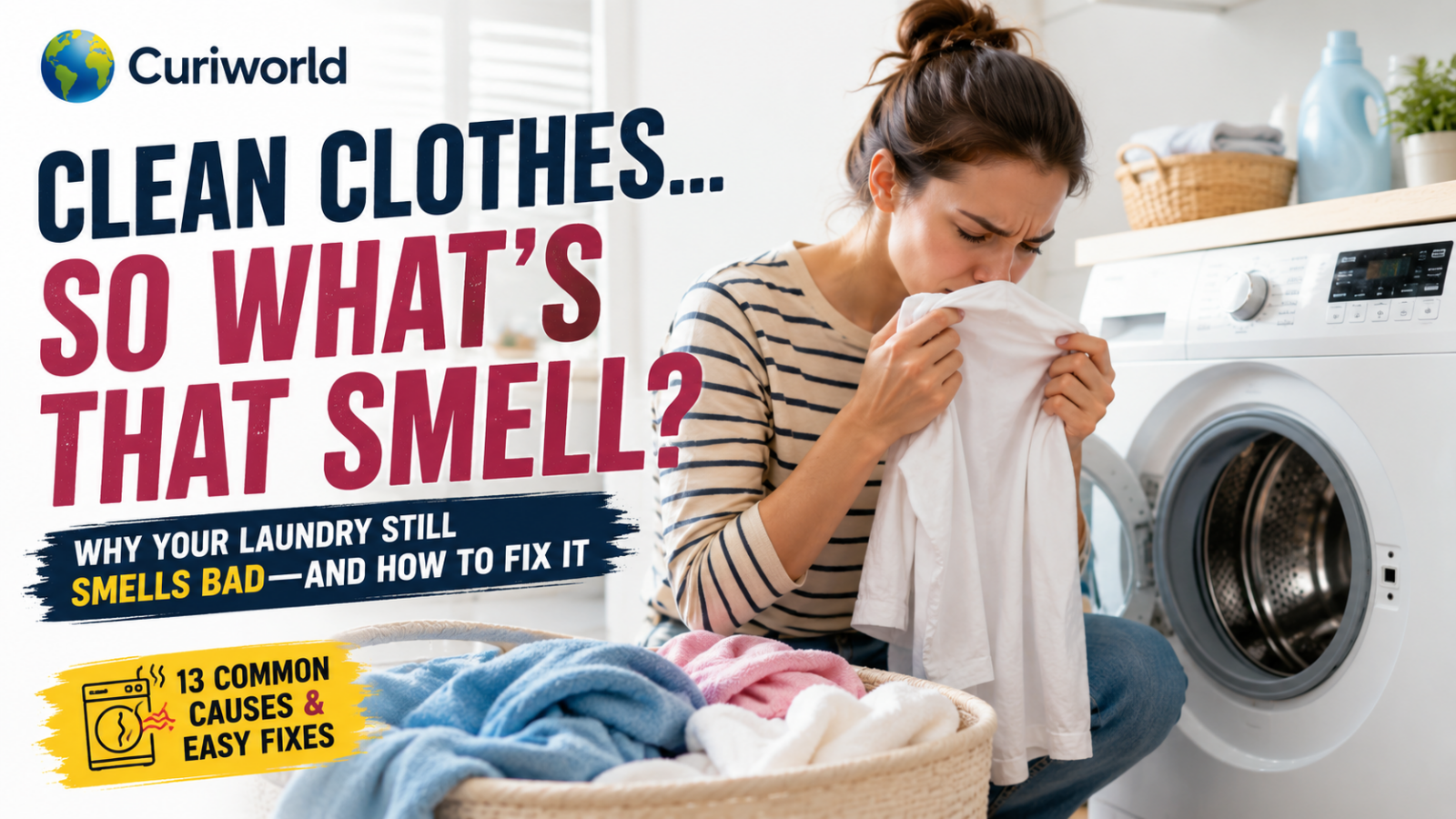
The washing machine finishes. You open the door expecting that familiar clean-laundry smell.
Instead, something is off.
Maybe the clothes smell musty. Maybe your towels have a sour odor. Workout shirts seem fine when they are dry, then start smelling again minutes after you put them on.
The obvious reaction is to add more detergent next time.
That can actually make things worse.
When clothes still smell bad after washing, the problem is usually somewhere in the wash → rinse → dry process. Sweat and body oils may not have been removed effectively. Too much detergent can leave residue behind. An overloaded washer may not clean and rinse properly. Wet clothes can sit too long before drying. And sometimes the washing machine itself is the source of the smell.
The trick is figuring out when the odor appears and what kind of laundry is affected.
First, Notice When the Smell Appears
Before changing your detergent, run a simple diagnostic.
Ask yourself:
Do the clothes smell bad immediately after washing?
If so, look closely at the wash itself, detergent use, overloading, and the condition of the washing machine.
Do they smell clean when wet but musty after drying?
Drying conditions deserve more attention.
Do they smell fine until you wear them?
Sweat, body oils, and odor trapped in certain fabrics may be the bigger issue.
Does every load smell, including lightly worn clothes?
The washing machine itself moves higher up the suspect list.
These distinctions matter because there is no single product that fixes every laundry odor.
1. More Detergent Can Actually Leave Clothes Less Fresh
This sounds backward.
Clothes smell dirty, so surely more detergent should make them cleaner.
Not necessarily.
Washing machines are designed around a certain balance of water, detergent, mechanical movement, and rinsing. Adding much more detergent than recommended does not guarantee better cleaning.
Instead, excess detergent can contribute to residue on clothing and inside the washer.
That residue can hold onto soils and interfere with rinsing.
If you have been pouring detergent by instinct, check the detergent instructions and your washer manual. Concentrated detergents may require considerably less product than people expect.
For a high-efficiency washer, use detergent intended for an HE machine.
The useful rule is simple:
Use the right detergent in the right amount—not the largest amount you can fit into the dispenser.
2. An Overloaded Washer Cannot Work Properly
There is a difference between a full washing machine and a washing machine packed so tightly that the clothes barely have room to move.
Laundry needs enough space for water and detergent to circulate through the load.
If you regularly compress one more towel, sweatshirt, or pair of jeans into an already crowded drum, cleaning and rinsing performance can suffer.
You may notice the problem most with:
- towels;
- bedding;
- gym clothes;
- heavy cotton items;
- work clothes;
- and large mixed loads.
Try washing a smaller load.
If the same clothes suddenly come out noticeably fresher, capacity may have been part of the problem.
This is one of the easiest tests because it costs nothing and requires no new cleaning product.
3. Wet Clothes May Be Sitting Too Long
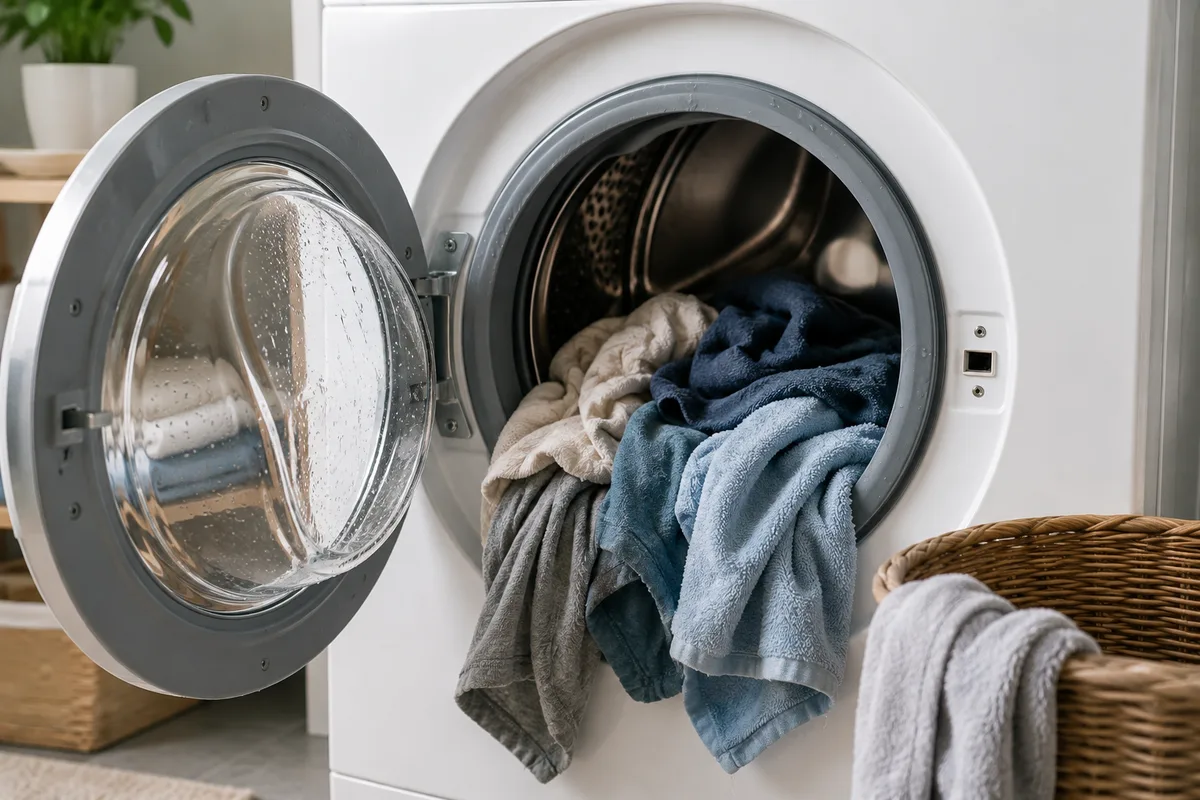
The wash cycle ends at 9:00 a.m.
You remember the laundry at 4:30 p.m.
That delay matters.
Wet fabric sitting in the enclosed washing-machine drum creates damp conditions where unpleasant odors can develop.
Whirlpool specifically advises removing laundry as soon as possible after the wash cycle because leaving wet clothes in the washer can lead to mildew and odors in both the garments and the machine.
If this happens occasionally, rewashing and promptly drying the load may solve the problem.
If it happens frequently, change the routine rather than repeatedly treating the smell afterward.
Use your washer’s cycle notification if it has one, set a phone reminder, or start laundry only when you know you will be available to move it.
Fresh laundry should not spend half the day wet inside the washer.
4. Your Washing Machine May Be Making Clean Clothes Smell Dirty
Here is a useful test:
Smell the empty washing machine.
If the empty drum itself smells damp, sour or musty, use our guide to why a washing machine can smell bad even when it is empty before repeatedly rewashing the clothes.
Do this before loading the next batch.
If the drum itself smells musty or stale, it is difficult to expect everything washed inside it to emerge perfectly fresh.
Over time, washers can accumulate detergent residue, fabric softener, soil, and moisture.
Pay particular attention to:
- the detergent dispenser;
- the drum;
- the door area;
- accessible seals or gaskets;
- and other areas identified for cleaning in your owner’s manual.
For front-loading machines, moisture can remain around the door and gasket after a cycle.
Many manufacturers recommend allowing ventilation between loads when appropriate for the machine. Whirlpool, for example, recommends leaving the washer door open between loads to help remaining moisture evaporate and reduce odor-causing residue.
Follow your specific washer’s care instructions rather than improvising with random chemicals.
If the manufacturer provides a Clean Washer, Tub Clean, or similar maintenance cycle, use it as directed.
5. Fabric Softener Can Become Part of the Problem
Fabric softener is designed to change the feel and scent of laundry.
That does not mean more is always better.
Using excessive laundry products can contribute to residue, particularly when products are not dosed according to instructions.
This can be especially noticeable with towels and performance fabrics.
If your laundry has developed a persistent coated feel or odor despite apparently thorough washing, try simplifying the routine.
Use the correct amount of detergent and check the garment care label before adding other laundry products.
For technical sportswear, also check whether the manufacturer recommends avoiding fabric softener altogether.
The goal is to clean the fabric—not layer enough fragrance over it that you cannot tell whether it is actually clean.
6. Workout Clothes Can Hold Onto Odor Differently
There is a particularly frustrating type of laundry problem:
The shirt smells fine after washing.
You put it on.
Ten minutes later, the old odor seems to return.
Workout clothing is especially prone to stubborn odor because sweat and body oils can remain associated with the fabric even when the garment looks clean.
Whirlpool identifies sweat, bacteria, and body oils among the reasons strong odors can persist in clothing after an ordinary wash.
Do not automatically solve this by using the hottest possible wash.
Always check the garment care label first.
Instead, avoid leaving sweaty clothing compressed in a gym bag or laundry hamper for long periods. Allow damp workout clothes to dry before they sit for an extended time when practical, and wash them using the cycle and detergent appropriate for the fabric.
If one particular type of shirt repeatedly smells while the rest of the load is fine, the fabric itself and the soils trapped in it deserve more attention than the washing machine.
7. Towels Have Their Own Odor Problem
Towels are designed to absorb water.
That is useful after a shower and less useful when a damp towel is folded, piled on the floor, or thrown into a hamper where it cannot dry.
If towels repeatedly smell sour or musty even after washing, look at what happens before laundry day as well as what happens inside the washer.
Are wet towels sitting in a heap?
Are they packed into a closed hamper while damp?
Are they being dried completely after washing?
A towel that spends hours or days damp before washing begins with a harder odor problem than one allowed to dry between uses.
Hang wet towels where air can circulate rather than leaving them crumpled.
And after washing, make sure they are fully dry before folding and storing them.
If your towels smell fine but have become rough or cardboard-like after washing, that is a separate issue. Our guide to why towels become stiff after washing explains how drying, water chemistry and laundry habits affect softness.
8. The Clothes May Not Be Dry When You Put Them Away
Laundry does not need to feel soaking wet to contain enough moisture to become musty.
Thick areas such as:
- waistbands;
- pockets;
- hoodie cuffs;
- towel hems;
- socks;
- and layered fabric
can remain damp after thinner areas feel dry.
Then the clothes are folded and placed inside a drawer or closet.
Moisture becomes trapped.
Later, you open the drawer and wonder why freshly washed clothes smell stale.
Before storing laundry, check the thickest part of the item rather than only touching the surface.
If it still feels cool and damp, give it more drying time.
This is particularly important when air-drying clothes indoors.
9. Slow Indoor Drying Can Create a Musty Smell
Air-drying is perfectly workable when conditions allow laundry to dry efficiently.
Problems arise when damp clothes remain damp for a very long time.
A crowded drying rack in a cool, humid, poorly ventilated room can slow evaporation dramatically.
Give garments space rather than overlapping them.
Improve air movement when possible.
And pay attention to indoor humidity.
If laundry takes unusually long to dry and the room itself has a persistent damp smell, the issue may extend beyond your clothes. Our guide to what a musty smell in your home can reveal explains how humidity, condensation, leaks, and damp materials can contribute to persistent household odors.
The key is not whether you use a dryer or a drying rack.
It is whether the laundry becomes completely dry in a reasonable amount of time.
10. Your Hamper Can Affect the Next Wash
Laundry problems begin before the washing machine starts.
A hamper full of damp gym clothes, wet towels, sweaty socks, and other moist fabrics can become an odor incubator.
Closing damp items inside a container reduces their opportunity to dry.
By laundry day, the odor may already be deeply established.
Try not to throw soaking-wet items directly into a packed hamper.
Hang or spread them out until they are reasonably dry first when practical.
And clean the hamper occasionally.
A fabric laundry bag that has held months of sweaty clothing deserves washing too.
11. Check the Detergent Dispenser
The drum gets most of the attention when people clean a washing machine.
The dispenser is easy to forget.
Detergent and fabric-softener residue can collect there over time. Moisture can remain in the area between washes.
If your washer’s dispenser is removable, consult the owner’s manual for the correct cleaning method.
Do not force components apart if they are not designed to be removed.
Whirlpool specifically recommends regularly cleaning the dispenser drawer as part of controlling washer odors.
This is a good example of why cleaning the visible drum alone may not solve a smelly-machine problem.
The source may be somewhere the clothes never directly touch.
12. Cold Water Is Not Automatically the Problem
It is easy to blame a cold wash whenever clothes smell bad.
But laundry care is more complicated than “hotter equals cleaner.”
Modern detergents and washing machines are often designed to work effectively at lower temperatures, and many garments specifically require cooler washing.
Hot water can also damage or shrink certain fabrics.
Follow the care label and detergent instructions.
If heavily soiled or odor-prone laundry repeatedly comes out unsatisfactory, select an appropriate cycle and temperature within the garment’s care instructions rather than automatically choosing the hottest setting.
The objective is effective cleaning without damaging the clothes you are trying to save.
13. Rewashing Without Fixing the Cause Can Create a Loop
Clothes smell.
You wash them again.
They still smell.
So you add more detergent and wash them a third time.
This can become an expensive loop if the underlying problem is actually:
- an overloaded drum;
- excess detergent;
- a dirty washer;
- wet laundry sitting after the cycle;
- incomplete drying;
- or persistent soils in a particular fabric.
Change one variable at a time.
Try a smaller load.
Measure the detergent.
Clean the washer according to its manual.
Move the clothes immediately after the cycle.
Dry them completely.
This turns laundry troubleshooting into an experiment instead of a guessing game.
What the Different Smells Can Tell You
The type of odor is not a perfect diagnostic tool, but it can point you in a useful direction.
Musty or mildew-like
Think about prolonged moisture.
Check how long wet laundry sits, how quickly it dries, and whether the washer itself smells.
Sour
Look closely at towels, sweaty clothing, damp storage, and residue.
Sweaty odor that returns when worn
Focus on workout clothing, body oils, sweat, and whether the fabric is being washed according to its care instructions.
Perfumed but somehow still dirty
Do not confuse fragrance with cleanliness.
Check detergent dosage, fabric softener use, washer loading, and rinsing.
Everything smells the same after every load
Smell and inspect the washer itself.
When every type of fabric develops the same unusual odor, the common denominator may be the machine rather than the clothing.
A Better Routine for Fresher Laundry
If you are not sure where the problem starts, try this routine for the next few loads:
1. Smell the empty washer first.
If it already smells bad, clean it according to the manufacturer’s instructions.
2. Do not overload the machine.
Give the laundry room to move.
3. Measure the detergent.
Follow the product directions instead of estimating.
4. Use the correct detergent for the washer.
HE machines should use compatible detergent.
5. Choose the appropriate cycle.
Follow the clothing care labels.
6. Remove the load promptly.
Do not let clean laundry spend hours wet inside the drum.
7. Dry everything completely.
Check thick seams, waistbands, towels, and pockets.
8. Let the washer dry between loads when the manufacturer recommends it.
Ventilation can help prevent remaining moisture from becoming a recurring odor source.
Then compare the result with your normal laundry routine.
You may find that the solution was not a stronger detergent at all.
When the Washing Machine Needs More Attention
Persistent odor can occasionally indicate a problem beyond routine cleaning.
Consider appliance service or further investigation if:
- the washer has a strong odor that returns immediately after proper cleaning;
- water remains inside the machine when it should have drained;
- the machine is not draining correctly;
- you notice a plumbing or sewer-like odor rather than ordinary mustiness;
- there are leaks;
- the washer displays an error;
- or cleaning and correct detergent use make no difference.
Follow the manufacturer’s troubleshooting instructions first.
If the machine is not functioning normally, repeatedly rewashing clothes will not fix the appliance.
The Bottom Line
If clothes still smell bad after washing, do not immediately assume you need more detergent.
Sometimes more detergent is part of the problem.
Start by identifying when the smell appears.
If clothes smell bad immediately after the wash, check detergent dosage, load size, and the washing machine itself.
If they become musty later, look at how long they remain wet and whether they are completely dry before storage.
If workout clothes smell again as soon as you wear them, focus on sweat, body oils, fabric type, and the garment’s washing instructions.
And if every load develops the same stale odor, inspect the machine.
Fresh laundry is the result of more than a wash cycle.
The clothes need to be washed effectively, rinsed properly, removed promptly, and dried completely.
Fix the weak point in that chain, and you may finally stop washing the same “clean” clothes twice.
Sources
Journal of Oleo Science — Effects of Water Hardness on Textile Detergency
International Journal of Consumer Studies — Water Hardness and Laundry Results








Join the discussion