Why Do Dishes Smell Like Wet Dog After the Dishwasher?
Clean dishes should not smell like wet dog. Trapped food, a dirty filter, moisture or drainage problems are usually better places to look than the dishes themselves.

The dishwasher finishes. The plates look clean. The glasses sparkle.
Then you lift one to your face and get a smell that makes absolutely no sense: wet dog.
It is a surprisingly common description for an unpleasant dishwasher odor, but there is no single universal “wet dog” substance hiding in your machine. In most cases, the smell points to a more ordinary combination of food residue, moisture, a dirty filter, poor drainage, or odor trapped somewhere inside the dishwasher or connected plumbing.
The good news is that you usually do not need a new dishwasher. You need to find where the smell is coming from.
Start With the Dishwasher Filter
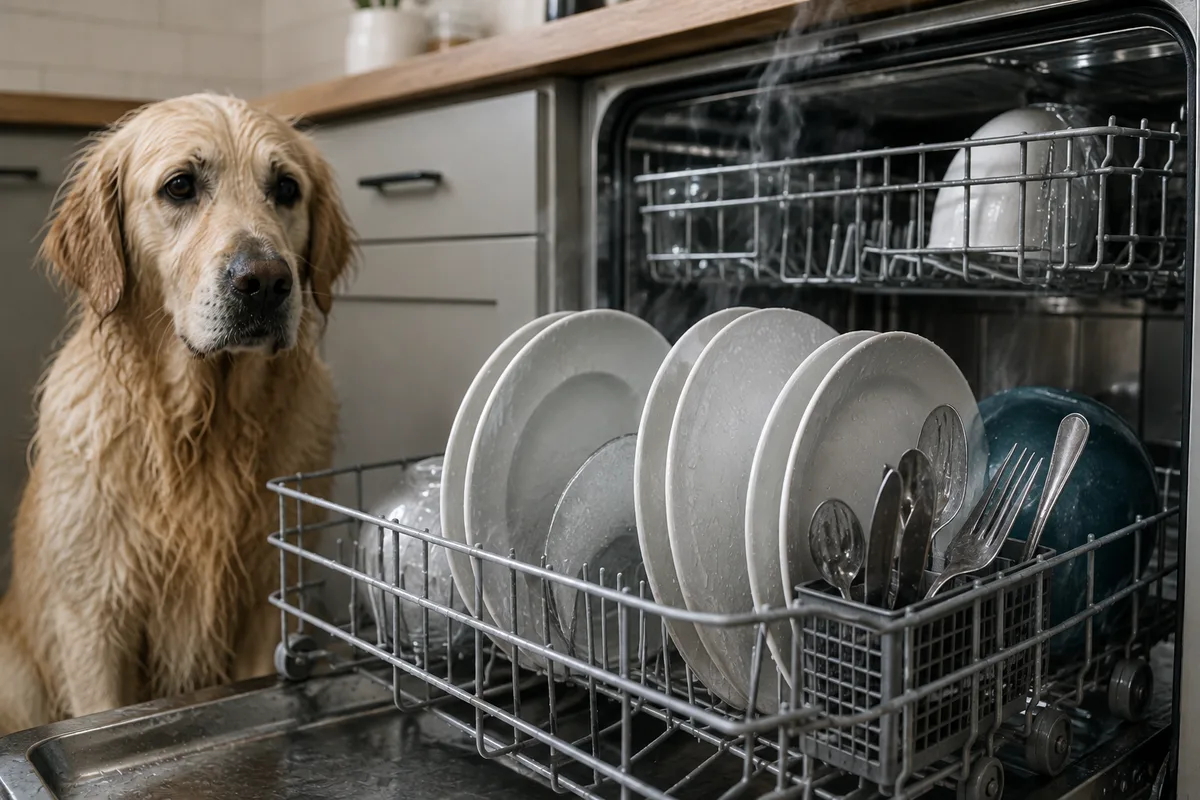
If your dishwasher has a removable filter, this is the first place worth checking.
The filter catches food particles that would otherwise circulate through the machine or enter the drain. Over time, small pieces of food, grease, and other residue can collect there.
A dishwasher is also warm and damp — exactly the kind of environment in which old organic material becomes unpleasant surprisingly quickly.
Whirlpool specifically identifies trapped food debris in the filter, spray arms, or bottom of the machine as a major source of dishwasher odors.
The confusing part is that the dishes can still look perfectly clean.
An odor problem does not necessarily leave visible dirt behind. Water circulating through a dishwasher with odor-producing residue can leave glasses and plates smelling unpleasant even when their surfaces appear spotless.
If your glasses look milky or hazy rather than simply smelling bad, that is a different dishwasher problem. See why glasses can turn cloudy after dishwashing.
Remove the filter according to your dishwasher’s manual, inspect it closely, and rinse away any visible debris.
Do not assume that a filter that looks “mostly clean” is irrelevant. Greasy residue can be less obvious than a piece of food.
If your glasses look milky or hazy rather than simply smelling bad, see why glasses can turn cloudy after the dishwasher.
Standing Water Can Make the Problem Worse
A dishwasher is designed to drain most of its wash water at the end of a cycle.
A small amount of water in certain filter or sump areas can be normal on some machines. A noticeable pool of dirty water is different.
If wastewater is not leaving properly, food particles and residue remain in a warm, enclosed space between washes. That can create odors that return during the next cycle.
Possible causes include a blocked filter, an obstruction in the drain system, or a problem with the way the drain is connected.
KitchenAid notes that a sewage-like or wet-dog-type dishwasher odor can be associated with drainage problems.
This is why repeatedly adding fragrance or running another wash cycle may not solve anything. If dirty water cannot leave correctly, the source of the smell is still there.
The Smell May Actually Be Coming From the Sink
Dishwashers do not operate completely independently from the rest of the kitchen.
Their drain system is usually connected to household plumbing, often near the kitchen sink or garbage disposal.
That means a bad odor that seems to originate inside the dishwasher can sometimes be related to the drain system instead.
If the dishwasher itself is clean but the smell keeps returning, check whether the sink drain or garbage disposal also smells unpleasant.
A drainage installation problem can also allow wastewater to move in a direction it should not.
This is one reason replacing an otherwise functioning dishwasher does not always fix an odor problem. If the source is farther downstream in the plumbing, the new machine may eventually smell too.
Dirty Dishes Can Smell Before the Wash Even Begins
Sometimes the problem starts hours before you press Start.
A few dirty plates sit in the dishwasher after breakfast.
More arrive after lunch.
The machine finally runs after dinner.
During those hours, traces of sauces, dairy, meat, eggs, and other food remain inside a warm enclosed appliance.
Whirlpool recommends using a rinse-only cycle when soiled dishes will sit for an extended period because accumulated food soils can contribute to odor.
This does not mean you need to completely wash every dish before loading it.
Modern dishwashers and detergents are designed to deal with food residue, and excessive prewashing is usually unnecessary.
Scrape away large pieces of food. The bigger issue is allowing heavily soiled dishes to sit inside a closed, damp machine for a long time.
Is Egg Residue Really the Cause?
Search online for “dishes smell like wet dog” and you will quickly find claims that cooked eggs are always responsible.
That explanation is too confident.
Eggs contain sulfur-containing compounds, and food residue of many kinds can certainly contribute to unpleasant dishwasher odors. Some households may notice a connection between egg-covered dishes and a particular smell.
But authoritative dishwasher guidance does not identify egg residue as the universal cause of the wet-dog odor.
Filters, leftover food, poor drainage, stagnant water, dirty seals, and connected plumbing are more useful places to investigate first.
So if you had scrambled eggs that morning, they may be part of the story.
They are not automatically the answer.
Why Can the Dishes Smell When the Machine Doesn’t?
This is one of the strangest versions of the problem.
You open the dishwasher and notice almost nothing unusual. Then you drink from a freshly washed glass and the odor is obvious.
That does not necessarily mean the glass itself is creating the smell.
Small amounts of residue or odor transferred during washing may become much more noticeable when you bring a plate, cup, or glass close to your nose.
Odor perception also depends heavily on context. You may not notice a faint smell while standing beside an open dishwasher, yet detect it immediately when drinking from a glass.
If many different dishes develop the same odor after the same wash cycle, investigate the machine and its water or drainage system before blaming the dishes themselves.
Don’t Forget the Door Seal and Hidden Surfaces
The filter gets most of the attention because it is designed to collect debris.
It is not the only place residue can hide.
Food and grime can accumulate:
- around the door gasket,
- beneath the lower edge of the door,
- near the filter housing,
- around spray components,
- and in areas of the tub that are not constantly flushed during a normal cycle.
Wiping visible surfaces and cleaning removable components according to the owner’s manual can make a significant difference.
Avoid randomly mixing household cleaning chemicals inside the dishwasher. Some combinations can damage the appliance or create hazardous fumes.
Follow the cleaning instructions for your specific machine.
Moisture Matters After the Cycle Too
A dishwasher remains warm and humid immediately after washing.
If the door stays tightly closed for a long period, moisture can remain inside.
Manufacturers commonly recommend allowing the interior to dry and regularly cleaning the machine to prevent musty odors from developing.
Some modern dishwashers automatically open the door slightly after a cycle for this reason. On machines without that feature, opening the door once the cycle has finished can improve airflow.
This is especially useful if you do not unload the dishwasher immediately.
A clean dishwasher that dries properly is a much less welcoming place for lingering odors.
What to Check First
If your dishes suddenly start smelling like wet dog, resist the temptation to attack the machine with every cleaning product in the cupboard.
Work through the likely causes in order.
Check the filter.
Remove trapped food and greasy residue.
Look for unusual standing water.
A small amount may be normal for your model, but a large amount after a completed cycle can suggest a drainage problem.
Inspect the drain area and sink connection.
Make sure the odor is not actually coming from connected plumbing or a garbage disposal.
Clean the door seal and interior.
Residue can survive outside the areas reached most aggressively by the wash spray.
Do not leave heavily soiled dishes sitting for days.
Use a rinse cycle if your manufacturer provides one and you are waiting for a full load.
Allow the machine to dry.
Ventilation after the cycle helps prevent a persistently damp interior.
If the smell survives all of these steps — especially if the dishwasher is also failing to drain, displaying errors, leaking, or leaving visibly dirty dishes — the problem may require appliance service or plumbing inspection.
Should Clean Dishes Have Any Smell at All?
Ideally, not much.
Clean dishes do not need to smell strongly of detergent, lemon, perfume, or anything else to be clean.
A recurring musty, sewage-like, rotten-food, or wet-dog odor is therefore worth investigating rather than masking with fragrance.
And the strongest clue is often repetition.
One strange-smelling plate could have held particularly aromatic food.
An entire load repeatedly emerging with the same odor suggests that something in the wash environment deserves attention.
The Dishwasher Is Usually Telling You Where to Look
That wet-dog smell can seem mysterious because the plates look clean and the odor often appears only after the washing is finished.
But the explanation is usually much less exotic.
A dishwasher repeatedly combines food residue, warm water, moisture, filters, hoses, and drains. If debris accumulates or wastewater does not move through the system correctly, unpleasant smells can follow the clean dishes out of the machine.
Start with the filter. Check the drainage. Clean the hidden surfaces. Let the interior dry.
If those basics do not change anything, the smell has given you another useful clue: the problem may not be on the dishes at all.
Sources
Whirlpool — Removing Odors in Your Dishwasher
https://producthelp.whirlpool.com/Dishwashers/Product_Info/Dishwasher_Cleaning_and_Care/Removing_Odors_in_your_Dishwasher
KitchenAid — Why Does My Dishwasher Smell?
https://www.kitchenaid.com/pinch-of-help/major-appliances/why-does-my-dishwasher-smell.html








Join the discussion