Freezer Ice Tastes or Smells Weird? Here’s What to Check
Strange-tasting freezer ice usually points to stale cubes, food odors, the water supply, or the refrigerator filter. A few quick tests can reveal which one.
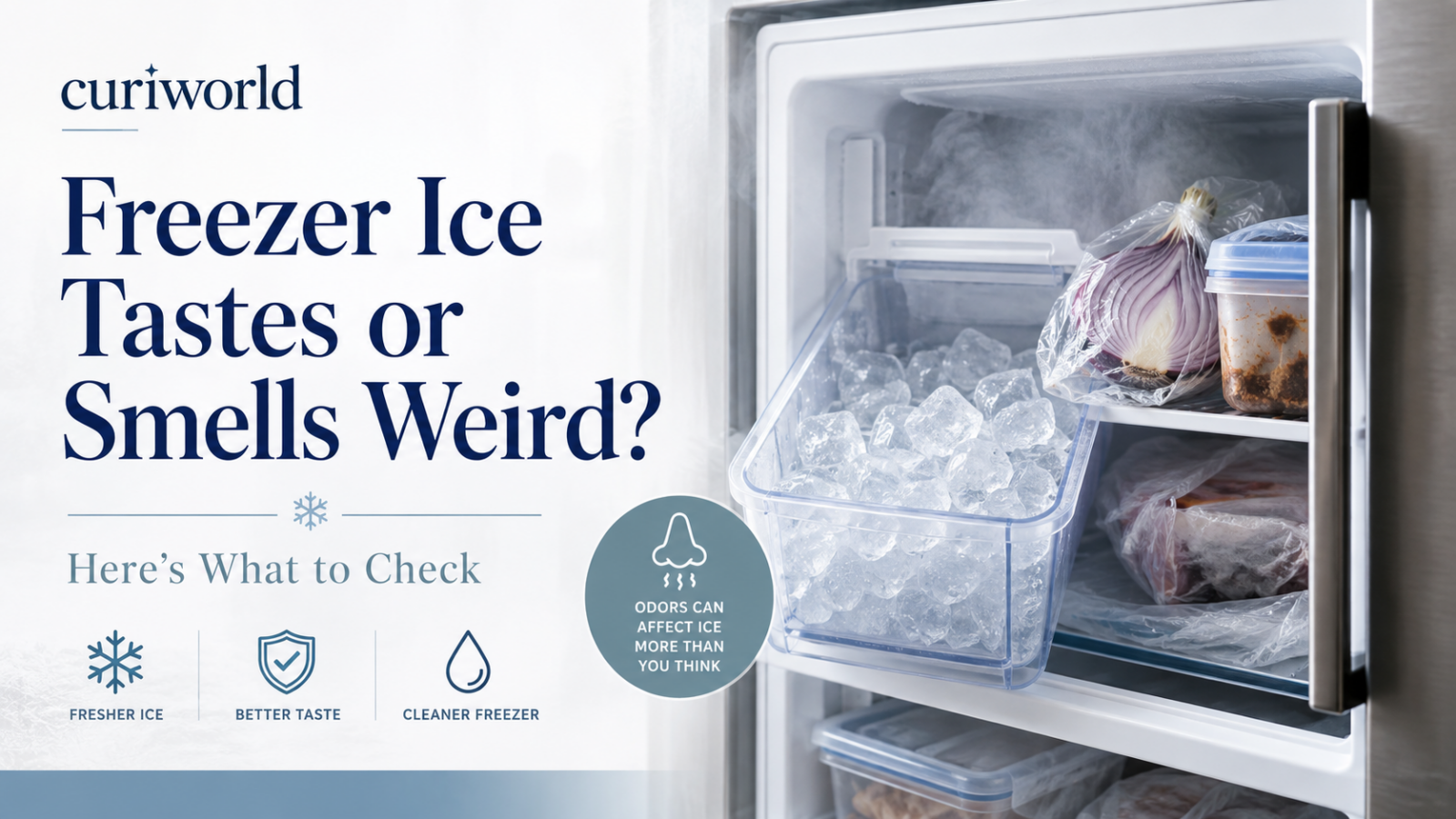
Ice should taste like almost nothing.
So when cubes suddenly make your water taste like onions, plastic, stale freezer air, or something vaguely chemical, the problem is usually coming from one of three places: the air inside the freezer, the water feeding the ice maker, or the refrigerator’s filter and water system.
Before replacing anything, a few simple checks can usually narrow it down.
Start With the Ice Itself
Old ice is surprisingly good at picking up odors.
Ice cubes sit exposed in the freezer bin while air moves around them. If strong-smelling foods are stored nearby—or even in the refrigerator compartment on some models—the cubes can gradually absorb those odors.
Garlic, onions, fish, leftovers, spices, and uncovered foods are obvious suspects, but the smell inside the freezer does not have to seem particularly strong to affect the ice.
If the ice has been sitting for a long time, empty the bin and let the ice maker produce a completely fresh batch.
Then taste the new cubes.
If the problem disappears, stale ice was probably the culprit.
If unusual ice is accompanied by new sounds from the appliance, our guide explains which refrigerator noises are normal and which deserve attention.
Check for Uncovered or Spilled Food
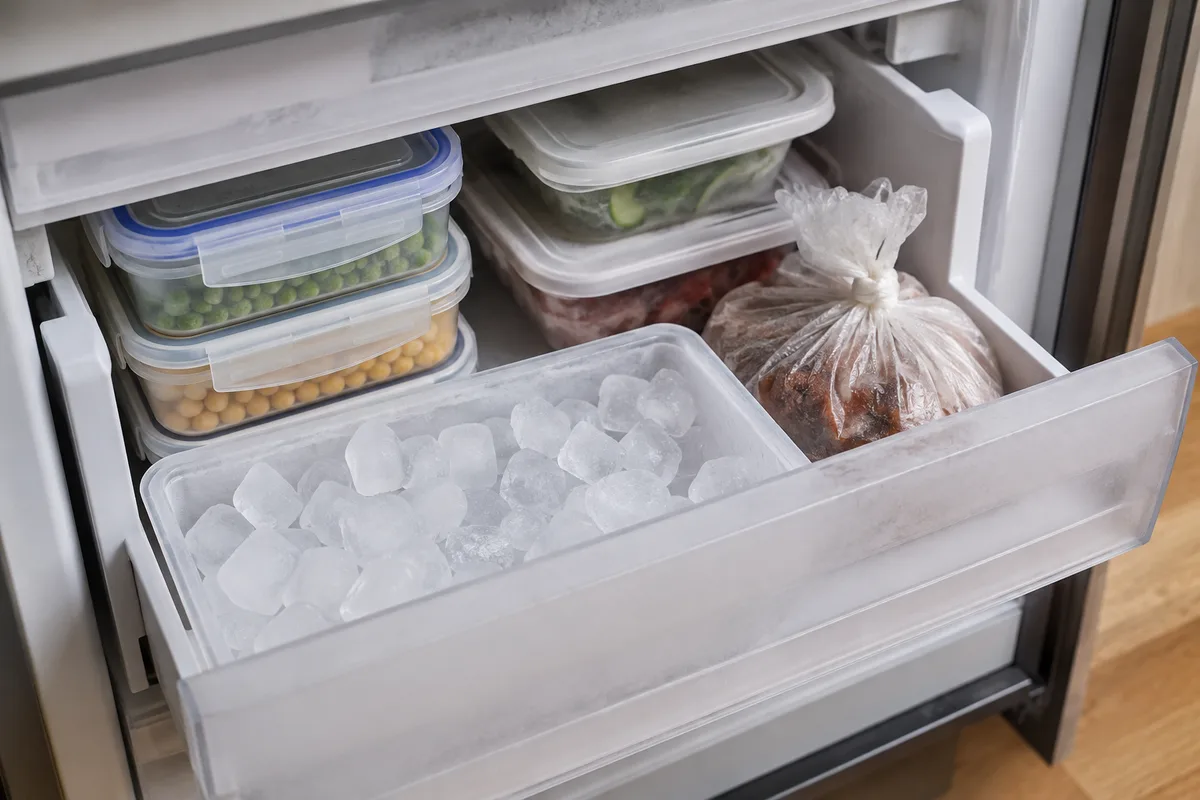
A freezer can look clean and still contain an odor source.
Inspect:
- open food containers
- torn freezer bags
- spilled sauces or liquids
- forgotten leftovers
- spoiled food
- ice buildup around old spills
- the ice storage bin itself Store strongly scented foods in tightly sealed containers rather than loosely wrapped packaging.
LG notes that odors from food stored inside the refrigerator or freezer can affect the smell and taste of ice, particularly when food is not properly sealed.
If the freezer itself smells strange, clean the shelves, drawers, walls, and ice bin according to the refrigerator manufacturer’s instructions.
Replacing the ice without removing the odor source will only create another batch of strange-tasting cubes.
Does the Tap Water Taste Strange Too?
This is one of the fastest ways to locate the problem.
Pour a glass of cold water directly from your kitchen faucet and compare it with the refrigerator’s water and ice.
If the tap water has the same unusual taste or smell, your freezer probably is not creating the problem.
The cause may instead be the household water supply.
Minerals, treatment chemicals, plumbing conditions, or changes in the local water supply can affect flavor. Freezing that water may make certain tastes seem more noticeable.
If both the tap water and refrigerator water suddenly develop an unusual odor or taste, investigate the water supply before replacing refrigerator parts.
Try a Simple Ice-Tray Test
GE recommends a particularly useful diagnostic test.
Fill a clean ordinary ice cube tray with tap water and freeze it in the freezer.
Once frozen, compare those cubes with ice produced by the built-in ice maker.
If both batches taste or smell strange, the odor may be coming from the freezer environment or the water itself.
If the tray-made ice tastes normal but the automatic ice maker’s cubes do not, the problem is more likely somewhere in the refrigerator’s water supply path, filter, ice maker, or storage bin.
If the ice-maker problem is accompanied by new clicking, buzzing, grinding or other refrigerator sounds, see which refrigerator noises are normal and which deserve attention.
This simple comparison can prevent you from replacing a perfectly good water filter when the real problem is an uncovered container of garlic—or cleaning the freezer repeatedly when the water supply is actually responsible.
Check the Refrigerator Water Filter
If your refrigerator uses a water filter, find out when it was last replaced.
An old or clogged filter may no longer perform as intended and can contribute to unpleasant-tasting water or ice.
Many refrigerator manufacturers recommend changing filters on a schedule, often around every six months, although the correct interval depends on the specific model, filter, water quality, and usage.
Use the schedule in your refrigerator’s owner’s manual rather than treating six months as a universal rule.
A recently installed filter can also temporarily affect taste if it has not been flushed properly.
After installing a new filter, follow the manufacturer’s instructions for flushing the water system before judging the flavor of the ice.
Is the Refrigerator New?
New refrigerators can produce odd-tasting water or ice during their first days of operation.
The water lines, filter, and internal system may need to be flushed before normal use.
Manufacturers commonly recommend dispensing and discarding a quantity of water and throwing away the first batches of ice after installation.
The exact amount varies by brand and model, so check the owner’s manual rather than relying on a generic number.
If the freezer is brand new and the strange taste gradually disappears after flushing the system and producing fresh ice, that is very different from an established refrigerator suddenly developing a new odor.
Clean the Ice Bin, Not Just the Freezer
The ice storage bin itself can become part of the problem.
It spends months in a cold environment while repeatedly holding wet ice, old cubes, small ice fragments, and whatever odors circulate through the compartment.
Empty it completely and clean it according to the appliance manufacturer’s instructions.
Make sure it is thoroughly dry before reinstalling it.
Also check the dispenser chute if your refrigerator dispenses ice through the door. Residue or old ice fragments can collect there and contribute to unpleasant odors.
Ice Can Simply Become Stale
Even perfectly clean ice does not improve by sitting in the freezer indefinitely.
Older cubes can gradually absorb odors and may develop a stale flavor. They can also shrink as ice slowly sublimates—changing directly from solid ice into water vapor in the dry freezer environment.
If you rarely use ice, periodically discard the old batch rather than continually adding fresh cubes on top of it.
This is particularly useful before guests arrive or after the ice maker has been unused for an extended period.
What If the Ice Smells Like Plastic?
A plastic-like taste deserves a little more investigation.
If the refrigerator is new, the water line or newly installed components may initially contribute an unfamiliar flavor. Properly flushing the system often helps.
If the refrigerator is not new, ask what changed recently.
Was the water filter replaced? Was a new supply line installed? Was the refrigerator disconnected and reconnected? Did the taste begin immediately afterward?
A sudden change following maintenance gives you a much stronger clue than the taste alone.
Do not try to mask persistent chemical or unusual odors with flavorings. If both household water and refrigerator water smell abnormal, contact the appropriate water provider or a qualified professional to identify the source.
A Five-Minute Troubleshooting Order
If your freezer ice suddenly tastes or smells bad, check things in this order:
- Throw away old ice and make a fresh batch.
- Seal strong-smelling food and inspect for spills.
- Smell and clean the freezer and ice bin.
- Compare the ice with your tap water.
- Freeze tap water in a separate ice tray and compare the results.
- Check the age and installation of the refrigerator water filter.
- Think about recent changes, such as a new refrigerator, new filter, new water line, or plumbing work.
That sequence matters because the cheapest explanation is often the correct one.
A strange-tasting cube does not automatically mean your ice maker is failing.
The Source Usually Leaves a Clue
Bad freezer ice can seem mysterious because the problem appears inside a frozen cube.
But the ice is often just revealing something that already existed elsewhere.
If fresh cubes improve after you clean the freezer, the problem was probably airborne odor. If tap water tastes the same, look upstream at the water supply. If ordinary tray ice tastes fine while ice-maker cubes do not, focus on the refrigerator’s filter, line, bin, and ice-making system.
Finding that distinction first is far more useful than repeatedly throwing away ice and hoping the next batch somehow tastes better.




Join the discussion