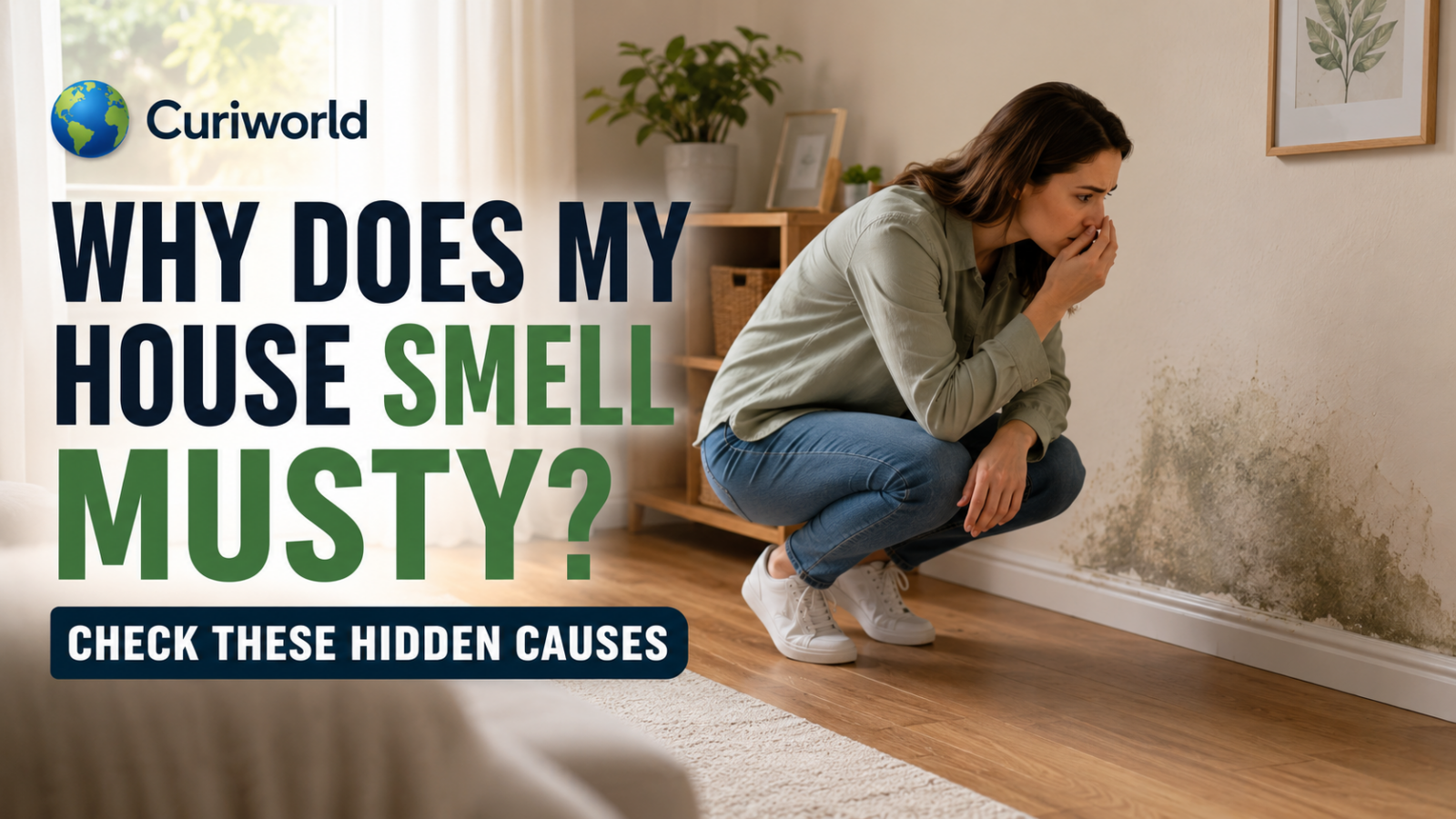
Why Does My House Smell Musty? Common Causes to Check
A persistent musty smell can point to moisture, hidden leaks, high humidity, damp materials or mold. Here's where to look first and what the clues can tell you.
You walk through the front door and notice it again.
That stale, damp, slightly earthy smell.
Maybe it is stronger after the house has been closed up for a few hours. Maybe you notice it most in one bedroom, the basement or a particular closet. You open a window, spray an air freshener and the room seems better for a while.
Then the smell comes back.
A persistent musty smell is worth investigating because odor is often the symptom, not the actual problem.
Moisture, poor airflow, damp materials and mold growth are among the most common places to start looking. And the source is not always somewhere you can immediately see.
A Musty Smell Often Points to Moisture
The first thing to understand is that a musty house does not automatically mean you have a huge visible mold problem.
But moisture deserves your attention.
Mold needs moisture to grow, and the U.S. Environmental Protection Agency (EPA) notes that a moldy or musty odor can suggest mold growth somewhere in a building.
That growth may be obvious.
It may also be hidden behind drywall, underneath carpet, above ceiling tiles or inside another damp area.
Instead of trying to cover the odor first, ask a more useful question:
Where could moisture be collecting in this part of the house?
That question often gets you much closer to the real cause.
If the odor seems strongest around the bathroom drain, our guide to why a shower drain smells explains the most common causes and safe checks.
1. Start With Hidden Water Leaks
A slow leak can cause trouble long before water starts dripping dramatically from the ceiling.
Check around:
- sinks and vanities;
- toilets;
- bathtubs and showers;
- washing machines;
- dishwashers;
- refrigerators with water lines;
- water heaters;
- plumbing penetrations;
- ceilings below bathrooms;
- and walls near plumbing.
Look for more than standing water.
Discoloration, peeling paint, swollen trim, soft drywall, warped flooring or a stain that seems to be growing can all justify a closer look.
Pay attention to when the smell changes too.
If a bathroom smells mustier after someone showers upstairs, or a cabinet smells worse after the sink has been used, that timing may help narrow down the source.
2. Check the Indoor Humidity
A house does not need an obvious plumbing leak to become damp.
Everyday activities add moisture to indoor air.
Showers, cooking, dishwashing and drying clothes can all increase humidity. In humid climates, outdoor air can add even more.
When that moisture is not adequately removed, certain parts of the home can stay damp enough to create musty conditions.
A small hygrometer can help you stop guessing.
EPA guidance recommends keeping indoor relative humidity below 60% when possible, ideally around 30% to 50%.
If humidity remains high for long periods, focus on the cause rather than simply buying stronger fragrance products.
Bathroom and kitchen exhaust fans, air conditioning, ventilation and a properly used dehumidifier can all help in appropriate situations.
3. Look for Condensation
Windows can tell you a surprising amount about indoor moisture.
If you regularly see water droplets on windows, pipes or other cold surfaces, you are seeing condensation.
Warm, moisture-containing air is meeting a colder surface and leaving some of that moisture behind.
Occasional condensation does not automatically mean there is mold throughout the house.
Persistent condensation, however, tells you that moisture is collecting somewhere.
Check:
- window frames and sills;
- exterior-wall corners;
- cold-water pipes;
- poorly insulated surfaces;
- areas behind large furniture;
- and closets against exterior walls.
Do not just wipe the water away every morning and consider the problem solved.
Ask why it keeps forming.
4. Inspect the Basement and Crawlspace
If the smell is strongest downstairs—or seems to drift upward—the basement or crawlspace deserves attention.
These areas can develop moisture from:
- groundwater or seepage;
- foundation problems;
- poor exterior drainage;
- plumbing leaks;
- condensation;
- or high humidity.
Cardboard boxes, wood, insulation, carpet and other porous materials can absorb moisture and hold onto odors.
Do not limit your inspection to the middle of the basement floor.
Check corners, exterior walls, around pipes, beneath stairs and behind stored belongings.
If you have a crawlspace and can inspect it safely, look for damp materials, water intrusion and other signs of persistent moisture.
A musty basement is not simply something every old house has to smell like.
There is usually a reason.
5. Do Not Forget the Carpet and Padding
A carpet can look perfectly dry on top while the material underneath tells a different story.
Past spills, flooding, pet accidents, plumbing leaks or water entering around doors and windows can reach the carpet padding.
If that layer remains damp, the odor may persist even after the visible carpet surface appears dry.
This is especially worth checking when the smell is concentrated in one room.
Get closer to the floor.
Compare the smell near walls, corners and furniture with the center of the room.
Also think about the room’s history.
Was there a leak six months ago?
Did a window once let rain in?
Was the carpet cleaned and then slow to dry?
Old moisture events can provide useful clues.
6. Furniture Can Hide a Damp Wall
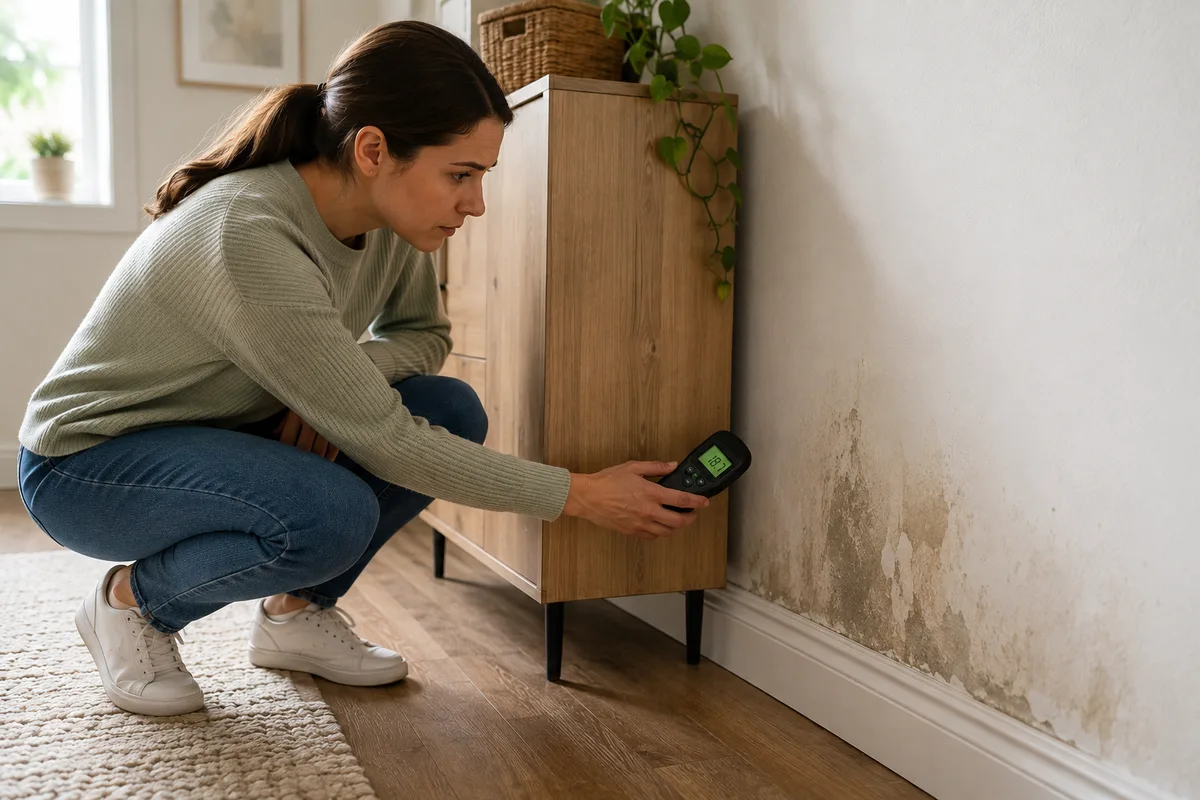
Large furniture can create small pockets of poor air circulation.
A wardrobe, bookcase, couch or bed pushed tightly against a cold exterior wall may leave very little room for air movement.
If condensation or moisture develops there, you might smell the problem before you see it.
Pull furniture away from the wall and inspect:
- the wall surface;
- baseboards;
- the back of the furniture;
- nearby flooring;
- and anything stored underneath.
Closets deserve the same treatment.
They are often cooler, darker and less ventilated than the rest of a room, particularly when the door stays closed most of the time.
If the musty odor becomes much stronger when you open a particular closet, investigate inside rather than simply adding a scented sachet.
7. Check the HVAC System
Sometimes the smell seems to come from everywhere at once.
If you notice it shortly after the heating or air conditioning starts, pay attention to the HVAC system.
Moisture can become a problem around components such as condensate pans and drain lines. EPA guidance also identifies ventilation systems as an area that may need inspection when mold or moisture is suspected.
Start with simple observations.
Does the smell become noticeably stronger when the system turns on?
Is there standing water around accessible HVAC equipment?
Is the condensate drain working properly?
Does an air filter look overdue for replacement?
If the bigger problem is that surfaces become dusty again soon after cleaning, check our guide to why a room gets dusty so quickly, including filters, vents, bedding and outdoor particles.
If you suspect contamination inside ductwork or equipment that you cannot safely inspect, this is a better situation for an appropriately qualified HVAC or remediation professional than an improvised DIY cleaning attempt.
8. Check Bathrooms for More Than Visible Shower Mold
Bathrooms naturally generate a lot of moisture.
A little visible mildew around a shower may be easy to spot, but the important question is whether the room actually dries after use.
Check whether the exhaust fan works properly and vents where it is supposed to.
Look around:
- shower and tub edges;
- caulk and grout;
- under the vanity;
- around the toilet;
- window frames;
- ceiling corners;
- bath mats;
- and cabinets.
A bathroom that remains humid for hours after every shower creates a recurring moisture problem.
If the odor seems strongest right at the shower drain rather than throughout the bathroom, investigate the plumbing separately. Our guide to why a shower drain smells explains the most common causes and safe checks.
Cleaning visible growth can improve the surface.
Improving moisture removal helps address why it keeps returning.
9. Wet Laundry and Fabrics Can Create Their Own Musty Odor
Not every musty smell originates inside a wall.
Sometimes the culprit is sitting in a laundry basket.
Damp towels, clothes left in the washing machine, wet bath mats and fabrics stored before they are completely dry can develop unpleasant odors.
Check upholstered furniture and curtains too, particularly in rooms that have experienced high humidity or water intrusion.
The useful distinction is whether the smell disappears after the item is washed and completely dried.
If you remove or clean the fabrics and the room still smells musty, continue looking for a building-related moisture source.
10. A Roof Leak May Appear Far From the Roof
Water does not always travel in a straight line.
A roof leak can enter at one location, move along framing or other building materials and become visible somewhere else.
Check ceilings and upper walls for:
- yellow or brown staining;
- bubbling paint;
- sagging material;
- softened drywall;
- and new discoloration.
Pay particular attention after heavy rain.
If the musty smell becomes noticeably stronger following wet weather, that timing is valuable information.
Roof and exterior-water problems should be addressed at the source. Repainting a stained ceiling without fixing the water entry only hides the evidence.
Why Does the House Smell Musty After Being Closed Up?
This is common after a vacation or when a room has been shut for several days.
Closing a house reduces normal air exchange.
Odors that were previously diluted can become more noticeable, and areas with poor circulation may feel stale.
But ventilation alone is not necessarily the solution.
If opening the windows makes the smell disappear and it returns every time the house is closed, look for the underlying source.
A genuinely dry, well-maintained home should not require constant fragrance or permanently open windows to disguise a strong damp odor.
Can a House Smell Musty Without Visible Mold?
Yes.
Visible mold is not required for a musty odor to deserve investigation.
EPA guidance notes that mold can grow on hidden surfaces, including the back of drywall, wallpaper and paneling, beneath carpets and pads, and above ceiling tiles.
This is why randomly searching visible walls may not find the source.
Use the smell together with other evidence:
Where is it strongest?
Is there a history of leaks?
Does it change after rain?
Does it become stronger when the HVAC starts?
Is humidity consistently high?
Are there stains or condensation nearby?
Those clues are more useful than tearing into a wall simply because a room smells strange.
Should You Use an Air Freshener?
An air freshener can change what the room smells like.
It does not fix a water leak.
That sounds obvious, but persistent household odors are often treated as fragrance problems first.
Candles, sprays and plug-in fragrances can mask the smell temporarily, making it harder to judge whether the underlying condition has improved.
If you are investigating a persistent musty odor, remove the moisture source first.
Then deal with affected materials and ventilation as appropriate.
The goal is not to make dampness smell nicer.
The goal is to stop the house from being damp.
What Should You Do If You Find Mold?
The first job is not choosing a stronger cleaner.
It is fixing the moisture problem.
EPA guidance emphasizes that if mold is cleaned but the water or moisture source remains, the problem is likely to return.
For relatively small mold areas, homeowners may be able to handle cleanup themselves using appropriate precautions. EPA uses an area of roughly 10 square feet as a general point below which DIY cleanup may often be appropriate.
Larger contamination, extensive water damage, sewage-related water, HVAC contamination or difficult hidden growth can justify professional help.
Porous materials can also be harder to save than hard surfaces.
Moldy ceiling tiles, carpet or other absorbent materials may sometimes need replacement rather than surface cleaning.
When Should You Call a Professional?
Not every musty smell requires opening walls or hiring a remediation company.
Start with the obvious, accessible causes.
But professional investigation makes more sense when:
- the smell is strong but you cannot locate the source;
- mold appears to cover a substantial area;
- there has been significant water damage;
- moisture keeps returning after repairs;
- you suspect mold inside walls or the HVAC system;
- structural materials appear damaged;
- or safely accessing the suspected area is difficult.
A useful professional investigation should focus on where the moisture is coming from, not merely on selling a way to cover the smell.
A Simple Musty-Smell Checklist
If you are trying to find the source today, work through the house in this order:
1. Find where the odor is strongest.
Walk room by room instead of assuming the entire house has one source.
2. Look for obvious water.
Check plumbing, appliances, ceilings, windows and floors.
3. Measure humidity.
A hygrometer gives you better information than guessing whether a room “feels damp.”
4. Look for condensation and staining.
Windows, cold walls and pipes can reveal moisture problems.
5. Move furniture and inspect closets.
Hidden, poorly ventilated areas are easy to overlook.
6. Check carpet, padding and stored fabrics.
Remember past spills and leaks, not just what happened today.
7. Inspect accessible basement, crawlspace and HVAC areas.
Pay attention to changes in the smell when the system runs or after rain.
8. Fix the moisture source before masking the odor.
This is the step that matters most.
The Bottom Line
If your house smells musty, do not begin with the air freshener aisle.
Begin with moisture.
A persistent musty odor can point to high humidity, condensation, a hidden leak, damp carpet, a basement or crawlspace problem, poor bathroom ventilation, HVAC moisture or mold growth.
You may find the cause under a sink in five minutes.
Or the smell may lead you to a hidden problem behind a wall or beneath flooring.
Either way, follow the clues rather than the odor alone.
Find where the smell is strongest, look for water and damp materials, check indoor humidity and pay attention to when the smell becomes worse.
Then fix the source.
Because when moisture is causing a musty house, covering the smell is temporary.
Removing the reason it is damp is what keeps the smell from coming back.







Join the discussion