Why Do Some Trees Live for Thousands of Years?
Some trees survive for thousands of years. Their extraordinary lifespan comes from slow growth, unusual biology, strong defenses, harsh habitats—and a remarkable amount of luck.
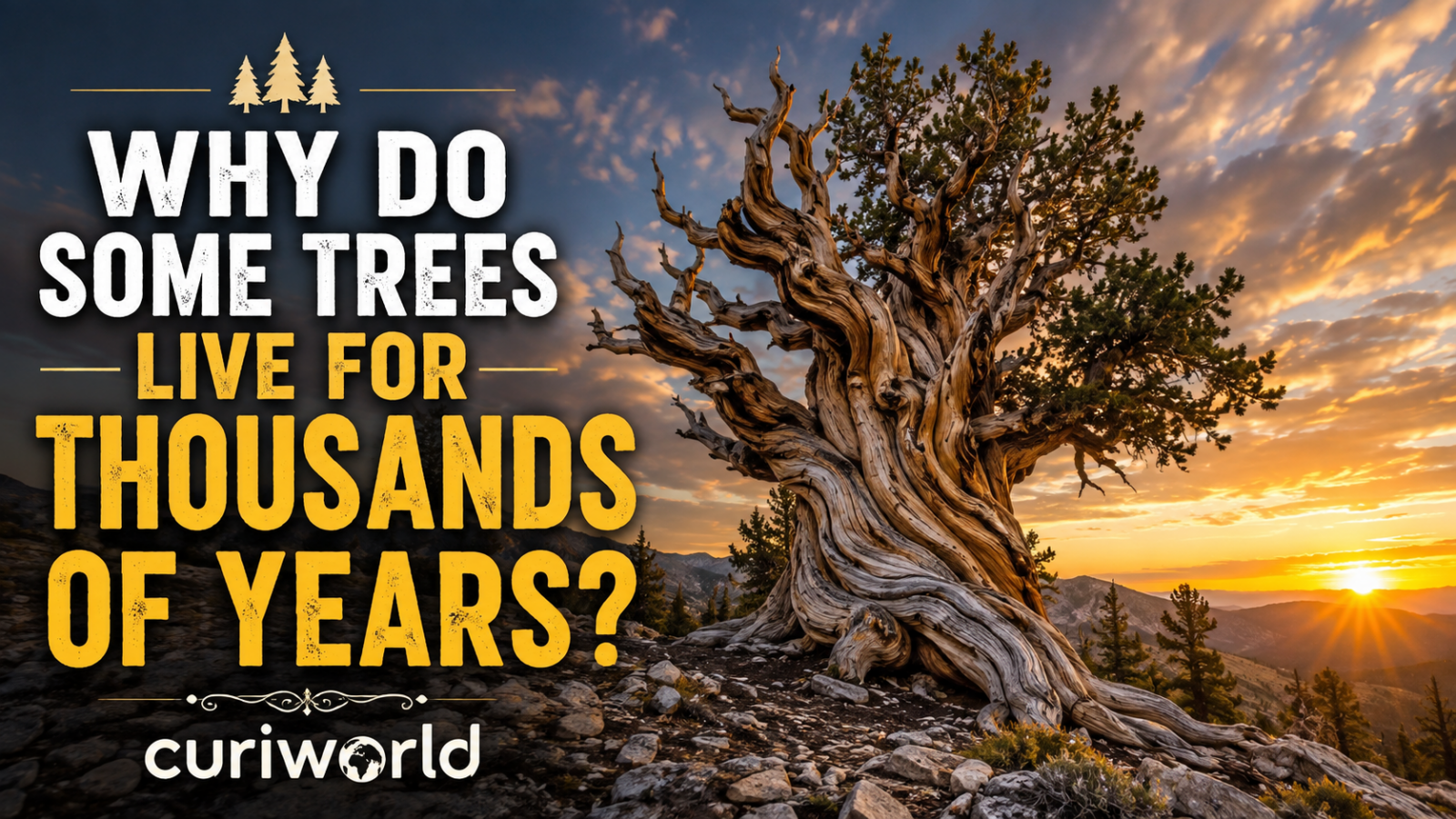
A human lifetime is barely noticeable to the oldest trees on Earth.
Some trees alive today were already centuries old when the Roman Empire was at its height. Great Basin bristlecone pines (Pinus longaeva) can survive for several thousand years, and the U.S. Forest Service reports a living specimen in California’s White Mountains that was aged at more than 5,000 years.
Their secret is not one extraordinary “anti-aging gene.”
Extreme tree longevity appears to come from a combination of slow growth, remarkable damage tolerance, efficient biological maintenance, strong chemical defenses, unusual growth patterns, and—perhaps most surprisingly—some of the harshest environments a tree could choose to live in.
Trees Do Not Age the Way Animals Do
Comparing an old tree with an old animal can be misleading.
Animals generally develop as integrated bodies. Damage to a critical organ can threaten the entire organism.
Trees are built differently.
They grow in modules: branches, buds, roots, leaves, and sections of vascular tissue can be added, lost, damaged, or replaced over time. A tree does not need every part of its body to remain alive for the whole organism to survive.
That becomes strikingly obvious in ancient bristlecone pines.
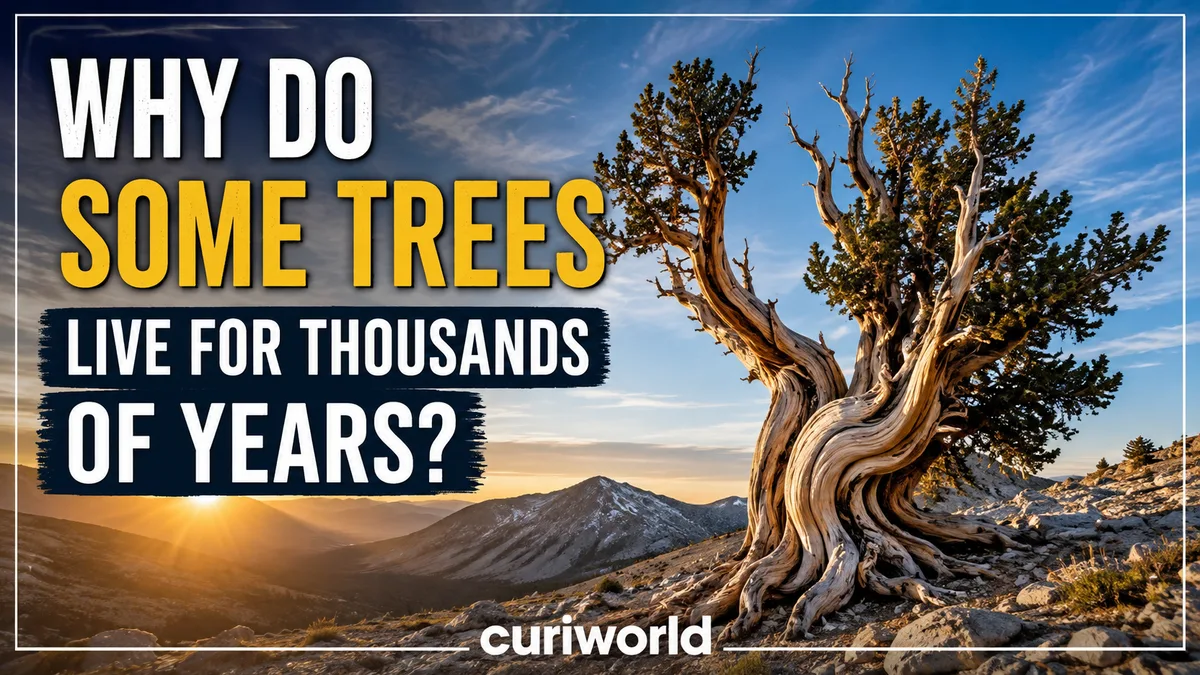
Very old individuals may contain large areas of dead wood while narrow strips of living tissue continue connecting particular roots to surviving branches. In other words, much of the tree can die while the remaining living sections continue functioning.
This ability to survive partial failure gives trees a powerful advantage when life is measured not in decades but in millennia.
The Oldest Trees Often Grow Painfully Slowly
Fast growth sounds like an advantage.
For an ancient tree, it is not always the winning strategy.
Great Basin bristlecone pines growing on exposed mountain sites experience cold temperatures, strong winds, short growing seasons, dry conditions, and nutrient-poor soils. Under these conditions, growth can be extraordinarily slow.
The U.S. Forest Service reports that some bristlecone pines on harsh sites may increase their trunk diameter by only about one inch per century.
That sounds like a terrible place to be a plant.
Yet it may be part of the reason these trees survive for so long.
Slow growth can produce dense wood and limit the amount of living tissue the tree must maintain. A slow-growing tree also uses resources differently from a species racing upward in a productive forest.
Extreme longevity is therefore not necessarily about becoming enormous as quickly as possible.
Sometimes survival favors patience.
Trees also occupy a surprisingly deep place in human traditions, including the curious history behind why people knock on wood for good luck.
Bad Soil Can Be Surprisingly Good for Longevity
One of the most interesting lessons from bristlecone pines is that a difficult environment can sometimes protect a tree.
Many ancient bristlecones grow on high, rocky slopes with thin soils derived from limestone or dolomite. These soils contain few nutrients and can be challenging for other plants.
That reduces competition.
A richer forest might provide more water and nutrients, but it would also contain many more trees competing for sunlight, root space, and resources.
The harsh mountain slopes occupied by ancient bristlecones can be remarkably open.
Fewer neighboring plants can also mean less vegetation capable of carrying a major fire through the landscape.
The same environment is difficult for many insects and decay-causing organisms. According to the U.S. Forest Service, high-elevation arid habitats are relatively poor environments for insects and root-decaying fungi, allowing bristlecone pines to succumb to disease very slowly.
The paradox is fascinating:
A place that makes growth difficult can also make death less likely.
Living Slowly Is Only Part of the Story
It would be tempting to reduce the entire mystery to one sentence:
Ancient trees live a long time because they grow slowly.
But that explanation is incomplete.
Trees also need biological systems capable of functioning for centuries without accumulating fatal levels of damage.
A 2025 review published in Plant, Cell & Environment examined research into the mechanisms associated with exceptional tree longevity. Scientists have increasingly focused on processes involving stem-cell activity, immune responses, defensive compounds, DNA repair, and epigenetic regulation.
Trees contain regions of actively dividing cells called meristems.
These tissues allow a tree to continue producing new shoots, leaves, wood, roots, and reproductive structures year after year.
An ancient tree therefore does not survive by keeping every cell it had when it was young.
Much of the organism is continually renewed.
That distinction helps explain how a tree can be thousands of years old while many of its individual leaves, root tips, and other tissues are comparatively young.
Ancient Trees Are Remarkably Good at Repair and Defense
Living for thousands of years creates a biological problem.
DNA can be damaged. Cells experience stress. Pathogens attack. Insects feed. Drought occurs. Temperatures change. Branches break.
An organism that survives for millennia must repeatedly cope with those challenges.
Modern research suggests that long-lived trees use several layers of protection rather than relying on a single mechanism.
The 2025 scientific review of tree longevity highlights research involving resistance and defense genes, DNA-repair systems, patterns of DNA methylation, stem-cell activity, immune responses, and protective secondary metabolites.
Secondary metabolites are compounds plants produce that can serve many functions, including defense against herbivores, pathogens, and environmental stress.
This does not mean scientists have discovered a simple genetic switch labeled “live 5,000 years.”
Tree longevity appears to be a system.
Genetics provides certain capabilities. Physiology keeps tissues functioning. Chemical defenses reduce damage. Growth patterns allow damaged parts to be sacrificed. The environment determines how often dangerous disturbances occur.
Extreme lifespan emerges when enough of those advantages happen to work together.
A Tree Can Sacrifice Part of Itself and Keep Going
Bristlecone pines provide one of the clearest demonstrations of modular survival.
As these trees age, sections of their trunks can die. Instead of the entire organism failing, surviving strips of living bark and vascular tissue may continue supplying particular branches.
This produces the spectacular twisted appearance associated with many ancient bristlecones.
The polished, weathered wood visible on an old tree may actually have been dead for centuries while a comparatively narrow ribbon of living tissue continues supporting the remaining crown.
The U.S. Forest Service notes that a high proportion of dead wood relative to living wood may reduce respiration and water loss.
That creates an unusual survival strategy.
Rather than maintaining a huge, fully living trunk and canopy, an ancient tree can continue functioning with a much smaller active system.
A human body could not survive by allowing most of itself to die and keeping a few connected sections operational.
A tree sometimes can.
Do Trees Eventually Die of Old Age?
This question is more complicated than it sounds.
Trees certainly die.
But extreme old age does not necessarily produce the same predictable physiological decline that people associate with animal aging.
Research on Great Basin bristlecone pines has produced particularly striking results.
Scientists studied trees ranging from young individuals to specimens more than 4,700 years old and examined characteristics including vascular function, growth, reproductive performance, and indicators of genetic damage.
The U.S. Forest Service summarizes this work by noting that several tested aging-related measurements did not show a statistically significant relationship with tree age.
That does not make bristlecone pines immortal.
Ancient trees remain vulnerable to drought, erosion, root damage, disease, fire, insects, lightning, wind, and changing climate conditions.
The important distinction is that reaching a particular biological age does not appear to trigger an automatic expiration date.
A tree may keep functioning until something finally overwhelms its ability to survive.
Thousands of Years Require Extraordinary Luck
Biology alone cannot explain a 5,000-year-old tree.
Think about what must not happen during five millennia.
The tree must avoid a fatal wildfire.
It must survive severe droughts.
It cannot be destroyed by a major landslide.
Its roots must remain sufficiently anchored.
No pathogen can completely overwhelm it.
No insect outbreak can kill it.
Extreme winds cannot uproot it.
Humans cannot cut it down.
Its local environment must remain suitable enough for survival through enormous changes in climate and landscape.
Even a species capable of living for thousands of years will rarely produce individuals that actually reach its theoretical maximum lifespan.
Extreme old age is therefore partly a biological achievement and partly a long sequence of disasters that never quite happened.
That helps explain why genuinely ancient trees are rare even within long-lived species.
Why Bristlecone Pines Are So Famous
Several tree species can live for extraordinary lengths of time, but Great Basin bristlecone pines have become symbols of extreme longevity.
They grow in parts of California, Nevada, and Utah, often at high elevations where conditions can appear almost hostile to trees.
Their distorted trunks and sparse crowns make them look fragile.
Biologically, they are anything but.
The U.S. Forest Service identifies Great Basin bristlecone pine as the longest-lived nonclonal plant species and reports individuals reaching approximately 5,000 years.
The word nonclonal matters.
Some plants spread vegetatively and create genetically connected colonies that may persist for extremely long periods. In those cases, scientists must distinguish between the age of the genetic individual and the age of a particular visible stem or trunk.
A bristlecone pine thousands of years old is remarkable because one individual tree has persisted through that span of time.
Old Trees Are Living Climate Archives
Extreme longevity gives ancient trees another remarkable property.
Their wood records environmental history.
Each year, new growth can preserve information influenced by conditions such as temperature, precipitation, drought, and growing-season length.
Scientists use tree rings through a field called dendrochronology to reconstruct past environmental conditions.
A tree that has survived for thousands of years is therefore more than an old organism.
It is a biological archive.
Its wood may contain a year-by-year record reaching back to periods of human history from which few written records survive.
Ancient trees connect biological time with human time in a way few living organisms can.
Being Huge Is Not the Secret
It is easy to imagine that the oldest tree should also be the largest.
That is not how longevity works.
Some giant trees can live for very long periods, but the oldest bristlecone pines are often relatively modest in height and extremely weathered.
They have spent thousands of years conserving resources rather than racing toward maximum size.
This reveals a broader principle in nature:
Growth and longevity are not the same strategy.
A tree that invests heavily in rapid growth may gain sunlight quickly and reproduce sooner. Another species may grow slowly, tolerate poor conditions, defend itself effectively, and persist for centuries.
Evolution does not produce one perfect tree.
It produces different solutions to survival.
Ancient Trees Are Survivors, Not Immortal Organisms
There is no single secret that allows a tree to live for thousands of years.
Extreme longevity appears when several advantages reinforce one another: slow growth, durable tissues, replaceable organs, persistent meristems, strong defenses, DNA-maintenance mechanisms, tolerance of partial damage, and an environment where competitors, pathogens, and catastrophic disturbances are relatively limited.
Then luck has to cooperate for centuries.
That combination helps explain one of nature’s strangest contradictions.
The oldest trees on Earth often grow in places where survival looks almost impossible.
They stand on cold, dry, rocky slopes. Their trunks are twisted. Much of their wood may already be dead. They can grow so slowly that decades produce barely noticeable change.
Yet that apparent hardship may be exactly what allows them to remain.
For an ancient tree, the goal is not to live quickly.
It is simply to keep enough of itself alive for one more year.
And then do it again—thousands of times.
Sources
U.S. Forest Service — Pinus longaeva, Great Basin Bristlecone Pine





Join the discussion