Why Do Deserts Get So Cold at Night If They’re So Hot During the Day?
Deserts can be scorching during the day and surprisingly cold after sunset. Dry air, clear skies, and rapid heat loss explain the dramatic temperature swing.
A desert can feel brutally hot under the afternoon Sun and surprisingly cold only hours later.
That temperature swing seems contradictory, but the same conditions that help deserts heat up quickly during the day also allow them to lose heat efficiently after sunset.
The biggest factors are dry air, clear skies, very little soil moisture, and strong nighttime radiative cooling. Sand plays a role, but it is only part of the story.
Desert Air Holds Very Little Water Vapor
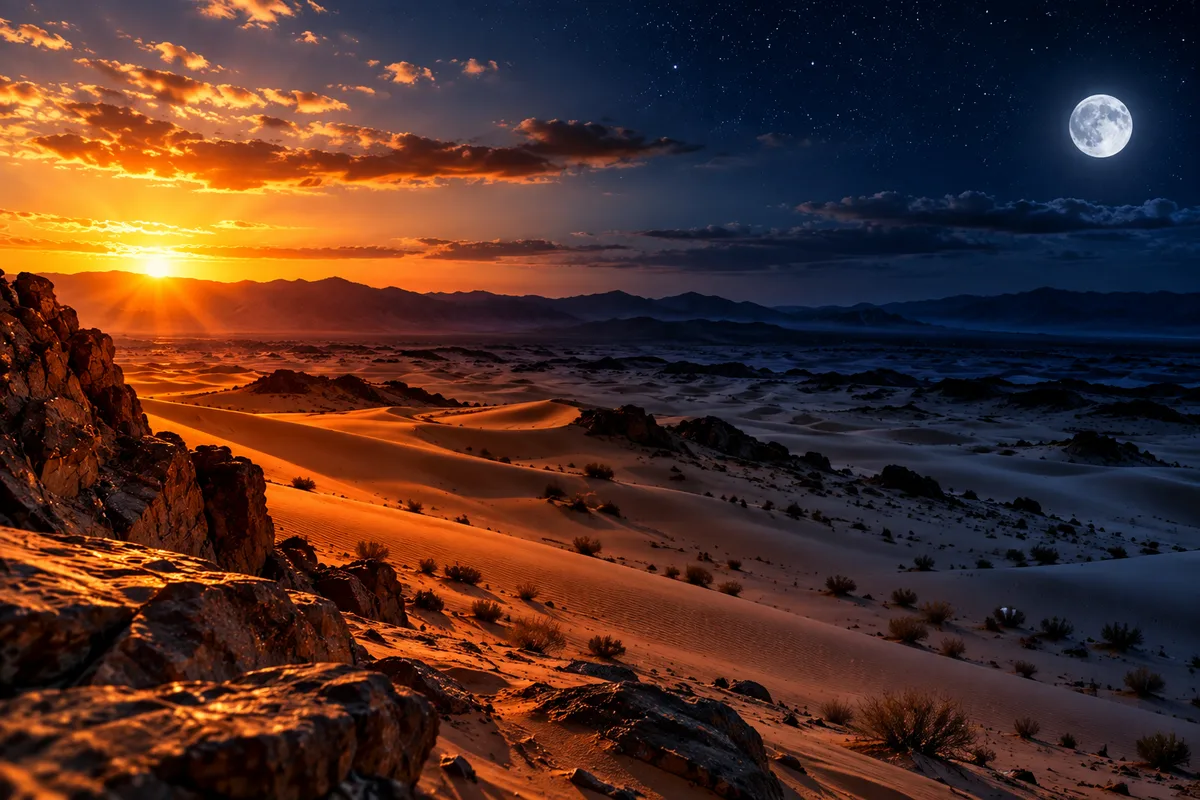
The most important clue is that deserts are defined by dryness, not heat.
Water vapor affects how heat moves through the atmosphere. During the day, sunlight reaches the ground and heats the desert surface. After sunset, that surface begins releasing energy upward as infrared radiation.
In humid environments, abundant water vapor absorbs and re-emits some of that outgoing infrared energy.
Desert air contains much less water vapor.
That means the atmosphere above a desert often provides a weaker blanket against nighttime heat loss, allowing the surface to cool rapidly once the Sun disappears.
NASA notes that desert temperatures can change dramatically between day and night precisely because the air is so dry.
Clear Skies Make the Temperature Swing Even Larger
Deserts also tend to have relatively little cloud cover.
That matters twice.
During the day, fewer clouds mean more direct sunlight reaches the ground. Rocks, sand, and bare soil can become intensely hot.
At night, those same clear skies allow the surface to radiate heat toward the atmosphere and space more efficiently.
Clouds can reduce daily temperature swings by altering both incoming sunlight and outgoing heat. Research on the diurnal temperature range has found that cloud cover, along with soil moisture and precipitation, can significantly reduce the difference between daytime highs and nighttime lows.
A clear desert sky therefore creates an efficient cycle:
strong solar heating by day → rapid radiative cooling by night
But Isn’t the Sand the Main Reason?
Sand contributes, but the common explanation is often too simple.
You may have heard that deserts get cold because sand “doesn’t hold heat.”
A thin layer of dry sand does respond fairly quickly to changes in incoming energy. The surface can become extremely hot in direct sunlight and then cool rapidly after sunset.
But deserts are not all giant fields of loose sand.
Many contain exposed rock, gravel, clay, salt flats, mountains, and other surfaces.
The large day-night temperature range still occurs across many dry landscapes.
That tells us the broader environment—especially low humidity, limited cloud cover, and low soil moisture—matters at least as much as the presence of sand itself.
Dry Ground Doesn’t Spend Much Energy Evaporating Water
Moist soil behaves differently from very dry ground.
When water is available, some daytime solar energy goes into evaporation rather than directly raising the temperature of the surface and nearby air.
This is called evaporative cooling.
A very dry desert surface has little water available to evaporate. More incoming solar energy can therefore go directly into heating the ground during the day.
The result can be a hotter surface before sunset.
Then, once the Sun is gone, the dry landscape begins losing that accumulated heat.
The combination helps produce a large diurnal temperature range—the difference between the day’s highest and lowest temperatures.
Why Doesn’t Humid Air Cool as Quickly?
Compare a dry desert night with a humid tropical night.
A tropical environment may remain uncomfortable long after sunset even if the daytime high was similar.
Part of the difference is water.
Humid regions usually contain more atmospheric water vapor, more clouds, wetter soil, and more vegetation. Each affects how energy is absorbed, stored, transferred, and released.
Deserts lack much of that thermal buffering.
This is also why desert weather can sometimes feel more dramatic than a simple temperature forecast suggests: the environment responds quickly when solar heating begins or ends.
Do All Deserts Become Freezing Cold at Night?
No.
This is one of the biggest misconceptions surrounding desert temperatures.
A large day-night temperature swing does not mean every hot desert becomes cold enough to freeze each night.
Death Valley is a good counterexample.
The U.S. National Weather Service notes that summer nighttime temperatures there can remain around 85–95°F (30–35°C) because the valley’s geography and accumulated heat can keep nights extremely warm.
Other deserts—especially high-elevation deserts or locations experiencing clear, calm winter weather—can become very cold and may fall below freezing.
So there is no universal “desert night temperature.”
Nighttime conditions depend on:
- elevation,
- latitude,
- season,
- humidity,
- cloud cover,
- wind,
- local terrain,
- and the weather pattern at the time.
The useful rule is not “deserts are cold at night.”
It is “dry, clear desert environments often have unusually large day-night temperature swings.”
Elevation Can Make Desert Nights Much Colder
Some famous deserts sit surprisingly high above sea level.
Higher elevations generally have cooler air than lower elevations, all else being equal.
Combine altitude with dry air and clear skies, and nighttime cooling can become particularly intense.
That is why two deserts at similar latitudes can have very different nighttime temperatures.
A low desert basin may remain warm well into the night, while a high desert plateau can become bitterly cold.
Calling both simply “desert climate” hides an enormous amount of variation.
Why Do Cities Stay Warm When Deserts Cool?
The contrast becomes especially interesting near large desert cities.
Concrete, asphalt, roofs, buildings, and other urban materials absorb substantial energy during the day and release it slowly after sunset.
Buildings also change airflow and radiation, while vehicles, air conditioning systems, and other human activities add additional heat.
As a result, a desert city can remain noticeably warmer at night than the undeveloped desert surrounding it.
That is the urban heat island effect.
Curiworld explores the opposite side of the desert cooling story in why cities stay hot after sunset.
A thermometer in downtown Phoenix and one in undeveloped desert outside the city may therefore tell very different stories after dark.
Why Can the Temperature Drop So Fast Right After Sunset?
Before sunset, the desert surface receives continuous solar energy.
Then that energy source suddenly disappears.
The ground keeps emitting infrared radiation, but there is no longer incoming sunlight to replace the lost energy.
Under clear, dry conditions, the balance can shift quickly.
The surface cools first. Air directly above it then loses heat through contact and mixing with the cooling ground.
On calm nights, this can create a temperature inversion, where colder air collects near the surface while relatively warmer air remains above it.
That is why the cooling can sometimes feel surprisingly sudden once darkness arrives.
The Desert’s Extreme Heat and Cold Come From the Same Environment
Hot desert days and cool desert nights are not opposites that require separate explanations.
They are two sides of the same climate.
Clear skies allow strong sunlight to heat the ground during the day. Dry soil provides little evaporative cooling. Sparse vegetation offers limited shade.
Then the Sun sets.
With little water vapor, often few clouds, and very dry ground, the accumulated heat can escape rapidly.
That is why a desert can deliver scorching afternoon heat followed by a genuinely chilly night.
The sand matters.
But the real answer is written in the dryness of the entire desert system—from the soil beneath your feet to the air above your head.







Join the discussion