Why Do Clothes Shrink Even in Cold Water?
Cold water lowers the risk of shrinkage, but it cannot stop every cause. Moisture, agitation, fabric construction, and drying can all change a garment's size.
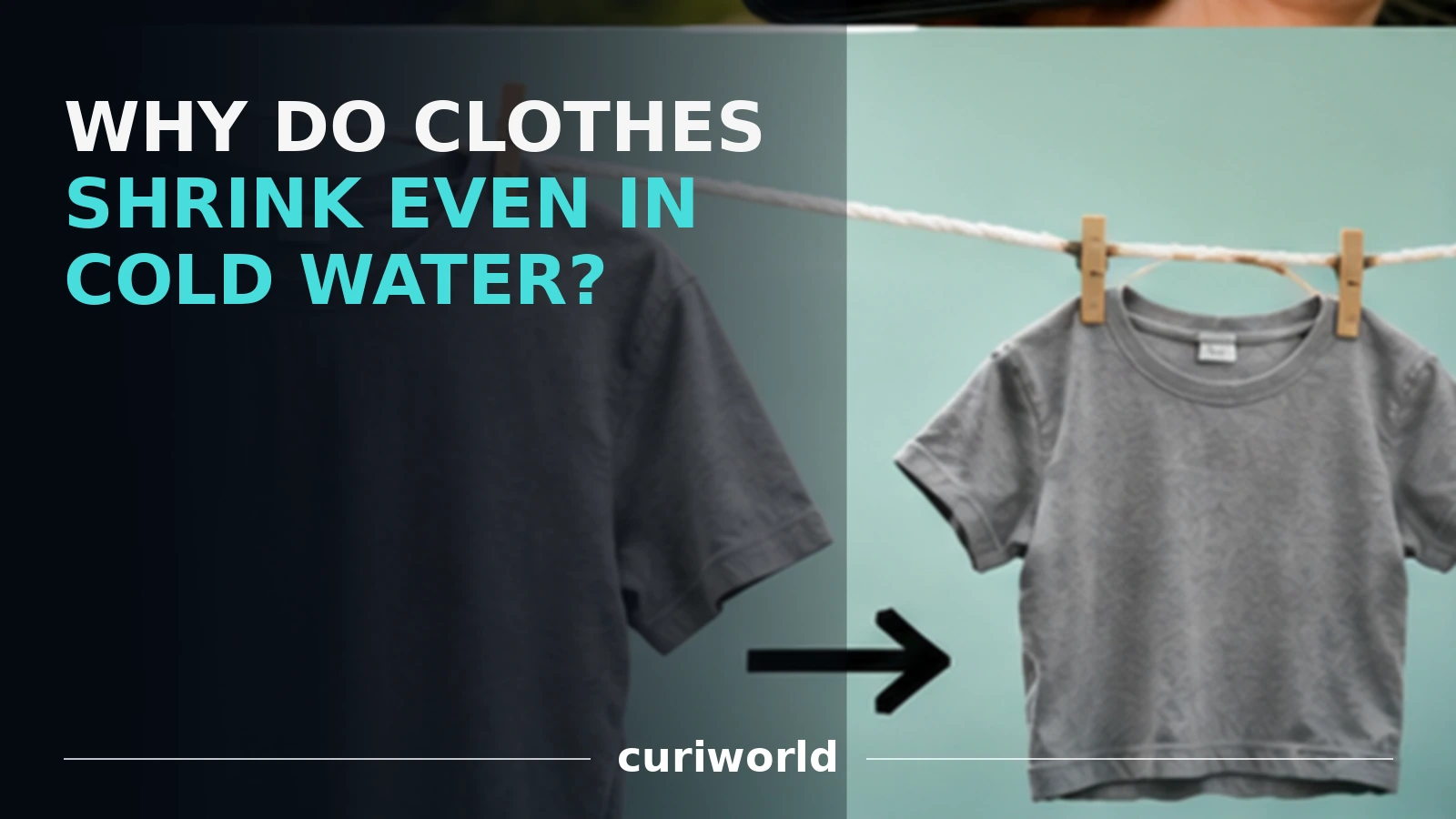
You wash a favorite T-shirt on the cold setting specifically to avoid shrinkage, then pull it out and discover that the sleeves feel shorter or the body fits a little tighter.
Cold water reduces the risk of shrinkage, but it does not eliminate it. Water itself, mechanical agitation, fabric construction, fiber type, and the way a garment is dried can all change its dimensions—even when the wash cycle never becomes hot.
That is because clothing shrinkage is not a single heat-driven process. Several different things can make fabric become smaller.
Shrinkage Often Begins Before the Clothes Reach Your Washing Machine
Fabric goes through considerable mechanical stress during manufacturing.
Fibers are spun into yarn, yarn is woven or knitted into fabric, and the material is stretched, pulled, tensioned, pressed, and finished before becoming a garment.
Some of that tension can remain locked into the finished fabric.
Once the garment becomes wet, the fibers and yarns gain more freedom to move. The structure can begin settling into a more relaxed configuration that occupies less space than it did when stretched during production.
Textile specialists call this relaxation shrinkage.
This is one reason a new cotton T-shirt can change noticeably during its first few washes even if you follow the care label carefully.
Cold water does not prevent this relaxation because the fabric still becomes wet.
Water Alone Can Change Natural Fibers
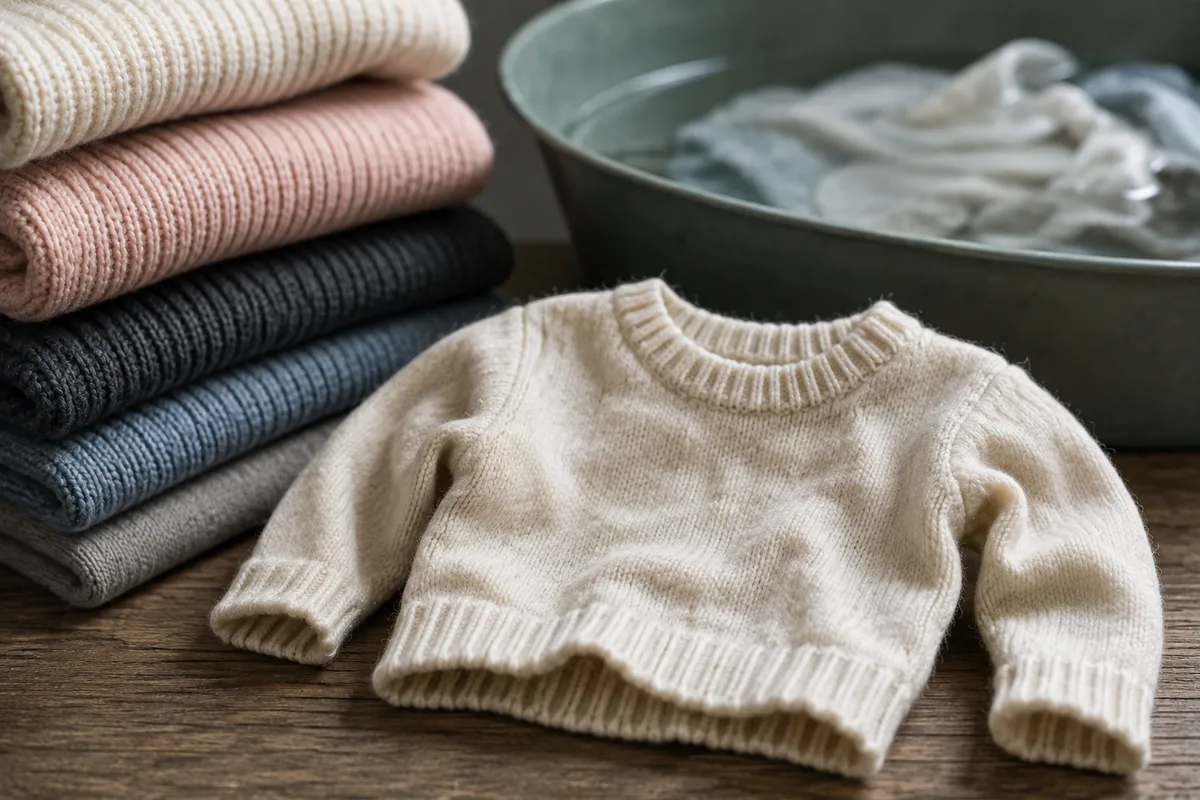
Cotton, linen, rayon, viscose, and several other common fibers readily interact with moisture.
Cotton is made largely from cellulose, a material that attracts water. When water penetrates the fiber, the fiber swells and becomes more flexible.
That same interaction between water and fabric also changes how light moves through the material. See why wet clothes look darker than dry clothes for the optical side of the story.
That extra mobility allows yarns and loops in the fabric to shift.
A textile scientist at Swinburne University explains that cold water can still penetrate fibers and cause swelling, while the movement of the washing machine helps those fibers rearrange. The effect is generally less dramatic than with hotter water, but shrinkage can still occur.
So the assumption that only heat changes fabric misses an important part of the process.
Sometimes simply getting the garment thoroughly wet is enough to release stresses that were already present.
Fabric structure and detergent residues can affect texture in other ways too; see why towels can turn hard after washing.
The Washing Machine Adds Mechanical Force
A garment does not sit motionless in a bowl of cold water.
It tumbles, twists, bends, rubs against other clothes, and repeatedly absorbs and releases water.
That mechanical action matters.
As fibers become wet and more flexible, agitation can help yarns settle into a tighter arrangement. Knitted fabrics are especially susceptible because their structure consists of interconnected loops with more freedom to move than yarns locked into a dense weave.
This helps explain why two shirts made from the same fiber can behave differently.
A loosely knitted cotton jersey may change shape noticeably, while a tightly woven cotton garment may remain much more stable.
Construction can matter almost as much as the fiber listed on the label.
The Dryer May Be the Real Culprit
If you wash clothes in cold water and then place them in a hot tumble dryer, the washing temperature may not be the most important part of the story.
Drying conditions can contribute significantly to dimensional change.
Research on knitted fabrics has found that washing causes fibers and fabric structures to move and relax, while tumble drying can encourage additional shrinkage because the fabric is free to contract while being repeatedly agitated. Higher drying temperatures can add another source of dimensional change.
This is why someone can honestly say, “I always wash it cold,” and still end up with a smaller shirt.
The wash cycle may have started the relaxation process. The dryer may have completed it.
If preventing shrinkage is the priority, changing the drying method can sometimes make a bigger difference than changing from cool water to slightly colder water.
Cotton Can Shrink Without High Heat
Cotton has a reputation for shrinking, and that reputation is deserved—but the mechanism is more complicated than “heat makes cotton smaller.”
Cotton fibers absorb water and swell. Meanwhile, stresses introduced during spinning, knitting, weaving, and finishing can relax when the material becomes wet.
The yarns then settle into a different arrangement.
Heat can accelerate or intensify dimensional change, especially during drying, but cotton does not require hot water to shrink.
This is why manufacturers sometimes pre-shrink or mechanically stabilize cotton fabrics before garments reach stores.
A well-stabilized cotton shirt may barely change after washing.
A similar-looking shirt that retains more manufacturing tension may become visibly shorter after its first cold wash.
Rayon and Viscose Can Be Particularly Sensitive
Rayon and viscose deserve extra attention because they are cellulose-based manufactured fibers that can change substantially when wet.
Water can weaken and swell some rayon structures, making the fabric more vulnerable to distortion during washing.
A garment may not shrink evenly either.
The body can become shorter, the width can change, or seams can twist because different parts of the garment respond differently to moisture and mechanical movement.
This is why the care label matters more than a simple rule such as “cold water is safe for everything.”
A delicate cold-water cycle is still a machine cycle.
For some garments, hand washing, reduced agitation, or dry cleaning may be recommended instead.
Wool Shrinks for a Different Reason
A wool sweater that becomes dramatically smaller is experiencing something different from ordinary cotton relaxation shrinkage.
Wool fibers have microscopic scales on their surfaces.
Moisture and mechanical action can allow those fibers to move and become increasingly entangled. As the scales catch against one another, the fabric becomes denser and more compact.
This process is known as felting.
Heat can make felting more severe, but agitation and moisture are also important. That means washing wool in cold water does not give you permission to treat it like a cotton T-shirt.
A cold but aggressive machine cycle can still damage an unsuitable wool garment.
The gentleness of the cycle matters.
Why Synthetic Clothes Usually Shrink Less
Polyester and nylon generally absorb much less water than cotton or rayon, so moisture does not cause the same degree of fiber swelling.
They are also commonly heat-set during manufacturing to give the fabric dimensional stability.
As a result, many synthetic garments tolerate normal washing with relatively little shrinkage.
But “synthetic” does not mean indestructible.
High dryer temperatures can still affect certain synthetic fabrics, elastane can degrade with repeated heat exposure, and blended garments behave according to the combination of fibers and construction used.
A cotton-polyester shirt, for example, may shrink less than an otherwise similar 100% cotton shirt without being completely shrink-proof.
Why the First Wash Often Makes the Biggest Difference
If a garment changes size after its first wash but then remains relatively stable, that does not necessarily mean you did something wrong.
A large part of the dimensional change in some fabrics comes from releasing stresses left over from manufacturing.
Once those stresses have relaxed, later washes may produce much smaller changes.
This is also the logic behind pre-shrinking.
Manufacturers can deliberately expose fabric to conditions that allow much of the expected dimensional change to occur before the garment is cut, sewn, and sold.
The word pre-shrunk, however, should not be interpreted as a promise that a garment can never change size again.
It means the manufacturer has attempted to reduce future shrinkage.
Can Detergent Cause Clothes to Shrink?
Ordinary laundry detergent is usually not the main cause of routine shrinkage.
Water, fabric structure, mechanical movement, temperature, and drying conditions are generally much more important.
However, specialized chemicals or inappropriate cleaning products can affect particular fibers, finishes, or dyes.
Using more detergent than recommended also does not protect against shrinkage.
For ordinary household laundry, following the garment’s care label is a better strategy than trying to solve dimensional changes by changing detergent alone.
How to Reduce Shrinkage as Much as Possible
Cold water is still useful—it simply needs to be combined with other careful choices.
Check the care label first.
The fiber content alone does not tell you how the finished garment should be treated.
Use a gentle cycle when appropriate.
Less agitation means less opportunity for wet yarns and loops to rearrange.
Choose a lower spin speed for delicate garments.
Aggressive mechanical treatment can contribute to distortion.
Avoid unnecessarily high dryer heat.
Low-temperature drying or air drying is often safer for shrink-prone clothing.
Reshape garments while they are damp.
Some knits benefit from being gently returned to their intended dimensions before drying.
Dry delicate knits flat when recommended.
Hanging a wet, heavy garment can create the opposite problem and stretch it out of shape.
Most importantly, do not treat “cold wash” as the only protective setting.
The entire wash-and-dry process matters.
Can You Unshrink Clothes?
Sometimes you can recover part of the lost size, but there is no guaranteed way to return every garment to its original dimensions.
If the shrinkage mainly comes from relaxed or rearranged fibers, gently wetting and reshaping the garment may restore some of its dimensions.
More severe felting, heat damage, or permanent structural change is much harder—or impossible—to reverse.
Trying to force a garment back to size can also distort seams, collars, or individual sections.
Prevention is much more reliable than rescue.
Cold Water Helps, but It Is Not a Shrink-Proof Setting
The label on a washing machine can make the situation sound simpler than it really is.
Hot water increases the risk of dimensional change for many fabrics, so choosing cold water is often a smart way to protect clothing.
But temperature is only one variable.
Water can make fibers swell. Wetting can release manufacturing tension. Agitation can rearrange yarns and knitted loops. A tumble dryer can allow the structure to contract even further.
That is why a shirt can come out smaller even after a genuinely cold wash.
The better rule is not “cold water prevents shrinking.”
It is: cold water reduces one major cause of shrinkage, while the fabric and the rest of the laundry process decide what happens next.
Sources
Swinburne University of Technology — Why Some Clothes Shrink in the Wash—and How to ‘Unshrink’ Them
https://www.swinburne.edu.au/news/2025/08/why-some-clothes-shrink-in-the-wash-and-how-to-unshrink-them/
RSC Advances — Optimizing Washing Conditions for Smart Fabrics: A Comprehensive Study
https://pubs.rsc.org/en/content/articlehtml/2024/ra/d4ra07365g








Join the discussion