Why Does Your Washing Machine Smell Bad Even When It’s Empty?
Your washer is completely empty, so why does it still smell? The real source may be hiding far beyond the part of the drum you can see.

You open the washing machine to start a fresh load and immediately notice it: a damp, sour, musty smell—even though there are no clothes inside.
That empty drum is actually giving you an important clue.
If the machine itself smells fine but freshly washed laundry still comes out sour or musty, see why clothes can still smell bad after washing.
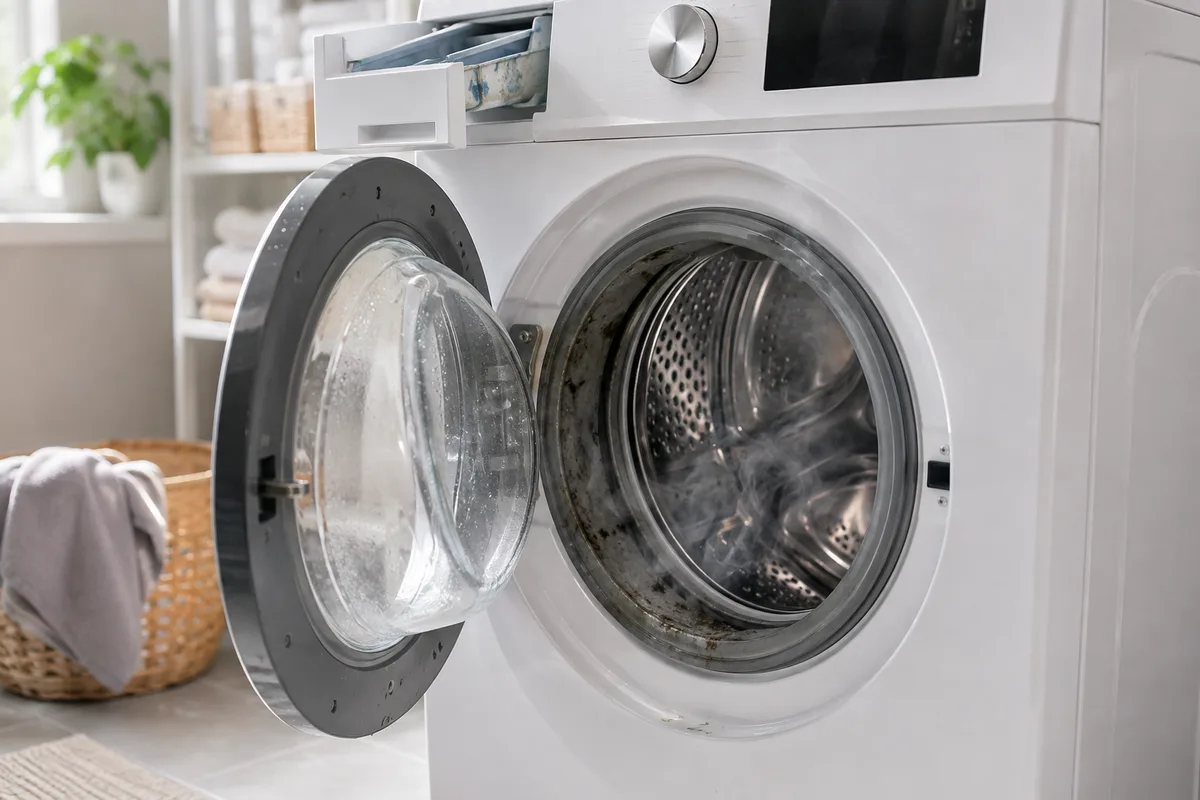
The odor usually is not coming from laundry at all. It is more likely developing in parts of the machine that stay damp or collect detergent, fabric softener, lint, hair, and dirty wash water. Common trouble spots include the rubber door seal, detergent dispenser, outer tub, drain pump filter, and drainage system.
In other words, the part you can see may be empty while the rest of the washer is anything but clean.
The Smell Often Comes From Somewhere You Cannot See
A washing machine moves water through considerably more than the shiny inner drum.
During a wash cycle, water and detergent pass through dispensers, hoses, pumps, seals, filters, and areas around the tub. Small amounts of moisture and residue can remain behind when the cycle ends.
Samsung identifies detergent buildup, trapped moisture, drainage problems, dirty pump filters, and wet laundry left inside the machine as common sources of washer odors. LG similarly notes that detergent residue can accumulate around the drum and door gasket, while a clogged drain pump filter can leave water behind and eventually produce odor.
That explains why wiping the visible drum sometimes achieves almost nothing.
You cleaned the part you could see.
The smell may be coming from somewhere behind it.
Too Much Detergent Can Make the Problem Worse
It feels logical that an unpleasant-smelling washer needs more detergent.
That can be exactly the wrong response.
A washing machine only needs the amount and type of detergent appropriate for the machine, water conditions, and load. Using too much can leave detergent behind instead of making the washer cleaner.
Samsung warns that excess detergent can create soap-scum buildup inside the washer, eventually contributing to odors. Fabric softener can create similar buildup.
This is particularly relevant to high-efficiency machines, which use less water than many older washers.
If there is more detergent than the available water can rinse away effectively, some of it may remain inside the system.
Over time, that sticky residue can trap other material from laundry.
The strange result is that a product designed to make clothes smell clean can help create the environment responsible for a bad-smelling washer.
Samsung suggests a surprisingly simple clue: run an empty cycle without adding detergent. If you still see suds, residual detergent may already be present inside the machine.
If the machine smells fine but the laundry itself does not, see why clothes can still smell bad after washing.
This is not just a cleaning myth.
Washer manufacturers warn that incorrect detergent use can leave film or residue inside the machine, and that residue can contribute to odor.
For high-efficiency machines, the detergent type and dose recommended for the specific washer matter more than simply adding extra detergent when laundry seems dirty.
The Rubber Door Seal Is an Ideal Hiding Place
Front-loading washers have another particularly important area to inspect: the flexible rubber gasket around the door.
Its job is essential. It creates the watertight seal that prevents wash water from pouring onto the floor.
Its shape also creates folds and crevices.
Those spaces can catch water, lint, hair, detergent residue, and small objects. LG notes that debris trapped in the gasket can retain water, allowing mold and odor to develop.
Open the door and gently inspect the folds of the seal.
What looks perfectly clean from a distance may contain damp residue just underneath the lip.
The gasket is also a good example of why an empty machine can still smell. Removing the clothing does nothing to remove moisture trapped inside the rubber seal.
Closing the Door Immediately Can Trap Moisture
A washing machine has just spent an hour or more moving water through an enclosed space.
Then the cycle finishes.
You remove the clothes and close the door.
The machine may look neat, but you have also created an enclosed, humid environment.
Both Samsung and LG recommend allowing the washer to dry after use. Samsung advises wiping moisture from areas such as the tub, detergent drawer, and door seal and leaving the door open to improve drying. LG also recommends leaving the washer door open after cleaning the gasket.
This does not mean the door needs to remain wide open in the middle of the room all day.
The goal is simply ventilation.
Giving residual moisture a chance to evaporate removes one of the conditions that helps unpleasant odors persist.
Do Not Forget the Detergent Drawer
The detergent dispenser is easy to ignore because detergent passes through it during every wash.
That does not mean it cleans itself.
Liquid detergent and fabric softener can leave a film inside the drawer and the channels behind it. Damp residue may remain there between washes.
LG specifically recommends cleaning the detergent dispenser when troubleshooting washer odor and notes that detergent may not completely dissolve in some conditions, contributing to buildup.
Pull out the drawer according to your machine’s instructions and inspect areas that normally remain hidden.
You may find that the strongest smell is nowhere near the drum.
A Dirty Pump Filter Can Smell Surprisingly Bad
Many front-loading washing machines have a drain pump filter.
Its job is to prevent objects and debris from interfering with the drainage system. Depending on the machine, it can collect lint, hair, coins, small objects, and other material.
If the filter becomes clogged, drainage may become less effective.
LG explains that poor draining can leave water inside the machine and lead to odor over time, while Samsung also identifies an unclean pump filter as a potential source of bad smells.
This area is often overlooked because it is hidden behind a small access panel near the bottom of the machine.
Before opening or cleaning a pump filter, check the instructions for your specific model. Some machines can release retained water when the filter is opened, so following the manufacturer’s procedure matters.
Sometimes the Smell Is Actually Coming From the Drain
Not every washing-machine odor begins inside the washer.
If the smell resembles sewage rather than damp laundry, pay attention to the drainage system.
Samsung notes that incorrect drain-hose installation can contribute to odor problems. A hose inserted too far into a standpipe, for example, can create drainage or siphoning issues that allow unpleasant smells to reach the washer.
That creates another misleading situation.
You open the machine and smell something terrible, so naturally you assume the drum needs cleaning.
But the odor may be traveling through plumbing connected to the appliance.
If a sewer-like smell persists after the washer itself has been cleaned, the drain hose and household drainage setup deserve closer attention.
Cold Washing Can Contribute to Residue
Cold-water cycles are useful for many types of laundry and can reduce energy use.
But if a machine is repeatedly washed at low temperatures while detergent and other residues continue accumulating, cleaning the washer itself may become more important.
LG notes that detergent may sometimes fail to dissolve completely during cold-water washing, contributing to buildup and odor.
This does not mean every load should suddenly be washed hot.
It means the washing machine itself needs maintenance, just like the clothes it cleans.
Many modern machines include a Tub Clean, Self Clean, Drum Clean, or similarly named maintenance program. Follow the instructions for your particular model rather than assuming every washer uses the same cleaning procedure.
What Should You Clean First?
If the washer smells musty even while empty, begin with the places most likely to hold moisture and residue.
Inspect the rubber door gasket carefully. Clean the detergent and fabric-softener dispenser. Check whether your model has a user-serviceable pump filter and follow its manual before opening it.
Then run the machine’s dedicated cleaning cycle if it has one.
Samsung recommends its Self Clean function as part of washer maintenance, while LG recommends a Tub Clean cycle and says performing it regularly can help prevent odor-producing buildup.
Afterward, allow the machine to dry properly instead of immediately sealing the remaining moisture inside.
Avoid improvising combinations of household cleaning chemicals. Use only cleaning products and procedures approved for your specific washer.
Start with the cleaning instructions for your exact washer model.
Door seals, detergent dispensers and filters are not accessed or cleaned in exactly the same way on every machine, and some manufacturers specify particular washer-cleaning cycles or products.
The Type of Smell Matters
Not every odor should be treated as the same maintenance problem.
A musty or damp smell often points toward moisture, residue, mold, or areas that are not drying properly.
A sewage-like odor makes the drainage system more suspicious.
A burning smell is different.
Samsung treats burning odors separately from ordinary mildew and maintenance-related smells. If the machine produces a strong electrical, burning-plastic, or overheating odor, stop treating the problem as something that simply needs another cleaning cycle.
Turn the appliance off and follow the manufacturer’s troubleshooting or service guidance.
Adding cleaner to an electrical or mechanical problem will not solve it.
Why the Washer Smells Again a Few Days After Cleaning
This is the frustrating version.
You run a cleaning cycle.
The smell disappears.
Then it returns.
That usually means the cleaning addressed some residue without changing the conditions that created it.
Perhaps too much detergent is still being used. The gasket remains wet after each load. The detergent drawer never dries. The filter has not been cleaned. Wet laundry regularly sits inside for hours. Or a drainage problem continues introducing odor.
A cleaning cycle can remove buildup.
It cannot change habits or fix plumbing by itself.
That is why odor prevention often comes down to several small things rather than one dramatic deep clean.
Use the appropriate detergent amount. Remove laundry when the cycle ends. Let damp areas dry. Clean the dispenser and gasket periodically. Maintain the filter where applicable. Run the washer’s cleaning program according to the manufacturer.
An Empty Washer Can Still Be a Damp Machine
The strange part about a smelly empty washing machine is that we instinctively judge cleanliness by what is inside the drum.
No clothes means empty.
Empty seems like it should mean clean.
But a washer is a network of damp surfaces, seals, pumps, filters, dispensers, hoses, and hidden spaces. Residue can remain in those areas long after the clothes have been removed.
That is why the smell can be strongest when the machine appears to contain nothing at all.
If the odor is musty, start by looking for moisture and buildup, not by adding more detergent.
Very often, the cure begins not with washing something—but with finally washing the machine itself.








Join the discussion