Why Does Your Sense of Smell Get Stronger During Pregnancy?
Everyday smells can suddenly become overwhelming during pregnancy—but science suggests the change is more complicated than simply developing a stronger nose.
A partner’s morning coffee suddenly smells overwhelming from across the room. The refrigerator seems unusually noticeable the moment its door opens. A perfume you once loved may become almost unbearable.
Changes like these are commonly reported during pregnancy, particularly during the first trimester. But the familiar explanation that pregnancy simply gives you a dramatically “stronger nose” is more complicated than it sounds.
Pregnancy can change the way odors are noticed, experienced, and tolerated. Yet scientific research does not consistently show that pregnant people become universally better at detecting faint smells. The experience can be very real even when the underlying change is not simply a stronger sense of smell.
Does Pregnancy Really Make Your Sense of Smell Stronger?
It can certainly feel that way.
An unusually heightened sensitivity to odors is sometimes called hyperosmia. During pregnancy, everyday smells such as coffee, perfume, cigarette smoke, cooking food, household cleaners, or garbage may suddenly seem much more noticeable or unpleasant.
But there is an important difference between feeling unusually sensitive to odors and actually becoming biologically better at detecting very faint smells.
A systematic review and meta-analysis published in Chemical Senses examined studies comparing olfactory function during pregnancy with olfactory function in non-pregnant women.
The researchers did not find a significant overall difference in odor-detection thresholds or odor discrimination. Pregnant participants even performed somewhat worse, on average, in some odor-identification testing.
That means pregnancy does not necessarily transform the nose into a universally more powerful odor detector.
Instead, pregnancy may change which smells attract your attention, how intense or unpleasant they seem, and how strongly your body reacts to them.
That distinction helps explain why the experience of having a “super sense of smell” can feel so convincing even when laboratory tests do not demonstrate generalized hyperosmia.
Why Can Smells Feel So Much Stronger During Pregnancy?
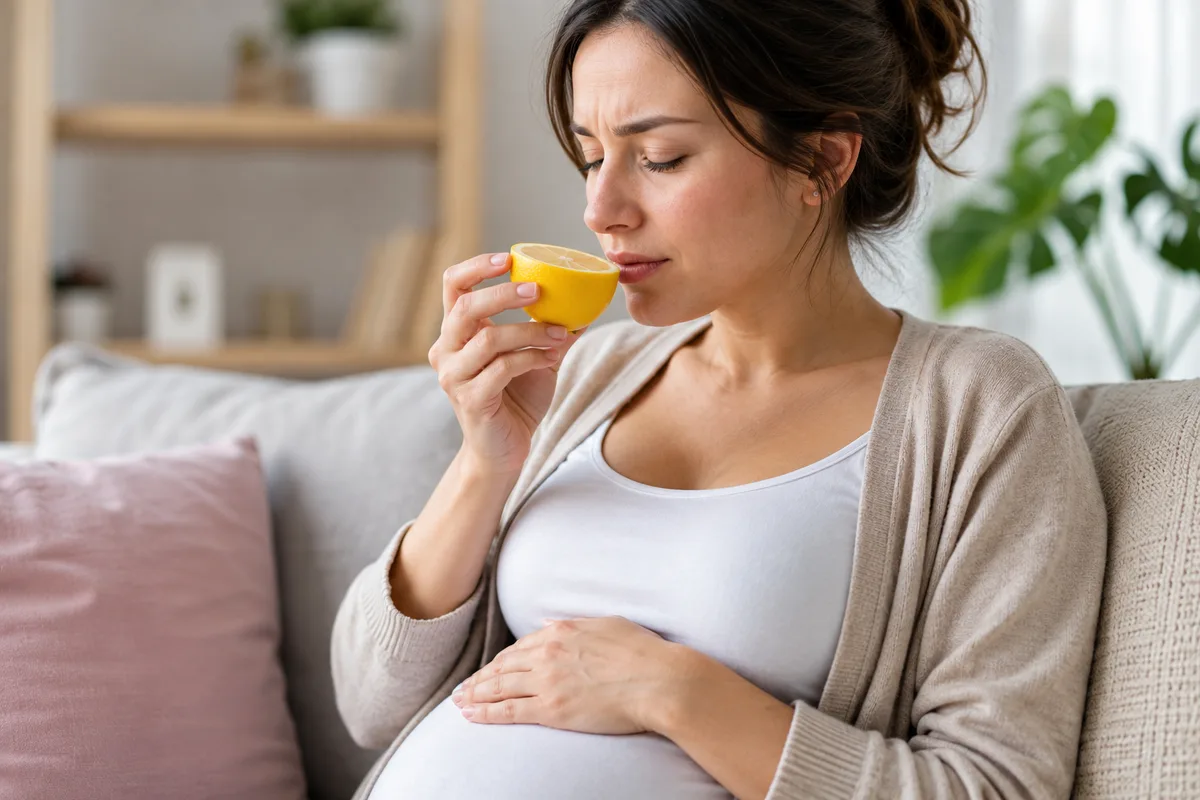
There probably is not one single explanation.
Pregnancy produces major physiological and hormonal changes throughout the body. Hormonal shifts are frequently discussed as one possible reason smell perception changes, but research has not established a simple relationship in which pregnancy hormones directly make every odor easier to detect.
The experience may instead result from several changes happening at the same time.
Sensory changes are only one part of the experience; pregnancy can affect energy dramatically too, as we explain in why pregnancy can make you feel so tired.
Your Reaction to Certain Odors May Change
A smell does not need to become objectively stronger to become much harder to tolerate.
Before pregnancy, for example, the smell of frying onions might barely attract your attention. During pregnancy, the same aroma could suddenly produce an immediate feeling of disgust or nausea.
Your nose may still be detecting the odor at a similar concentration, but your reaction to that odor has changed.
Research on pregnancy and olfaction suggests that some changes may also be odor-specific rather than affecting every smell equally.
That fits everyday experiences surprisingly well. One person may suddenly be unable to tolerate coffee, while someone else becomes especially sensitive to perfume, meat, smoke, or cleaning products.
Certain Smells May Become Harder to Ignore
Your brain does much more than simply detect an odor.
It also decides which sensory information deserves attention.
An odor associated with discomfort or nausea is much harder to ignore than one that feels neutral. A smell that previously faded quietly into the background can suddenly dominate your attention.
This can make it seem as though the odor itself has become dramatically stronger.
In other words, heightened smell during pregnancy may sometimes involve a change in how strongly an odor captures your attention and affects you, rather than a dramatic improvement in your nose’s ability to detect it.
Why Is Smell Sensitivity Often Linked With Morning Sickness?
Smell and nausea can become closely connected during pregnancy.
The American College of Obstetricians and Gynecologists (ACOG) notes that foods and odors that did not bother someone before pregnancy may begin to trigger nausea.
This relationship can be especially noticeable during early pregnancy, when nausea and vomiting are also common.
According to ACOG, pregnancy-related nausea and vomiting commonly begin before nine weeks of pregnancy and often improve by around 14 weeks, although symptoms can last longer for some people.
That timing overlaps with the period when many pregnant people describe particularly strong reactions to smells.
However, this does not mean that a heightened sense of smell directly causes morning sickness.
A person does not necessarily need to detect a smell from farther away for that smell to become nauseating.
A familiar odor may instead become more unpleasant or develop a stronger association with nausea. Once that happens, even encountering the same ordinary smell can trigger discomfort.
This helps explain a common pregnancy experience: you may not suddenly smell everything better, but certain smells can become almost impossible to ignore.
Why Do Some Smells Become Unbearable While Others Do Not?
One of the most interesting features of pregnancy-related smell changes is how selective they can be.
Some people suddenly struggle with smells such as:
- coffee
- frying food
- meat
- perfume
- cigarette smoke
- garbage
- household cleaners
- strongly scented cosmetics
Yet other smells may remain completely normal.
Some odors can even become more pleasant.
This inconsistency is another reason researchers are cautious about describing pregnancy-related smell changes as simple hyperosmia.
The effect can vary considerably between individuals, different odors, and different stages of pregnancy.
There is no single list of smells that every pregnant person will suddenly dislike.
Are Pregnancy Hormones Responsible?
Hormonal changes are probably part of the story, but the common statement that “estrogen makes your sense of smell stronger” is more certain than the evidence allows.
Pregnancy causes major changes in estrogen, progesterone, human chorionic gonadotropin (hCG), and many other biological processes.
Because smell changes frequently appear alongside these changes, hormones have long been proposed as a possible explanation.
However, research measuring actual olfactory performance has produced mixed results.
Scientists therefore cannot confidently say that rising levels of one pregnancy hormone simply turn up the sensitivity of the nose.
A more accurate explanation is that pregnancy-related hormonal and physiological changes may influence how smells are processed, interpreted, and experienced, while the exact mechanisms are still being investigated.
Does Heightened Smell Mean the Pregnancy Is Healthy?
Not by itself.
Having a very noticeable sense of smell does not tell you whether a pregnancy is developing normally.
It also cannot reliably reveal the baby’s sex, despite numerous pregnancy myths suggesting that particular symptoms can predict whether someone is carrying a boy or a girl.
Likewise, not developing smell sensitivity is not automatically a cause for concern.
Pregnancy symptoms vary enormously from person to person.
They can even vary between different pregnancies in the same person.
Some people experience dramatic smell aversions, while others notice little or no difference at all.
Smell sensitivity is best understood as one possible pregnancy experience rather than a measure of pregnancy health.
Can Strong Smells Affect What You Want to Eat?
They can.
If the smell of a particular food suddenly triggers nausea, simply being around that food may become unpleasant even before you taste it.
This can contribute to temporary food aversions during pregnancy.
Someone who normally enjoys eggs, coffee, meat, or a particular spice may suddenly find the smell difficult to tolerate.
That does not necessarily mean the food itself has changed.
Instead, the sensory experience surrounding it has changed.
This connection between smell, taste, appetite, and nausea is one reason food preferences can sometimes feel very different during pregnancy.
How Can You Make Strong Smells Easier to Handle?
If particular odors are making daily life uncomfortable, reducing exposure to those specific triggers may help.
You can try:
- identifying which smells consistently trigger nausea
- ventilating the kitchen while cooking
- opening windows when possible
- using an extractor fan while preparing food
- avoiding strongly scented personal-care products if perfume becomes uncomfortable
- asking someone else to handle particularly strong-smelling household tasks when possible
- choosing foods that do not create strong cooking odors during periods of nausea
ACOG specifically recommends avoiding foods and smells that worsen nausea and suggests using a fan while cooking if food odors are a problem.
There is usually no need to eliminate every noticeable smell from your environment.
The more practical goal is to identify the few odors that consistently cause discomfort and reduce unnecessary exposure to them.
Does Smell Sensitivity Go Away After Pregnancy?
For many people, smell-related symptoms improve as pregnancy progresses, especially when they occur alongside first-trimester nausea.
However, there is no exact timetable that applies to everyone.
Some people notice the change mainly during early pregnancy. Others may remain sensitive to particular odors for much longer.
Pregnancy symptoms vary widely, so another person’s timeline is not necessarily a useful predictor of your own.
If an unusual change in smell persists well beyond pregnancy or seems unrelated to pregnancy symptoms, it may be worth mentioning to a healthcare professional.
When Does Smell-Triggered Nausea Need Medical Attention?
Being irritated by the smell of coffee is very different from being unable to eat or drink.
Contact your obstetric healthcare provider if nausea or vomiting becomes severe, particularly if you:
- cannot keep liquids down
- are becoming dehydrated
- are losing weight
- have very dark or unusually small amounts of urine
- feel dizzy or faint
- are struggling to maintain normal food or fluid intake
Severe nausea and vomiting during pregnancy can require medical treatment.
A sudden major loss or distortion of your sense of smell that seems unrelated to your normal pregnancy symptoms is also worth discussing with a healthcare professional because pregnancy is not the only condition that can affect olfactory function.
So Why Does Pregnancy Make Your Nose Feel So Sensitive?
The most accurate answer is slightly different from the popular explanation.
Pregnancy does not necessarily make the nose universally better at detecting tiny amounts of an odor.
Instead, pregnancy appears capable of changing the experience of smell.
Certain odors may become more noticeable, unpleasant, difficult to ignore, or much more likely to trigger nausea. Hormonal and physiological changes probably contribute, but scientists are still working out exactly how those changes affect olfactory perception.
That is why someone can genuinely feel as though their sense of smell has become dramatically stronger even though laboratory measurements do not demonstrate a universal improvement in smell sensitivity.
Pregnancy may not give you a super-powered nose.
It may change which smells your brain refuses to ignore.
This article is intended for general educational purposes and is not a substitute for individualized medical advice or prenatal care.






Join the discussion