Why Does Pregnancy Make You So Tired?
Pregnancy can make even an ordinary day feel exhausting. Here is why fatigue can hit so hard, how it changes by trimester, and when it deserves attention.
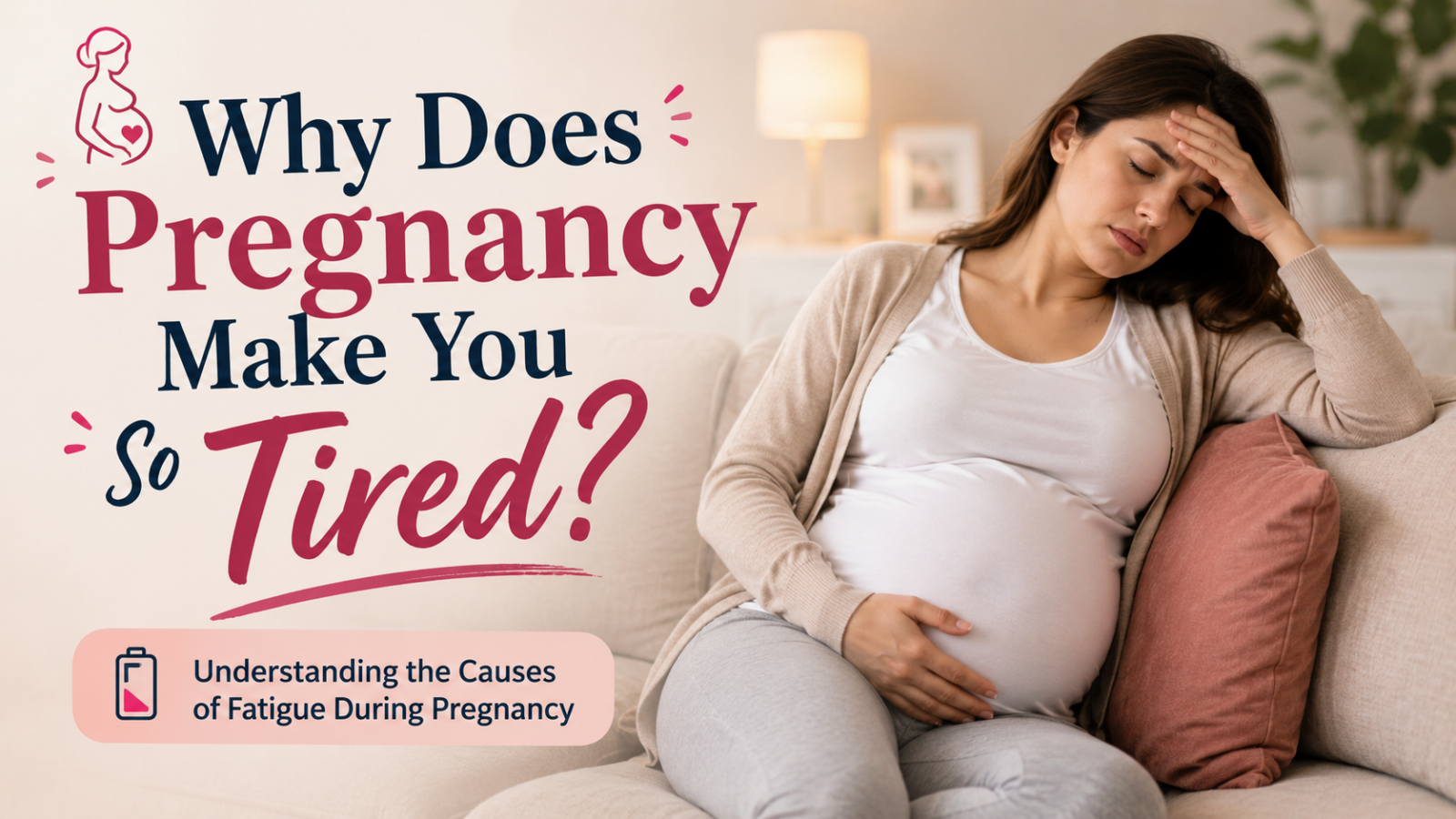
A full night’s sleep can suddenly feel as though it was barely enough. A routine afternoon may leave you searching for the nearest sofa. Even simple tasks can seem strangely draining.
Pregnancy fatigue can be surprisingly intense, particularly during the first trimester. In many cases, it is a normal response to the enormous physical and hormonal changes taking place inside the body. The NHS notes that feeling tired or even exhausted is especially common during the first 12 weeks of pregnancy.
But pregnancy tiredness does not always feel the same from beginning to end. The reasons behind it can change as pregnancy progresses.
Why Is Early Pregnancy So Exhausting?
The first trimester can produce some of the strongest fatigue even though there may be very little visible physical change yet.
That can seem strange. If the baby is still tiny and there is no large pregnancy bump to carry, why does getting through an ordinary day suddenly require so much energy?
One major reason is hormonal change.
Hormone levels shift rapidly during early pregnancy as the body adapts to supporting the pregnancy. The NHS identifies these hormonal changes as an important contributor to early tiredness, alongside symptoms such as nausea and emotional changes.
Pregnancy is also changing the body’s priorities long before those changes become obvious from the outside.
So the first trimester can create an unusual mismatch: you may not look dramatically different yet, but your body is already operating under very different physiological conditions.
Add nausea, disrupted sleep, frequent urination, changing appetite, or simply the mental adjustment to pregnancy, and the exhaustion can become much more noticeable.
For many people, this is why early pregnancy fatigue feels less like ordinary sleepiness and more like running out of energy unusually quickly.
Does Pregnancy Fatigue Get Better in the Second Trimester?

Often, yes—but there is no universal timetable.
Because fatigue is especially common during the first 12 weeks, some people notice that their energy gradually returns as they move into the second trimester. Others continue to feel tired.
Pregnancy symptoms do not follow a perfectly predictable calendar.
Two people at the same stage of pregnancy can have completely different energy levels, and even the same person can experience very different levels of fatigue from one pregnancy to another.
If you are currently in the early weeks, this is also the period when questions about prenatal screening often begin to appear. Curiworld’s guide to when a fetal DNA test can be done explains why around 10 weeks is commonly used as a starting point for NIPT.
Why Can Tiredness Return Later in Pregnancy?
Pregnancy fatigue can disappear for a while and then make an unwelcome comeback.
Later in pregnancy, the explanation becomes more physical.
As the pregnancy grows, the body is carrying additional weight. Finding a comfortable sleeping position may become harder. Trips to the bathroom can interrupt sleep, and physical discomfort may make it difficult to stay asleep for long periods.
The NHS specifically notes that later-pregnancy tiredness can be related to the extra weight being carried and that a growing bump can make good-quality sleep more difficult.
So early and late pregnancy fatigue can feel similar while having somewhat different contributing factors.
Early pregnancy is strongly influenced by rapid internal and hormonal changes.
Later pregnancy adds the increasingly obvious physical demands of carrying a growing pregnancy and trying to sleep comfortably while doing it.
Could Extreme Tiredness Be Related to Iron Deficiency?
Pregnancy itself can make you tired, but not every case of severe fatigue should automatically be dismissed as “just pregnancy.”
One important reason is iron deficiency anemia.
Iron is needed to produce hemoglobin, which allows red blood cells to carry oxygen around the body. During pregnancy, iron demands increase, and iron stores can become depleted.
According to guidance from The Rotherham NHS Foundation Trust, iron deficiency anemia during pregnancy may cause symptoms including tiredness, weakness, breathlessness, dizziness, headaches, and noticeable heartbeats or palpitations.
That does not mean feeling tired during pregnancy automatically means you are anemic.
The distinction matters.
Pregnancy fatigue is extremely common. Iron deficiency is simply one possible additional explanation, particularly when tiredness seems unusually intense or occurs alongside other symptoms.
Blood tests used during prenatal care can help healthcare professionals identify anemia. Supplements should also be discussed with a doctor, midwife, or other qualified healthcare professional rather than assuming that more iron is always the solution.
What Actually Helps With Pregnancy Fatigue?
There is no single trick that restores pre-pregnancy energy overnight.
That may be frustrating, but it also means pregnancy fatigue should not be treated as a productivity problem that needs to be “fixed.”
Rest is one of the simplest responses.
The NHS recommends getting enough sleep, allowing time to rest during the day, and accepting help when it is available. It also notes that gentle physical activity, such as walking or swimming, may help some people feel less tired.
A few practical habits can make low-energy days easier:
- Protect your nighttime sleep whenever possible.
- Take short breaks before exhaustion becomes overwhelming.
- Eat regular, balanced meals rather than relying on quick bursts of sugar or caffeine.
- Stay adequately hydrated.
- Keep physically active at a level considered appropriate for your pregnancy.
- Avoid caffeine late in the day if it interferes with sleep.
- Accept help with work, childcare, household tasks, or errands when you need it.
There is an important psychological side to this too.
Your normal level of productivity may temporarily change.
Trying to maintain exactly the same pace despite significant fatigue can turn an already tiring day into a frustrating one. Adjusting expectations may be more useful than repeatedly trying to push through exhaustion.
When Is Pregnancy Fatigue Worth Mentioning to a Doctor or Midwife?
Ordinary pregnancy tiredness is common and, by itself, is not usually a sign that something is wrong with the pregnancy. The NHS states that feeling tired during pregnancy does not harm you or your baby.
Still, fatigue deserves attention when it seems unusually severe, suddenly becomes much worse, interferes substantially with normal daily activities, or appears alongside other concerning symptoms.
In particular, significant tiredness accompanied by unusual weakness, persistent dizziness, noticeable heart palpitations, breathlessness, frequent headaches, faintness, or other symptoms that make you feel genuinely unwell should be discussed with a healthcare professional.
These symptoms can have several explanations, and iron deficiency anemia is one possibility that can be assessed with appropriate testing.
Sleep matters emotionally as well as physically. If persistent sleep problems occur together with feelings such as hopelessness or loss of interest in things you normally enjoy, it is sensible to speak with a doctor or midwife.
Pregnancy should not become a reason to ignore symptoms simply because tiredness happens to be common.
Why Pregnancy Fatigue Can Feel So Different From Ordinary Tiredness
There is a useful distinction between being sleepy after a late night and experiencing pregnancy fatigue.
Ordinary tiredness often has an obvious explanation: you slept too little, exercised heavily, worked a long day, or stayed up late.
Pregnancy can create fatigue even when you have done everything “right.”
You might sleep longer and still need a nap.
You might have a quiet morning and feel depleted by lunchtime.
You might discover that an activity that previously required little thought now requires planning and recovery time.
That does not mean every episode of exhaustion should be ignored. It simply reflects the fact that pregnancy changes the conditions under which your body is operating.
The Pattern Usually Matters More Than a Single Tired Day
One exhausted afternoon tells you very little.
What is more useful is noticing the pattern.
Is the fatigue strongest during the early weeks? Does it improve after rest? Is poor sleep clearly contributing? Has it gradually increased as the pregnancy has progressed?
Or has tiredness suddenly become much more intense and appeared with symptoms such as dizziness, weakness, or breathlessness?
That distinction helps separate the ordinary ups and downs of pregnancy from symptoms worth discussing at a prenatal appointment.
Pregnancy can make you extraordinarily tired because the body is adapting to significant hormonal and physical change. Early in pregnancy, those changes may produce exhaustion before there is much to see from the outside. Later, carrying additional weight and disrupted sleep can drain energy again.
For many people, the result is simple: some days genuinely require more rest.
Listening to that signal is reasonable. And when fatigue feels different from the expected pattern—or comes with other symptoms—bringing it up with a healthcare professional is the safer choice.
This article is for general educational information and does not replace individualized prenatal care, diagnosis, or medical advice.
Sources
NHS — Tiredness and sleep problems in pregnancy
https://www.nhs.uk/pregnancy/common-symptoms/tiredness/
The Rotherham NHS Foundation Trust — Iron deficiency anaemia in pregnancy
https://www.therotherhamft.nhs.uk/patients-and-visitors/patient-information/iron-deficiency-anaemia-pregnancy






Join the discussion