Why Do Pillows Turn Yellow Even With Pillowcases?
A pillowcase catches plenty of sweat and oil, but it cannot stop everything. The chemistry behind those familiar yellow pillow stains happens slowly.
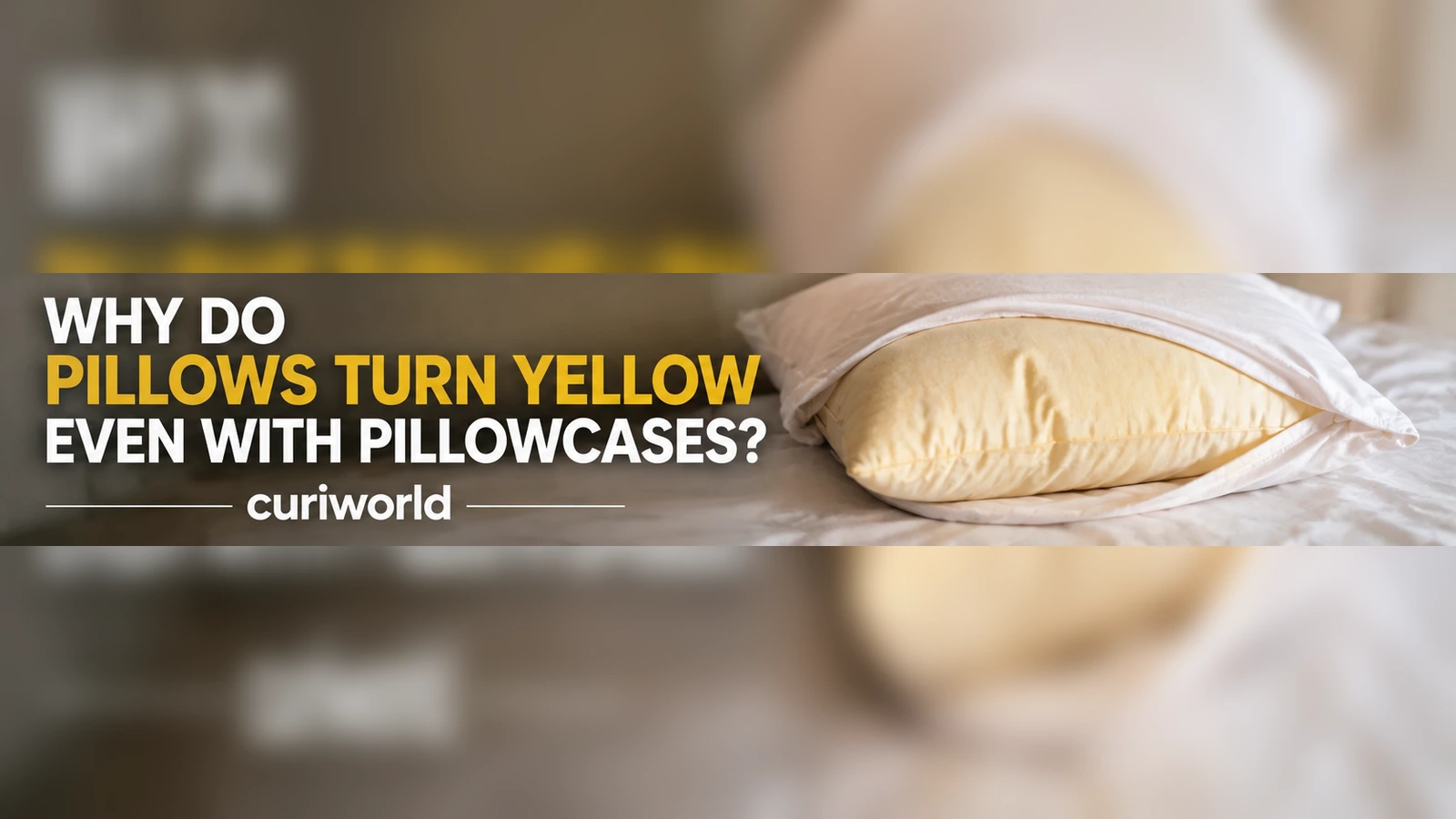
A clean white pillow can slowly turn cream, beige, or yellow even when it has spent its entire life inside a pillowcase.
The pillowcase is not failing. It is simply not an impermeable barrier.
While you sleep, small amounts of moisture and natural oils can move through the fabric and into the pillow underneath. Over months or years, residues left inside the fibers can change chemically, especially when exposed to oxygen, warmth, and repeated moisture. The yellow color is often the visible result of that gradual buildup and aging.
Stored white garments can yellow through a different mix of residues, oxidation and storage conditions. See why white clothes turn yellow in storage.
That also explains why washing the pillowcase regularly may keep the bed looking clean while the pillow itself continues to change color underneath.
A Pillowcase Stops Some Dirt, Not Everything
Pillowcases are excellent at collecting material that would otherwise reach the pillow directly.
They catch skin oils, sweat, shed skin cells, cosmetic residue, and other everyday soils. That is exactly why they need washing far more frequently than most pillows.
But ordinary cotton, linen, microfiber, and similar fabrics remain permeable.
Moisture can move through them.
So can some oily residues.
The Canadian Conservation Institute notes that water and oils associated with perspiration and handling can carry soils deeper into textile fibers through capillary action. Over time, those stains can oxidize and become increasingly visible.
A pillowcase therefore reduces exposure. It does not seal the pillow away from everything your head and body release during several hours of sleep.
Sweat Is Part of the Story—but Not the Whole Story
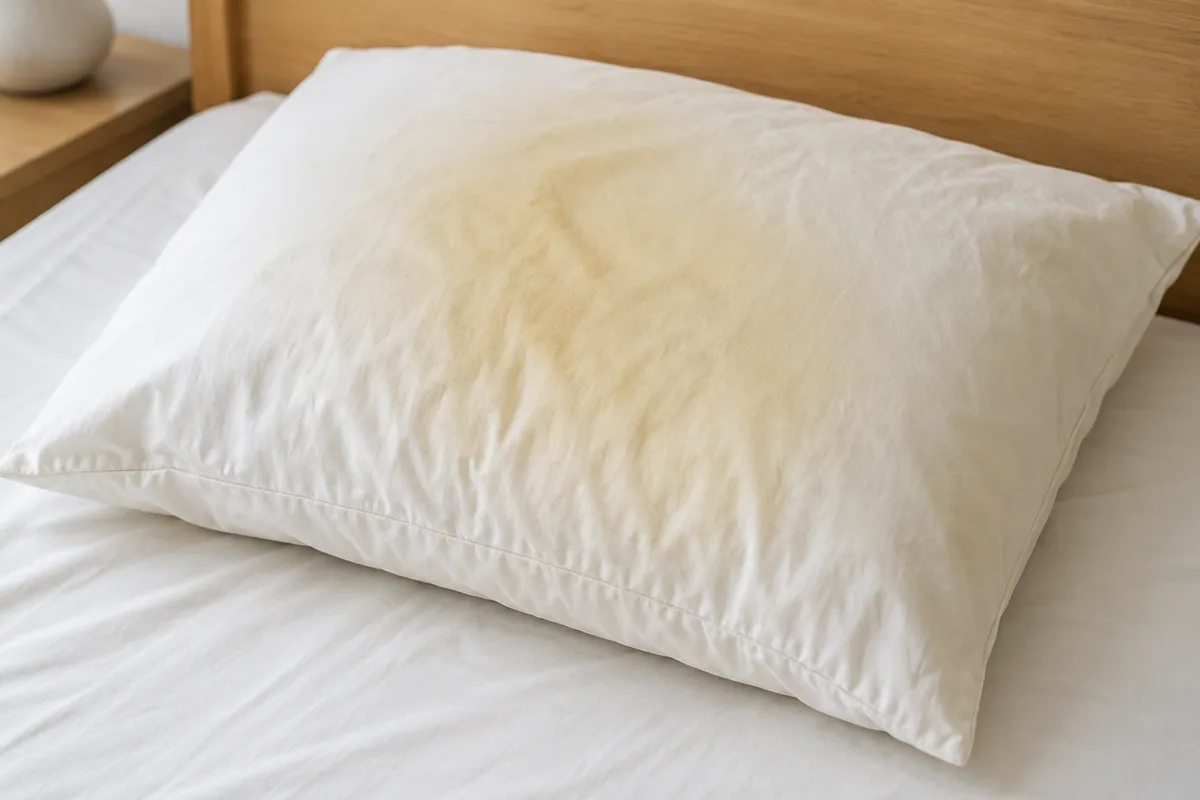
Yellow pillows are often blamed entirely on sweat.
Sweat certainly matters, especially for people who sleep warm, live in humid climates, or regularly wake with damp hair or bedding.
But the discoloration is better understood as a mixture of moisture and accumulated organic residues rather than “yellow sweat.”
Your skin naturally produces oils. Those oils can transfer to bedding along with perspiration. Hair and skin products may add additional residues depending on what you use before bed.
Night after night, tiny quantities can penetrate beyond the pillowcase.
You may never notice the process happening.
A pillow does not usually turn yellow after one particularly warm night. The change builds slowly until enough material has accumulated—or aged enough chemically—for the difference to become obvious.
The Real Color Change Often Happens Later
Fresh body oil is not necessarily bright yellow.
That is where oxidation becomes important.
Researchers studying oily soils on textiles have found that oils can undergo chemical changes as they age. One study on oily textile soils reported that aging unsaturated oils produced yellow compounds that became difficult to remove through washing.
The basic process is familiar in other parts of everyday life.
Many substances change after prolonged exposure to oxygen. Oils can oxidize, plastics can discolor, and fabrics can slowly lose their original appearance.
A pillow provides a good environment for gradual change because the same area is repeatedly exposed to skin contact, warmth, moisture, and air.
That is why an older pillow may look substantially yellower than a newer one even when both have always been covered.
The same color change has a slightly different explanation in clothing; see why white clothes turn yellow in storage.
Moisture Can Make Yellowing More Noticeable
Heat and moisture do more than make sleeping uncomfortable.
They can also accelerate the aging of stains in textiles.
The Canadian Conservation Institute specifically notes that stains from water and oils can oxidize over time and that this process is accelerated by heat and moisture.
Think about what happens to a pillow on a typical night.
Your head warms the surface for hours. Perspiration adds moisture. The pillow absorbs some of it, then dries after you get up.
That cycle repeats hundreds of times.
A person who sweats heavily at night may therefore notice discoloration earlier than someone whose pillow stays relatively dry.
Climate matters too. A pillow in a warm, humid bedroom may dry more slowly than one in a cool, well-ventilated room.
Going to Bed With Wet Hair Can Add More Moisture
Sleeping with wet hair does not automatically turn a pillow yellow, but it gives the pillow another source of repeated moisture.
A pillowcase can absorb some of that water, yet sufficiently damp hair can transfer moisture through to the pillow itself.
The issue is less about one wet night than repetition.
If the pillow repeatedly becomes damp and does not dry thoroughly, moisture remains part of the environment in which existing residues age.
Drying your hair before bed can therefore reduce one source of unnecessary moisture, particularly if your pillow already tends to stay damp.
Why Does the Yellowing Often Appear Where Your Head Rests?
Look at an old pillow and the discoloration may not be evenly distributed.
The center or upper portion can become noticeably more yellow than the edges.
That pattern makes sense.
Those areas receive the most repeated contact with your face, scalp, and hair. They also receive the most pressure, warmth, and moisture.
The edges may stay relatively white because they spend far less time in direct contact with you.
This localized pattern is another clue that the discoloration is often connected to repeated use rather than simply the fabric becoming old everywhere at the same rate.
Why Doesn’t Washing the Pillowcase Prevent It?
Because washing the removable cover only removes what remained in the cover.
Imagine spilling a small amount of liquid onto a towel sitting on top of another towel.
Washing the top towel afterward does nothing to remove what already soaked into the one underneath.
Bedding works in a similar way.
Once sweat, oils, or moisture pass through the pillowcase and enter the pillow’s outer fabric or filling, changing the pillowcase cannot pull them back out.
Regularly washing pillowcases is still worthwhile because it limits the amount of buildup at the surface.
It simply cannot undo material that has already migrated deeper into the pillow.
Would a Pillow Protector Make a Difference?
This is where a pillow protector and a pillowcase serve slightly different purposes.
A pillowcase is primarily the washable surface your face touches.
A protector adds another removable layer between the pillowcase and the pillow itself.
Depending on its construction, that extra barrier can reduce how easily moisture and oils reach the pillow.
Some protectors are designed primarily for allergens, while others provide stronger moisture resistance. The exact level of protection depends on the material, so “pillow protector” does not automatically mean waterproof.
For someone who frequently deals with yellow pillows, adding a washable protector beneath the ordinary pillowcase can make more sense than simply buying thicker pillowcases.
The arrangement becomes:
Pillow → protector → pillowcase
You can then wash the layers that receive most of the contact while exposing the pillow itself to less repeated soiling.
Can a Yellow Pillow Be Washed White Again?
Sometimes—but not always completely.
Whether a pillow can be washed depends heavily on what it is made from.
Some synthetic and down-alternative pillows can tolerate machine washing. Other constructions may require gentler cleaning, and certain foam pillows should not simply be placed in a washing machine.
The care label matters more than generic internet advice.
If the manufacturer allows washing, cleaning may remove some accumulated residues and noticeably improve the appearance.
Older yellowing can be harder to reverse because aged oily soils can chemically change and become more difficult to remove from textile fibers. That is one reason a pillow that has been yellow for years may never return to its original bright white color even after cleaning.
Avoid experimenting with aggressive bleaching or very hot washing unless the care instructions specifically allow it. Whitening the fabric is not helpful if the process damages the pillow.
Yellow Does Not Automatically Mean Dirty
Color alone is a poor test of whether a pillow is usable.
An older white textile can discolor even after being cleaned because some of the color change results from chemical aging rather than loose surface dirt.
Conversely, a pillow that still looks perfectly white is not automatically clean.
Appearance and cleanliness are related, but they are not identical.
A better assessment considers:
- whether the pillow can still be cleaned according to its care instructions;
- whether it smells even after cleaning and drying;
- whether the filling has broken down;
- whether it remains comfortable and supportive;
- and whether there are signs of persistent moisture or visible mold.
Yellowing by itself is usually more of an appearance issue than a reason to immediately throw the pillow away.
Make Sure the Pillow Actually Dries
Cleaning a pillow is only half of the process.
Drying matters just as much.
A thick pillow can feel dry on the outside while still retaining moisture internally. Putting it back onto the bed too soon can leave moisture trapped inside the filling.
Whenever the care label permits washing, follow the manufacturer’s drying instructions and give the pillow enough time to dry throughout.
The same principle applies after ordinary sleep.
Pulling heavy bedding tightly over a damp pillow immediately after waking can slow evaporation. Giving bedding some airflow can help moisture escape rather than remain trapped in the fabric.
The Pillowcase Is Doing Its Job—Just Not Perfectly
A pillowcase dramatically reduces direct contact between your skin and the pillow, but no ordinary fabric layer can keep every trace of moisture and oil away forever.
Night after night, tiny amounts can work their way through.
Then time changes them.
Oily residues age. Stains oxidize. Warmth and moisture can accelerate the process. Eventually, a pillow that once looked bright white develops the familiar yellow patches that seem mysterious when the pillowcase above it still looks perfectly normal.
The best way to slow that process is not to obsess over keeping a pillow permanently white.
Wash the removable layers regularly, consider using a washable pillow protector, reduce unnecessary moisture, let bedding dry properly, and clean the pillow only according to its care instructions.
The yellowing may look sudden when you finally notice it.
The process that created it probably took hundreds of nights.
Sources
Canadian Conservation Institute — Caring for Textiles and Costumes: Preventive Conservation Guidelines for Collections
https://www.canada.ca/en/conservation-institute/services/preventive-conservation/guidelines-collections/textiles-costumes.html
Chi, Y.-S. & Obendorf, S. K. — Aging of Oily Soils on Textiles: Chemical Changes Upon Oxidation and Interaction With Textile Fibers — Journal of Surfactants and Detergents
https://aocs.onlinelibrary.wiley.com/doi/abs/10.1007/s11743-998-0038-y




Join the discussion