Why Do Leaves Change Color in Fall? What Makes Them Red, Orange and Yellow?
Why do leaves turn red, orange and yellow in fall? The answer lies in chlorophyll, hidden pigments, anthocyanins and the seasonal changes happening inside each leaf.
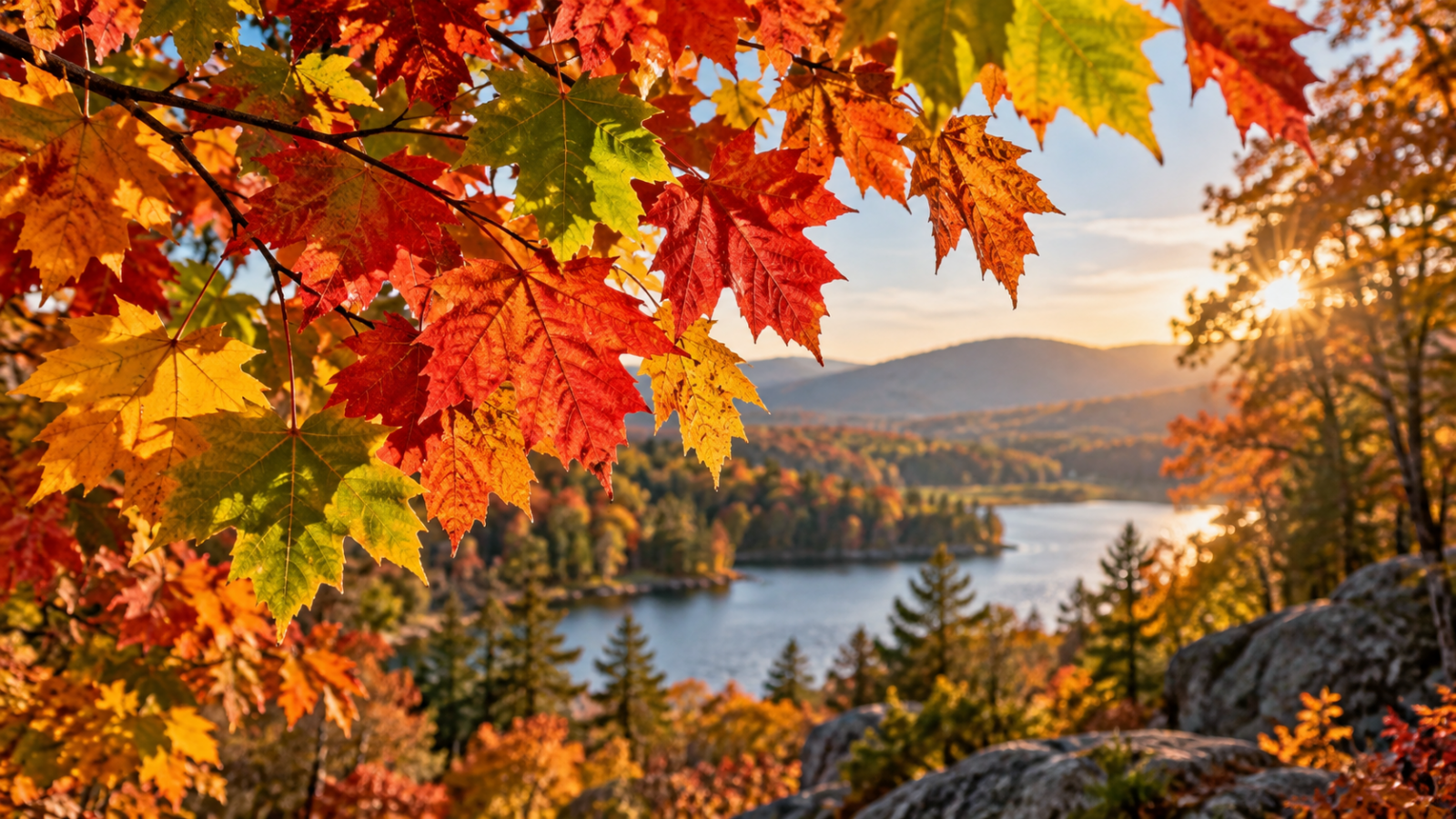
A green summer leaf does not simply get “painted” red, orange or yellow when fall arrives.
Something more interesting is happening inside it.
As days shorten, deciduous trees begin shutting down their leaves for the season. Chlorophyll—the pigment responsible for the familiar green color—breaks down. As the green fades, pigments that were hidden beneath it become visible, while some trees also manufacture new pigments before the leaf finally falls.
That distinction explains why one tree turns golden yellow, another becomes scarlet red, and a single maple can sometimes display several colors at once.
What Actually Changes Inside a Leaf in Fall?
During spring and summer, leaves are working photosynthetic organs.
Chlorophyll absorbs light energy that helps plants turn carbon dioxide and water into sugars. Because chlorophyll is abundant, its green color dominates what we see.
But maintaining a leaf costs resources.
As autumn approaches in temperate regions, shortening daylight provides a reliable seasonal signal that winter is coming. The tree begins a controlled process known as leaf senescence rather than simply allowing the leaf to “die” overnight.
Chlorophyll is dismantled, and valuable nutrients—especially nitrogen associated with the leaf’s photosynthetic machinery—can be moved back into woody tissues for later use. Harvard Forest describes this loss of chlorophyll as an orderly process that allows trees to recover resources before the leaf is shed.
Once enough green disappears, the rest of the leaf’s color chemistry becomes much easier to see.
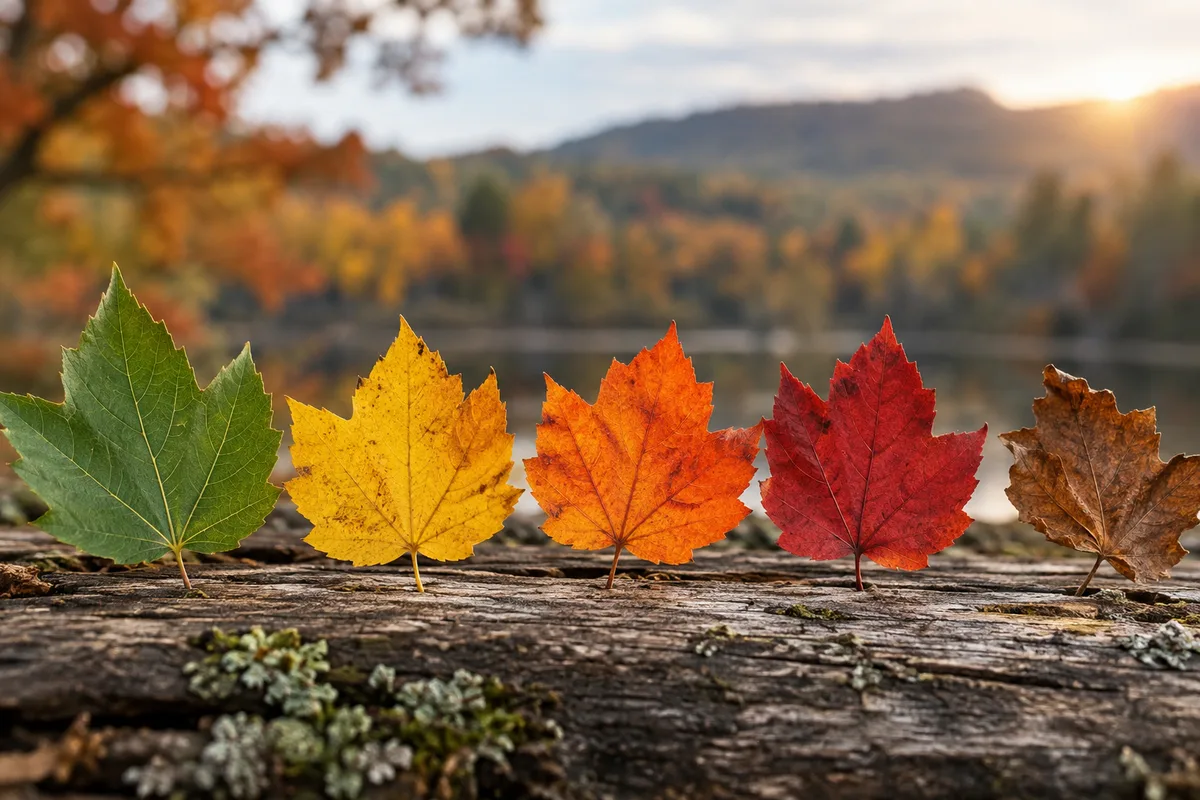
| Fall color | Main pigment or process | What is happening |
|---|---|---|
| Yellow | Xanthophylls and other carotenoids | Pigments already present become visible as chlorophyll fades |
| Orange | Carotenoids and sometimes a mixture of pigments | Orange pigments are revealed or combine visually with reds and yellows |
| Red / purple | Anthocyanins | Often produced in the leaf during autumn |
| Brown | Tannins, remaining pigments and tissue breakdown | Usually appears later as senescence progresses |
The important point is that yellow and red leaves do not necessarily become colorful in the same way.
Why Do Some Leaves Turn Yellow?
Yellow is largely the color that was hiding in the leaf all along.
Leaves contain carotenoids during the growing season. These pigments help participate in the leaf’s light-handling system and include yellow compounds such as xanthophylls.
In summer, there is so much green chlorophyll that the yellow is visually overwhelmed.
When chlorophyll breaks down in fall, the yellow pigments remain visible for longer. The leaf therefore appears to “turn” yellow even though much of that color was already present.
This is why trees such as aspens and birches can produce striking golden displays without needing to manufacture a completely new set of yellow pigments at the end of the season.
Orange Leaves Are a Pigment Mix
Orange fall foliage is slightly more complicated.
Some orange tones come from carotenoid pigments themselves. In other leaves, the final color reflects a mixture of yellow-orange carotenoids, newly formed red anthocyanins and whatever chlorophyll remains.
That is why autumn color is better understood as a changing balance of pigments than as a simple green-to-red sequence.
A leaf can pass through several shades as those proportions change.
It may look green one week, yellow-green a few days later and deep orange shortly before falling.
Red Leaves Are Different
Red leaves reveal one of the most interesting parts of autumn biology.
In many deciduous plants, the red and purple pigments called anthocyanins are actively produced during leaf senescence rather than simply being uncovered when chlorophyll disappears.
Harvard Forest research has shown that anthocyanins can accumulate in aging leaves as their photosynthetic machinery is being dismantled. Researchers have proposed that these pigments may help protect vulnerable leaf cells from excess light, potentially allowing the plant to continue recovering nutrients efficiently before the leaf is discarded.
This also corrects a common fall-foliage misconception.
Yellow may be largely revealed.
Red is often made.
That difference helps explain why red coloration can respond strongly to sunlight, temperature and sugar levels within the leaf.
Does Cold Weather Make Leaves Change Color?
Not by itself.
People often assume that the first cold nights “turn” the trees red and yellow. Temperature matters, but the seasonal process is more complicated.
Shortening day length is one of the most dependable signals that autumn is arriving. Weather then influences how quickly the transition happens and how intense some colors become.
The U.S. National Park Service notes that sunny conditions combined with cool nights can encourage the development of anthocyanins because sugars accumulate in leaves while red pigment is being formed.
A hard freeze, however, is not required for beautiful foliage—and severe frost can actually bring the display to an abrupt end by damaging leaf tissue.
So a better way to think about fall color is:
Day length helps start the seasonal transition; weather helps shape the final performance.
Why Are Some Autumns More Colorful Than Others?
Two falls in the same forest can look surprisingly different.
That is because color intensity depends on more than the calendar.
Sunlight, nighttime temperatures, soil moisture, summer growing conditions, drought stress and the timing of frost can all influence the result.
Bright days and cool—but not severely freezing—nights are often associated with stronger red coloration in species capable of producing anthocyanins. Extended cloudiness can reduce the light available for sugar production, while extreme drought may cause some trees to brown or drop their leaves before they reach their most vivid colors.
There is no single weather formula that guarantees a spectacular autumn everywhere.
Species and local conditions matter too.
Why Can One Tree Have Red, Orange and Yellow Leaves at the Same Time?
Look closely at a large maple in October and you may find one side blazing red while another branch remains yellow or even partly green.
That is not unusual.
Leaves on the same tree do not necessarily experience identical conditions.
One branch may receive direct afternoon sun.
Another may remain shaded.
Individual leaves can differ in sugar concentration, pigment production, temperature exposure and the speed at which chlorophyll is disappearing.
Harvard Forest notes that color can vary not only between different trees but also within the same individual tree—and even within a single leaf.
Autumn foliage is therefore a landscape-scale event created by millions of tiny local differences.
Why Don’t All Trees Turn the Same Color?
Genetics sets much of the palette.
Different species contain different combinations of pigments and have different capacities for producing anthocyanins.
Aspens and many birches are famous for yellow.
Sugar maples can produce yellow, orange and brilliant red.
Some oaks develop deep red or russet tones before moving toward brown.
Other species never produce dramatic scarlet foliage at all.
Location matters as well. Elevation, sunlight exposure, local temperature and moisture can shift the timing and intensity of the display.
This is one reason fall foliage often seems to move across a landscape rather than changing everywhere on the same day.
Why Do Trees Drop Their Leaves After Changing Color?
The color show is part of a larger winter preparation process.
Deciduous trees face a problem in cold or seasonally dry climates: broad leaves lose water and can be vulnerable to freezing conditions, while weak winter sunlight makes maintaining them less profitable.
So the tree recovers what it can and prepares to let the leaf go.
A separation zone develops near the base of the leaf stalk. Eventually the connection weakens enough for wind or gravity to detach the leaf.
The bare branch may look inactive afterward, but the tree is not dead. It has shifted resources into tissues that will survive the unfavorable season.
Tree survival strategies can be remarkably different across species; Curiworld has also explored why some trees can live for thousands of years despite drought, cold and other environmental stresses.
Why Don’t Evergreen Trees Do the Same Thing?
Evergreens also lose leaves or needles.
They simply do not usually discard their entire canopy at once.
Pine, spruce and many other evergreen species have leaves adapted to survive for multiple seasons. Their needles typically have features that reduce water loss and help them tolerate cold conditions.
Old needles are still shed and replaced, but the process is staggered.
That is why an evergreen can remain green through winter while a nearby maple becomes bare.
“Evergreen” does not mean a leaf lives forever.
It means the plant retains functioning foliage throughout the year.
Is Climate Change Affecting Fall Color?
Climate warming is changing the timing of seasonal events in plants, but autumn responses are not as simple as “warmer weather means later fall everywhere.”
Recent research shows that autumn leaf coloration, photosynthetic shutdown and leaf fall can respond differently to warming, drought and local microclimates.
A 2026 study using satellite measures across northern ecosystems found that warmer autumn conditions tended to delay both photosynthetic cessation and leaf coloration, although not by exactly the same amount. Earlier spring growth also influenced what happened later in the year.
Other research has found that drought can push senescence earlier, meaning warming and water stress may sometimes pull autumn timing in opposite directions.
So climate change is not simply shifting one universal “peak color date.”
It is altering the environmental signals that different species and ecosystems respond to.
The Real Reason Fall Leaves Look So Different
Autumn color is not one chemical switch.
It is a transition.
Green chlorophyll breaks down as the tree prepares for winter.
Yellow and orange carotenoids that were present during summer become easier to see.
Some species manufacture red and purple anthocyanins during senescence.
Sunlight, temperature, moisture, genetics and even the position of an individual leaf can change the final shade.
Then, after the tree has recovered useful nutrients, the leaf is released.
For a few weeks each year, that carefully managed shutdown becomes one of nature’s most visible seasonal transformations.
Sources
Harvard Forest — The Process of Leaf Color Change; Harvard Forest — The Biological Significance of Leaf Color Change; U.S. National Park Service — Rise and Fall of Foliage; Communications Earth & Environment — Earlier Spring Onset and Autumn Warming Increase the Discrepancy Between Leaf Coloration and Photosynthetic Cessation (2026).







Join the discussion