Why Is the Ocean Salty but Rivers Aren’t?
Rivers carry dissolved minerals into the ocean every day, yet remain fresh. The reason involves rocks, dilution, evaporation, and millions of years of Earth’s water cycle.
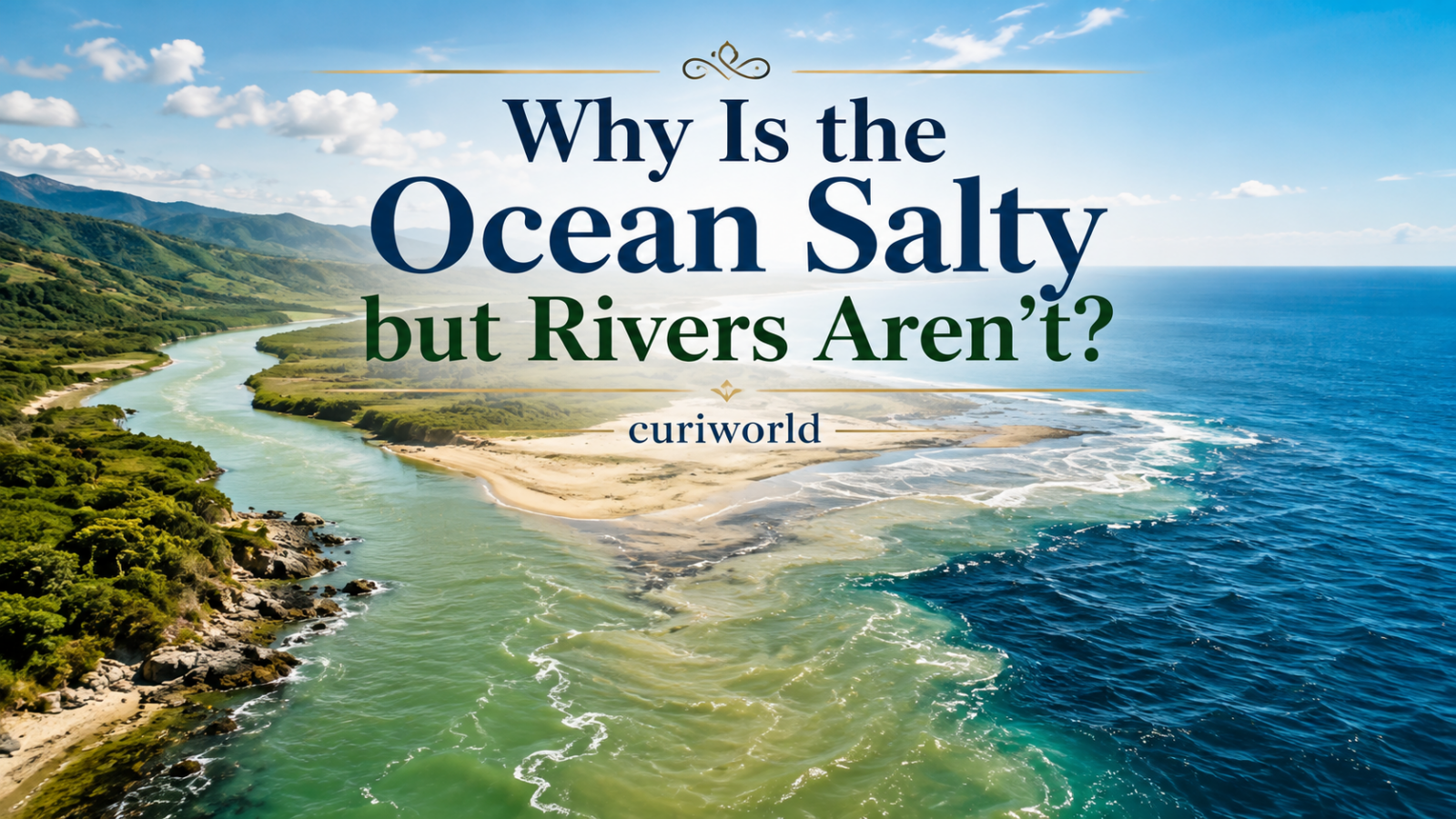
Rivers flow into the ocean every day, carrying water from mountains, forests, cities, and vast drainage basins. That creates an obvious question: if rivers are mostly fresh, why is the ocean salty? And if rivers help carry salt to the sea, why don’t rivers become salty too?
The answer comes down to concentration, evaporation, and time.
Rivers are not completely free of salt. They contain small amounts of dissolved minerals picked up from rocks and soil. The ocean receives those dissolved materials over immense periods of time, while evaporation removes water but leaves most of the salt behind.
That simple difference has helped shape the chemistry of the world’s oceans.
Rivers Aren’t Actually Salt-Free
“Freshwater” does not mean chemically pure water.
As rainwater moves across the ground and through soil and rock, it dissolves small quantities of minerals. These dissolved substances can include calcium, sodium, bicarbonate, chloride, magnesium, and other ions.
Streams collect this water. Streams join rivers. Rivers then carry those dissolved minerals toward lakes and oceans.
So rivers do contain salts.
The reason we normally call them freshwater is that the concentration is very low compared with seawater. Rivers are also constantly being replenished by rainfall, snowmelt, springs, and groundwater while their water keeps moving downstream.
Instead of storing dissolved salts for extremely long periods, rivers usually transport them elsewhere.
Much of the Story Begins With Rain
The journey of ocean salt often begins far from the coast.
Rainwater interacts with carbon dioxide in the atmosphere and soil, making it mildly acidic. When that water reaches exposed rocks, it contributes to a natural process known as chemical weathering.
Over time, water helps break down minerals in rock and releases electrically charged particles called ions.
Some of these ions dissolve into water and travel through streams and rivers.
A single river may carry only relatively small concentrations of dissolved salts, but rivers have been transporting material from the continents toward the oceans over geological timescales.
According to the National Oceanic and Atmospheric Administration, rivers continuously carry dissolved salts and minerals from the land into the sea.
Why Don’t Rivers Become Salty Too?
A river behaves very differently from an ocean.
Most rivers are constantly moving.
Fresh water enters from precipitation, melting snow, springs, tributaries, and groundwater. At the same time, river water and the minerals dissolved in it continue downstream.
In that sense, a river works more like a transportation system than a storage tank.
Imagine continually adding a tiny amount of salt to flowing water while fresh water is also entering and the mixture keeps leaving at the other end. Salt is present, but it has little opportunity to build up to ocean-like concentrations.
The ocean is different because one of the main ways water leaves it—evaporation—does not carry most of the dissolved salt away.
Evaporation Removes Water but Leaves the Salt Behind
Sunlight causes enormous amounts of ocean water to evaporate.
When water evaporates, water molecules enter the atmosphere as vapor. Most dissolved salts remain in the ocean.
The water vapor may later form clouds and fall as rain or snow. Some of that water lands on continents, flows across rocks, enters rivers, and eventually returns to the sea.
This creates an important difference between the movement of water and the movement of salt.
Water can leave the ocean through evaporation. Salt generally cannot.
Repeated over enormous periods of geological time, this process allows dissolved salts to remain concentrated in seawater.
Average ocean salinity is about 35 parts per thousand, although the exact level varies significantly between different parts of the world.
Sodium and chloride—the two components associated with ordinary table salt—are the dominant dissolved ions in seawater, but they are far from the only minerals present.
Rivers Are Not the Ocean’s Only Source of Dissolved Minerals
Rivers explain an important part of ocean salinity, but they are not the entire story.
The seafloor also plays a role.
Seawater can enter cracks in oceanic crust, especially in areas with hydrothermal activity. The water becomes heated and reacts chemically with surrounding rocks.
When that water returns to the ocean, its chemical composition has changed.
Volcanic activity, hydrothermal vents, and interactions between seawater and oceanic crust have all contributed to the long-term chemical evolution of the oceans.
This is also an important reminder that ocean chemistry is dynamic.
Materials are constantly entering, leaving, reacting, settling, and being recycled.
Why Isn’t the Ocean Getting Saltier Forever?
It might seem that the ocean should become increasingly salty every year.
After all, rivers keep delivering dissolved minerals and evaporation keeps leaving salts behind.
But the ocean also has mechanisms that remove dissolved material.
Certain ions become incorporated into minerals and sediments. Marine organisms use some dissolved substances to build shells and other structures. Chemical reactions involving the ocean floor can remove some elements from seawater as well.
Over long periods, these removal processes help balance the continued addition of dissolved material.
According to NOAA, salt entering the modern ocean is approximately balanced by processes that remove it.
So the ocean should not be imagined as a container becoming endlessly saltier without limit.
It is part of a long-running geological and chemical system.
Freshwater and Saltwater Aren’t Absolute Opposites
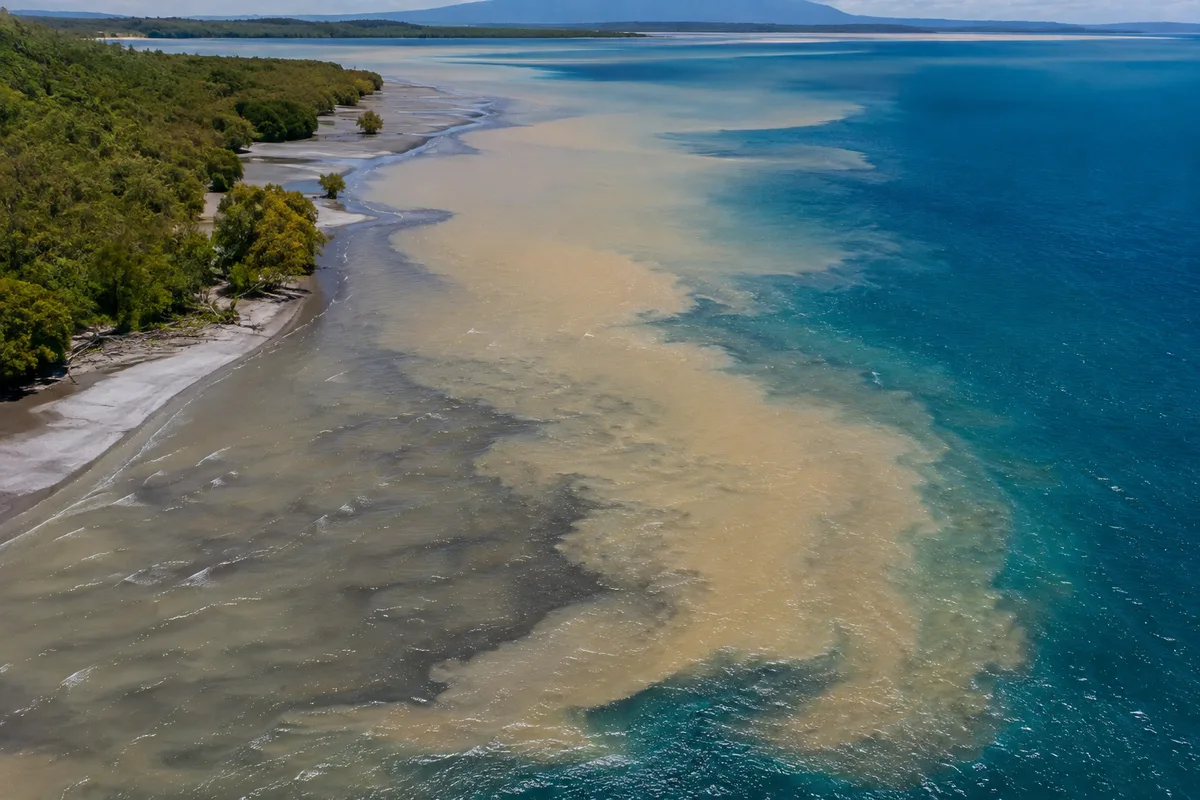
Another misconception is that river water contains no salt while seawater contains salt.
Natural water is more complicated than that.
Freshwater contains dissolved minerals. Seawater simply contains them at much higher concentrations.
There are also places where the two mix.
At an estuary, a river meets the sea and freshwater gradually mixes with salty ocean water. The resulting water is often described as brackish.
Its salinity can change dramatically depending on river flow, rainfall, tides, evaporation, and ocean currents.
There is not necessarily a perfectly defined line separating fresh river water from salty seawater.
Instead, many coastal environments contain constantly changing mixing zones.
Why Is Some Ocean Water Saltier Than Other Ocean Water?
The ocean has an average salinity, but that does not mean every part of it contains exactly the same amount of dissolved salt.
Evaporation, rainfall, river discharge, sea ice, ocean currents, and local geography all affect salinity.
Regions where evaporation is high can become relatively salty because more water escapes into the atmosphere.
Areas receiving heavy rainfall or large amounts of river water can have lower salinity.
Melting ice adds freshwater, while the formation of sea ice can leave more salt concentrated in the surrounding water.
Ocean salinity is therefore not a single fixed number. It varies across locations, depths, and seasons.
Salt Is Part of a Much Larger Water Cycle
The contrast between rivers and oceans becomes easier to understand once water and dissolved minerals are treated as two things following related but different journeys.
Rain falls on the land.
Water interacts with rocks.
Small amounts of minerals dissolve.
Rivers carry those minerals toward the sea.
Ocean water evaporates.
Most of the salt stays behind.
Fresh water returns to the land through precipitation, and the process begins again.
Over geological time, this enormous cycle has helped maintain the salty oceans we know today.
It also explains something that initially sounds contradictory: the ocean is salty partly because rivers are carrying tiny amounts of salt into it all the time.
Rivers simply remain fresh because those minerals are much more diluted and the water keeps moving.
The ocean holds many other processes that are invisible from the surface. One striking example is the biology behind why the ocean can glow blue at night, another case where seemingly ordinary seawater can hide surprisingly complex science.







Join the discussion