Why Do Ancient Statues Have So Many Broken Noses?
Why are so many ancient statues missing their noses? In many cases, simple damage explains it—but some noses were deliberately destroyed for religious, political, or symbolic reasons.
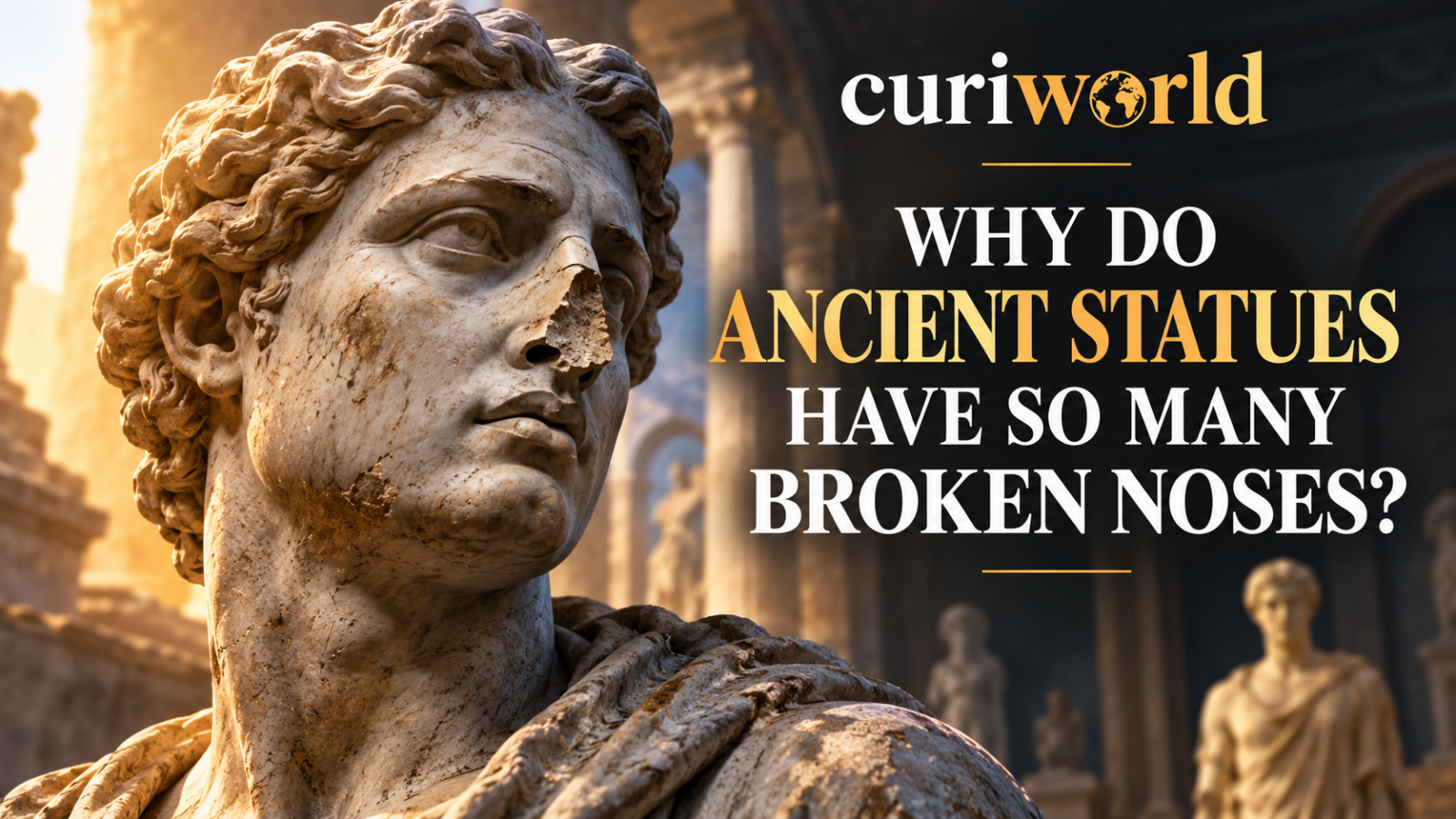
Walk through almost any museum of ancient sculpture and the pattern becomes hard to ignore. Faces may survive for two thousand years, yet the noses are often gone.
It can look suspiciously deliberate.
Sometimes it was. But in many cases, the explanation is much simpler: a statue’s nose is one of the easiest parts to break.
The real story is a mix of fragile geometry, centuries of accidents and erosion, ancient vandalism, religious iconoclasm, political destruction, and changing ideas about restoration.
Noses Are One of the Most Vulnerable Parts of a Statue
A carved nose projects outward from the face.
That makes it very different from features such as the forehead or cheeks, which are supported by a larger mass of stone.
If a marble or stone statue falls forward, is knocked over, transported badly, buried under collapsing architecture, or struck by debris, the nose is one of the first parts likely to take the impact.
Hands, fingers, ears, and other projecting features often disappear for the same reason.
A curator at Copenhagen’s Ny Carlsberg Glyptotek told Smithsonian Magazine that noses are among the most vulnerable features on Greek and Roman sculpture. Many statues in the museum have lost them simply through the physical realities of surviving for centuries.
That helps explain an important pattern:
A damaged nose does not automatically mean someone deliberately attacked the statue.
Sometimes stone breaks exactly where you would expect it to break.
But Some Noses Really Were Smashed on Purpose
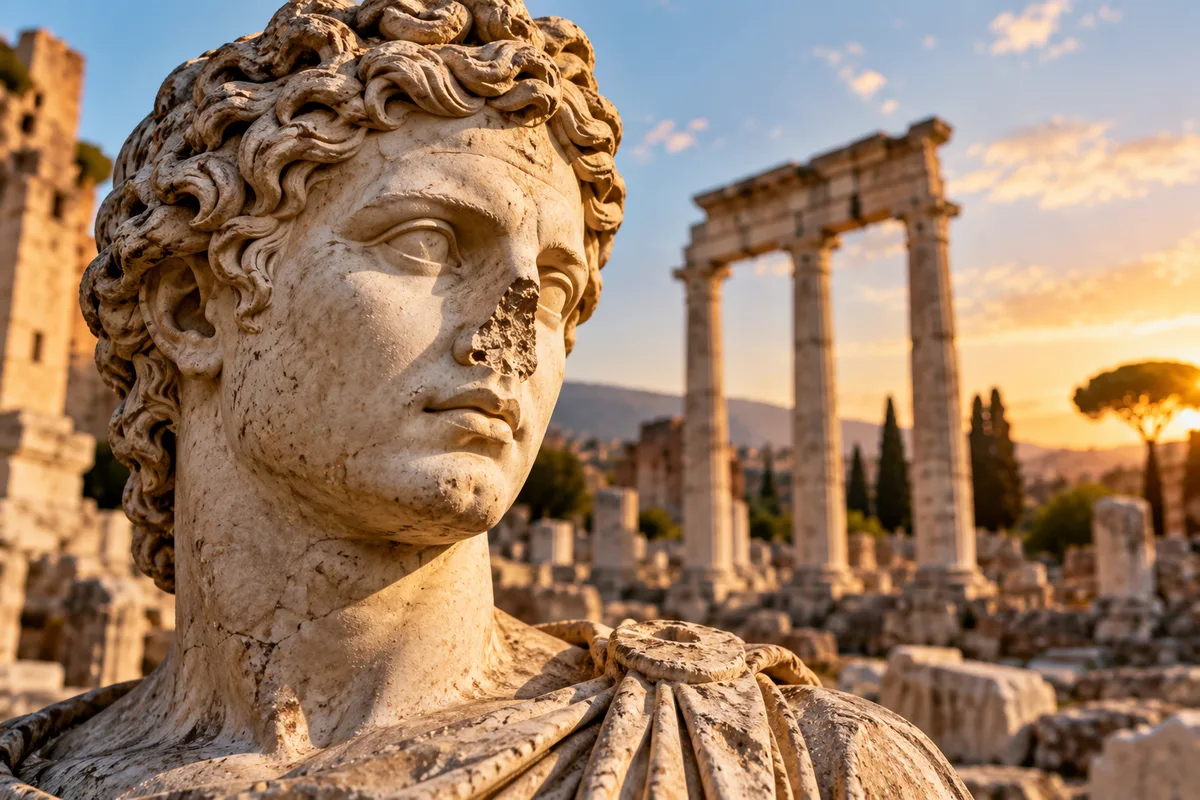
This is where the story becomes much more interesting.
Researchers studying ancient Egyptian sculpture have found repeated patterns of intentional damage. Noses, eyes, ears, names, and other specific features were sometimes targeted rather than randomly broken.
The Brooklyn Museum explains that ancient Egyptian statues were not always regarded as passive decorations.
Within Egyptian religious belief, an image could function as a physical vessel through which a god, spirit, or deceased person could act.
Damaging certain parts of the image could therefore symbolically disable it.
Breaking the nose, for example, could prevent the figure from breathing. Damaging the eyes could stop it from seeing. Destroying ears could prevent it from hearing.
The important point is that this explanation applies to particular cultures, objects, and historical contexts. It should not be used as a universal explanation for every noseless statue in every museum.
Why Would Anyone Want to “Disable” a Statue?
Ancient images could represent power.
That power might belong to a ruler, deity, religious tradition, political rival, or person whose memory someone wanted to erase.
As governments and religions changed, statues could become targets.
The Pulitzer Arts Foundation’s exhibition Striking Power: Iconoclasm in Ancient Egypt examined deliberate damage to Egyptian objects associated with political and religious motivations.
One example is Pharaoh Hatshepsut.
After her reign, parts of her royal imagery and inscriptions were deliberately attacked. Other rulers and religious images also experienced targeted destruction during different periods.
The goal was not necessarily to smash every piece of stone into dust.
Sometimes damaging the right feature was enough.
How Can Archaeologists Tell Damage Was Deliberate?
A single missing nose proves very little.
Patterns matter.
If an ancient statue has fallen and broken naturally, damage may appear in unpredictable places. The nose might be missing, but so might the chin, arm, shoulder, or another exposed feature.
Deliberate attacks can leave a different pattern.
Researchers may find repeated blows to the same symbolic areas across many objects: noses removed, eyes gouged, names erased, royal symbols damaged, or ears deliberately cut away.
For example, the Metropolitan Museum of Art describes a New Kingdom Egyptian sculpture known as Bald-headed Man Wearing Gold Collars as showing deliberate damage to both the nose and ears, suggesting a possible iconoclastic episode.
Context makes the difference.
Archaeologists and conservators examine the location of fractures, tool marks, archaeological setting, historical period, and patterns across related objects before deciding whether damage was intentional.
Why Do Egyptian Statues Get So Much Attention in This Question?
Ancient Egyptian sculpture provides particularly striking evidence because images could hold religious and political significance far beyond decoration.
That has encouraged scholars to study patterns of deliberate damage closely.
But internet explanations sometimes go too far and turn an interesting archaeological finding into a universal rule:
“Ancient statues have no noses because people intentionally broke them off.”
That is too simple.
Greek and Roman statues frequently lost noses through ordinary physical damage. Egyptian statues could suffer the same fate too.
At the same time, some Egyptian examples clearly show targeted destruction.
Both explanations can be true.
Time Is Surprisingly Destructive
Two thousand years is a very long time for any object to survive.
Ancient sculptures have endured earthquakes, collapsing buildings, fires, floods, warfare, burial, excavation, transportation, looting, reuse of stone, weather exposure, and sometimes poor restoration.
Even a statue displayed safely inside a museum today may have spent centuries outdoors or underground before reaching its current location.
Stone feels permanent when we touch it, but carved stone can fracture.
Marble in particular can lose projecting details while leaving the larger face recognizable.
That is why a statue can retain beautifully carved eyes and lips while the nose has disappeared completely.
The same broader principle appears in other types of historic art. Curiworld’s look at why old paintings crack shows how centuries of physical and environmental change can become part of an artwork’s visible history.
Some Statues Once Had Replacement Noses
There is another twist: some ancient statues that appear noseless today were once repaired.
During the 18th and 19th centuries, collectors and museums often preferred ancient sculptures to look visually complete. Missing noses, fingers, limbs, and other features could therefore be reconstructed.
The Ny Carlsberg Glyptotek in Copenhagen preserves an unusual reminder of this practice: a collection of replica noses that were once attached to ancient sculptures.
Modern conservation philosophy generally places greater emphasis on distinguishing original material from later additions.
As a result, some old restorations were removed.
A statue displayed without a nose today may therefore have been:
- created with a nose in antiquity,
- damaged centuries later,
- given a replacement nose in the modern era,
- and eventually displayed again without the reconstruction.
What looks like simple damage can carry several layers of history.
If you enjoy the way age changes artworks, Curiworld also explores why old paintings can look different today than when they were first created.
Was Every Broken Nose an Act of Vandalism?
No.
That is the most important distinction.
A missing nose can result from:
- accidental falls,
- structural collapse,
- weathering and erosion,
- burial and excavation damage,
- transportation,
- warfare,
- reuse of stone,
- deliberate vandalism,
- political iconoclasm,
- religious destruction.
Without evidence from the specific object, it is risky to choose one explanation simply because it makes the better story.
Archaeology works in the opposite direction: researchers examine the damage first and then ask which explanation best fits the evidence.
So Why Do So Many Ancient Statues Have Broken Noses?
Because noses are almost perfectly designed to be damaged.
They stick out from the face, are supported by relatively little stone, and can take the first impact when a sculpture falls or is struck.
Thousands of years give accidents plenty of opportunities.
But that is only half the story.
In some ancient societies — particularly in documented cases from Egypt — statues were intentionally mutilated because images carried religious, political, or symbolic power. Removing a nose, destroying eyes, or erasing a name could be a deliberate attempt to neutralize that power.
So the missing noses in museums do not tell one story.
Some are evidence of gravity.
Some are evidence of history.
And a few preserve the marks of people who wanted the face itself to stop having power.
Sources
Smithsonian Magazine — What a Cabinet of Fake Noses Tells Us About How Art Preservation Has Evolved
Physical vulnerability of sculpted noses and historical restoration practices:
https://www.smithsonianmag.com/travel/cabinet-fake-noses-sculture-180969163/
Brooklyn Museum — Why Are the Noses Broken?
Ancient Egyptian beliefs and deliberate damage to statues:
https://opencollection.brooklynmuseum.org/exhibitions/3329?limit=20&offset=160
Pulitzer Arts Foundation — Striking Power: Iconoclasm in Ancient Egypt
Political and religious motivations behind deliberate destruction of Egyptian images:
https://pulitzerarts.org/art/striking-power/
The Metropolitan Museum of Art — Bald-headed Man Wearing Gold Collars
Museum example showing deliberate damage to the nose and ears:
https://www.metmuseum.org/art/collection/search/330125







Join the discussion