What Is a Third Place—and Why Modern Life Needs One?
Third places are the cafés, libraries, parks, and community spaces where casual contact becomes belonging. Discover what makes them work—and why modern life still needs them.
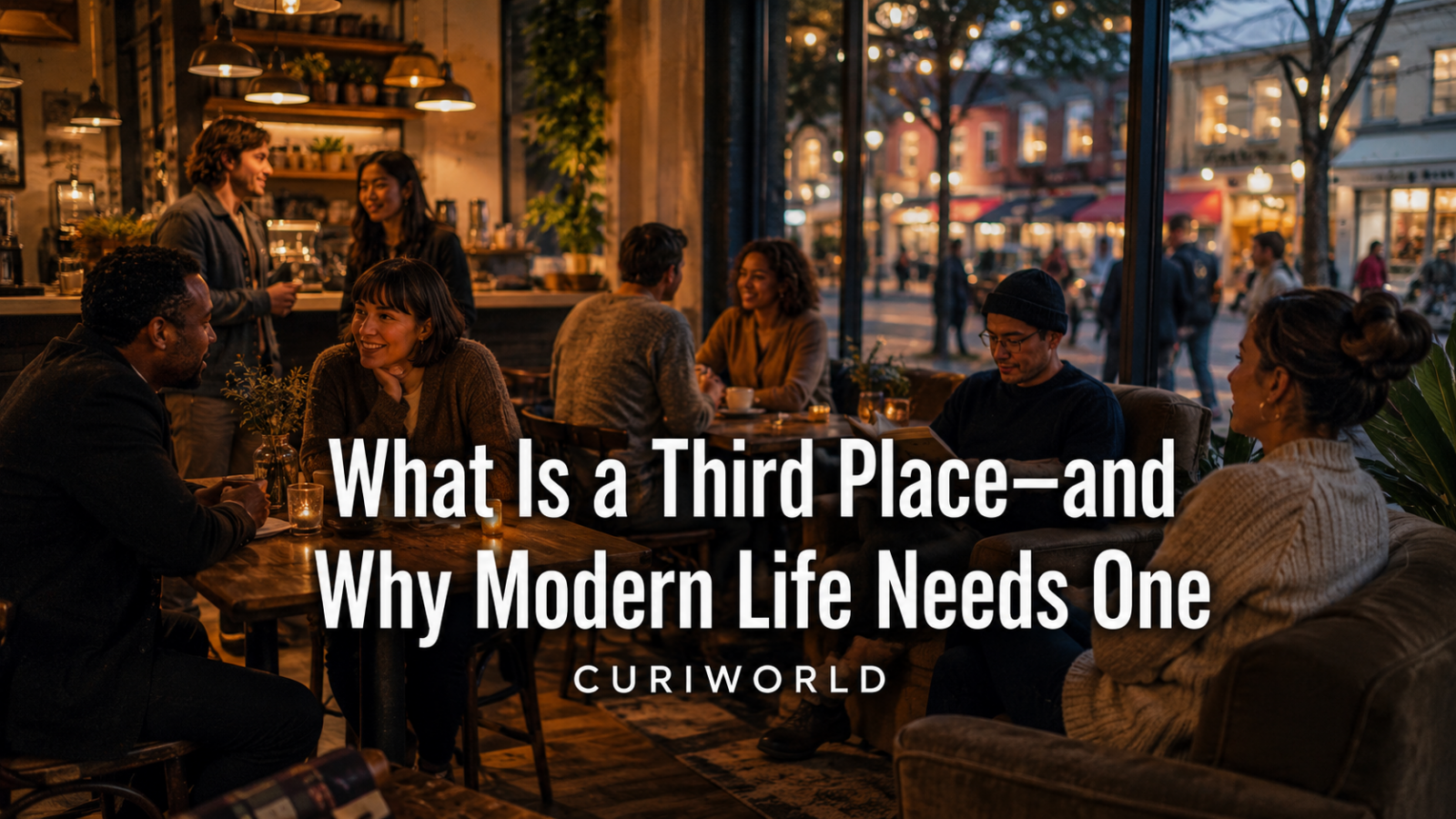
You can have a comfortable home, a demanding job, and several active group chats—and still lack somewhere you can simply show up.
No invitation. No appointment. No need to host, perform, or explain why you are there. Perhaps the staff recognize you, a familiar face nods from across the room, or a casual conversation begins without being placed on anyone’s calendar.
That kind of setting is known as a third place: a regular social environment beyond home and work where people can spend time informally, encounter others, and gradually develop a sense of belonging.
The idea sounds simple. What makes it important is how easily this layer of everyday life can disappear.
A Third Place Is a Social Habit, Not a Building Type
American sociologist Ray Oldenburg developed and popularized the third-place concept. In his framework, home is the “first place” and work is the “second place.” The third place is where informal public life happens.
Classic examples include cafés, libraries, parks, neighborhood bars, barbershops, bookstores, community centers, places of worship, and local markets. Yet the label does not come automatically with the building.
A coffee shop filled with hurried customers may never become a third place. A modest bench outside a neighborhood store might become one if the same people regularly stop, talk, and recognize one another there.
The defining feature is therefore not what a venue sells or what appears above its door. It is the relationship among the place, its regular users, and the routines they create together.
The phrase “third space” is sometimes used casually as a synonym, but it also has other meanings in cultural theory, education, and workplace design. “Third place” is the more precise term for Oldenburg’s idea of informal social settings beyond home and work.
What Makes a Genuine Third Place?
Third places can look very different across cultures and communities, but several qualities tend to appear repeatedly:
- They are easy to revisit. A place cannot become part of ordinary life if reaching it requires a major journey or elaborate planning.
- The barrier to entry is low. People can usually spend time there without paying a large amount, applying for membership, or receiving an invitation.
- The atmosphere is informal. Visitors do not need to dress, speak, or behave as if they are attending a formal event.
- People can linger. The setting allows enough time for recognition, conversation, and familiarity to develop.
- Regulars give the place continuity. New visitors may arrive, but repeated faces help create its character.
- Social interaction is possible without being mandatory. Someone can join a conversation, sit quietly near others, or simply become a familiar presence.
This last quality matters. A third place should not feel like a networking event disguised as leisure. The social value comes partly from its lack of pressure.
Why Modern Life Makes Their Absence More Noticeable
Many daily activities can now be completed with less contact than before. Food arrives at the door. Banking, shopping, and entertainment move onto screens. Self-service systems reduce brief exchanges. Remote work can pull the workplace into the home until the first and second places occupy the same room.
These forms of convenience can be genuinely useful. The trade-off is that incidental contact becomes easier to remove from the day.
A planned dinner with close friends is valuable, but it requires coordination. A third place provides something different: the possibility of company without organizing an event. You can arrive alone and still be around familiar people.
That creates a quieter route into social life. Some relationships begin with the immediate chemistry explored in Curiworld’s look at why we click with some people. Others grow because two people keep appearing in the same place until recognition becomes a greeting and a greeting becomes a conversation.
Third places are especially good at supporting that second path.
What Third Places Give Us That Home and Work Cannot
Home is private and usually selective. Work brings people together, but job titles, responsibilities, and power differences shape those relationships. A third place creates a more voluntary setting where people can be present without acting only as an employee, customer, parent, partner, or host.
This can produce several small but meaningful forms of connection.
A barista notices that a regular has not visited lately. Two parents exchange useful neighborhood information while their children play. Someone hears about a local event from a person they would never have encountered through their close friends. A familiar stranger begins to make an unfamiliar city feel less anonymous.
None of these interactions must become a deep friendship to matter. Casual acquaintances can still provide recognition, conversation, practical information, and the reassuring sense that other people notice our presence.
A peer-reviewed paper published in Health & Place describes third places as part of the social infrastructure that supports interaction, community, and social support. The researchers suggest that such places may help buffer loneliness, stress, and alienation, while also emphasizing that their relationship with health and quality of life remains under-researched.
That caution is important. A third place is not a guaranteed cure for loneliness, and it cannot replace close relationships, professional care, or accessible public services. It is better understood as an environment that makes connection more possible.
A Café Is Not Automatically a Third Place
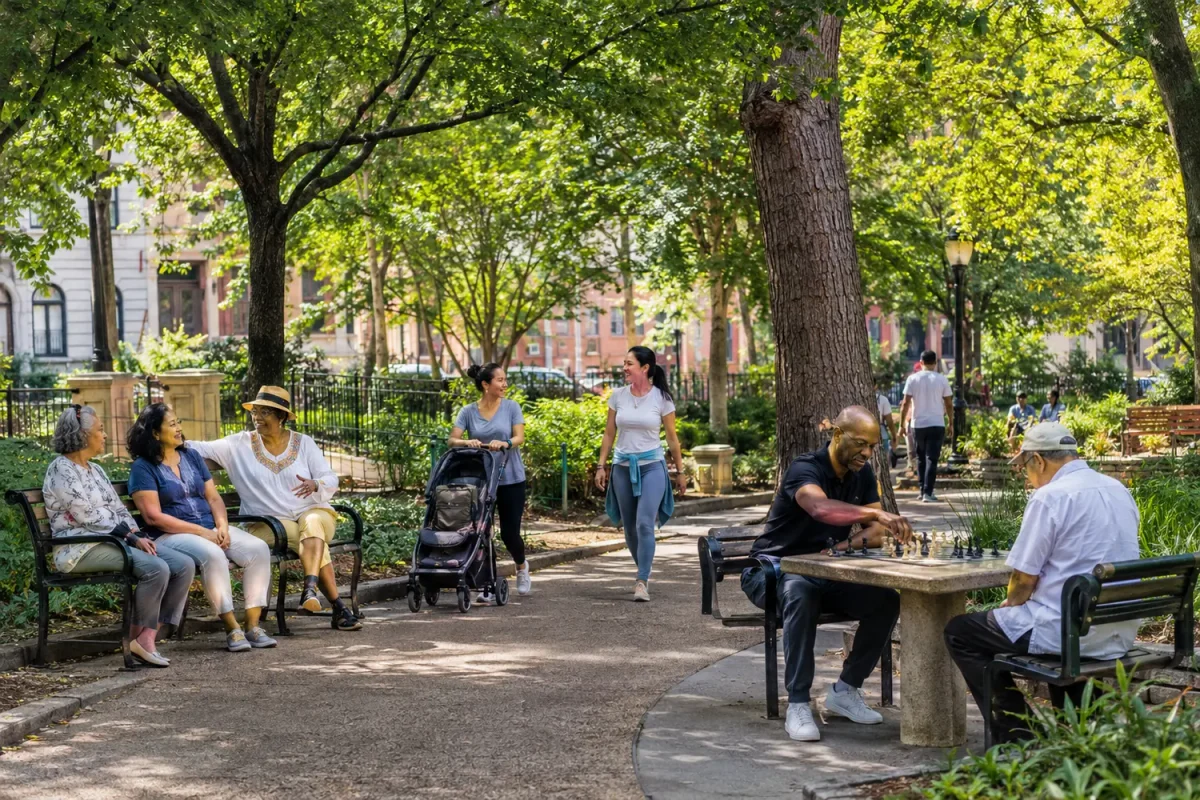
The recent popularity of the term has made it tempting to call any attractive public venue a third place. That misses the central idea.
An expensive café may be technically open to the public but too costly for regular visits. A restaurant that expects rapid table turnover may discourage lingering. A park without shade, seating, restrooms, or safe access may offer public land without creating a usable social setting.
Exclusion can also be less obvious. Stairs, hostile seating, surveillance, dress expectations, age restrictions, and the assumption that everyone must buy something can determine who feels welcome enough to stay.
A genuine third place does more than admit people through the entrance. It allows a reasonably broad group of them to return, feel comfortable, and participate in the life of the setting.
Can an Online Community Be a Third Place?
Digital communities can reproduce several third-place qualities. A well-moderated forum, online game, group chat, or virtual club may contain regulars, shared humor, informal conversation, and the expectation that people will return.
These spaces can be particularly valuable for people separated by geography, living with limited mobility, or looking for a community built around a specialized interest.
Still, a digital third place does not provide everything a physical one does. It does not place you beside people who share your street, use the same park, or experience the same local problems. It also cannot fully reproduce the unplanned, embodied experience of occupying a public setting with people outside a carefully selected online network.
An online community can be a meaningful social environment without serving as a complete substitute for neighborhood-level public life. Many people benefit from having both.
How to Find Your Own Third Place
Searching for a third place does not require finding the most fashionable café in town. Start with places that could realistically become part of your routine.
Ask a few practical questions:
- Can I reach this place without turning the visit into a major trip?
- Can I return regularly without spending more than I can comfortably afford?
- Would I feel comfortable arriving alone?
- Are there reasons for the same people to return?
- Can I stay for a while without feeling rushed?
- Is conversation possible without being forced?
A library with a recurring book group may work. So might a neighborhood park, community garden, local gym, weekly market, faith community, makerspace, or small café where lingering is welcome.
Once you find a promising place, repetition matters more than intensity. Visit at roughly the same time. Acknowledge the people who work there. Join a small recurring activity if one feels natural. Allow familiarity to develop without treating every interaction as a test of your social skills.
You do not need to become the most talkative person in the room. Belonging often begins with something much smaller: recognizing a face and realizing that the person recognizes you too.
Communities Need Places Where People Are Allowed to Stay
Finding a third place is partly a personal choice, but access also depends on how neighborhoods are built and funded.
Libraries need usable hours. Parks need seating and shade. Public spaces need safe access, restrooms, and designs that work for different ages and abilities. Affordable local businesses need enough stability to develop regular communities rather than constantly turning over.
Location matters as well. Curiworld’s guide to why some cities feel more walkable than others shows how proximity, mixed land use, comfortable streets, and public transportation influence whether people can actually reach everyday destinations.
A beautiful gathering place that can only be reached by a long drive will not play the same neighborhood role as one people naturally pass during an ordinary day.
Cities therefore need more than destinations where people are expected to purchase, complete a task, and leave. They also need places where staying is an accepted use of space.
The Missing Room in Everyday Life
A third place is often ordinary: a familiar table, a shaded bench, a library corner, or a room where nobody is surprised when you return.
Its value develops through accessibility, repetition, and the presence of other people. Home and work remain central parts of life, but neither can carry every social need. Third places provide the public layer between them—a setting open enough to share, comfortable enough to revisit, and familiar enough to begin feeling like it belongs to you.
Sources
Project for Public Spaces — Ray Oldenburg and the Third-Place Concept







Join the discussion