What Makes Old Paintings Look So Different Today?
Old paintings do not necessarily look the way their artists first saw them. Varnish, pigments, dirt, cracks and centuries of chemical change can transform their appearance.
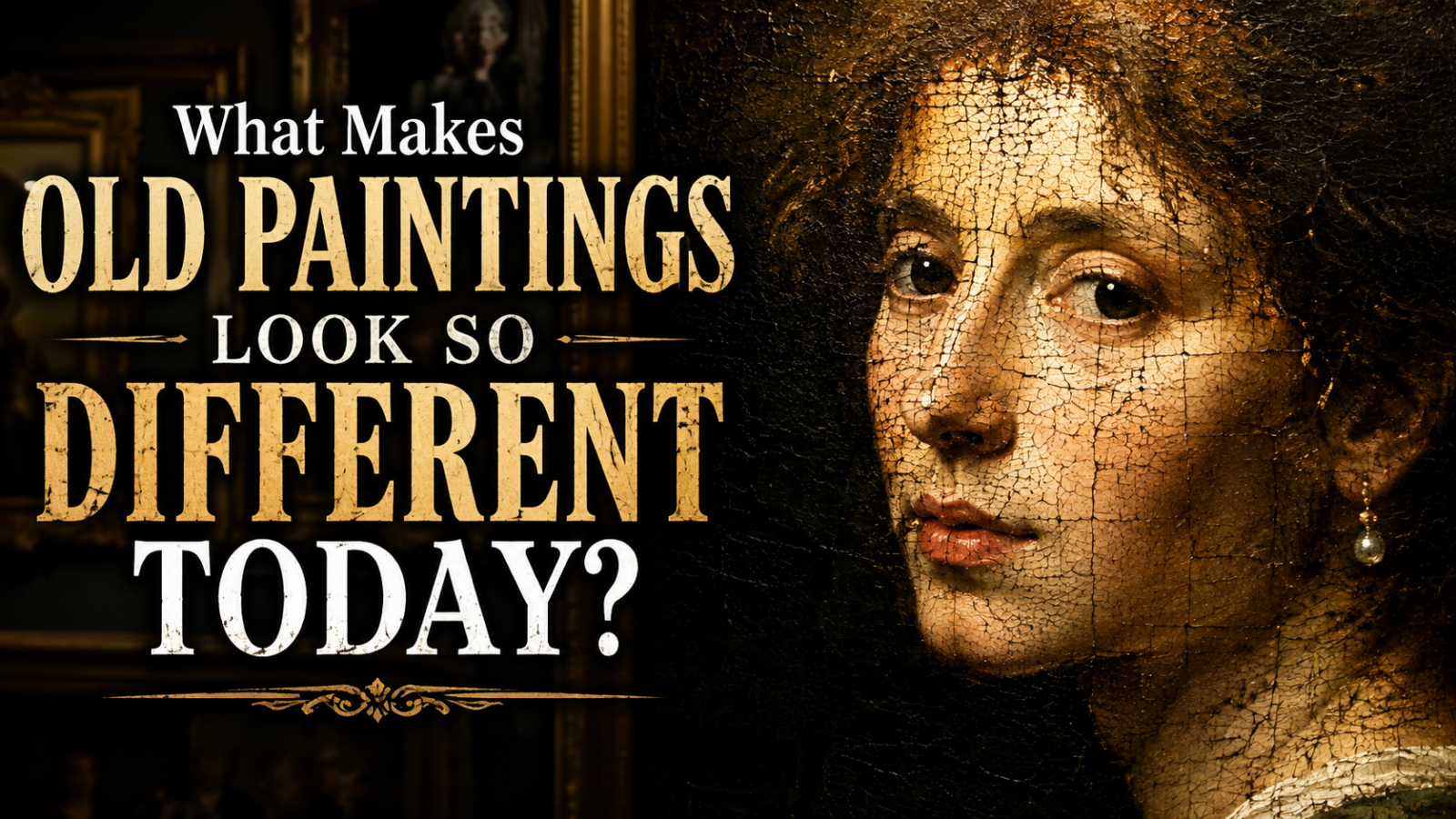
Walk through a gallery of centuries-old paintings and you may notice something immediately: dark backgrounds, warm brown tones, muted colors and delicate networks of cracks across the surface.
It is easy to assume that this is simply what old paintings were supposed to look like.
Often, it is not.
A painting can change considerably during hundreds of years of exposure to light, air, humidity, dirt, aging varnish and chemical reactions within the materials themselves. Previous cleaning and restoration can change its appearance too.
Some of those changes sit above the original paint and can potentially be reduced by conservation. Others happen inside the pigments and paint layers, meaning the appearance the artist originally saw may be impossible to recover completely.
That makes an old painting more than a preserved image. It is also a physical record of everything that has happened to the object since the artist put down the brush.
Old Varnish Can Make an Entire Painting Look Yellow
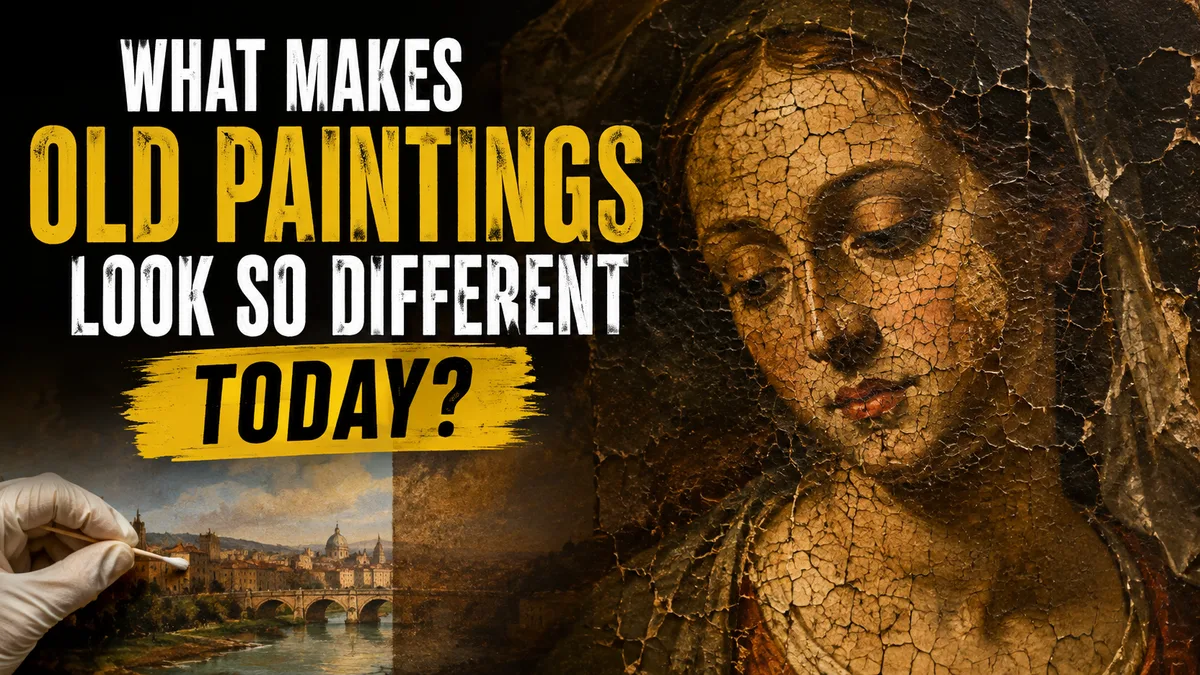
One of the biggest changes may come from something that is not actually part of the painted image.
It is the varnish covering it.
Traditional oil paintings were often finished with a transparent varnish. When fresh, varnish can deepen colors, create a more unified surface and provide some protection from dirt and atmospheric contamination.
Traditional natural-resin varnishes, however, do not necessarily remain clear forever.
As they age, they can become yellow or brown. Instead of seeing the original colors directly, the viewer is effectively looking through an increasingly warm-colored transparent layer.
The change can affect the whole composition.
Bright whites may become creamy. Pale blue skies can appear greener or duller. Delicate shadows may merge into darker areas, while a painting that originally contained strong contrasts can gradually develop the warm brown appearance many people associate with “old art.”
The Smithsonian Museum Conservation Institute explains that traditional natural-resin varnishes can darken with age and alter the tonal balance of a painting.
This is also why photographs taken during professional conservation can sometimes look remarkably dramatic. Removing deteriorated varnish may reveal much brighter colors underneath.
The conservator has not necessarily made the painting brighter than it originally was. A layer that was interfering with how those colors reached the viewer has been reduced or removed.
Centuries of Dirt Change What We See
A painting hanging indoors may seem protected from the outside world, but several centuries give the environment plenty of time to leave a mark.
Dust can accumulate on a surface, but historically paintings were also exposed to candle smoke, fireplace soot, tobacco smoke and other airborne contaminants.
Some of this material may settle on the surface. Some can become associated with an old varnish layer.
As contamination builds, contrast can decrease and colors may appear less vivid.
This is an important distinction: a pigment does not always need to chemically change for us to perceive a different color.
Our perception depends on the light that reaches the painting and the light that returns to our eyes.
A familiar everyday example is fabric. Curiworld’s explanation of why wet clothes look darker than dry clothes shows how changing the way light interacts with a surface can make a material appear darker even though its underlying dye has not suddenly changed.
A centuries-old painting involves much more complicated materials, but the underlying lesson is useful: what we see depends on both color and the surface through which we are seeing it.
Some Pigments Really Do Change Color
Varnish and dirt are only part of the story.
Sometimes the paint itself has changed.
Historic artists worked with pigments made from minerals, metals, plants and other natural or manufactured substances. Different pigments have very different chemical properties, and not all of them remain equally stable over long periods.
Some colorants are sensitive to light. Others react with moisture, oxygen, pollutants, binders or neighboring materials.
Research from the National Gallery of Art on pigment alteration and color change describes how pigments can undergo chemical reactions triggered by environmental conditions, potentially changing the appearance of an artwork over time.
The important consequence is not simply that one color becomes weaker.
Painting depends on relationships between colors.
Imagine an artist placing a particular green beside a strong red because the contrast between them creates exactly the effect they want. If the green changes significantly during the following centuries while the red remains relatively stable, the relationship between those colors changes too.
The figures and brushstrokes may survive, yet the visual balance experienced by the original audience may no longer exist.
Unlike surface dirt, this kind of change cannot necessarily be removed by cleaning.
The material itself is different.
Bright Colors Were Not Unusual in Historical Art
The dark appearance of many old paintings can create a misleading idea about the past.
We sometimes imagine earlier centuries as visually dominated by brown, beige, gray and black because those are the tones we frequently encounter in aged objects.
Historical art could actually be strikingly colorful.
Artists deliberately sought vivid blues, reds, greens, yellows and other pigments, sometimes using costly materials to achieve particular effects.
The problem is that different colors survive differently.
If one pigment remains strong while another fades, a painting can slowly move away from its original color harmony.
That means looking at an old painting today is not necessarily the same visual experience as standing in front of it shortly after it was completed.
Modern conservation science can sometimes identify tiny surviving traces of pigments and help researchers understand how a work may once have appeared. But reconstructing an original appearance is not the same as actually traveling back in time.
There is always some uncertainty.
Paint Layers Can Become More Transparent
A traditional painting is not necessarily one flat layer of color.
Artists may build an image using a prepared ground, opaque paints, translucent glazes and several overlapping layers.
Those layers interact with light to create the final appearance.
As some paint films age, their optical properties can change. Areas may become more transparent, allowing underlying layers to become easier to see than the artist intended.
This can reveal a fascinating part of the creative process.
An artist might originally paint a hand in one position, change their mind and cover it with a new version. Hundreds of years later, changes in the overlying paint may make part of that first hand visible again.
Such visible alterations are often called pentimenti, from an Italian word associated with changes of mind or repentance.
Time can therefore reveal decisions that were once deliberately hidden beneath the finished painting.
Why Do Old Paintings Have So Many Cracks?
The fine network of cracks visible on many historical paintings is generally known as craquelure.
These cracks are another reminder that a painting is not simply an image.
It is a physical structure.
Canvas, wooden panels, ground layers, paint and varnish can respond differently to temperature, humidity and aging. Over long periods, paint films can lose flexibility and become brittle.
Meanwhile, a canvas or wooden support may expand and contract as environmental conditions change.
The Smithsonian Museum Conservation Institute notes that aging paint films can shrink and lose flexibility, while movement in the support can place additional stress on the layers above it.
Eventually, cracking may develop.
Craquelure can influence appearance as well as texture. Small cracks may collect dirt and interrupt the way light reflects from the painted surface.
What appears to us as part of the “look” of an Old Master painting therefore may not have been visible when that work first left the artist’s studio.
Restoration Can Become Part of a Painting’s History
Not every visual change is caused naturally.
People change paintings too.
During a lifespan of several hundred years, an artwork may be cleaned, repaired, revarnished, retouched or partly repainted several times.
Restoration standards have also changed considerably.
Treatments performed generations ago may not match the conservation principles used by major museums today. Earlier restorers might have added paint over damaged areas or applied materials that later became discolored themselves.
A conservator examining an old work may therefore encounter several histories at once:
the artist’s original materials, natural aging, environmental contamination and interventions made by previous restorers.
This is one reason professional conservation is far more complicated than simply making an old painting “look new.”
Doing that could destroy information contained in the artwork.
The aim is generally to understand and preserve the work while making careful decisions about which later changes should — or realistically can — be treated.
Museum Lighting Changes the Experience Too
There is another reason a historical painting may look different from what you expect: the room where you are seeing it.
The appearance of color depends partly on illumination.
Modern museums carefully manage lighting because light allows visitors to see artworks but can also contribute to deterioration in sensitive materials.
A painting under controlled museum lighting may therefore look different from the same object photographed under intense studio lights, reproduced in a book or displayed on a bright phone screen.
Digital images create another layer of variation.
Camera settings, scanning equipment, image processing and your own display can all change brightness and color.
So if an online reproduction looks much brighter than the painting you remember seeing in a museum, neither experience necessarily tells the complete story on its own.
Why Can’t Conservators Simply Restore the Original Colors?
Because there may no longer be one simple layer hiding the “real” painting underneath.
Some alterations are removable surface changes.
Others are irreversible chemical transformations.
A yellowed varnish may sometimes be carefully removed or reduced. Surface grime may be cleaned. An old restoration may potentially be treated.
A pigment that has chemically changed is a different problem.
Removing something will not automatically bring its former color back.
Trying to repaint every altered area according to what researchers believe it once looked like would also introduce a large amount of modern material and interpretation into the historical object.
Conservation therefore involves restraint as much as restoration.
Scientific analysis can reveal pigments, hidden layers and previous changes, but knowing that something has changed does not always mean the change should — or even can — be reversed.
Aging Happens to More Than Paintings
The process feels extraordinary because paintings can survive for centuries, but the basic idea is familiar.
Materials continue changing even when they appear to be sitting still.
Fabric is another good example. As Curiworld explains in its guide to why white clothes turn yellow in storage, oxidation and other slow processes can alter an object’s appearance long after it has been put away.
Paintings operate on a vastly more complicated level, but time never truly stops acting on their materials.
Light continues interacting with pigments.
Oxygen remains present.
Humidity changes.
Binders age.
Varnishes oxidize.
Supports move.
The process may be extremely slow from a human perspective, but give it 200, 400 or 600 years and the accumulated effects can become impossible to miss.
The Painting We See Is Both Art and History
There probably is no single answer to what a centuries-old painting “really” looks like.
The artist saw one version when it was new.
People several generations later saw another.
Conservators may reveal details that had been hidden beneath dirt or deteriorated varnish, while scientific analysis may identify colors that no longer survive in their original form.
What hangs in a museum today is therefore both the artist’s work and the material history of that work.
The yellowing, fading and cracking do not necessarily represent the painter’s original intentions. But after centuries, they have become evidence of the extraordinary physical journey the object has survived.
That may be the most interesting way to look at an old painting: not as a perfectly frozen image from the past, but as something that has been quietly changing ever since it was created.
Sources
Smithsonian Museum Conservation Institute — What Makes the Painting Image Change?
National Gallery of Art — Pigment Alteration and Color Change








Join the discussion