15 Places on Earth That Don’t Look Real — But Actually Are
These 15 real places look almost impossible—from mirror-like salt flats to glowing caves and surreal deserts. Some appear this way only under very specific weather, seasonal or lighting conditions.
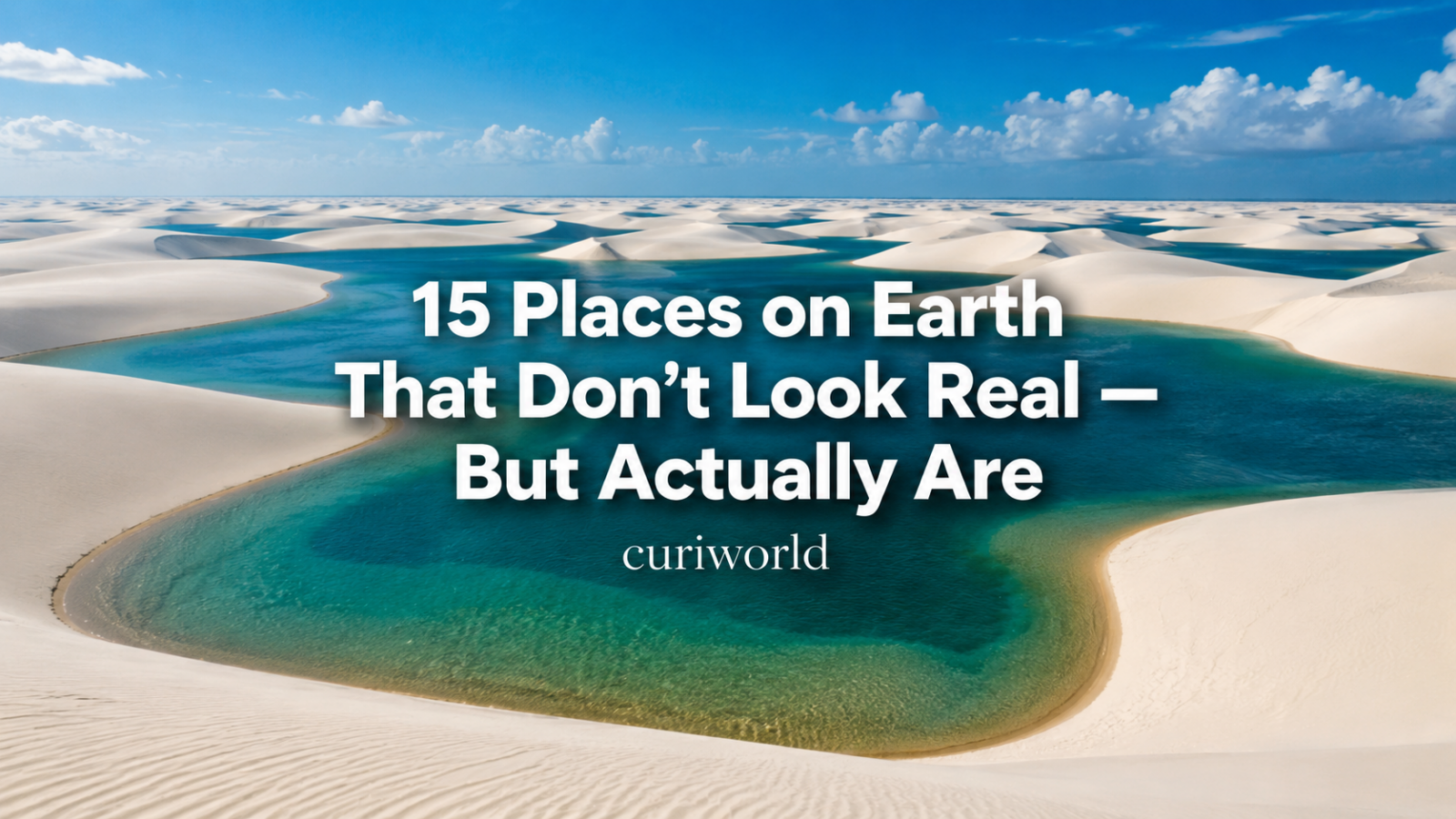
Earth is perfectly capable of producing landscapes that look over-edited without any help from Photoshop: a salt flat that erases the horizon, a cave ceiling that resembles a star field, white desert rocks shaped like giant sculptures, and a river that appears to have been painted by hand.
The useful catch is that “real” does not always mean “looks exactly like the viral photo every day.” Water level, season, sunlight, mist, viewpoint, and even long-term environmental change can transform several of these places. The most interesting part is not simply that they exist, but why they look so improbable.
What Makes a Place Look “Unreal”?
There is no single reason a landscape can look almost artificial.
Some places seem unreal because of extreme color contrast. Others depend on unusual geology, reflective surfaces, rare biological activity, seasonal flooding, mineral deposits or the angle of sunlight.
Several of the places in this list also look very different depending on when and how they are photographed.
A few common reasons include:
- seasonal water levels,
- unusual mineral or salt concentrations,
- rare rock formations,
- erosion over thousands or millions of years,
- biological pigments or bioluminescence,
- snow, mist or cloud cover,
- and photographic perspective.
That matters because the most spectacular image of a place is not always its everyday appearance.
The landscape is still real.
But understanding the conditions behind the photograph often makes it even more interesting.
1. Salar de Uyuni, Bolivia — The Sky Under Your Feet
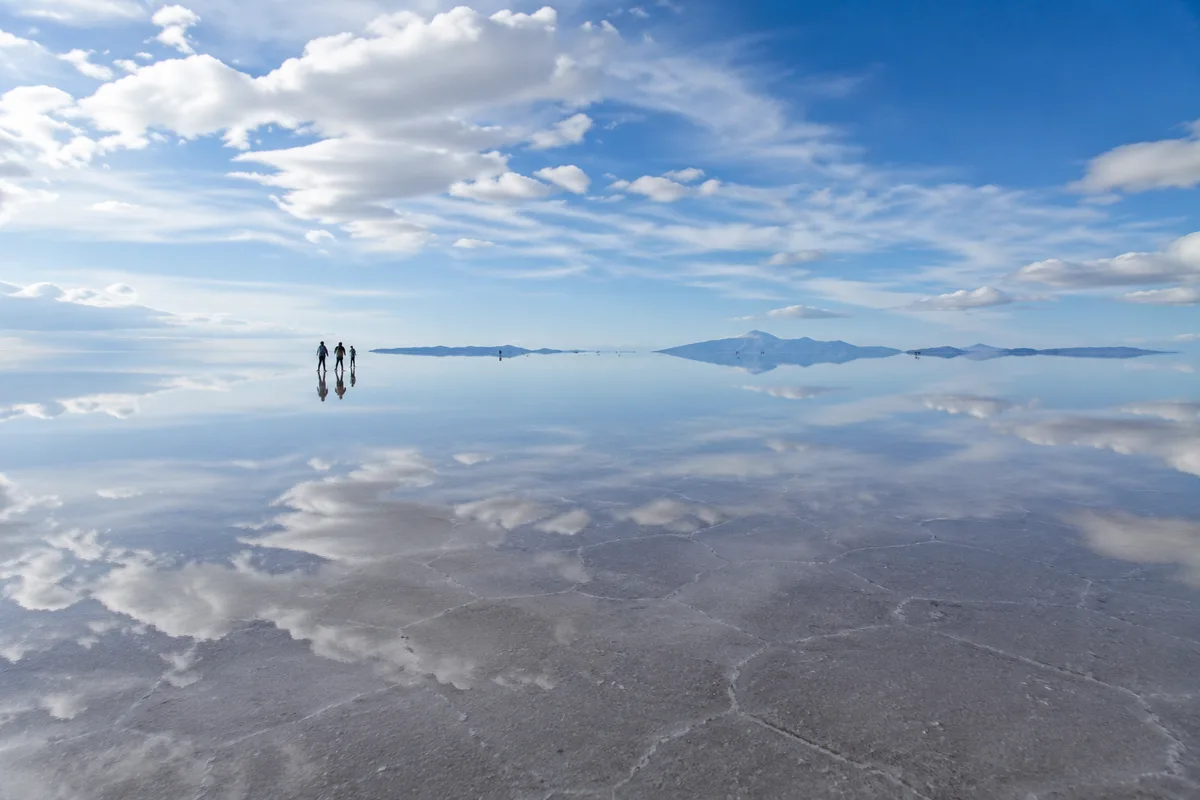
In the dry season, Salar de Uyuni is an immense white plain of salt. After enough rain, however, a shallow layer of water can spread across its exceptionally flat surface and turn it into a near-seamless mirror.
Clouds appear both above and below you, while the horizon can become almost impossible to locate.
Salar de Uyuni is the world’s largest salt flat, covering roughly 10,000 square kilometers. Its famous mirror effect is completely real, but it is seasonal. For much of the year, the landscape is bright, dry, and mineral-white rather than reflective.
That contrast is part of what makes it extraordinary: the same place can resemble an endless frozen plain one month and an impossible sky world another.
Nature produces plenty of other scenes that look almost unreal too, including the science behind why seawater can glow blue at night.
Reality check: The giant mirror effect is not visible all year. It appears when a sufficiently thin layer of water covers the exceptionally flat salt surface. In drier conditions, Salar de Uyuni looks more like an endless white salt plain than a reflection of the sky.
2. Lençóis Maranhenses, Brazil — A “Desert” Filled With Blue Lagoons
From the air, Lençóis Maranhenses looks as if someone poured turquoise water between endless white dunes.
It is often described as a desert, but that description is slightly misleading. The region receives significant seasonal rainfall. During the wetter months, water collects in low areas between the dunes, creating thousands of temporary freshwater lagoons.
The lagoons are usually at their fullest around the middle of the year and gradually shrink as the dry season progresses.
This means the surreal combination of brilliant white sand and blue water is not permanent. It is a seasonal transformation created by an unusual meeting of dunes, rainfall, and underlying geology.
Reality check: The blue lagoons are seasonal. Their size and number depend on rainfall, and many shrink dramatically during the dry season. Photos showing endless turquoise pools usually represent the park during or shortly after the wetter part of the year.
3. Deadvlei, Namibia — Black Trees, White Clay, Red Dunes
Few natural landscapes look as deliberately composed as Deadvlei.
Dark, dead camel-thorn trees stand on a pale clay pan while enormous orange-red dunes rise behind them. Under the intense desert sun, the contrast can look almost graphic: black, white, red, and blue arranged like a minimalist painting.
The trees died centuries ago after shifting dunes changed the local water supply. The extremely dry climate prevented them from decomposing normally, leaving their weathered trunks preserved in place.
The scene may look digitally enhanced, but much of its strange beauty comes from naturally extreme color contrast.
Reality check: The dramatic black trees are real, but they are not burned. Their dark appearance comes from centuries of exposure in an extremely dry environment. The trees died after changing water conditions left the clay pan too dry for them to survive.
4. Canaima National Park, Venezuela — Mountains With Their Tops Cut Flat
The tepuis of southeastern Venezuela resemble enormous stone tables rising vertically above the forest.
Instead of familiar pointed mountain peaks, many have steep cliffs and remarkably flat summits. Mist and waterfalls often make them appear even more isolated from the landscape below.
These ancient formations are known as tepuis, and they dominate large parts of Canaima National Park.
Their unusual shape helped inspire generations of stories about lost worlds and isolated ecosystems. Yet the formations are entirely geological, created over immense periods of erosion.
Nature did not flatten the mountains with a ruler. It only looks that way.
5. Grand Prismatic Spring, United States — A Natural Rainbow in Yellowstone
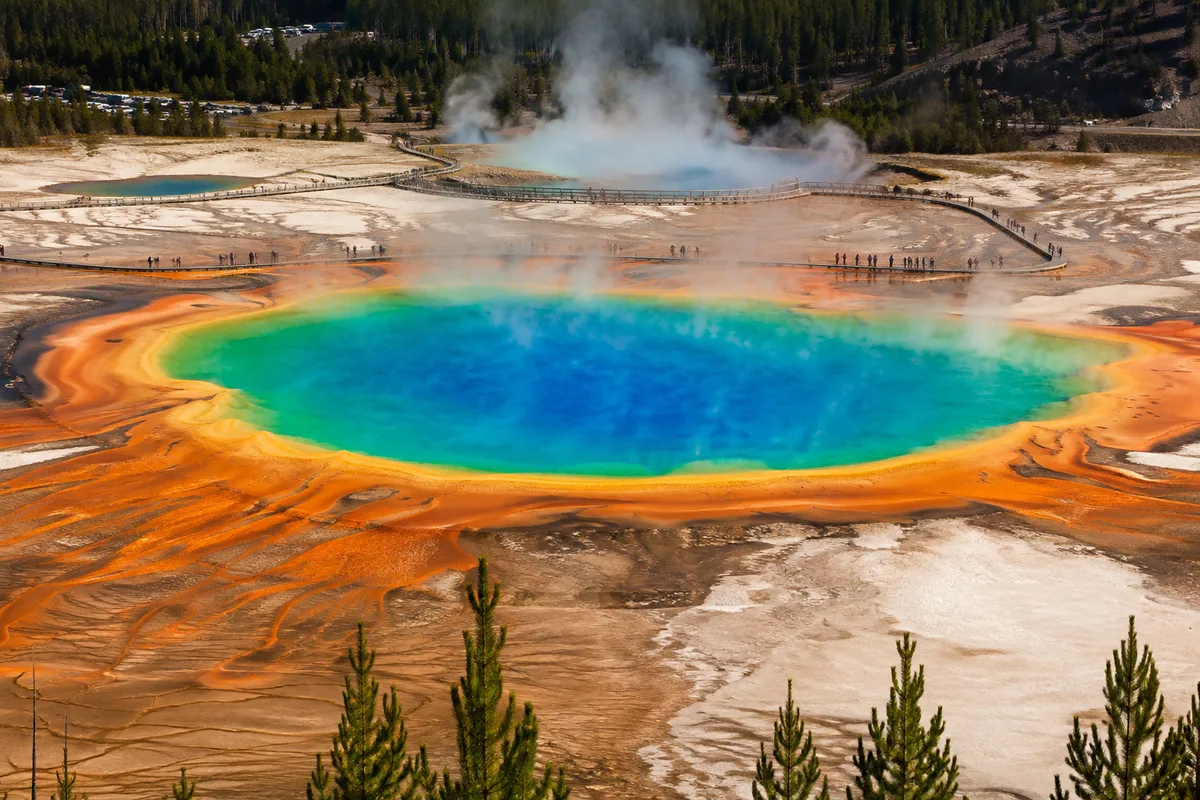
Yellowstone’s Grand Prismatic Spring looks like an enormous blue eye surrounded by rings of yellow, orange, green, and brown.
The colors are not artificial.
The center of the spring is extremely hot, producing its intense blue appearance. Around the cooler edges, heat-loving microorganisms thrive in different temperature zones. These microbial communities contribute to the vivid bands of color around the spring.
At roughly 200 to 330 feet across, Grand Prismatic is Yellowstone’s largest hot spring.
Conditions matter, though. Steam can partially obscure the colors, particularly in cooler weather, which means the perfect aerial-style view seen in photographs is not guaranteed at every moment.
6. Caño Cristales, Colombia — A River That Looks Painted
For part of the year, Colombia’s Caño Cristales appears to glow in shades of red, green, yellow, and darker tones beneath remarkably clear water.
It is often called the “River of Five Colors.”
The water itself is not naturally red. Much of the spectacular color comes from an aquatic plant called Macarenia clavigera, which becomes highly visible under the right combination of water level and sunlight.
The effect is strongly seasonal.
That makes Caño Cristales less like a permanently colorful river and more like a recurring natural performance. Visit at the wrong time, and the famous colors may be far less dramatic.
Reality check: The river is not permanently rainbow-colored. Its famous red, yellow, green and orange appearance depends on seasonal conditions and aquatic plants in the riverbed. At other times of year, the colors can be far less dramatic.
7. Pamukkale, Türkiye — White Terraces That Are Not Snow
From a distance, Pamukkale can look frozen.
Brilliant white terraces cascade down a hillside while pale blue thermal water gathers in naturally formed pools. Yet the landscape has nothing to do with snow or ice.
Mineral-rich thermal water has flowed across the hillside for thousands of years. As the water cools, calcium carbonate is deposited, gradually building the white travertine terraces.
The name “Pamukkale” means “cotton castle,” which is surprisingly fitting. From afar, the hard mineral formations can appear soft and cloudlike.
It is a landscape built slowly by water, heat, and dissolved minerals.
Reality check: Pamukkale’s white terraces are natural mineral formations created by calcium-rich thermal water. Their appearance depends heavily on water flow, preservation rules and lighting, so not every terrace is filled with bright blue water at all times.
8. White Desert, Egypt — Giant Chalk Sculptures in the Sahara
The Sahara is usually associated with golden sand and rocky horizons.
Egypt’s White Desert looks completely different.
Large areas are covered in pale chalk, and wind erosion has shaped the landscape into strange natural formations resembling mushrooms, towers, animals, and abstract sculptures.
Against a clear desert sky, the whiteness can resemble snow.
Nothing about the formations is artificial. Their smooth, unusual shapes are the result of erosion acting on soft rock over long periods of time.
The result looks almost like an outdoor sculpture garden created at an impossible scale.
9. Giant’s Causeway, Northern Ireland — 40,000 Stone Columns
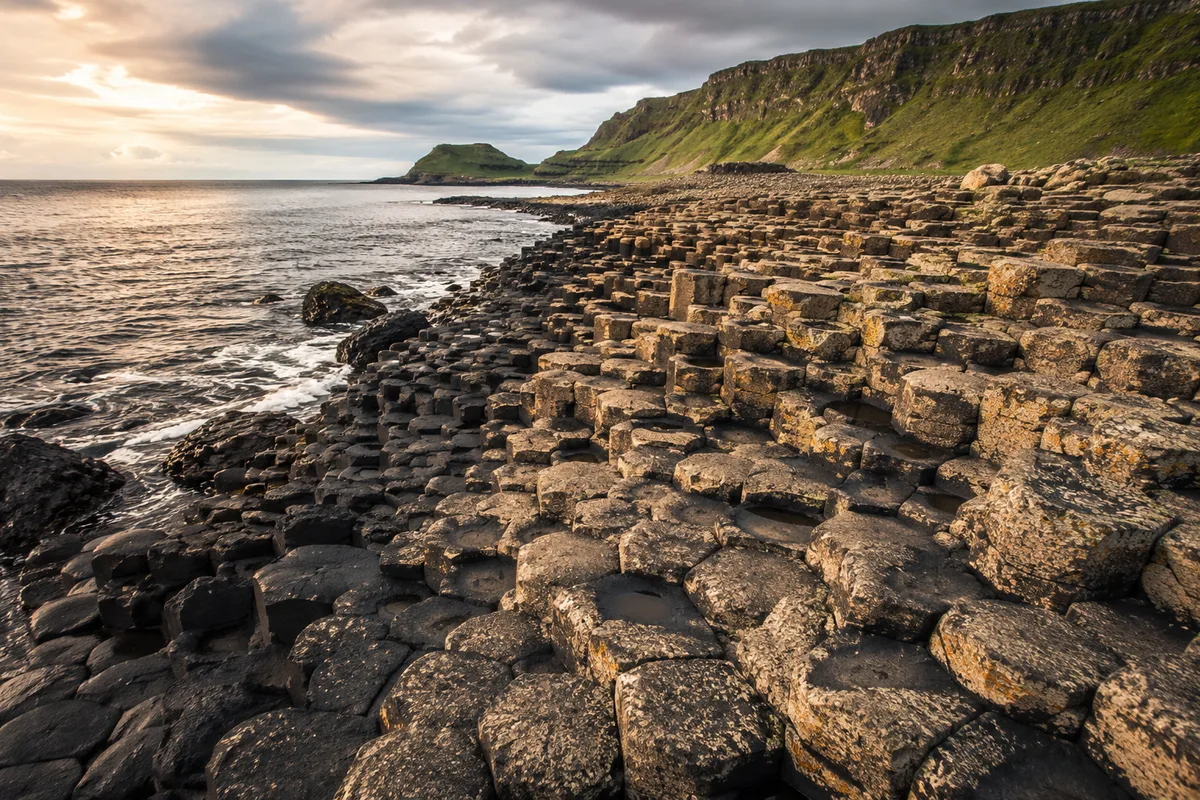
At Giant’s Causeway, the coastline appears to have been paved with thousands of tightly packed geometric stones.
Many of the basalt columns have polygonal tops, producing a level of repetition that seems architectural rather than natural.
According to legend, giants were responsible.
Geology offers another explanation. Around 50 to 60 million years ago, volcanic activity produced large lava flows. As the basalt cooled and contracted, it fractured into distinctive columns.
There are roughly 40,000 of them.
The scientific explanation is logical, but standing beside such precise natural geometry still makes it easy to understand why earlier generations preferred stories about giants.
10. Wulingyuan, China — A Forest Made of Stone Towers
Wulingyuan in China’s Hunan Province contains thousands of narrow sandstone pillars rising above wooded valleys.
Some towers reach more than 200 meters high.
When mist fills the lower valleys, the bases of the formations can disappear completely, leaving tall stone pillars apparently floating above the clouds.
More than 3,000 sandstone pillars and peaks are found across the region, alongside caves, natural bridges, ravines, and waterfalls.
The landscape is dramatic in clear weather, but fog is what pushes it into another visual category. With the ground hidden, ordinary depth perception begins to fail.
That is when the mountains stop looking like geology and begin looking like scenery from another planet.
11. Chocolate Hills, Philippines — Hundreds of Nearly Identical Cones
Bohol’s Chocolate Hills consist of more than a thousand unusually symmetrical hills spread across the landscape.
Their similar height and rounded-conical shape make them look as if they were deliberately arranged.
They were not.
The hills are limestone formations shaped through long-term geological processes including erosion.
Their famous name comes from a seasonal change. During wetter months, the hills are covered in green vegetation. In the dry season, the grass turns brown, making the landscape resemble rows of enormous chocolate drops.
The hills look unusual from ground level, but elevated viewpoints reveal the full effect: repeating natural geometry stretching toward the horizon.
12. Antelope Canyon, United States — Sandstone That Looks Liquid
Inside Antelope Canyon in Arizona, sandstone appears to flow like frozen liquid.
Narrow walls curve, twist, and fold through shades of red, orange, and purple. At certain times, sunlight enters through openings above and creates brilliant shafts of light inside the canyon.
The canyon’s smooth forms were shaped by repeated flash floods and erosion over long periods.
Those famous beams of light are real, but they depend on the season, weather, and angle of the sun. Visitors should not assume that every trip produces the same photographic conditions.
Antelope Canyon also sits on Navajo land and can only be visited through authorized access arrangements. Flash flooding remains a real natural hazard, which is a reminder that the same processes responsible for its beauty are still active.
Reality check: The famous shafts of light depend on the Sun’s position, season and time of day. The canyon itself is always there, but the glowing beams seen in many photographs occur only under particular lighting conditions.
13. Socotra, Yemen — The Island That Looks Like Another Planet
Socotra’s dragon’s blood trees may be among the strangest-looking trees on Earth.
Their branches spread outward into broad, umbrella-shaped crowns, creating a silhouette that looks almost fictional.
The explanation lies partly in isolation.
Socotra developed separately from many surrounding ecosystems, allowing unusual species to evolve over long periods. A remarkably high proportion of its plants, reptiles, and other organisms occur nowhere else.
The dragon’s blood tree, Dracaena cinnabari, is one of the island’s most recognizable endemic species.
Socotra looks alien not because its landscape is artificial, but because evolution took a particularly unusual path there.
14. Waitomo Glowworm Caves, New Zealand — A Night Sky Underground
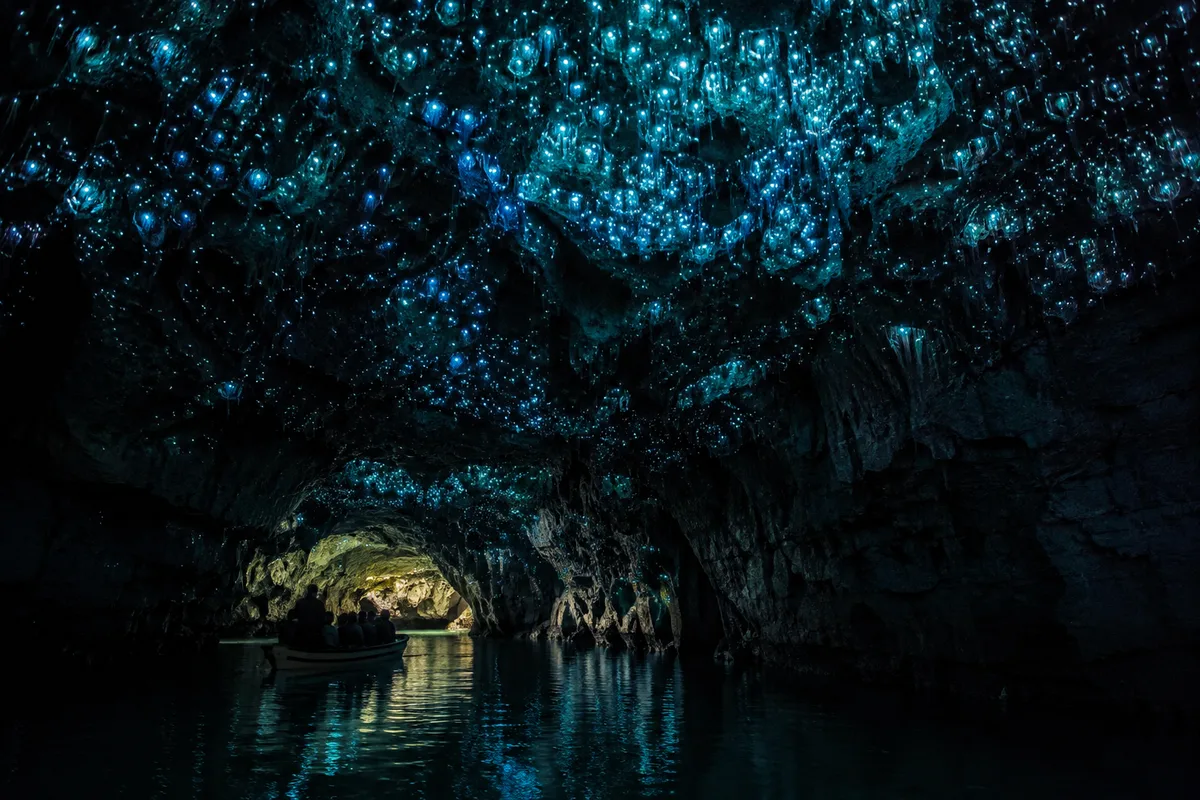
Enter certain caves in New Zealand’s Waitomo region and the ceiling appears to be covered with thousands of tiny blue-green stars.
There is no open sky above.
The lights come from glowworms, specifically the larval stage of a fungus gnat native to New Zealand.
The larvae produce light to attract small insects toward sticky silk threads hanging below them. In dark cave environments, large colonies can create an extraordinary illusion of constellations suspended overhead.
The effect becomes even more striking when viewed above underground water, where darkness removes almost every familiar visual reference.
It may look like digital fantasy art, but it is biology.
Reality check: The star-like ceiling is produced by bioluminescent glowworms, not reflected starlight or artificial lighting. Long-exposure photography can make the effect look brighter than it appears to the human eye, but the glow itself is real.
Curiworld explains the broader science behind natural blue light in why the ocean can glow blue at night.
15. Great Blue Hole, Belize — A Dark Circle in a Turquoise Sea
From the air, Belize’s Great Blue Hole looks like someone placed a perfectly dark blue circle inside a tropical reef.
The ocean has other effects that look almost unreal too, including the science behind why seawater can glow blue at night.
Its almost circular shape and dramatic color contrast are especially obvious from above.
Located within Lighthouse Reef Atoll, the Great Blue Hole is roughly 300 meters across and about 125 meters deep.
It began as a cave system during periods when sea levels were much lower. As the ocean rose, the cave was flooded, creating the enormous marine sinkhole visible today.
Underwater stalactites provide evidence of that earlier history.
What looks like an impossibly clean geometric shape in the ocean is actually the remains of a landscape that formed when the coastline looked very different.
Why These Places Often Look Even Stranger in Photos
Photography can exaggerate some of the qualities that already make these places unusual.
Wide-angle lenses can make foreground features feel larger.
Telephoto lenses can compress distance and make mountains or rock pillars appear closer together.
Long exposures can intensify moving water or bioluminescence.
Low-angle sunlight can deepen shadows and increase color contrast.
And modern cameras can capture a wider dynamic range than many older systems.
That does not mean the landscape is fake.
It means the camera is making choices about how the scene is recorded.
The most useful question is not:
“Is this photo real?”
It is:
“Which part of this appearance comes from the place itself, and which part depends on timing, weather, light and photography?”
One Famous “Unreal Place” We Deliberately Left Out
Lake Hillier in Western Australia appears on countless lists of strange places because of its famously bubblegum-pink water.
Those photographs are real.
But they are not necessarily an accurate picture of the lake today.
A major rainfall event in 2022 diluted its salinity, and the lake lost much of its famous bright pink appearance. Its color can change depending on environmental conditions, and there is no guarantee that visitors will see the intense pink shade shown in older viral photographs.
That distinction matters.
A real place can have real photographs and still look different when you arrive years later.
The Photos Are Real — but Timing Is Part of the Story
What makes these landscapes extraordinary is not that they somehow defeat science.
It is that ordinary natural processes can combine in extraordinary ways.
Mineral deposits create white terraces. Microorganisms color hot springs. Rain fills temporary lagoons. Erosion produces geometric rock formations. Evolution creates species found nowhere else. Changes in sea level leave giant underwater caves behind.
The photographs can be real without representing what a place looks like every hour of every year.
A mirror needs water. A glowing canyon needs the right angle of sunlight. A colorful river depends on season and water conditions. Mist can make mountains seem to float.
Earth does not hold these landscapes still for us.
Sometimes the most unbelievable view is simply what happens when geology, biology, weather, water, and light happen to meet at exactly the right moment.
Which of These Places Change the Most With the Season?
| Place | What changes most |
|---|---|
| Salar de Uyuni | Water coverage and mirror effect |
| Lençóis Maranhenses | Lagoon size and number |
| Caño Cristales | River color intensity |
| Bioluminescent locations | Organism density and water conditions |
| Snow or ice landscapes | Seasonal cover and temperature |
| Light-dependent caves or canyons | Sun angle and viewing conditions |
The places themselves are real, but their most famous appearance may exist only for a particular window of time.
Sources
NASA Earth Observatory — A Salt Bath in Bolivia — Source
NASA Earth Observatory — The Paradox of Lençóis Maranhenses National Park — Source




Join the discussion