Why Do Newborn Babies Hiccup So Much?
Hiccups are extremely common in newborn babies and are usually harmless. Frequent feeding, swallowed air and changes in stomach fullness can help trigger the diaphragm spasms behind the familiar “hic.”
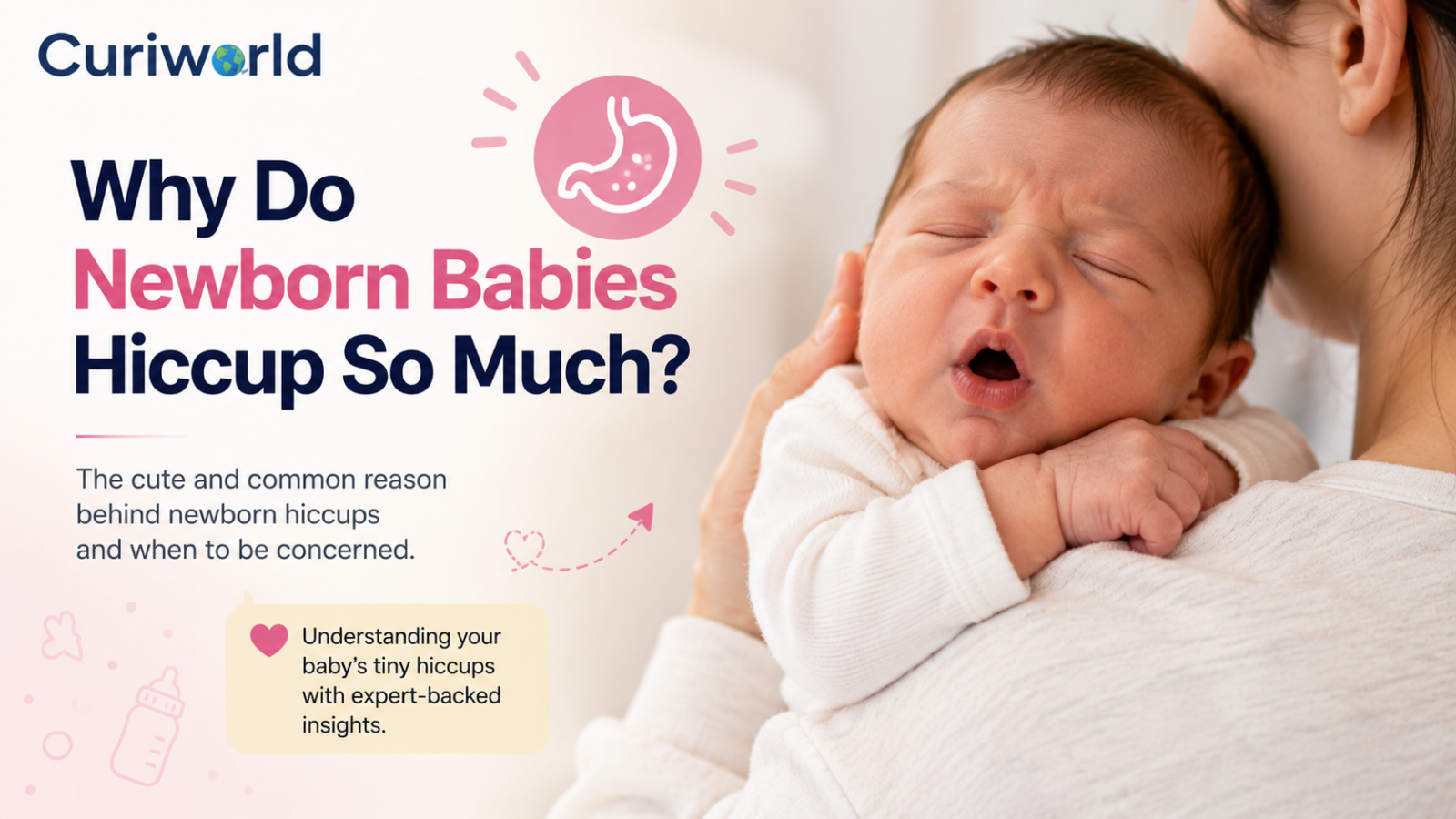
A newborn can finish a feeding, settle comfortably in your arms, and suddenly start hiccupping every few seconds.
For new parents, the frequency can seem surprising. But hiccups are extremely common in young babies and, in most cases, are not a sign that anything is wrong.
A hiccup happens when the diaphragm, the large muscle involved in breathing, contracts involuntarily. This is followed by a quick closure around the vocal cords, producing the familiar “hic” sound.
Newborns may seem to hiccup more often than older children and adults partly because their days revolve around frequent feeding. Swallowing air, gulping milk, feeding quickly and changes in stomach fullness can all create conditions that make hiccups more likely.
Why Are Hiccups So Common in Newborns?
There is no single explanation for every episode of newborn hiccups, but feeding is an important part of the picture.
Young babies eat frequently, and they may swallow air along with breast milk or formula. This is especially likely when a baby is feeding quickly, crying, fussing or gulping.
The American Academy of Pediatrics explains that swallowed air is common during infant feeding, which is why gentle burping breaks can sometimes help.
A feeding can also fill a newborn’s small stomach relatively quickly. Changes in stomach fullness and swallowed air may help trigger the hiccup reflex.
That helps explain a familiar pattern: a perfectly content baby who suddenly begins hiccupping during or shortly after a feeding.
Frequent hiccups alone do not automatically mean a baby has a digestive problem.
Are Hiccups After Feeding Normal?

Usually, yes.
The American Academy of Pediatrics notes that hiccups are something most babies experience from time to time and that they often bother parents more than they bother the baby.
What matters is not simply how dramatic the hiccups sound, but how the baby appears overall.
A newborn who hiccups frequently but:
- feeds comfortably,
- seems content between feeds,
- is growing appropriately,
- does not appear to be in pain,
- and has no concerning vomiting or other symptoms
is very different from a baby whose hiccups occur alongside feeding problems or significant distress.
This distinction is useful because frequency alone does not tell you whether something is wrong.
Can Reflux Cause Baby Hiccups?
It can, but hiccups alone do not mean a baby has reflux disease.
Reflux occurs when milk or stomach contents travel back toward the esophagus. Some degree of reflux is common during infancy because the muscular mechanism that helps keep stomach contents in the stomach is still developing.
The NHS includes hiccupping during feeding among the possible signs of infant reflux. Other signs can include bringing up milk, coughing during feeds, gulping or swallowing after feeding, becoming unsettled while eating or difficulty gaining weight.
So the more useful question is not:
“Does my baby hiccup, so does that mean reflux?”
Instead, look at what else is happening.
If hiccups are the only noticeable feature and the baby otherwise seems comfortable, feeds normally and grows appropriately, they are much less concerning.
If they regularly occur alongside discomfort, significant vomiting, feeding refusal or poor weight gain, the overall pattern deserves discussion with a healthcare professional.
What Can You Do When a Newborn Gets Hiccups?
Most ordinary hiccups stop on their own, so there is usually no need to urgently “cure” them.
If hiccups begin during a feeding, a few gentle adjustments may help.
Pause the Feeding
If your baby is actively hiccupping or becoming fussy while eating, briefly stopping the feed may allow them to settle.
Changing the baby’s position and giving them a short break can sometimes be enough.
Burp Your Baby
Burping can help release swallowed air.
You do not need to force a burp every time, but a gentle burping break during a feed may be useful, especially if your baby has been gulping quickly.
Feed Before Your Baby Becomes Extremely Hungry
A very hungry baby may feed rapidly and swallow more air.
Feeding when early hunger cues appear rather than waiting until a baby becomes extremely upset may make some feeds calmer.
Keep Your Baby Upright After Feeding When Appropriate
If hiccups occur alongside reflux symptoms, holding your baby upright during and for a period after feeding may be helpful.
However, sleep is different.
Babies should still be placed flat on their backs for sleep. Raising the head of a crib or routinely positioning a baby on their stomach or side to manage reflux is not recommended.
Skip Adult Hiccup Remedies
Many traditional hiccup tricks are designed for adults, not newborns.
Trying to frighten a baby, making them hold their breath, giving sugar or experimenting with unusual internet remedies is unnecessary and may be inappropriate for an infant.
Ordinary newborn hiccups usually disappear without intervention.
Parents should also avoid giving a young baby water, herbal preparations or supplements specifically to stop hiccups unless advised by a qualified healthcare professional.
When Should Hiccups Be Mentioned to a Doctor?
Hiccups themselves are rarely the most important warning sign.
The symptoms that occur alongside them matter much more.
Speak with a healthcare professional if your baby has persistent feeding difficulties, regularly refuses feeds, appears unusually distressed or is not gaining weight as expected.
More urgent medical assessment may be appropriate if a baby develops symptoms such as:
- forceful or projectile vomiting,
- green or yellow vomit,
- blood in vomit or stool,
- a swollen or tender abdomen,
- repeated vomiting with difficulty keeping feeds down,
- signs of dehydration,
- severe or persistent distress.
A fever in a young infant should also be medically assessed rather than being attributed to hiccups or ordinary reflux.
These symptoms do not mean that hiccups themselves are dangerous. They matter because they can point to a separate health problem that deserves proper evaluation.
Hiccups Are Usually Just Part of Being a Newborn
Newborns do plenty of things that can look surprisingly intense to adults.
They sneeze, startle, make unusual noises and sometimes become fascinated by things adults barely notice. Another good example is the way young babies can stare endlessly at moving objects and bright contrasts, which we explore in Why Do Babies Love Ceiling Fans and Lights?.
Hiccups usually belong in the same broad category: noticeable, sometimes frequent and usually completely ordinary.
The key is to look beyond the “hic.”
A comfortable baby who is feeding, growing and behaving normally usually does not need treatment simply because hiccups happen often. When hiccups appear together with significant vomiting, feeding difficulty, poor growth or obvious distress, the accompanying symptoms—not the hiccup sound itself—are the reason to seek professional advice.
This article provides general educational information and is not a substitute for individualized medical advice, diagnosis or treatment.






Join the discussion