Why Do Painters Sign Their Work? How the Artist’s Signature Became Important
A small signature can reveal authorship, ambition, and history. Discover why painters sign their work, how the practice evolved, and why a name alone cannot prove authenticity.

A few painted letters in the corner of a canvas can change how the entire work is understood. They identify the person claiming authorship, but they may also record a date, mark the end of the creative process, or turn an artist’s name into a recognizable symbol.
Painters sign their work mainly to establish authorship, connect the painting with their professional identity, and help later viewers identify when and by whom it was made. The practice became especially important as European artists gained greater individual recognition and the artist’s name acquired cultural and commercial value.
A signature, however, is not a certificate of authenticity. It is one piece of evidence within a much larger story.
What Does a Painter’s Signature Actually Do?
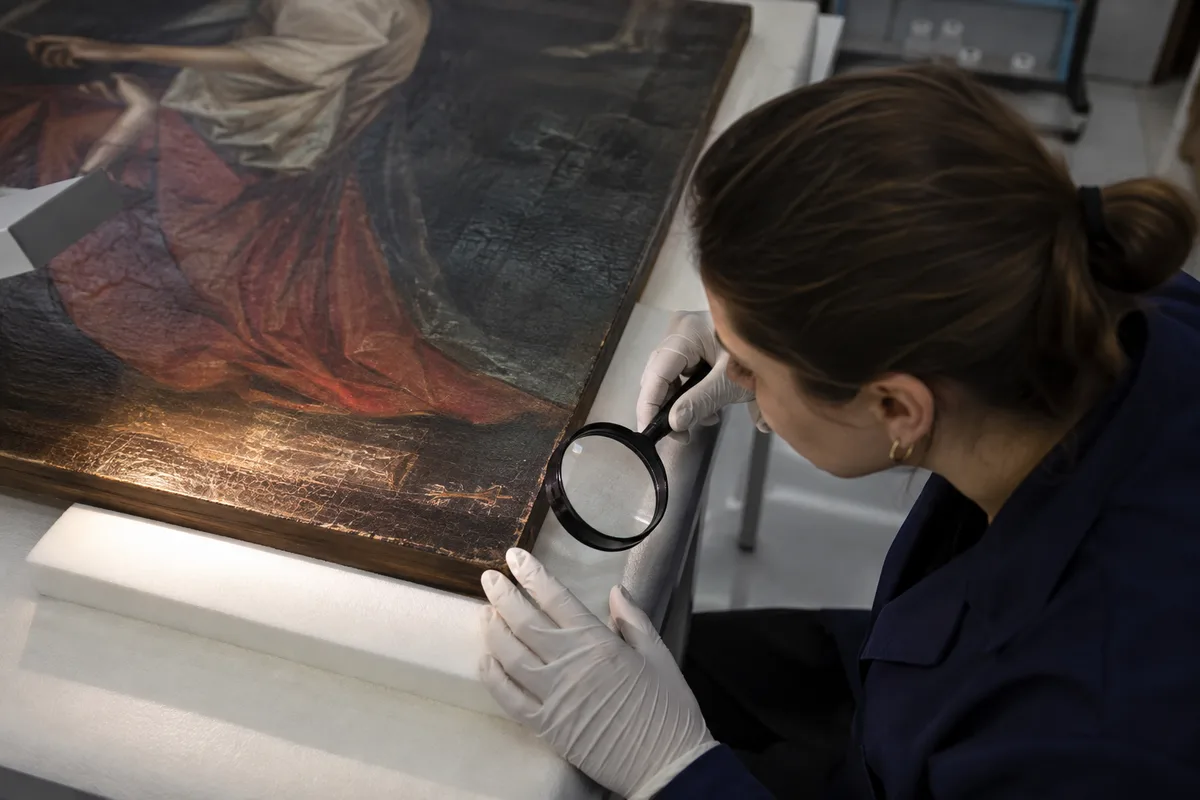
An artist’s signature can perform several functions at once:
- Identify authorship: It tells viewers who claims to have created the work.
- Signal completion: Some artists sign when they consider a painting finished and ready to leave the studio.
- Build recognition: A repeated name, monogram, or symbol can become closely associated with an artist’s public identity.
- Preserve context: A signature may be accompanied by a date, location, dedication, title, or other inscription.
- Support later research: Signatures help historians, conservators, collectors, and cataloguers compare works and reconstruct an artist’s career.
These functions can overlap. A signature may be a practical label, a personal gesture, a visual element, and a claim to professional status—all within the same few brushstrokes.
Artists Were Not Always Expected to Sign Their Work
Signed art existed before the Renaissance, so there was no single moment when artists suddenly invented the practice. What changed over time was the meaning attached to the maker’s name.
Many historic works were produced within workshops, religious communities, guild systems, or courtly environments. The patron, sacred subject, institution, or workshop could matter more publicly than the individual craftsperson. Large projects might also involve several hands, including a master, assistants, apprentices, and specialists responsible for different parts of the work.
Under those conditions, leaving a painting unsigned did not necessarily mean that its maker lacked skill or pride. A visible signature was simply not required in every period, region, genre, or commission.
Survival also affects what we see today. A signature originally placed near an edge may disappear if a panel or canvas is trimmed. Marks on the reverse can be covered by relining, framing, labels, or later repairs. Darkened varnish and retouching may make a once-visible inscription difficult to detect.
How the Renaissance Changed the Meaning of the Artist’s Name
Signatures became increasingly prominent in European art during the Renaissance, particularly as artists were recognized more clearly for their individual invention, skill, and style. The change was gradual rather than universal, but it helped move the artist’s name closer to the center of how a work was viewed and valued.
Art historian Patricia Rubin describes Renaissance signatures as part of a broader process of artistic self-definition. A name inscribed within a painting could direct attention toward its maker and encourage viewers to appreciate the work as the achievement of a particular individual.[1]
Some Renaissance painters presented their names on a painted slip of paper known as a cartellino. Others used inscriptions that effectively said the artist “made this,” sometimes in Latin. These marks did more than identify the painter. Their placement and wording could become part of the composition itself.
The signature therefore gained significance alongside the changing status of the artist. As patrons, collectors, and viewers became interested in recognizable individual makers, the name on the artwork carried more weight.
When a Signature Became a Personal Brand
A full handwritten name is only one form of artistic signature. Painters have used initials, monograms, symbols, emblems, shortened names, and carefully designed marks. Some are immediately readable; others function almost like small logos.
Rembrandt’s changing signatures offer a revealing example. Early in his career, he used different monograms. He later began signing paintings with his first name alone, creating a distinctive identity that viewers could recognize. Research on Rembrandt and his contemporaries also shows that signing practices varied considerably between artists, workshops, regions, and stages of a career.[2]
A consistent mark made an artist easier to remember. It also linked separate paintings to the same professional identity. As art markets expanded and works traveled beyond the places where they were created, that link became increasingly valuable.
The signature could now travel with the painting. Long after the artist, patron, and original audience were gone, the name remained attached to the object.
Why Are Some Signatures Hidden or Placed on the Back?
The familiar lower-corner signature is easy to notice without dominating the composition, but painters have never followed one universal rule.
Some integrate their name into the depicted scene, placing it on a painted letter, wall, stone, book, or architectural feature. Others sign the reverse of the canvas, the wooden panel, the stretcher, or even the edge of the work.
Signing the back allows the front of the painting to remain visually uninterrupted. It also gives the artist more space to add information such as the title, date, medium, location, inventory number, or dedication. The disadvantage is that the mark may be hidden once the painting is framed or displayed.
An artist may also sign only selected works. Personal preference, workshop practice, the wishes of a patron, the intended destination of the painting, and the possibility of future sale can all influence the decision.
Does a Signature Prove That a Painting Is Authentic?
No. A signature can support an attribution, but it cannot establish authenticity by itself.
A name may have been copied, altered, strengthened, or added long after the painting was completed. A genuine-looking signature might appear on a workshop production, while an authentic painting may have no visible signature at all. Even dates written beside signatures require interpretation because they may record completion, delivery, revision, or a later signing rather than the first moment the painting was created.
Specialists therefore examine the signature together with other evidence, including documented ownership, materials, support, pigments, construction, brushwork, underdrawing, condition, and technical imaging.
The physical surface matters as well. Varnish, cleaning, retouching, and chemical change help explain why old paintings can look so different today. Specialists may also examine whether a signature sits naturally within the paint layers and whether it relates convincingly to the surrounding surface. Even features such as craquelure can provide clues about a painting, although cracking alone cannot prove age or authenticity.
A signature is best understood as a starting point for investigation, not the final verdict.
What Can an Artist’s Signature Reveal?
When interpreted carefully, signatures can reveal far more than a name.
Changes in spelling, handwriting, monograms, or placement may help researchers estimate when a work was signed. An artist might adopt a new form after moving to another city, entering a different market, gaining professional recognition, or changing how they wished to be known.
Additional inscriptions can preserve the year of completion, the place of production, the identity of a recipient, or the relationship between two works. A dedication may show that a painting was a gift rather than an ordinary sale. A signature embedded inside the depicted world can also reveal how deliberately the painter wanted their identity to participate in the image.
Hidden or rediscovered signatures sometimes prompt scholars to reconsider earlier attributions. They can help restore a work to an overlooked artist, but such discoveries still need to be tested against historical, stylistic, and material evidence.
Why an Unsigned Painting Can Still Be Important
The absence of a signature does not make a painting unfinished, unimportant, or inauthentic. Some artists rarely signed. Others signed inconsistently, placed marks on the reverse, or worked within studios where the master’s name represented a collective production process.
Signatures can also be lost through physical change. Canvas edges are folded or cut, panels are reduced, frames are replaced, and old surfaces undergo restoration. What appears unsigned today may not always have been that way.
Art historians can attribute unsigned works by comparing technique, materials, preparatory drawings, documented commissions, provenance, and relationships with securely identified paintings. In some cases, those combined clues are stronger than a name written in the corner.
The Small Mark That Made the Artist Visible
The artist’s signature became important because the artist’s identity became important. As individual makers gained recognition and their names began to influence reputation, interpretation, collecting, and value, the signature developed into a powerful connection between person and object.
It can mark authorship, completion, ambition, memory, and professional identity. Yet its power has limits. A signature can guide research, but it cannot replace it.
That tension is what makes the mark so fascinating: it may be the smallest element in a painting, but it carries one of the work’s largest claims—this was made by me.








Join the discussion