What Really Happened to the Mary Celeste? Facts Behind the Mystery
in 1872, the Mary Celeste was found sailing without a single person aboard. The real evidence points toward a tragedy far different from the famous ghost-ship legends.
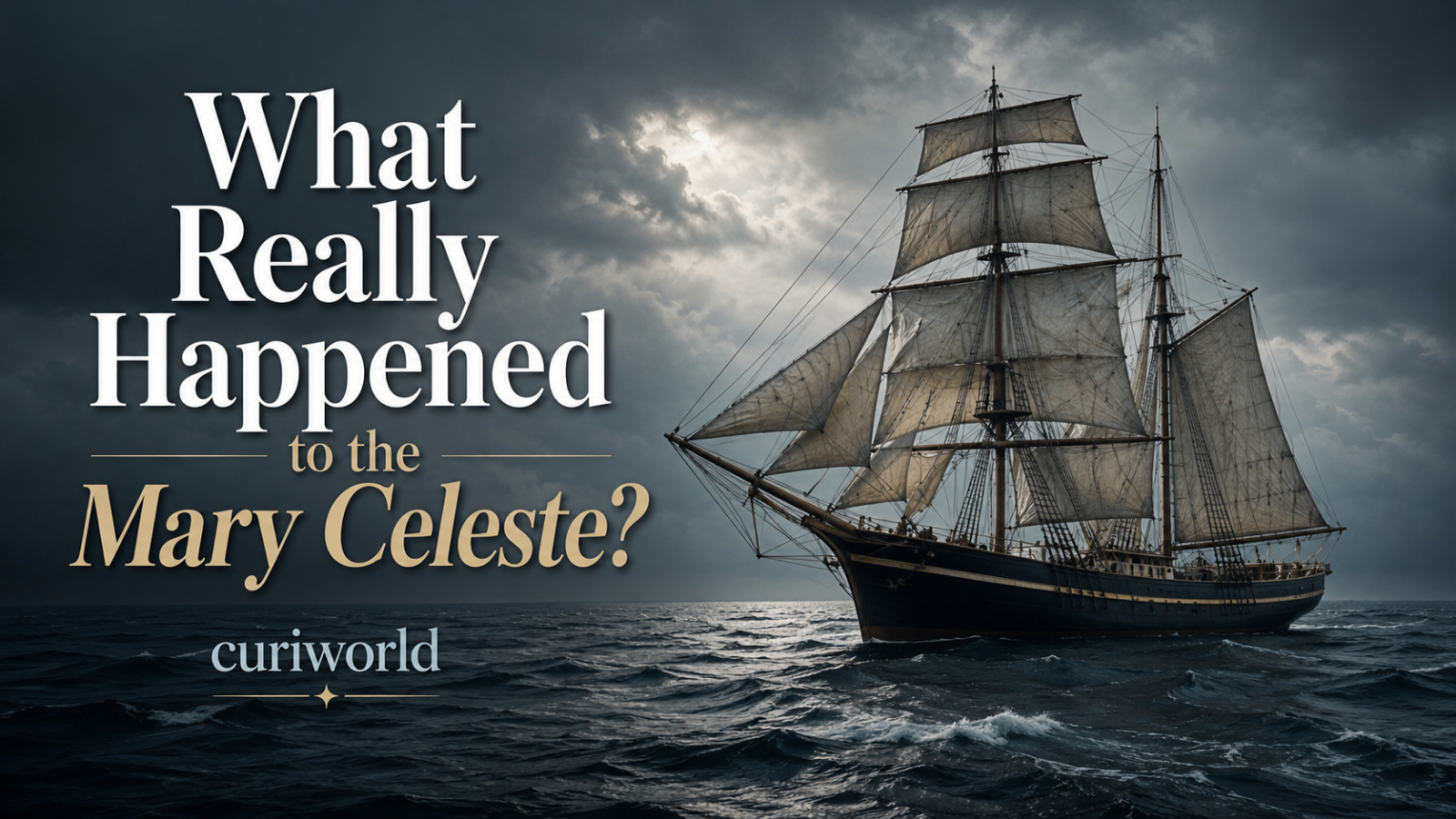
The Mary Celeste did not vanish. The people aboard her did.
In December 1872, the merchant brigantine was discovered drifting in the Atlantic with no captain, no crew, and no passengers. Yet the vessel itself had not been destroyed. Much of its cargo remained aboard, supplies were available, and the ship was seaworthy enough to be sailed hundreds of miles to Gibraltar.
That contradiction turned the Mary Celeste into one of history’s most enduring maritime mysteries.
More than 150 years later, no evidence proves exactly what happened to the ten people aboard. But the documented story is considerably less supernatural — and more interesting — than many versions of the legend suggest.
The Final Voyage of the Mary Celeste
The Mary Celeste left New York on November 7, 1872, bound for Genoa, Italy.
Captain Benjamin Spooner Briggs was aboard with his wife, Sarah, their two-year-old daughter, Sophia, and seven crew members. The vessel was carrying 1,701 barrels of industrial alcohol.
Nothing about the journey suggested that it would become one of the most famous mysteries in maritime history.
The ship crossed the Atlantic through difficult weather. The last known entry on its log slate was made on November 25 near Santa Maria, one of the Azores islands.
Then the record stopped.
Nine days later, the brigantine Dei Gratia encountered the Mary Celeste farther east in the Atlantic.
Nobody was aboard.
If unresolved stories are your kind of rabbit hole, our list of mystery movies that keep you guessing until the end explores the same tension from the fictional side.
Was the Mary Celeste Found on December 4 or December 5?
Even one of the most basic facts in the story has become confused over time.
Many accounts state that the Mary Celeste was discovered on December 5, 1872. Historical records, however, indicate that the sighting occurred between 1 and 2 p.m. on December 4 by civil reckoning.
The discrepancy comes from the maritime system then used for recording dates at sea. The Dei Gratia log recorded the event as December 5 in “sea time,” helping create a date difference that still appears in modern retellings.
It may seem like a minor detail, but it illustrates a larger problem surrounding the Mary Celeste: the story has been repeated and embellished so many times that later additions are often mistaken for documented evidence.
What the Boarding Party Actually Found
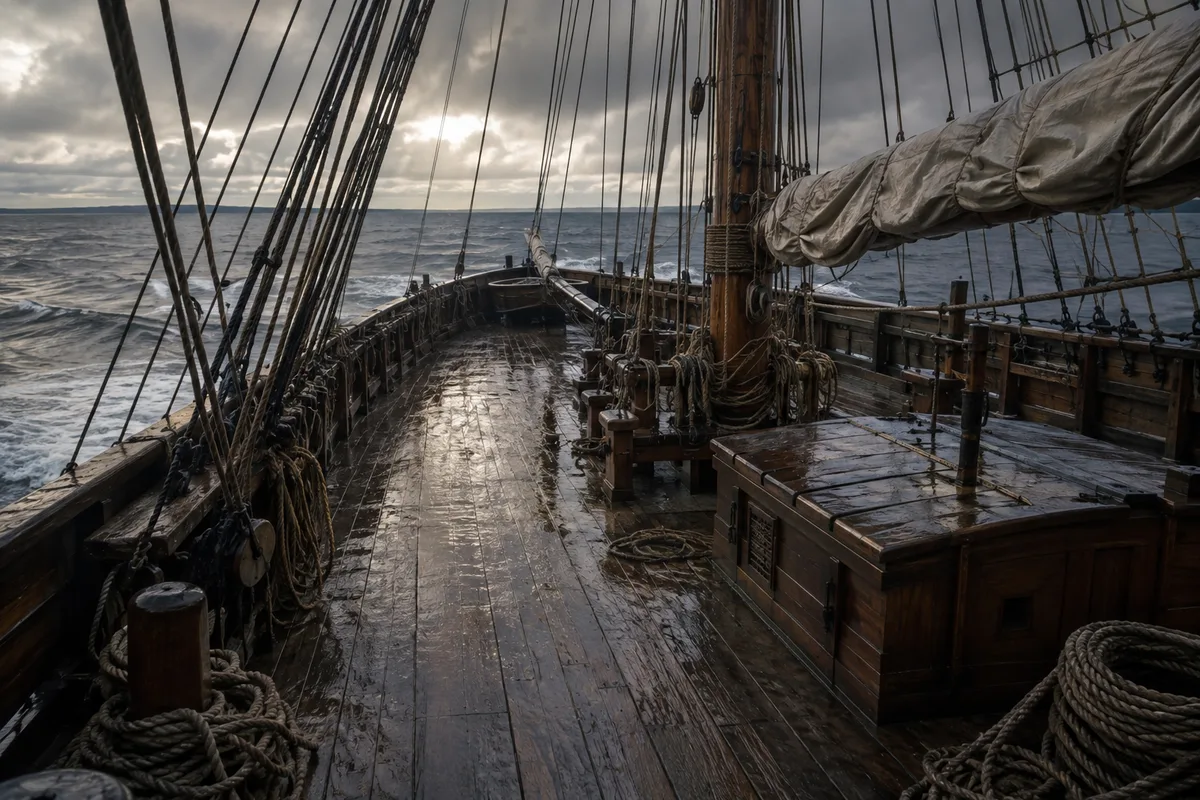
The condition of the vessel made the disappearance especially difficult to explain.
The Mary Celeste had water in its hold, but it was not sinking when it was discovered. Its cargo was largely intact. Food and drinking water remained aboard.
One of the ship’s pumps had been taken apart.
More importantly, the ship’s small boat was missing.
That detail changes the nature of the mystery.
If unresolved stories are your kind of rabbit hole, our list of mystery movies that keep you guessing until the end explores the same tension from the fictional side.
Rather than ten people simply disappearing from a ship, the missing boat strongly suggests that Captain Briggs, his family, and the crew deliberately left the vessel.
The central question is therefore not simply, “Where did everyone go?”
It is:
What could have convinced an experienced captain that leaving the Mary Celeste in a small boat was safer than remaining aboard?
The vessel was still seaworthy enough for members of the Dei Gratia crew to sail it roughly 800 miles to Gibraltar.
Whatever frightened or concerned Briggs did not ultimately destroy the ship.
The Famous “Meal Still on the Table” Story Is a Myth
One of the most memorable versions of the Mary Celeste story describes an eerie scene frozen in time.
According to the legend, meals were left untouched on the table, cups of tea were still waiting, and the crew seemed to have abandoned the ship in the middle of ordinary life.
It is wonderfully atmospheric.
It is also unsupported by the historical evidence.
Records associated with testimony from the Gibraltar Vice-Admiralty Court do not support the claim that a freshly prepared meal was sitting on the cabin table when the ship was discovered. There was also no documented meal left cooking on the galley stove.
Another popular image — an empty ship racing across the Atlantic with every sail dramatically raised — is misleading.
Some sails were set, but others were furled, loose, damaged, or missing.
The real Mary Celeste does not need these embellishments.
The documented facts are strange enough on their own.
Did Pirates Attack the Mary Celeste?
Piracy is an obvious theory whenever people disappear from a ship, but the evidence does not fit particularly well.
The vessel had not been stripped of its valuable cargo. There was no convincing evidence of a violent struggle aboard, and the ship itself had not been destroyed or seriously damaged.
If pirates had taken control of the vessel, leaving behind the ship, its supplies, and most of its cargo would create another mystery.
The investigation in Gibraltar considered the possibility of foul play, but no evidence established that Captain Briggs, his family, or the crew had been murdered aboard the ship.
Piracy cannot be disproved with absolute certainty.
It simply does not explain the surviving evidence especially well.
Could the Crew Have Mutinied?
Another early theory blamed the crew.
According to some versions, sailors may have broken into the alcohol cargo, become intoxicated, and attacked Captain Briggs or one another.
There are several problems with that explanation.
The cargo consisted of industrial alcohol rather than ordinary drinking liquor. There was also no persuasive physical evidence of a violent mutiny aboard the vessel.
No strong motive has emerged that would explain why the crew would murder Briggs and his family and then abandon a valuable ship.
The mutiny theory gives the story villains.
The ship itself gives us very little evidence that those villains existed.
Did the Alcohol Cargo Cause an Explosion?
The Mary Celeste was carrying 1,701 barrels of alcohol, so the cargo has naturally played a major role in theories surrounding the disappearance.
One possibility is that alcohol leaking from the barrels produced dangerous vapors.
If Briggs believed those vapors could ignite or explode, he might have temporarily ordered everyone into the ship’s boat.
Nine barrels were later found empty.
That sounds dramatic until another detail is considered: those barrels were made from more porous red oak, unlike most of the others. Leakage therefore provides a plausible explanation for why they were empty.
There was also no evidence that a major explosion or fire had actually occurred aboard the ship.
That does not entirely eliminate alcohol from the story.
The important distinction is between an explosion actually happening and Briggs believing that one might happen.
A captain facing an uncertain threat does not have the benefit of knowing the eventual outcome.
If Briggs believed the cargo had created an immediate danger, he might have ordered a precautionary evacuation even though no explosion ultimately occurred.
The evidence, however, cannot prove that this is what happened.
The Most Plausible Explanation May Be Less Dramatic
Some later investigations have focused on a combination of ordinary maritime problems rather than a single spectacular event.
Captain Briggs had experienced rough weather during the crossing.
Navigation may also have been more uncertain than he realized as the ship approached the Azores.
Then there was the problem with the pumps.
Cargo occupied much of the hold, which could make it difficult to judge exactly how much water had entered the vessel. If one of the pumps was malfunctioning or obstructed, Briggs may have struggled to determine whether the ship was merely taking on manageable water or facing a genuine danger of sinking.
That uncertainty matters.
The Mary Celeste did not actually need to be sinking.
Captain Briggs only needed a reasonable reason to believe that it might be.
Imagine the situation from his perspective rather than from ours.
He had experienced difficult weather. His ability to assess the amount of water in the hold may have been limited. A pump was causing problems. His exact position may have been uncertain.
His wife and young daughter were also aboard.
If land was visible or believed to be nearby, temporarily entering the boat may have appeared safer than remaining aboard a vessel Briggs feared could be in serious trouble.
The tragic possibility is that the Mary Celeste survived the danger he feared.
The people who left it apparently did not.
Why Would an Experienced Captain Abandon a Seaworthy Ship?
This is often treated as the biggest problem with the evacuation theory.
Why would an experienced captain leave a vessel that was still capable of crossing the Atlantic?
Because Briggs could not know what investigators would know later.
We know the ship remained afloat.
We know the Dei Gratia crew eventually sailed it to Gibraltar.
Briggs could not know either of those things at the moment he had to make his decision.
Decisions at sea are made with the information available at the time, not with knowledge of what happens afterward.
If Briggs believed the water level was rising dangerously and could not reliably determine the condition of the vessel, abandoning ship temporarily might have appeared reasonable.
A decision can look unnecessary in hindsight while still making sense to the person who made it.
That distinction may be one of the most important clues in the entire mystery.
What Happened After They Left the Ship?
This is where the evidence becomes far weaker.
No confirmed survivor from the Mary Celeste was ever found.
There is no final letter from Captain Briggs explaining his decision. There is no surviving account from a crew member. The missing boat was never recovered in a condition that could reveal exactly what happened.
If all ten people entered the small boat, they would have exchanged a large sailing vessel for something dramatically more vulnerable to wind, waves, and rapidly changing weather.
One theory is that the boat remained connected to the Mary Celeste by a line while the passengers waited to see whether the perceived danger passed.
If that line broke, the empty ship and the much smaller boat could have quickly become separated.
Another possibility is that the boat attempted to reach land.
Either situation could have become fatal in poor Atlantic conditions.
These scenarios fit the known circumstances, but they remain reconstructions rather than proven history.
Without survivors or the missing boat, the final stage of the story cannot be established with certainty.
Arthur Conan Doyle Helped Turn the Mystery Into a Legend
The real incident was already mysterious, but literature helped transform it into something larger.
In 1884, Arthur Conan Doyle — years before Sherlock Holmes made him internationally famous — published a fictional story inspired by the incident.
He even changed the ship’s name to the Marie Celeste.
Doyle’s story was fiction, but some invented elements gradually became mixed with popular accounts of the real event.
The process did not stop there.
Over the following decades, books, newspapers, television programs, and popular culture added dramatic details including violent confrontations, supernatural forces, sea monsters, and mysterious meals supposedly left untouched.
Even the incorrect name Marie Celeste can still be found today.
The historical vessel was the Mary Celeste.
Was There Anything Supernatural About the Mary Celeste?
There is no reliable evidence that anything supernatural happened aboard the ship.
Stories involving sea monsters, paranormal forces, the Bermuda Triangle, or unexplained phenomena were added later.
The Bermuda Triangle theory is particularly weak because the Mary Celeste was discovered near the Azores in the eastern North Atlantic — nowhere near the area popularly associated with the Bermuda Triangle.
The ghost-ship image survives because an intact vessel discovered without its people naturally feels unsettling.
But unexplained does not mean supernatural.
The surviving evidence points toward a maritime emergency, a mistaken assessment of danger, or some other human decision rather than anything paranormal.
So, Has the Mary Celeste Mystery Been Solved?
No.
There is still no evidence that allows historians to reconstruct the final hours of Captain Briggs, his family, and the seven crew members with certainty.
What the evidence does allow is a much narrower mystery than the one popular culture created.
The ship was not found after an obvious massacre.
Its cargo had not been stolen by pirates.
There was no documented warm meal mysteriously abandoned on the table.
There is no evidence that a huge explosion devastated the vessel.
The missing boat strongly suggests that the people aboard deliberately evacuated.
Rough weather, navigation uncertainty, water in the hold, and problems assessing or pumping that water provide a plausible combination of circumstances that could have convinced Briggs to leave the ship.
The most haunting explanation may therefore be the simplest.
Captain Briggs may have abandoned the Mary Celeste because he sincerely believed the vessel was becoming unsafe.
The ship survived.
The people who left it disappeared into the Atlantic.
That scenario fits much of the available evidence, but it cannot be proven.
Without the missing boat, survivors, bodies, or a final account from the people aboard, the last chapter of the Mary Celeste story remains missing.
And that is precisely why, more than 150 years later, it remains one of history’s genuine maritime mysteries.
Sources
Smithsonian Magazine — Abandoned Ship: The Mary Celeste
MaryCeleste.net — Facts Not Fiction: Common Errors and Misconceptions







Join the discussion