What Happened to the Flannan Isles Lighthouse Keepers? Facts vs. Legend
Three lighthouse keepers vanished from Scotland’s Flannan Isles in 1900. The official evidence points toward a deadly wave—but many of the story’s most famous details are later legend.
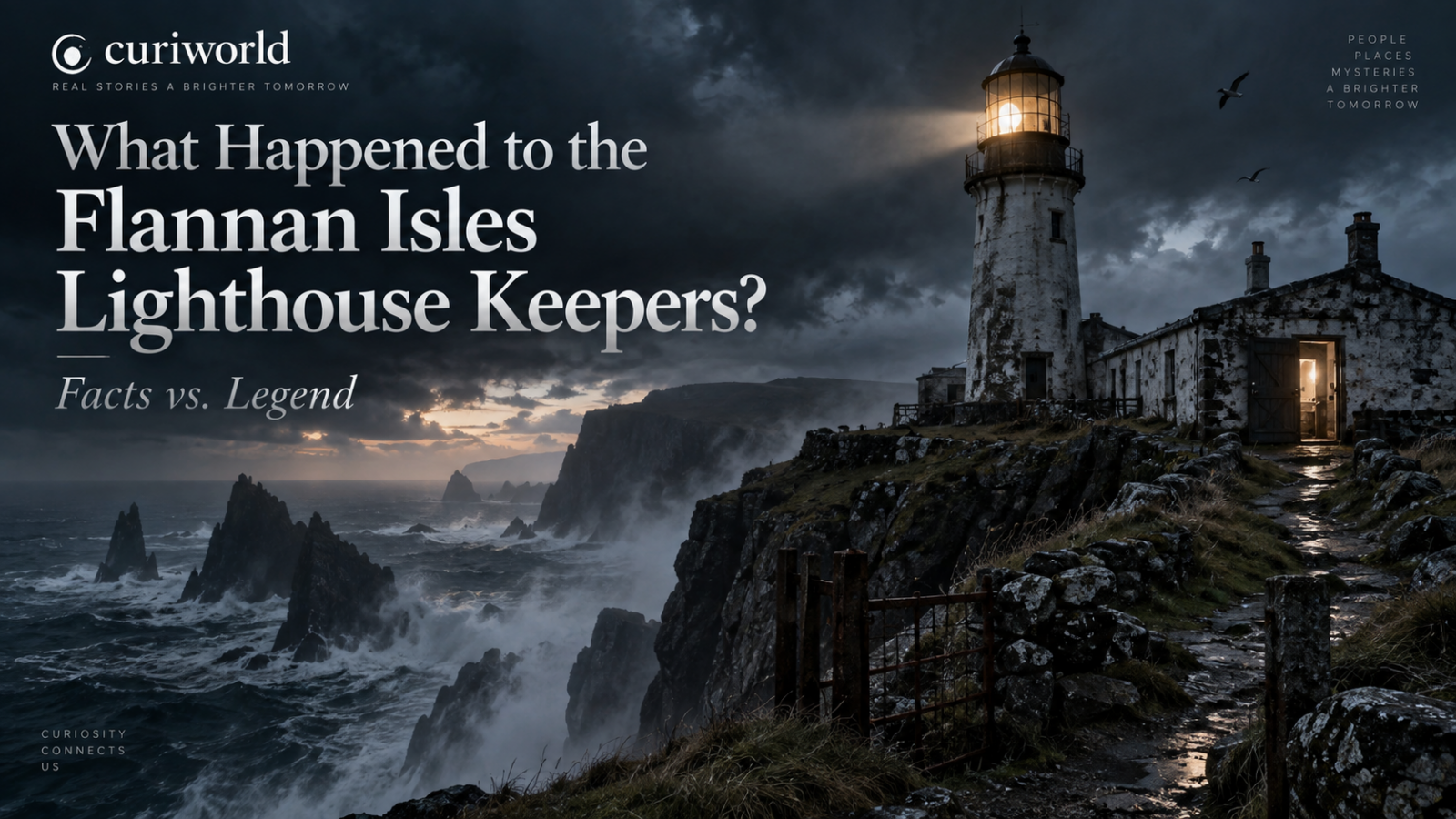
On December 26, 1900, a relief vessel reached a remote lighthouse off the west coast of Scotland.
No keeper came down to meet it.
No flag was flying.
A horn was sounded.
A rocket was fired.
There was still no response.
When relief keeper Joseph Moore climbed to the Flannan Isles Lighthouse on Eilean Mòr, he found the station deserted.
Three men—James Ducat, Thomas Marshall, and Donald McArthur—were gone.
They were never found.
More than a century later, the story is often told as a supernatural mystery involving terrified logbook entries, a meal abandoned on the table, a toppled chair, and inexplicable calm weather.
The real records tell a different story.
The evidence strongly suggests that the three keepers went toward the island’s exposed western landing and were swept into the Atlantic by an exceptionally powerful wave.
That does not solve every detail.
But the documented mystery is much narrower than the legend.
Who Were the Three Missing Lighthouse Keepers?
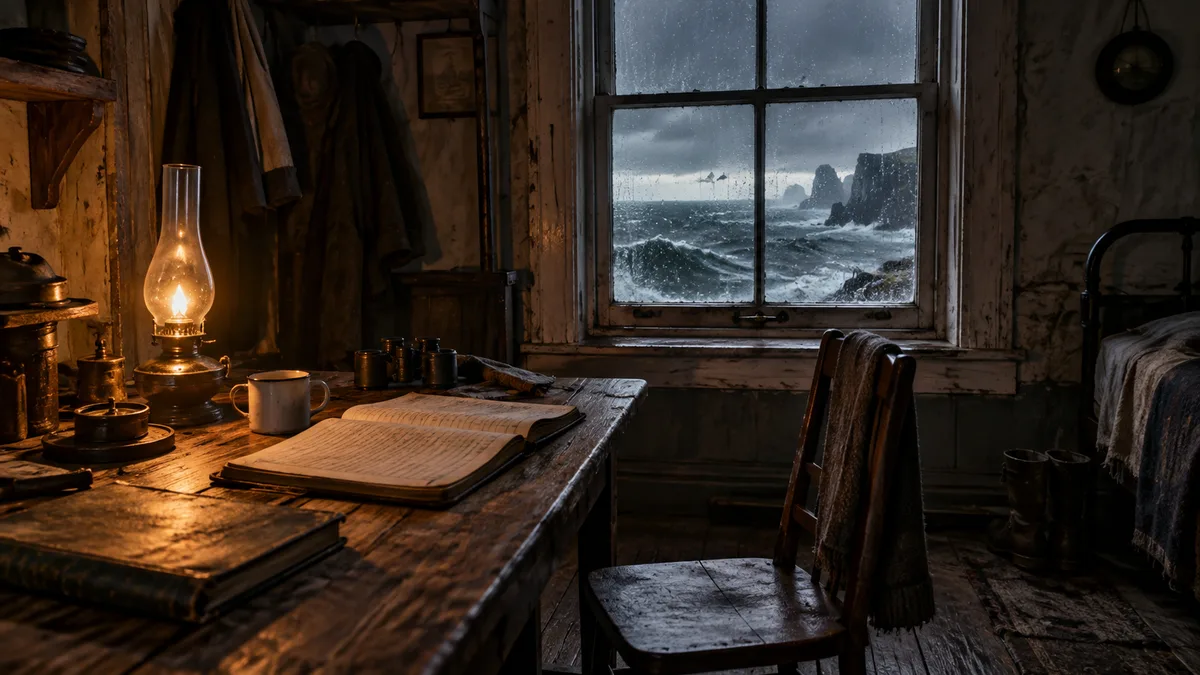
The Flannan Isles Lighthouse stood on Eilean Mòr, the largest of a small group of islands west of the Isle of Lewis in Scotland’s Outer Hebrides.
The lighthouse had only been operating for a little over a year when the men disappeared.
The three keepers on duty were:
- James Ducat, Principal Lightkeeper
- Thomas Marshall, Assistant Lightkeeper
- Donald McArthur, Occasional Keeper
McArthur was filling in for another keeper who was absent through illness.
A fourth member of the rotation, Joseph Moore, was ashore at the time.
These were not tourists stranded on an unfamiliar island.
They were lighthouse workers operating in a dangerous maritime environment.
That matters when considering what may have happened.
The First Warning Came on December 15
The first known sign that something was wrong did not come from the relief crew.
A passing steamer observed around midnight on December 15, 1900, that the lighthouse was not showing its light.
The report did not immediately lead to an investigation.
The disappearance was formally discovered only when the lighthouse tender Hesperus reached Eilean Mòr for a routine relief visit on December 26.
By then, the keepers had apparently been missing for around eleven days.
What Joseph Moore Actually Found
This is where the factual story begins to separate from the legend.
According to archival material preserved by the National Records of Scotland, Moore found the lighthouse deserted but largely orderly.
The lamps had been trimmed and prepared.
The lens and machinery had been cleaned.
The kitchen was tidy.
Two sets of outdoor clothing were missing.
There was no evidence of three men casually abandoning their work and leaving the island.
Instead, the station appeared to have been functioning normally shortly before the disappearance.
The records indicate that the last formal log entries had been made for December 13, but weather observations and other information for December 14 and the morning of December 15 had been written on a slate to be transferred into the log later.
Work had clearly been completed on the morning of December 15.
That places the likely disappearance sometime during the afternoon.
The West Landing Was Badly Damaged
The most important evidence was not inside the lighthouse.
It was down near the island’s western landing.
Superintendent Robert Muirhead later investigated the site and documented severe damage.
Iron railings had been displaced and twisted.
Equipment had been disturbed.
A large block of stone weighing more than a ton had been moved.
The sea had clearly reached areas with extraordinary force.
This was not subtle damage.
It pointed toward violent conditions around the landing.
And there was another important clue.
Two Men Had Dressed for the Landing
Muirhead’s report noted that Ducat was wearing sea boots and a waterproof coat when he disappeared.
Marshall was wearing sea boots and oilskins.
According to Moore, the men normally wore those clothes when going down toward the landing areas.
That suggested a practical reason for leaving the lighthouse.
They may have gone to inspect or secure equipment after storm damage.
McArthur appears to have left without the same level of outdoor clothing.
That has helped create one of the more plausible reconstructions of the final minutes.
Perhaps Ducat and Marshall went toward the western landing.
Perhaps McArthur followed suddenly after something happened.
What happened next cannot be proven.
But the condition of the landing provides a powerful clue.
The Official Explanation: A Large Wave
Muirhead concluded that the men were probably caught by an unusually large sea while near the western landing.
In modern language, we might describe the event simply as an exceptionally large wave or series of waves.
The exact mechanism cannot be reconstructed from surviving evidence.
But the official theory is straightforward:
The keepers went down toward the landing, likely because of damaged equipment.
A large wave struck the exposed rocks.
The men were swept into the sea.
No bodies were recovered.
The death register later recorded their likely cause of death as drowning.
That explanation is far less mysterious than many modern retellings.
It also fits the physical evidence better than most alternative theories.
Was There an Untouched Meal on the Table?
This is one of the most famous details in the story.
According to popular versions, the relief party entered the lighthouse and found a meal sitting untouched on the table—as though the keepers had suddenly vanished halfway through dinner.
It is an excellent horror-story image.
It is not a reliable description of the documented scene.
The image became strongly associated with the case through later literary retellings, particularly Wilfrid Wilson Gibson’s poem “Flannan Isle,” published years after the disappearance.
Contemporary records instead describe the kitchen as tidy.
There is no need for an interrupted dinner to explain the men’s disappearance.
What About the Overturned Chair?
The toppled-chair story belongs to the same category.
It frequently appears alongside the unfinished meal:
A chair overturned.
Food left untouched.
A clock stopped.
Three men suddenly gone.
It creates the impression that something catastrophic happened inside the lighthouse.
But the surviving official evidence does not support that dramatic scene.
The real investigation focused much more heavily on what was found outside—particularly the destruction near the West Landing.
That difference completely changes the likely sequence of events.
Did the Logbook Describe Terrified Keepers?
This is probably the most damaging myth surrounding the case.
Versions circulating online sometimes claim that the lighthouse log contained disturbing entries describing:
- an enormous storm,
- experienced men crying,
- men praying together,
- one keeper behaving strangely,
- and finally a mysterious calm.
These entries are often presented as evidence that something psychologically or supernaturally disturbing happened before the disappearance.
They are not part of the documented contemporary record.
The National Records of Scotland says the surviving archival evidence shows ordinary operational information recorded through the morning of December 15.
There is no reliable archival basis for the famous melodramatic “terrified keepers” log sequence.
It is a later embellishment.
That matters because once those invented entries are removed, theories involving madness, supernatural terror, or inexplicable panic lose much of their apparent evidence.
Was the Weather Calm?
Another common claim says there was no storm at all.
That is misleading.
The actual scene at the western landing showed obvious evidence of destructive seas.
Heavy ironwork had been damaged.
A large stone had been displaced.
Equipment had been swept around.
Whatever the exact weather was at every hour before the disappearance, the physical evidence made it clear that the sea had recently struck the landing with substantial force.
The mystery is therefore not:
How did three men drown on a perfectly calm island?
A better question is:
Why were all three men close enough to an exposed landing to be lost at the same time?
Why Would All Three Leave the Lighthouse?
This is the strongest unresolved part of the case.
A lighthouse station normally required someone to remain on duty.
Why would all three keepers go outside together?
There is no definitive answer.
Several reasonable possibilities exist.
One or two men may initially have gone to inspect damage or secure equipment.
Something may then have happened that caused the third keeper to rush outside.
A man could have slipped.
Equipment could have broken free.
Someone could have been in danger.
The others might have attempted a rescue.
That sequence would explain why McArthur may have left without full outdoor gear.
But it remains a reconstruction.
No witness survived to confirm it.
Could One Keeper Have Killed the Others?
Murder theories have circulated for decades.
The basic idea is that a dispute broke out, one keeper killed the others, and the final survivor then died by suicide or accident.
There is no convincing physical evidence for this theory.
No documented scene of violence was found inside the lighthouse.
The severe storm damage outside provides a much simpler explanation for why men working near the landing could have disappeared.
A murder scenario is possible only in the broad sense that almost anything is possible without witnesses.
It is not strongly supported by the evidence we actually have.
What About a Sea Monster, Ghosts, or Abduction?
These ideas belong to folklore, not evidence.
The isolated location, vanished bodies, and dramatic lighthouse setting naturally encouraged supernatural stories.
But there is no documentary evidence that the keepers were taken by:
- a supernatural force,
- sea creatures,
- pirates,
- foreign agents,
- or anything similarly extraordinary.
The case does not need a paranormal explanation to be disturbing.
Three experienced men working on a remote Atlantic island apparently walked outside and never returned.
That is enough.
Could a Rogue Wave Explain It?
The phrase “rogue wave” is often used today, but we should be careful about applying a modern label too confidently.
What the official investigation described was an unexpectedly large wave or “large roller” striking the rocks.
The physical damage demonstrates that unusually powerful seas had reached the western landing.
Whether the exact event would meet a modern scientific definition of a rogue wave cannot be established from the surviving evidence.
So the safest conclusion is simply:
An exceptionally large wave is consistent with both the official investigation and the physical evidence.
Why Were the Bodies Never Found?
The absence of bodies is one reason the case feels unresolved.
But disappearance at sea does not guarantee recovery.
The western coast of Eilean Mòr is exposed directly to Atlantic water, strong currents, cliffs, and rough seas.
If the men were swept from the rocks, there is no reason to assume their bodies would necessarily have washed back onto the island.
No recovered remains means we cannot confirm the exact sequence.
It does not make the wave theory improbable.
What We Actually Know
Strip away the folklore and the case becomes surprisingly coherent.
Three keepers were working normally on December 15.
The lighthouse appears to have been maintained properly that morning.
Two men had taken outdoor gear associated with going toward the landings.
The western landing showed serious storm damage.
All three men disappeared.
No bodies were recovered.
The official investigation concluded that a large wave probably swept them into the sea.
That is the factual core.
What We Still Do Not Know
Several questions remain unanswered.
Why did all three men end up outside?
Did one keeper go down first?
Was someone trying to rescue another?
Were they securing equipment when the wave struck?
Did one wave take all three, or was there a sequence of accidents?
We cannot know.
And that distinction matters.
An unsolved detail is not the same thing as an unexplained supernatural event.
Facts vs. Legend
| Claim | What the evidence says |
|---|---|
| Three lighthouse keepers disappeared | Fact |
| They likely vanished around December 15, 1900 | Strongly supported |
| The lighthouse was found largely orderly | Fact |
| Severe damage existed at the West Landing | Fact |
| A large wave probably swept them away | Official conclusion / most plausible explanation |
| A half-eaten meal was found on the table | Later legend, not supported by the official record |
| A chair was mysteriously overturned | Later retelling, not reliable evidence |
| The log described men crying and praying | Not supported by the archival record |
| The weather was completely calm | Misleading; serious storm damage was documented |
| Ghosts or supernatural forces took the men | No evidence |
The Mystery Is Smaller Than the Legend—but More Human
The Flannan Isles story is often made stranger by adding details.
It does not need them.
The archival version is already haunting.
Three men went to work on an isolated rock in the North Atlantic.
They completed their duties.
Something drew them toward one of the most dangerous parts of the island.
The sea had been powerful enough to twist iron and move enormous stone.
And sometime on the afternoon of December 15, 1900, all three disappeared.
The most likely explanation is not a ghost story.
It is a workplace accident in an extraordinarily dangerous environment.
What remains unknown is not whether something supernatural happened.
It is the final few minutes.
That is the part the sea kept.
If you enjoy maritime mysteries where later storytelling has become mixed with the historical evidence, Curiworld also separates fact from fiction in what really happened to the Mary Celeste.
Sources
National Records of Scotland — The Flannan Islands Lighthouse: A Disappearance
National Records of Scotland — Flannan Isles Lighthouse Keepers: The Disappearance
National Records of Scotland — Lighthouse Records and the Flannan Islands Mystery








Join the discussion