Why Do Some Countries Eat Dinner So Late?
Dinner at 6 p.m. can feel normal in one country and extremely early in another. Lunch, work schedules, climate, social life, and culture help explain why.

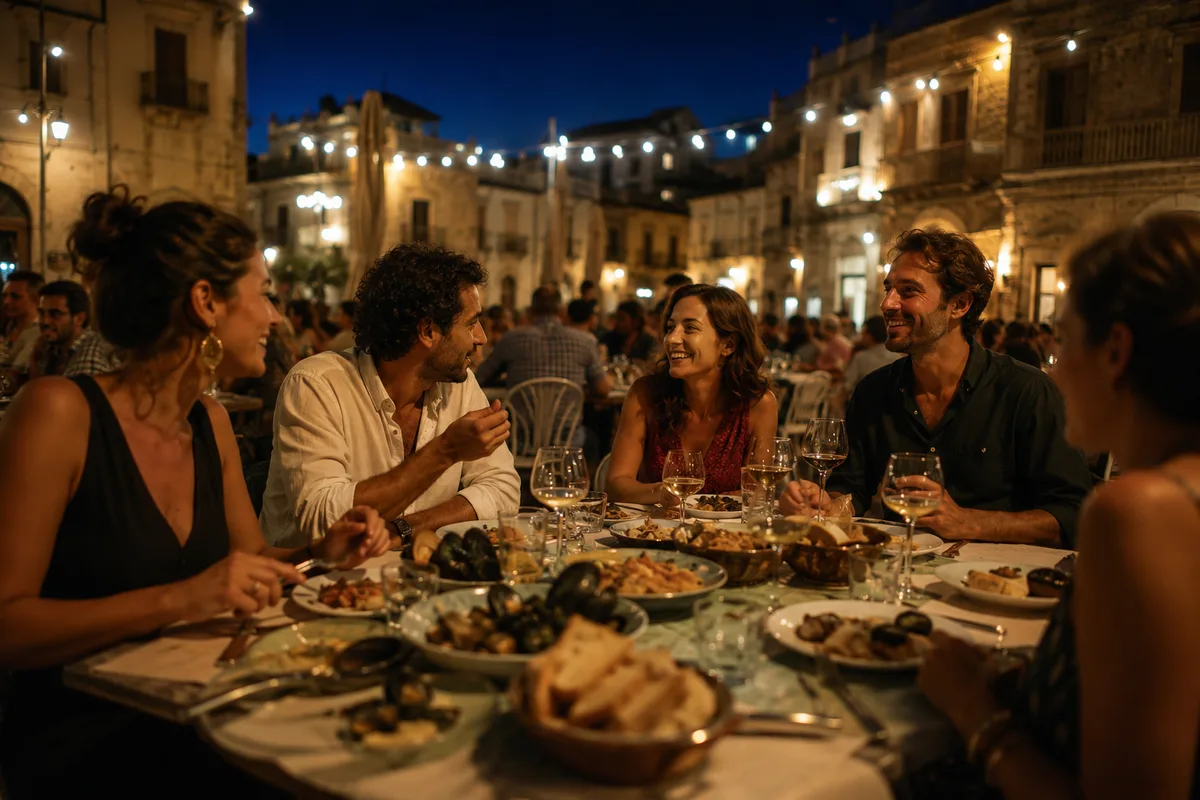
Dinner at 6 p.m. can feel perfectly normal in one country and surprisingly early in another. In parts of Spain, sitting down for dinner at 9 or even 10 p.m. barely raises an eyebrow. Travel farther north in Europe and many families may already have finished eating by then.
The difference is not simply that some cultures “like staying up late.” Meal times develop as part of a much larger daily rhythm. Lunch schedules, working hours, daylight, climate, social habits, family life, and the size of earlier meals can all influence when dinner feels normal.
Once a society settles into that rhythm, 9 p.m. does not necessarily feel late to the people living there. It is simply dinner time.
Dinner Time Is Cultural, Not Universal
There is no biologically fixed hour when humans are supposed to eat dinner.
The clock matters because societies organize daily life around shared expectations. Schools end at particular times. Offices develop familiar working hours. Shops open and close according to local habits. Friends know when it is normal to meet. Restaurants adapt their kitchens to when customers actually arrive.
Meals become part of that system.
Research comparing eating patterns across ten European countries found a clear geographical difference. Dinner was generally consumed later in Mediterranean countries than in Central and Northern Europe.
In the study, the most common reported dinner time was around 9 p.m. in Spain and Greece, around 8 p.m. in Italy and France, and considerably earlier in several Northern European countries.
The difference was not limited to dinner. Breakfast, lunch, snacks, and evening eating also followed different schedules.
That matters because late dinner is rarely an isolated habit. It is usually the final piece of a differently timed day.
Meal times are not the only everyday convention that varies across cultures; even the clock itself can look different, as our guide to why some countries use 24-hour time explains.
A Late Lunch Naturally Pushes Dinner Back
One of the simplest reasons for a late dinner is an equally late lunch.
Imagine two daily schedules.
Someone eats lunch at noon. By 6 p.m., six hours have passed, so dinner may feel perfectly natural.
Someone else eats a substantial lunch at 2:30 or 3 p.m. At 6 p.m., only a few hours have passed. A full evening meal might feel unnecessarily early.
This pattern is particularly relevant in parts of Mediterranean Europe.
The European Prospective Investigation into Cancer and Nutrition found that lunch was commonly eaten around 2 p.m. in Spain and Greece, compared with around noon in several Nordic countries.
Spain’s official tourism information reflects the same pattern today: restaurants commonly serve lunch from roughly 1 p.m. to 4 p.m. and dinner from about 8 p.m. into the late evening.
So asking why dinner is late without looking at lunch can be misleading.
If the middle of the eating day shifts later, dinner often follows.
The Biggest Meal May Not Be Dinner
Another assumption comes from countries where dinner is traditionally the day’s main meal.
That pattern is not universal either.
In some Mediterranean eating cultures, lunch has historically occupied a much larger place in the day. It can be longer, more substantial, and more socially important than the quick midday meal familiar in some Northern European or North American routines.
The European study found an interesting contrast: Mediterranean participants tended to eat their meals later, but they also consumed a greater share of their daily energy earlier in the day than participants in Central and Northern Europe.
In other words, a later dinner does not automatically mean that most of the day’s food is being eaten late at night.
A person may eat a substantial lunch, have a small afternoon snack, and then eat dinner at 9 p.m. Someone in another country might eat lunch much earlier and rely on a larger 6 p.m. dinner.
The clock alone does not reveal the entire meal pattern.
Afternoon and Evening Life Can Fill the Gap
Dinner timing also makes more sense when you look at everything that happens between lunch and the evening meal.
In Spain, for example, afternoon and early-evening eating can include small snacks, tapas, or drinks with friends before dinner. Spain’s official tourism guidance even notes the cultural importance of meeting for food or drinks before main meals.
These smaller eating occasions can bridge the long gap between lunch and dinner.
More importantly, they turn eating into something social rather than purely functional.
Dinner does not necessarily begin the moment work ends or hunger first appears. People may walk, shop, meet friends, spend time outside, or stop somewhere for a drink before eventually sitting down for the main evening meal.
The entire evening can therefore operate on a different timetable.
Climate and Daylight May Help Shape Habits — but They Are Not the Whole Answer
Warm weather is frequently offered as the explanation for late Mediterranean dinners.
There is some intuitive logic to the idea.
In hot climates, the middle of the day can be uncomfortable for outdoor activity, while evenings become more appealing as temperatures fall. Longer summer evenings can also encourage people to spend more time outside before eating.
But climate should not be treated as a complete explanation.
Countries with similar climates do not all eat at identical times, and meal schedules can remain culturally stable across seasons. Work, school, history, urban life, restaurant culture, and family habits all interact with environmental conditions.
The European evidence does show a broad south-to-north pattern in meal timing, but geography is not destiny.
Culture turns environmental conditions into routines, and those routines can persist long after their original influences become difficult to separate.
Work Schedules Matter More Than They First Appear
Dinner cannot happen in isolation from the working day.
If offices, shops, schools, and social activities finish earlier, evening meals can begin earlier too. If the entire schedule runs later, dinner has to fit somewhere further down the timeline.
That creates a reinforcing cycle.
Restaurants stay open late because people eat late.
People can eat late because restaurants stay open late.
Friends arrange meetings at 8 p.m. because 8 p.m. is socially understood as a reasonable time to meet.
Employers, entertainment venues, transportation systems, and shops adapt to the same expectations.
Eventually the schedule feels completely ordinary to the people living inside it.
This is one reason visitors sometimes experience more “culture shock” from meal times than residents realize. What looks unusually late from outside may feel no later than a 6:30 p.m. dinner does somewhere else.
Social Dinner Is Different From Refueling
Dinner also performs different social functions around the world.
In some households, the evening meal is mainly practical: everyone eats soon after returning home.
Elsewhere, dinner is more closely connected with conversation, extended family time, restaurants, public squares, outdoor terraces, and gatherings with friends.
When dinner becomes an evening social event rather than simply the last major dose of calories for the day, there is less reason for it to happen immediately after work.
This is particularly visible in cultures where restaurants and streets remain active late into the evening.
The meal is part of nightlife—but not necessarily “nightlife” in the sense of clubs and parties. Families with children, older adults, couples, and groups of friends may all participate in a public evening culture that simply runs later.
Why Do Northern Countries Often Eat Earlier?
The reverse question is just as useful.
Why is dinner comparatively early in countries such as Norway, Sweden, the Netherlands, or parts of Germany?
Earlier lunches are part of the answer.
In the European study, lunch commonly occurred around noon in several northern countries. With the main daytime meal already several hours in the past, eating again around 5 or 6 p.m. fits naturally.
Workday conventions and long-established household routines reinforce that schedule.
Historically, daylight patterns and climate may also have contributed to different ways of structuring work, leisure, and meals, although modern heating, lighting, transport, and office life have reduced many environmental constraints.
The important point is that an early dinner requires no more explanation than a late one.
Both are cultural schedules that became normal through repetition.
Spain Is an Extreme Example — but Not Every Spaniard Eats at 10 p.m.
International discussions about dinner timing often reduce entire countries to a single hour.
Real life is much messier.
Spain’s official tourism authority says restaurants generally serve dinner between approximately 8 p.m. and 11:30 p.m., with particularly late service possible in large cities and during summer.
That is a wide window.
Families with young children may eat differently from university students. Rural routines can differ from those of major cities. Weekday schedules may differ from weekends. Older adults may have different habits from younger people.
Even the European meal-timing research found substantial differences within individual countries.
So “Spaniards eat dinner at 10 p.m.” works as a cultural shorthand, not a universal rule.
The same caution applies whenever we talk about “the French,” “the Italians,” “Americans,” or “Northern Europeans.”
Countries contain millions of individual schedules.
Is Eating Dinner Late Unhealthy?
This question often appears immediately after discussions of Mediterranean meal times.
Research into chrono-nutrition—the study of how food timing interacts with biological rhythms—does suggest that when we eat can matter alongside what and how much we eat.
But comparing countries purely by dinner hour can be misleading.
A 9 p.m. dinner exists within a larger pattern involving wake time, sleep time, meal size, total energy intake, physical activity, and the timing of other meals.
As the European research demonstrates, populations with later meal schedules can still consume a larger proportion of their daily energy earlier in the day.
So it would be too simplistic to look at the clock and declare one national dinner schedule healthy and another unhealthy.
Meal timing is part of a complete daily pattern.
Why 9 p.m. Can Feel Early in One Place and Late in Another
Perhaps the most interesting part of dinner time is how quickly people stop noticing their own schedule.
Someone raised with 6 p.m. dinners may arrive in Madrid and wonder how anyone can wait until 10.
Someone accustomed to dinner at 9:30 may be equally confused when a restaurant elsewhere begins filling up before sunset.
Neither group is responding to an objective definition of “late.”
They are comparing another culture’s clock with their own.
Meal times are created by the rhythm of the rest of the day: when people wake, work, eat lunch, socialize, shop, return home, and go to sleep. Once all those pieces settle into place, dinner finds its position among them.
That is why some countries eat dinner so late.
The surprising part is that, to the people who live there, it often does not feel late at all.
Sources
Huseinovic et al. — Timing of Eating Across Ten European Countries, Public Health Nutrition








Join the discussion