Why Do Old Internet Trends Keep Coming Back? The Psychology of Online Nostalgia
Old memes, songs and aesthetics never seem to stay dead. The reason has as much to do with memory and identity as it does with algorithms.
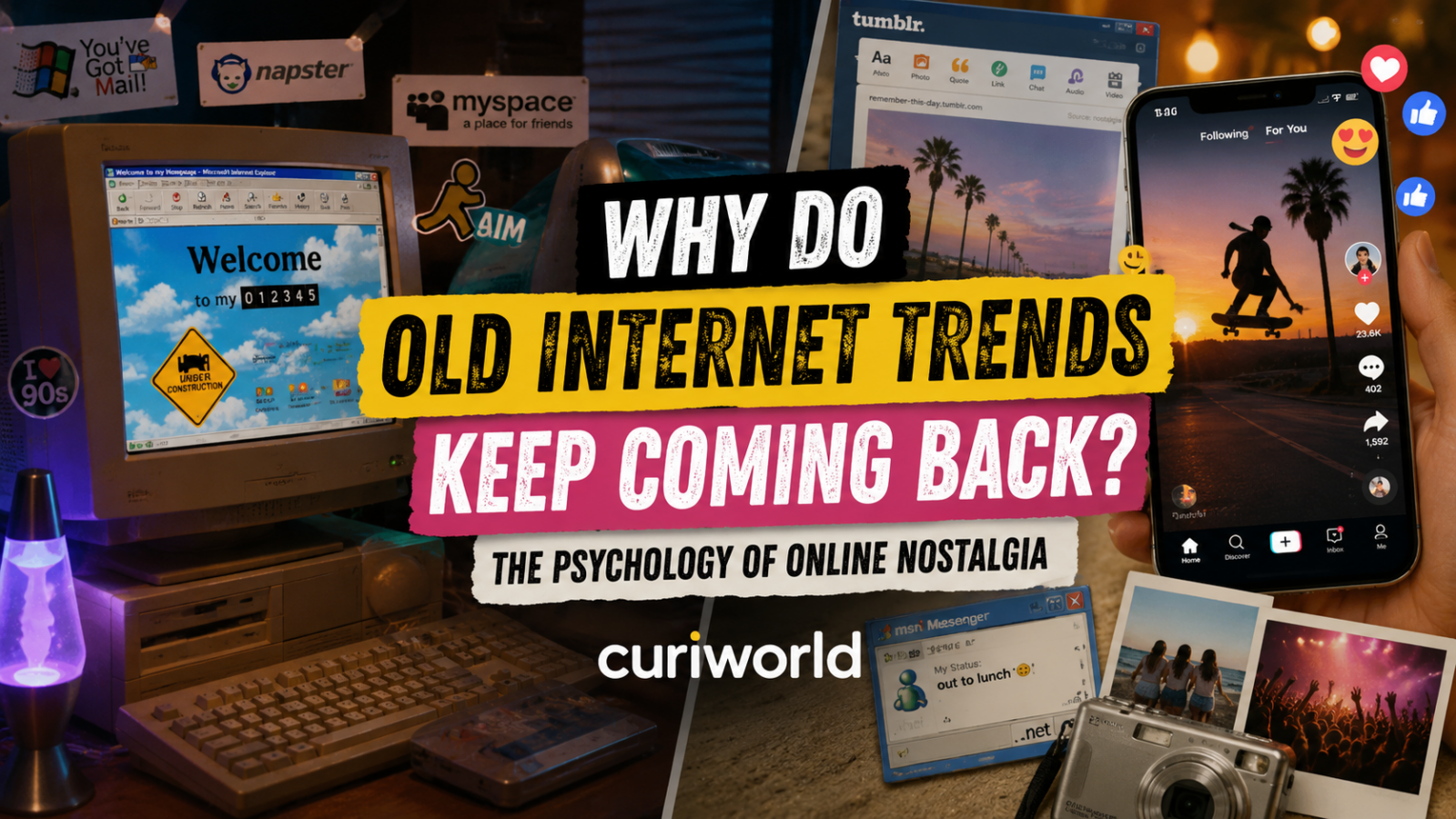
A song from 2012 suddenly appears in thousands of short videos. An old meme format comes back with slightly different captions. Low-resolution digital cameras become desirable again. A fashion aesthetic that the internet abandoned years ago returns with a new name.
Online culture is remarkably good at declaring something dead — and then bringing it back.
Part of the explanation is technological: the internet rarely forgets. Old videos, images, songs, jokes and aesthetics remain available to rediscover, repost and remix.
But availability alone does not explain why people want them back.
The stronger answer involves nostalgia. Psychologists increasingly describe nostalgia not simply as missing the past, but as an emotion connected with identity, social relationships and a sense of continuity between who we were and who we are now.
Online, that creates ideal conditions for cultural recycling.
The Internet Has Built an Enormous Memory Archive
Older forms of popular culture could disappear surprisingly easily.
A television show might stop airing. A magazine vanished from shelves. A local fashion trend survived mainly in photographs. A song you had not heard for ten years might stay forgotten until somebody happened to play it again.
The internet changed that.
A meme from 2014 may still be sitting in an old Tumblr archive. A forgotten song can remain on streaming platforms. YouTube videos, screenshots, old posts, fan edits and digital photographs can survive long after their original moment has passed.
That changes what “old” means.
Internet culture does not always have to recreate the past from memory. It can retrieve the actual artifact.
One person reposts it.
Another remixes it.
Someone younger encounters it for the first time.
Within days, an apparently dead trend can return to active circulation.
Nostalgia Is More Than Thinking, “That Was Fun”
Nostalgia is often treated as a cute emotional reaction: an old cartoon appears and you feel warm for a few seconds.
Psychological research suggests something deeper is happening.
A major review published in Current Opinion in Psychology describes nostalgia as a highly social emotion. Nostalgic memories frequently involve important people and meaningful periods of life, and nostalgia can support feelings of social connectedness, meaning and self-continuity.
That last idea — self-continuity — is particularly useful for understanding online nostalgia.
Your life changes.
Your friends change.
Your job changes.
The websites you use change.
Even the way the internet looks changes.
Then an old Windows sound, Vine clip, game menu, ringtone or song suddenly appears on your screen.
For a moment, the present connects with an earlier version of yourself.
You are not necessarily missing the meme.
You may be reconnecting with the period of your life in which the meme existed.
That is why seemingly trivial digital objects can carry surprisingly strong emotional weight.
Curiworld has explored a similar connection between sensory cues and autobiographical memory in its look at why certain smells can suddenly bring back powerful memories. Online nostalgia works through different cues, but the broader principle is familiar: something small can unlock a much larger personal context.
Social Media Makes the Past Unusually Easy to Re-Enter
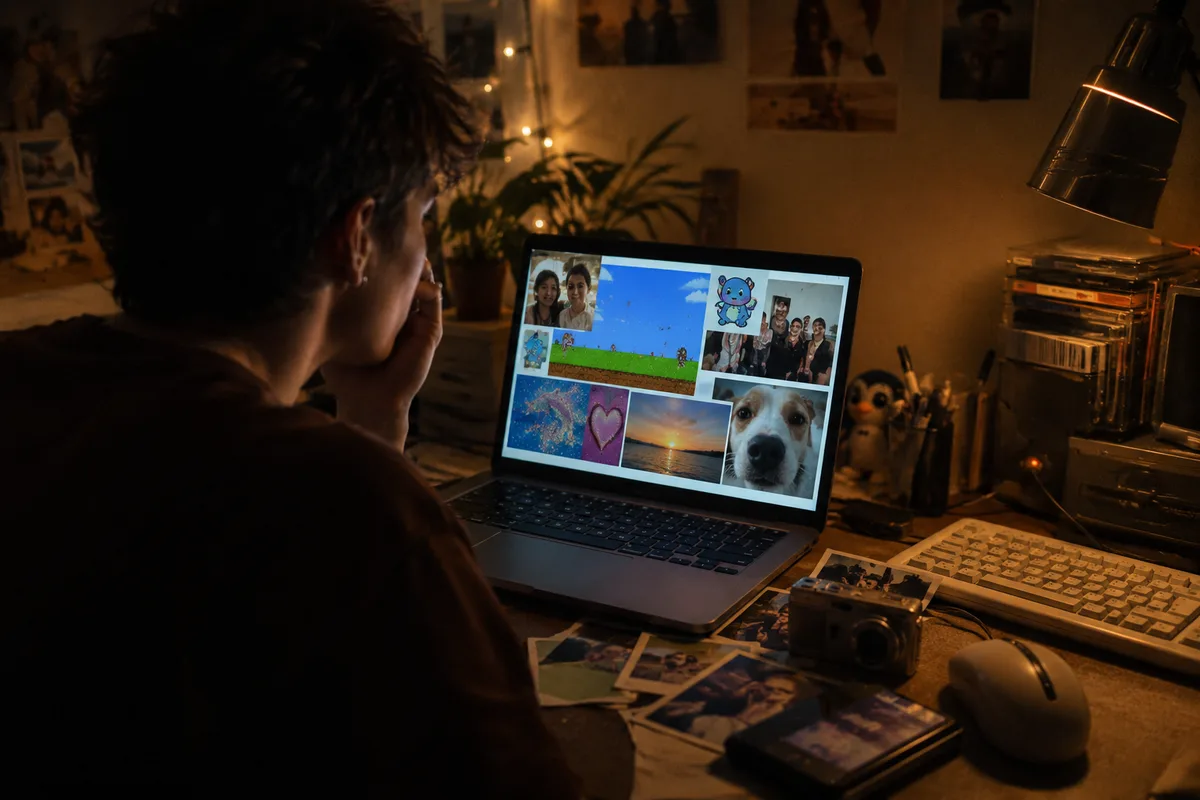
There is now direct research on what happens when people revisit their own old social-media material.
A 2026 study published in Cyberpsychology, Behavior, and Social Networking used two web-based experiments in which participants revisited either memorable or ordinary posts from their own social-media histories.
The researchers found that nostalgic posts could produce greater mental transportation — a feeling of being psychologically drawn back into the remembered moment — with effects on measures including positive affect and meaning in life under the conditions studied. The results also depended in part on participants’ sense of self-continuity.
That helps explain why “remember this?” content works so well online.
The old image is not merely information.
It can function like a doorway into a former social world.
Who were you talking to then?
What music were you listening to?
What phone did you own?
What did weekends look like?
What did everyone at school, university or work find funny?
One forgotten meme can bring the entire environment with it.
Online Nostalgia Is Often Collective
Some memories belong to you.
Others belong to millions of people at once.
This difference matters.
Imagine somebody posts the startup screen of an old game console. Thousands of comments appear:
“I can hear this picture.”
“My entire childhood.”
“You had to be there.”
“Why does this make me emotional?”
People are not simply remembering independently. They are publicly confirming that they remember the same cultural object.
That turns nostalgia into a social event.
Research on nostalgia emphasizes precisely this social dimension: nostalgic reflection is often populated by relationships and can strengthen feelings of connection with others.
Online communities amplify that mechanism.
A forgotten trend returns, and suddenly strangers recognize one another as members of the same invisible generation.
They watched the same videos.
Used the same websites.
Played the same games.
Quoted the same jokes.
For a moment, the internet feels less like an endless stream of strangers and more like a reunion.
But Not Everyone Experiencing the Trend Is Nostalgic
This is where online trend cycles become especially interesting.
Suppose an aesthetic from 2008 returns in 2026.
A 35-year-old may remember living through it.
A 24-year-old may vaguely remember seeing older siblings participating in it.
A 16-year-old may have no memory of it whatsoever.
All three can participate in the same revival for completely different reasons.
For the first person, the trend is nostalgia.
For the second, it may feel culturally familiar.
For the third, it is effectively new.
This gives internet revivals unusual power.
A comeback does not depend entirely on persuading the original audience to return.
It can simultaneously attract people who remember it and people who have just discovered it.
That is one reason describing every revival as “nostalgia” is too simple.
One generation’s retro can be another generation’s novelty.
The Trend Usually Comes Back Slightly Wrong — and That Helps
Internet trends rarely return as perfect historical reproductions.
They mutate.
An old song may return because a particular eight-second section works well in short-form video.
An old fashion style might be rebuilt using modern clothing.
A forgotten meme format gets new captions.
An early-2000s aesthetic may combine objects that were never actually fashionable at the same time.
From a historical perspective, these revivals can be messy.
From a cultural perspective, that may be exactly why they survive.
A trend that returns unchanged is simply an archive.
A trend that can be remixed becomes raw material.
The internet is exceptionally good at this kind of transformation because participation is easy. People do not merely watch a revived trend; they make their own versions of it.
The return therefore becomes another cultural moment rather than a museum exhibit of the first one.
Algorithms Can Accelerate a Revival, but They Do Not Create the Emotion
It is tempting to blame every recurring online trend on “the algorithm.”
Recommendation systems certainly help content spread. Once enough people begin interacting with an old song, format or aesthetic, platforms can expose it to far more users than the original posters could reach on their own.
But that explains distribution better than desire.
An algorithm can place an old clip in front of you.
It cannot, by itself, explain why seeing that clip reminds you of being 14 years old, staying up too late on a family computer and messaging friends you have not spoken to in years.
The technology supplies the cue.
Your memory supplies the meaning.
That distinction also matters when thinking about our broader relationship with feeds and recommendation systems. Curiworld’s examination of what can happen when you stop using social media for 30 days looks at how repeated digital cues and habits shape the experience of using these platforms.
Online nostalgia lives inside that same attention environment — but its emotional pull often reaches far beyond the screen.
Why the Past Can Feel Better Than It Actually Was
There is another reason old internet eras acquire mythical status.
Memory is not a complete recording.
We reconstruct the past.
That means the annoying parts of an earlier internet era can fade while a few vivid, funny or socially meaningful pieces remain easy to remember.
People may fondly remember early social networks while forgetting terrible mobile browsing.
They may miss old online games without missing unstable connections.
They remember the funniest memes rather than the thousands that were forgotten immediately.
So when people say, “The internet was better then,” they are not necessarily conducting an objective comparison between two technological periods.
They may be comparing today’s ordinary experience with yesterday’s highlights.
The passage of time itself can change the way periods of life are remembered. That connects naturally with another Curiworld exploration: why time can seem to move faster as we get older.
Nostalgia does not make a memory false.
It simply means the emotional meaning of the past may matter more than an accurate inventory of every inconvenience it contained.
There Is Also Nostalgia for an Internet That No Longer Exists
Online nostalgia is unusual because people are not always nostalgic for content.
Sometimes they miss the environment around the content.
Smaller communities.
Personalized profile pages.
Messy websites.
Forums.
Early video platforms.
A time before every hobby became content.
A time before every post was measured through visible metrics.
Whether those earlier eras were objectively “better” is debatable. They had their own spam, harassment, privacy problems, technical limitations and terrible design.
But people often connect platforms with stages of their lives.
Missing an old website may therefore partly mean missing who you were when you used it.
The platform becomes a timestamp.
The Internet Is Now Old Enough to Be Nostalgic About Itself
This may be the biggest change.
For much of its history, mainstream internet culture was obsessed with what came next.
The new website.
The new app.
The new phone.
The new meme.
The new platform everyone was suddenly joining.
Now digital culture has accumulated decades of its own history.
People can be nostalgic for early YouTube, old Facebook layouts, MySpace pages, Flash games, MSN Messenger, Tumblr eras, Vine, specific generations of smartphones, old emojis and even particular forms of low-quality digital photography.
The internet is no longer merely a machine that produces new culture.
It has become an archive of previous versions of itself.
And every year that archive becomes larger.
So Why Do Old Internet Trends Keep Returning?
Because the internet creates an unusually powerful combination:
The past remains accessible.
People attach personal identity to it.
Groups share memories of it.
Younger audiences can rediscover it.
Creators can remix it.
Platforms can redistribute it at enormous speed.
A returning meme or aesthetic may look like a trivial cycle of online fashion.
Sometimes it is.
But sometimes the attraction is not really the trend at all.
It is the chance to briefly revisit a social world, an earlier version of ourselves, or a period that now feels much farther away than the number of years suggests.
That is why the internet keeps resurrecting things it supposedly left behind.
Online culture moves quickly.
Human memory does not always want to.
Sources
Juhl, J. & Biskas, M. — “Nostalgia: An Impactful Social Emotion” — Current Opinion in Psychology (2023)
View the research article
Jang, J.-W., Lee, J. A., Lee, H.-J. & Lee, E.-J. — “More than an Anxiety Machine: How Nostalgic Social Media Use Promotes Positive Affect, Self-Regard, and Meaning in Life” — Cyberpsychology, Behavior, and Social Networking (2026)
View the study





Join the discussion