That Date on Your Food May Not Mean What You Think It Does
A date printed on food doesn't always mark the day it becomes unsafe. Here's what Best By, Sell By and Use By actually mean—and what matters when deciding whether food is still good.
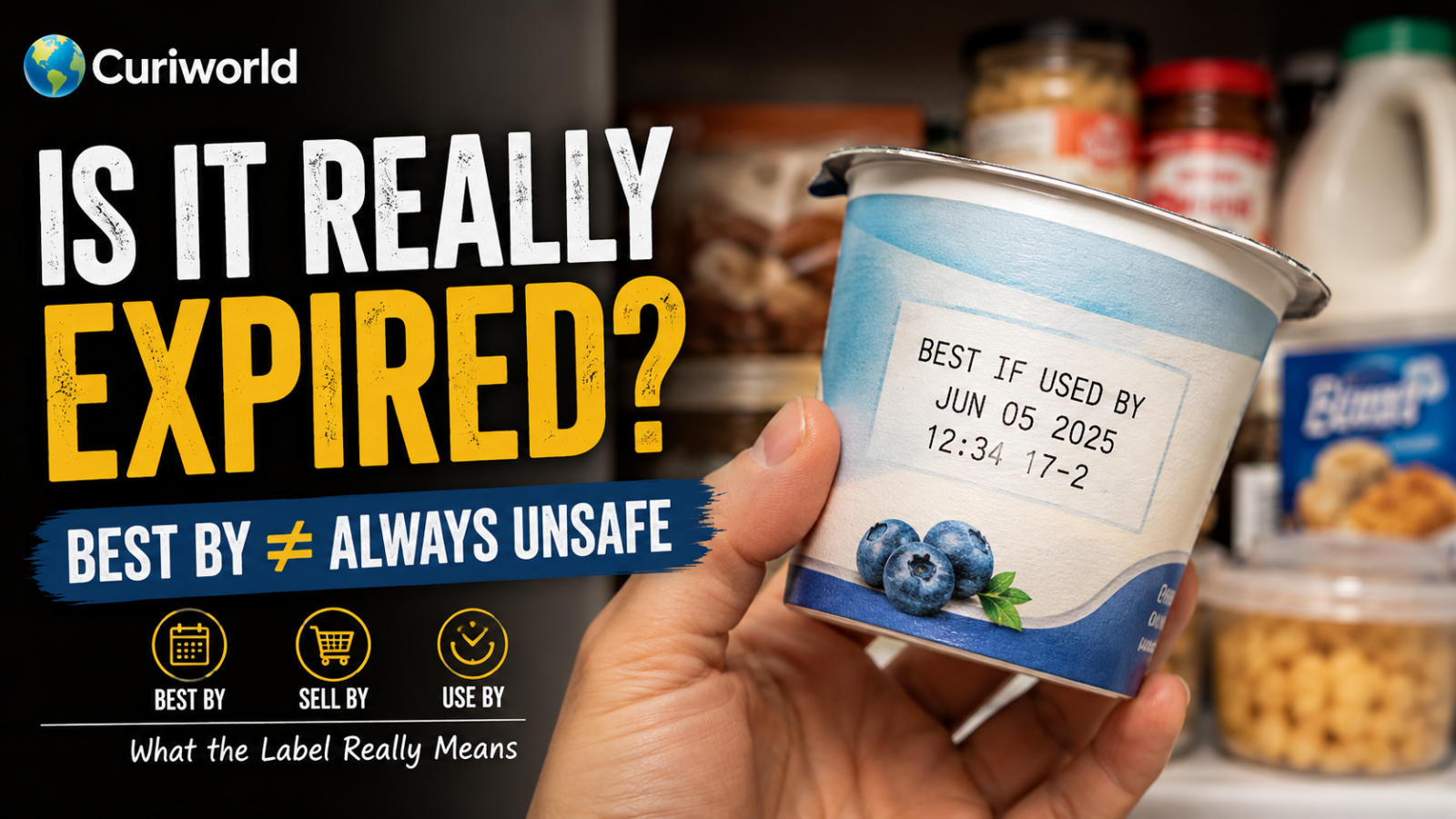
You find an unopened package at the back of the pantry.
The date printed on it was last week.
Nothing looks unusual. The package is intact. But the label seems to deliver a simple message:
The food has expired.
So you throw it away.
That feels like the safest choice—but food date labels are more complicated than they appear.
In the United States, dates such as “Best By,” “Best if Used By,” “Sell By” and even some “Use By” dates often relate to quality rather than marking the exact day a food suddenly becomes unsafe.
That doesn’t mean dates should be ignored.
It means you need to understand what the label is actually telling you—and combine that information with the type of food, how it was stored and whether the package has been opened.
Here’s how to read those dates without treating every printed number as a countdown to spoilage.
First: “Expiration Date” Is Often an Oversimplification
People commonly call almost every date on food an expiration date.
The package may say something entirely different.
You might see:
Best if Used By
Best By
Sell By
Use By
Freeze By
Those phrases don’t necessarily mean the same thing.
In fact, the FDA says there are currently no uniform or universally accepted descriptions for open date labeling across the U.S. food supply.
Except for infant formula, manufacturers generally are not federally required to put quality-based date labels on packaged foods.
That helps explain why grocery shelves contain so many different phrases—and why consumers understandably find them confusing.
Dates are only one part of food safety; temperature and time matter too, especially when cooked food has been left on the counter.
What Does “Best if Used By” Mean?
This is the easiest one to understand once you stop thinking of it as an expiration date.
“Best if Used By” is primarily about quality.
It tells you when the manufacturer expects the product to be at its best in characteristics such as flavor or quality.
After that date, a product may gradually lose some of what made it ideal.
Crackers might become less crisp.
Cereal might taste stale.
A sauce may lose some flavor.
That does not mean the product automatically becomes dangerous at midnight when the date changes.
The FDA and USDA currently encourage the voluntary use of “Best if Used By” for quality-based food date labeling because it more clearly communicates that distinction.
What Does “Sell By” Mean?
“Sell By” sounds like an instruction to the person eating the food.
Usually, it isn’t.
A Sell By date is primarily intended to help retailers manage inventory and determine how long a product should remain on display.
It does not mean:
“Unsafe to eat after this date.”
A product can reach its Sell By date while still having useful storage time remaining at home.
But that does not mean you should ignore normal food-storage limits.
For refrigerated perishables, safe storage time still matters regardless of what the package says.
A printed date cannot compensate for a refrigerator that was too warm or food that spent hours sitting on the counter.
What About “Use By”?
This is where things get confusing.
Consumers naturally read Use By as a hard safety deadline.
But under current U.S. federal guidance, many food dates—including Use By dates—are not automatically safety dates.
The wording and regulatory context can vary by product.
There is, however, one especially important exception:
infant formula.
FDA regulations require infant formula containers to carry a Use By date. The FDA advises caregivers not to use infant formula after that date, because the manufacturer guarantees its nutrient content and quality only through the declared Use By date.
So while a Best By date on crackers may primarily concern quality, the Use By date on infant formula should not be treated casually.
A Quick Guide to Common Food Date Labels
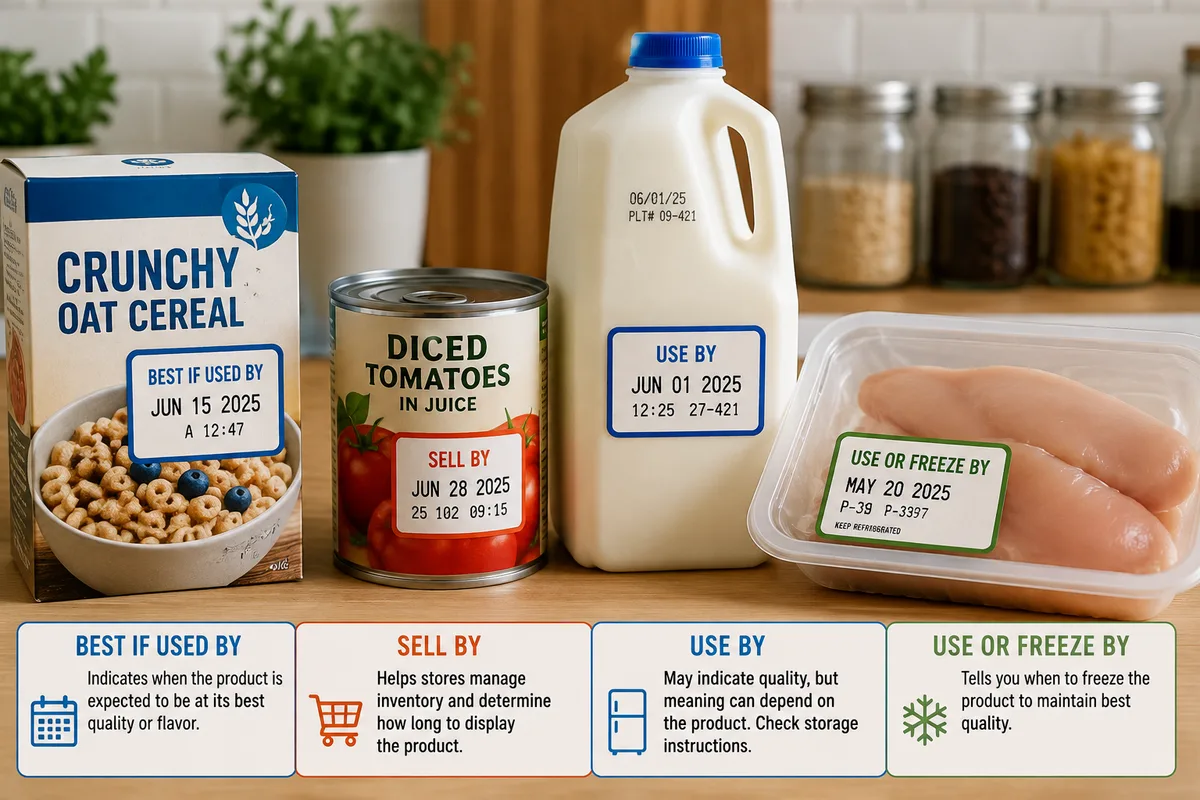
| Label | What It Usually Tells You |
|---|---|
| Best if Used By / Best By | When the product is expected to have its best flavor or quality |
| Sell By | Helps stores manage display and inventory |
| Use By | Often quality-related on ordinary foods, but meaning can depend on the product |
| Freeze By | Suggests when to freeze a product to help maintain quality |
| Infant Formula Use By | Follow the date; FDA requires it and advises against using formula afterward |
The important lesson is simple:
The words around the date matter.
So does the food they are printed on.
Can You Eat Food After a Best By Date?
Potentially, yes.
Passing a quality-based Best By or Best if Used By date does not automatically make a properly stored food unsafe.
But that statement needs an important qualification:
A date label cannot tell you the food’s entire history.
Imagine two identical products with the same date.
One remained sealed and was stored exactly as recommended.
The other was opened, contaminated by a utensil and left somewhere too warm.
The printed date is identical.
The actual condition of the food is not.
This is why date labels should be considered alongside proper storage and handling.
Refrigerated Foods Need More Attention Than Pantry Foods
A box of dry pasta and a package of raw chicken should not be judged using the same logic simply because both have dates printed on them.
Shelf-stable foods generally behave very differently from highly perishable refrigerated foods.
With perishables, temperature and storage time become critical.
Your refrigerator should be kept at 40°F (4°C) or below, and food-specific refrigerator storage recommendations still apply.
Raw poultry is a good example of why food-specific storage guidance matters. See how long raw chicken can stay in the refrigerator rather than relying only on the date printed on the package.
For example, many cooked leftovers are generally recommended for only 3 to 4 days in the refrigerator.
For a practical breakdown by food type, storage temperature and warning signs, see how long common leftovers are good in the fridge.
That storage guidance doesn’t disappear because the container happens to have a later printed date.
For refrigerated foods, ask two questions:
What does the package date mean?
and
How long has this food actually been stored?
You need both answers.
Does Opening the Package Change Things?
Often, yes.
A date printed by the manufacturer generally relates to the product under its intended packaging and storage conditions.
Opening the package changes the situation.
Food is exposed to:
air;
moisture;
utensils;
hands;
and microorganisms from the surrounding environment.
Some products therefore have separate instructions such as:
“Use within 5 days of opening.”
Once opened, that instruction may become much more useful than the distant date printed elsewhere on the package.
This is another reason a Best By date should not be treated as a universal promise that the food will remain good until that day regardless of what happens after opening.
Can You Trust the Smell Test?
Your senses are useful—but they have limits.
If food has developed an abnormal odor, texture, consistency or appearance, those changes can indicate deterioration or spoilage.
The FDA specifically advises consumers to examine foods past a Best if Used By date for noticeable changes in color, consistency or texture.
But there is an important difference between detecting spoilage and proving safety.
Foodborne pathogens do not always produce an obvious bad smell or visible warning.
So:
“This smells bad” can be a reason to throw something away.
But:
“This smells fine” is not a guarantee that unsafe food is safe.
For perishable foods, storage history remains more important than a successful sniff test.
What If the Package Is Damaged?
The date becomes much less reassuring if the packaging itself is compromised.
Be cautious with food from packaging that is:
leaking;
badly damaged;
unexpectedly swollen;
or no longer properly sealed.
Cans deserve particular attention.
A severely swollen or leaking can is not something to taste “just to see.”
Date labels assume normal storage and intact packaging.
Once the integrity of the package becomes questionable, the printed date should not be your main decision tool.
Why Are Food Dates So Confusing?
Because consumers often expect them to answer a question they were not necessarily designed to answer:
“Is this food safe right now?”
Many dates were designed primarily to communicate quality or assist inventory management.
The confusion has consequences.
The FDA estimates that misunderstanding food date labels accounts for about 20% of consumer food waste in the United States.
That means perfectly usable food may be discarded simply because people interpret a quality date as an automatic safety deadline.
The solution isn’t to ignore dates.
It’s to understand them better.
A Better Way to Decide Whether to Keep or Toss Food
Instead of looking at the printed date alone, use a short checklist.
1. Read the wording.
Is it Best By, Sell By, Use By or something else?
2. Identify the food.
A shelf-stable dry product and raw poultry require very different safety decisions.
3. Check how it was stored.
Was refrigeration required? Did it remain properly cold?
4. Ask whether it has been opened.
After-opening instructions may matter more than the original date.
5. Inspect the package and food.
Look for obvious spoilage or damaged packaging.
6. Follow product-specific safety guidance when it exists.
Don’t replace established refrigerator storage times with a printed quality date.
And if the storage history of a highly perishable food is unknown, guessing based on the label is not a good strategy.
The Bottom Line
The date printed on food is not always an expiration date in the way most people imagine.
In the United States, Best By and Best if Used By generally indicate when a food is expected to be at its best quality—not the exact moment it becomes unsafe.
Sell By is mainly useful for retail inventory.
And while Use By can sound like a universal safety deadline, its meaning depends on the product and labeling context.
The major exception worth remembering is infant formula: do not use it after its required Use By date.
For everything else, don’t make the date do more work than it was designed to do.
Read the wording.
Know what kind of food you’re dealing with.
Follow proper storage times.
Pay attention to whether the package has been opened or damaged.
And remember that food safety depends on time, temperature and handling—not just the number printed on the package.





Join the discussion