Raw Chicken in the Fridge: How Long Is Too Long?
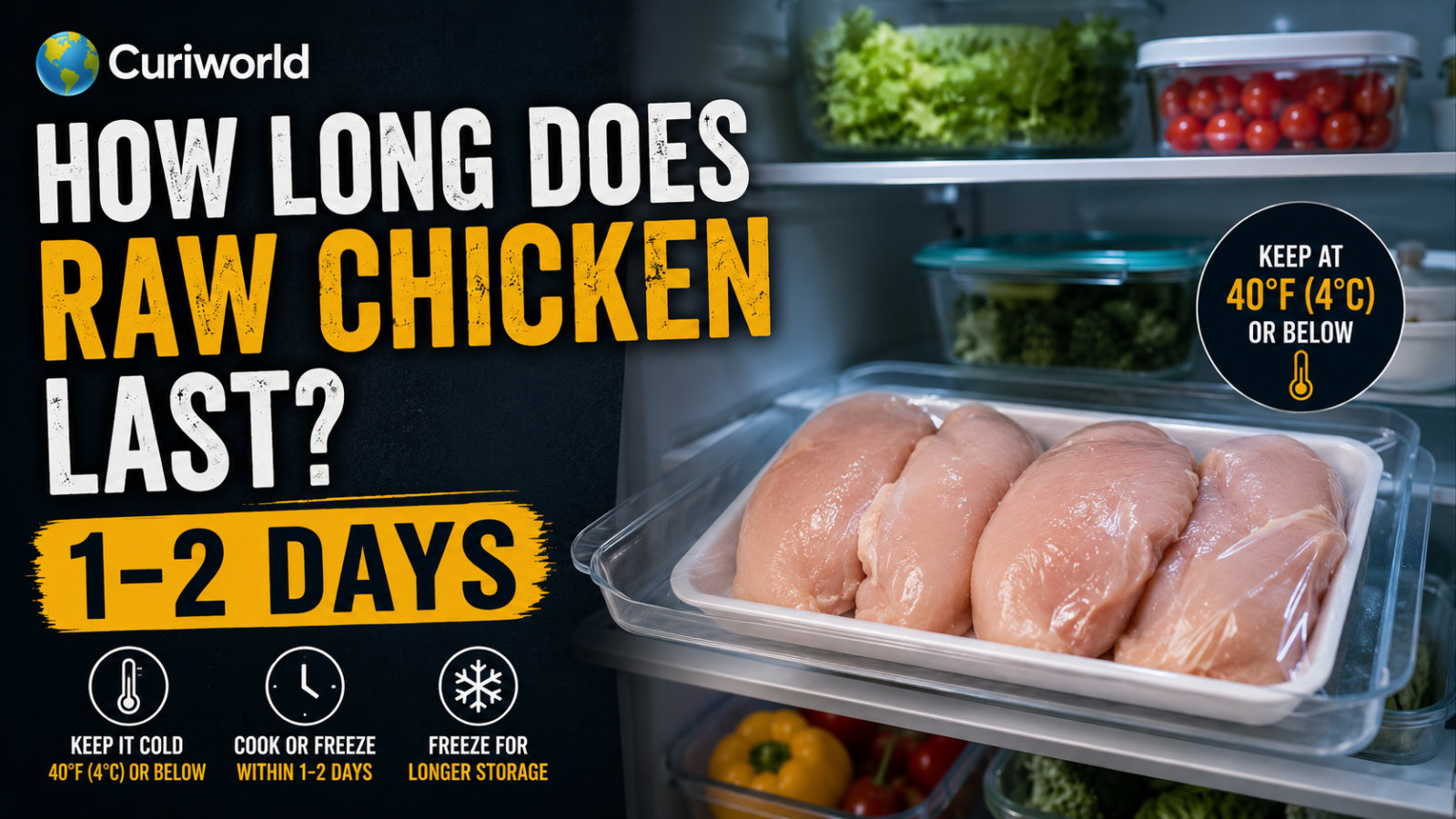
Fresh raw chicken should generally be cooked or frozen within 1–2 days when refrigerated at 40°F (4°C) or below. Here's what to know about day three, package dates, freezing, thawing and safe cooking.
You bought chicken with every intention of cooking it that night.
Plans changed. One day passed, then another.
Now the package is still sitting in the refrigerator, and you’re wondering whether dinner is still inside it—or whether it’s time to throw it away.
For fresh raw chicken, the refrigerator window is shorter than many people expect.
Raw chicken should generally be cooked or frozen within 1 to 2 days when stored in a refrigerator at 40°F (4°C) or below.
That applies to both whole chicken and chicken pieces.
So if raw chicken has been sitting in your refrigerator for three or four days, the question isn’t simply whether it still smells okay. Its storage time has already moved beyond the recommended refrigerator window.
Here’s what actually matters when deciding what to do with it.
The Simple Rule: Raw Chicken Gets 1 to 2 Days
FoodSafety.gov lists the same refrigerator storage time for whole fresh chicken and fresh chicken pieces:
1 to 2 days at 40°F (4°C) or below.
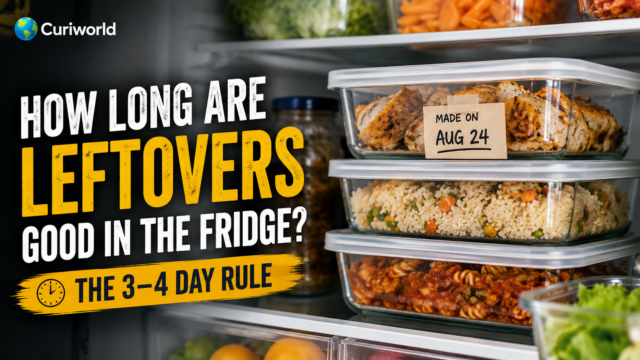
That’s noticeably shorter than cooked chicken, which generally gets 3 to 4 days under proper refrigeration.
| Chicken | Refrigerator Storage |
|---|---|
| Raw whole chicken | 1–2 days |
| Raw chicken pieces | 1–2 days |
| Cooked chicken leftovers | 3–4 days |
If you buy fresh chicken and realize you won’t cook it within the next day or two, freezing it is the better option.
Is Raw Chicken Still Good After 3 Days in the Fridge?
This is where many people hesitate.
If fresh raw chicken has been refrigerated for three days, it is already beyond the official 1-to-2-day storage recommendation.
That doesn’t mean chicken suddenly changes the moment day two ends. Food-safety recommendations aren’t an invisible switch.
They provide a practical storage window designed to reduce risk under normal home conditions.
So chicken that has been sitting in the refrigerator for three days shouldn’t automatically get another day simply because it looks or smells normal.
If you know you won’t cook fresh chicken within the recommended window, freeze it earlier rather than stretching its refrigerator life.
Does the Sell-By or Use-By Date Change the Rule?
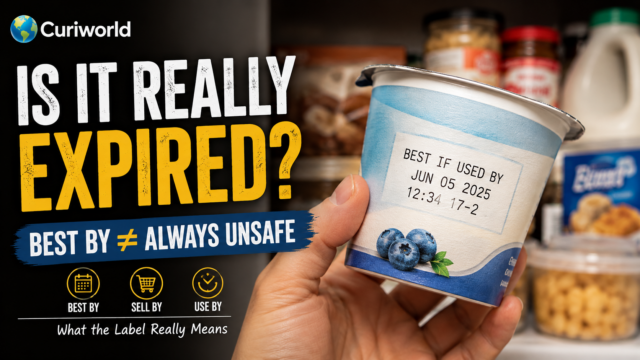
A package of chicken may have a Sell By, Best By or Use By date printed on it.
But food date labels and home refrigerator storage recommendations don’t necessarily answer the same question.
A Sell By date, for example, can help retailers manage inventory. It isn’t automatically a promise that fresh chicken can remain in your refrigerator until that date regardless of when you bought it or how it was handled.
For ordinary fresh poultry at home, the practical recommendation remains:
Cook or freeze it within 1 to 2 days.
In other words, don’t let a later package date distract you from how long the chicken has actually been sitting in your refrigerator.
What If the Package Hasn’t Been Opened?
An unopened package doesn’t automatically extend the standard refrigerator recommendation for fresh raw chicken.
Keeping the original packaging intact may reduce additional handling and contamination, but it doesn’t stop time.
If you’re not going to use fresh chicken within 1 to 2 days, freezing it is the more sensible option—even if the supermarket wrapping is still sealed.
Some vacuum-packed or commercially processed products may carry specific storage instructions. When they do, follow the manufacturer’s directions.
For ordinary fresh chicken, however, unopened does not mean unlimited refrigerator life.
What About Chicken That Was Previously Frozen?
Now another factor matters:
How was it thawed?
Frozen food can be safely thawed in the refrigerator, in cold water or in the microwave.
Chicken thawed using cold water or a microwave should be cooked immediately.
Refrigerator thawing gives you more flexibility because the chicken stays cold while it thaws.
What you shouldn’t do is leave frozen chicken on the kitchen counter for hours.
The outside can warm to temperatures where bacteria multiply while the center is still partially frozen.
Thawing is part of safe food handling—not a break from it.
Where Should Raw Chicken Go in the Refrigerator?
Raw chicken needs to be stored with one problem in mind:
leaking juices.
A package that leaks onto salad greens, fruit, cooked leftovers or other ready-to-eat foods can spread bacteria to food that may never be cooked again.
Keep raw chicken securely wrapped or place the package inside a leak-proof container or tray.
It should also be positioned so that accidental leakage cannot drip onto foods below it.
This is one of those kitchen habits that takes almost no effort but can prevent cross-contamination.
Should You Wash Raw Chicken Before Cooking It?
No.
Raw chicken does not need to be rinsed in the sink before cooking.
Washing poultry can splash contaminated droplets onto the sink, countertops, utensils and nearby foods.
Cooking—not rinsing—is what makes chicken safe to eat.
Move the chicken from its packaging to the preparation area while minimizing unnecessary contact with other kitchen surfaces.
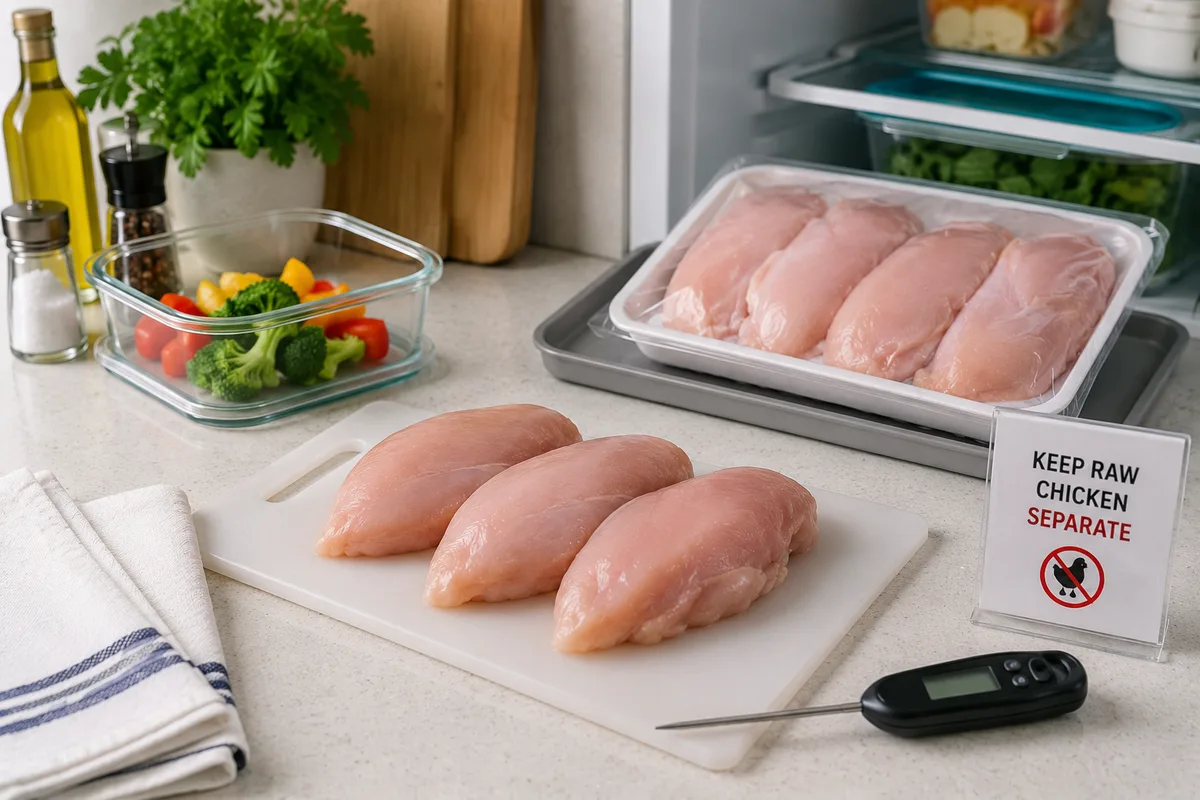
After handling raw poultry, wash your hands thoroughly and clean cutting boards, knives, plates and surfaces that touched it.
Using a separate cutting board for raw meat and poultry can make this even easier.
Can You Tell If Raw Chicken Is Bad by Smelling It?
An unpleasant or clearly abnormal odor is a reason not to use raw chicken.
Major changes in appearance or texture can also indicate deterioration.
But there is an important limitation:
Your nose cannot prove that chicken is safe.
Foodborne pathogens don’t necessarily produce a smell you can detect.
That means:
Bad smell → discard it.
But:
Normal smell → not proof that it is safe.
This distinction matters when someone opens a package and says:
“It’s been in the fridge for four days, but it smells fine.”
The four days tell you something your nose cannot.
The chicken is already beyond the recommended refrigerator storage period.
What About Slimy Raw Chicken?
Raw chicken naturally contains moisture, so a wet surface alone doesn’t necessarily mean it has spoiled.
A noticeable change in texture—especially when combined with an unpleasant smell or unusual appearance—is a reason to discard it.
But once again, storage history matters more than trying to diagnose chicken by touch.
If you already know it has been refrigerated beyond the recommended period or spent too much time at unsafe temperatures, there is little value in conducting more sensory tests.
The timeline has already given you the more useful information.
How Cold Should Your Refrigerator Be?
Keep your refrigerator at 40°F (4°C) or below.
Refrigeration slows bacterial growth, but it doesn’t sterilize raw chicken.
If you’re unsure how cold your refrigerator actually is, an inexpensive appliance thermometer can provide a more reliable answer than the temperature dial alone.
Also avoid packing the refrigerator so tightly that cold air cannot circulate effectively.
The 1-to-2-day recommendation assumes the chicken has actually remained properly refrigerated.
Don’t Forget the Trip Home From the Store
Safe storage begins before the chicken reaches your refrigerator.
Raw poultry and other perishable foods should generally be refrigerated or frozen within 2 hours.
If the surrounding temperature is above 90°F (32°C), that window drops to 1 hour.
This can matter during warm-weather grocery trips.
Buying chicken and then leaving it in a hot car while running several more errands may create a temperature problem before the package ever reaches your kitchen.
On particularly hot days, buying refrigerated and frozen foods near the end of your shopping trip is a simple precaution.
Can You Freeze Raw Chicken Instead?
Absolutely.
If you’re not confident you’ll cook fresh chicken within a day or two, freezing it early is the easiest way to avoid stretching the refrigerator window.
FoodSafety.gov lists approximate freezer times for best quality of:
Whole raw chicken — 1 year
Raw chicken pieces — 9 months
These freezer times primarily concern quality when food is continuously frozen at 0°F (-18°C) or below.
Wrap the chicken well to help prevent freezer burn and add the freezing date to the package.
Most importantly, don’t think of freezing as a last-minute rescue for chicken that has already been sitting too long.
If your plans change, freeze it while it is still within its recommended refrigerator period.
How Hot Does Chicken Need to Be Cooked?
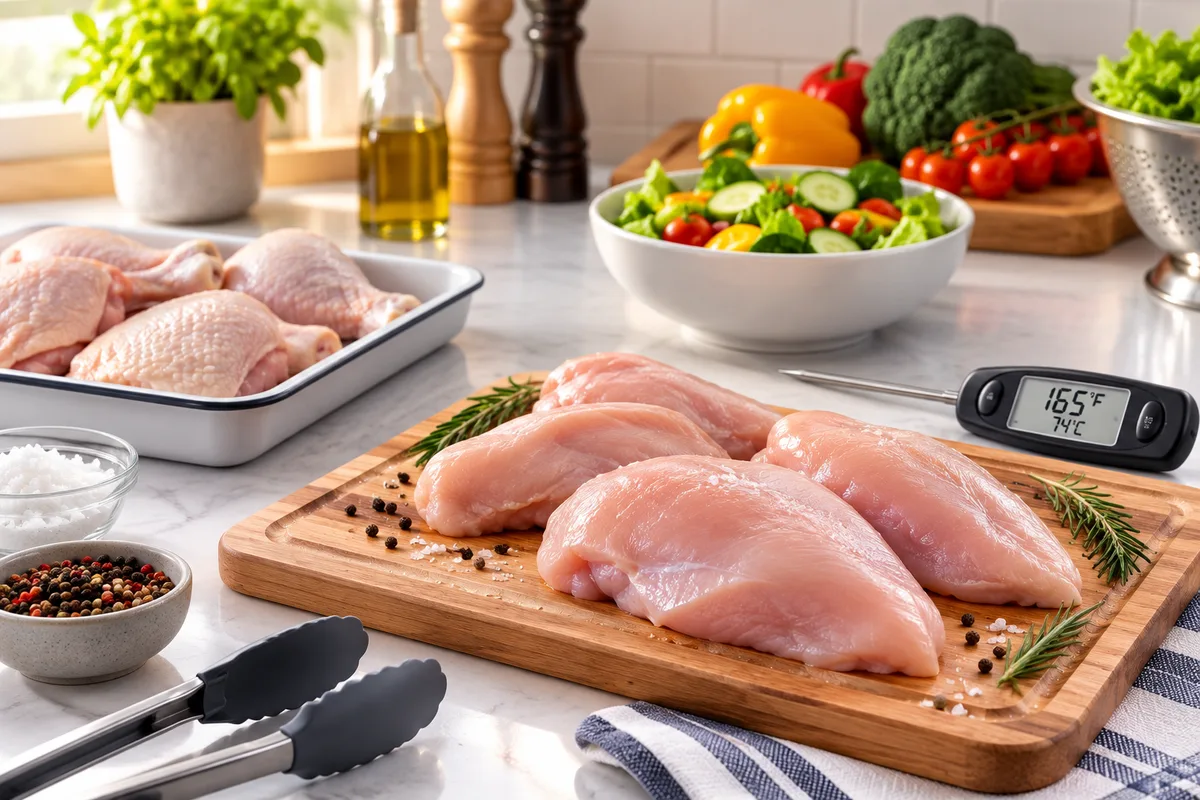
Chicken and other poultry should reach a safe minimum internal temperature of 165°F (74°C).
The most reliable way to know you’ve reached that temperature is a food thermometer.
Color alone isn’t a dependable safety test.
Chicken can sometimes appear done before the thickest part has reached the correct temperature. Properly cooked poultry can also occasionally retain colors that people associate with undercooking.
A thermometer replaces that guesswork with an actual measurement.
The Numbers Worth Remembering
You don’t need to memorize an entire food-safety manual.
For fresh raw chicken, these numbers cover most everyday situations:
1–2 days — refrigerator storage for fresh raw chicken.
40°F (4°C) — maximum recommended refrigerator temperature.
2 hours — general limit for leaving perishable food unrefrigerated.
1 hour — the shorter limit when temperatures are above 90°F (32°C).
165°F (74°C) — safe minimum internal cooking temperature for poultry.
If you know you won’t use the chicken within the first number, freeze it.
The Bottom Line
Fresh raw chicken has a short refrigerator life:
1 to 2 days at 40°F (4°C) or below.
If you won’t cook it within that window, freeze it.
Don’t assume an unopened package or a later printed date automatically gives fresh poultry extra refrigerator time. And don’t rely on smell, color or texture to prove that chicken stored beyond the recommended period is safe.
Keep raw poultry contained so its juices cannot contaminate other foods, thaw it safely and cook it to an internal temperature of 165°F (74°C).
The easiest rule is also the most useful:
Cook it soon—or freeze it early.
That’s much better than finding the package three days later and hoping your nose can make the decision for you.






Join the discussion