How Long Are Leftovers Really Good in the Fridge?
Most cooked leftovers last about 3–4 days in a refrigerator kept at 40°F (4°C) or below—but safe storage starts before the container ever reaches the fridge.
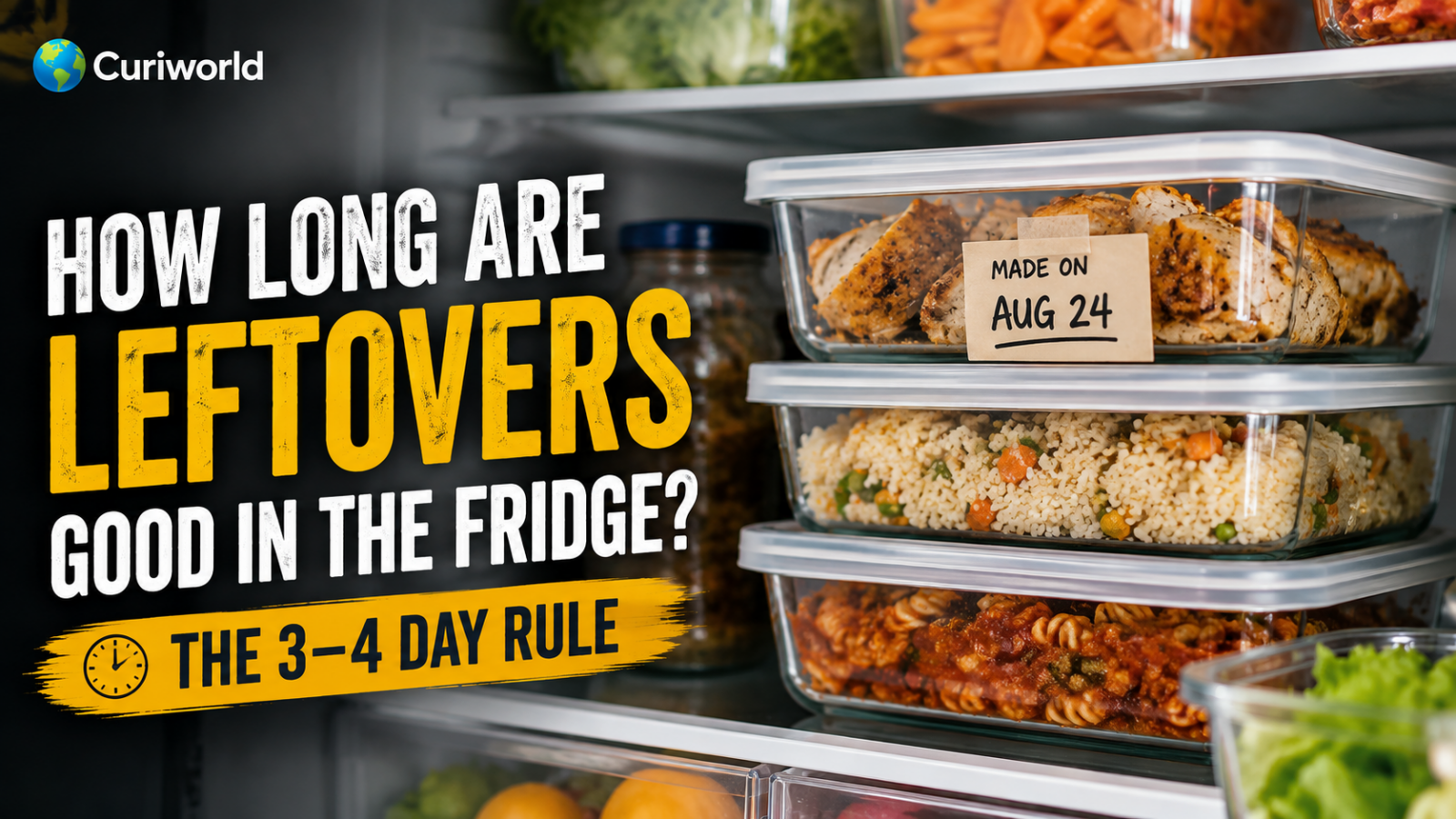
There is a container in the back of your refrigerator.
You remember the meal. You just don’t remember exactly when you made it.
It still looks normal. It doesn’t smell strange. And throwing away perfectly good food feels wasteful.
So, is it still safe to eat?
For many cooked leftovers, the practical answer is 3 to 4 days, provided they were refrigerated promptly and your refrigerator is kept at 40°F (4°C) or below.
But the number of days is only part of the story.
How long the food sat out before refrigeration, how quickly it cooled, and whether it stayed consistently cold all matter. And despite what we often do in the kitchen, smelling leftovers is not a reliable way to prove they are safe.
Here’s how to make the decision without guessing.
The 3-to-4-Day Rule
For many common cooked foods, the refrigerator window is surprisingly similar.
FoodSafety.gov recommends about 3 to 4 days for cooked meat and poultry leftovers, soups and stews, pizza, and many other prepared foods when stored at 40°F (4°C) or below.
A useful rule of thumb is:
If you won’t eat cooked leftovers within four days, freeze them instead.
This isn’t a universal rule for everything in the refrigerator. Raw meat, deli meat, eggs and other foods have their own storage recommendations.
But for the dinner you cooked two nights ago, 3 to 4 days is a good place to start.
For chicken-specific storage, freezing and reheating guidance, see how long cooked chicken is good in the fridge.
A Quick Leftover Storage Guide
| Food | Refrigerator |
|---|---|
| Cooked meat or poultry | 3–4 days |
| Soups and stews | 3–4 days |
| Pizza | 3–4 days |
| Cooked egg dishes | 3–4 days |
| Chicken, tuna, ham or egg salad | 3–4 days |
| Opened or deli-sliced lunch meat | 3–5 days |
These times assume a refrigerator temperature of 40°F (4°C) or below.
That last detail matters more than it may seem.
Your Refrigerator Slows Bacteria—It Doesn’t Stop Time
A refrigerator is not a pause button.
Cold temperatures slow the growth of many microorganisms, which is why refrigeration preserves food for much longer than leaving it on the counter.
But refrigeration does not sterilize food.
Some microorganisms can survive cold storage, and some can continue growing slowly at refrigerator temperatures.
This is why food can have a limited safe storage period even when it has been refrigerated continuously.
Keeping your refrigerator at 40°F (4°C) or colder is therefore essential. If you’re unsure about the actual temperature, an inexpensive appliance thermometer is more useful than relying entirely on the fridge’s control setting.
The Clock Starts Before the Leftovers Reach the Fridge
This is the part people often miss.
Imagine dinner ends at 7 p.m., but the leftovers stay on the table until 10:30 before someone finally puts them away.
Those hours count.
Perishable foods should generally be refrigerated within 2 hours. If the surrounding temperature is above 90°F (32°C)—for example at a summer picnic—the limit drops to 1 hour.
Putting food in the refrigerator later does not erase the time it already spent sitting out.
So the familiar 3-to-4-day guideline assumes the leftovers were handled safely from the beginning.
Can You Put Hot Food Straight in the Fridge?
Yes.
The old idea that hot food must cool completely on the counter before going into the refrigerator can actually work against safe food handling.
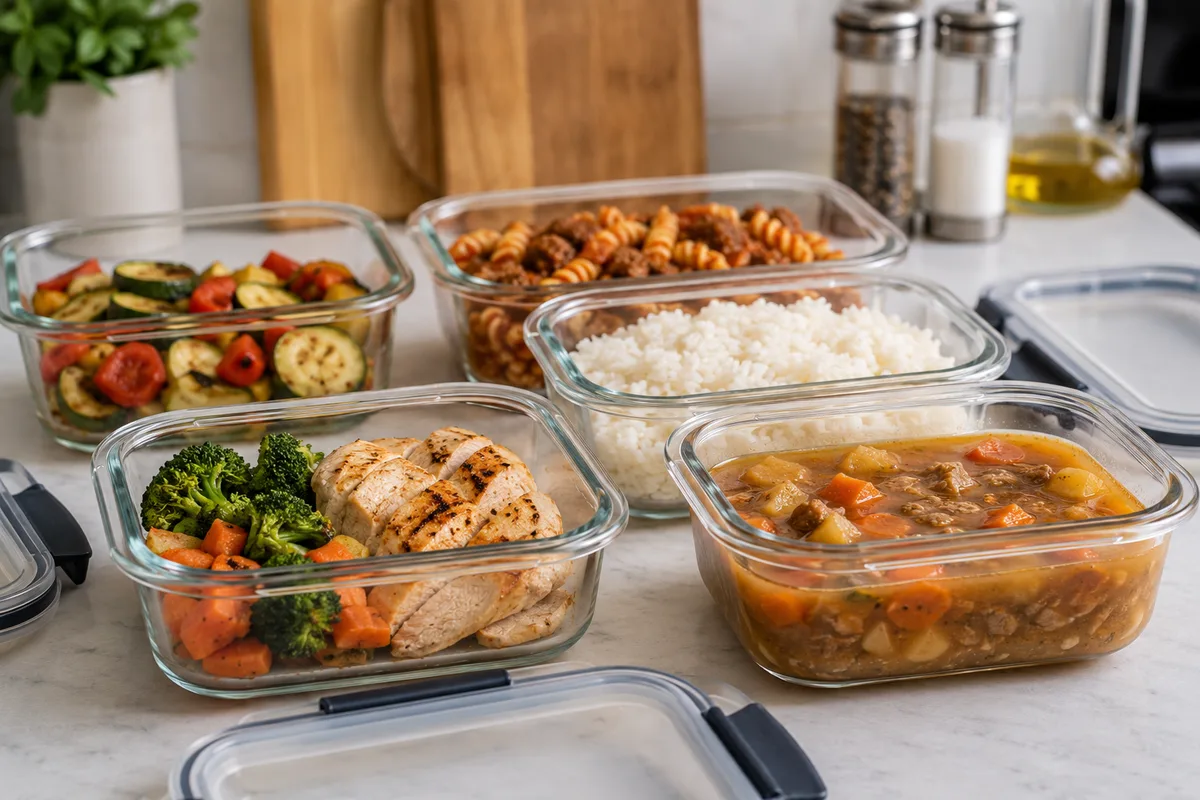
Small portions can go into the refrigerator while still warm.
For a large pot of soup, chili or stew, however, don’t simply place the entire deep pot in the fridge and hope the center cools quickly.
Divide large amounts into smaller, shallow containers.
A shallow container allows food to cool faster and more evenly than a deep container filled to the top.
The goal isn’t to make food cold before refrigeration.
It’s to get it through warmer temperatures efficiently.
“It Smells Fine” Isn’t a Safety Test
We naturally trust our senses around food.
If something smells sour, looks moldy or has developed a bizarre texture, most of us know not to eat it.
The problem is the opposite assumption:
If it smells fine, it must be safe.
That isn’t reliable.
Spoilage organisms can produce noticeable changes in smell, appearance or texture. Disease-causing microorganisms, however, don’t necessarily announce themselves that way.
Food can look and smell normal and still present a risk.
The same applies to tasting a tiny amount “just to check.”
If you know a perishable food has been stored too long or left out for too long, don’t let a normal smell or taste override its storage history.
What About Cooked Chicken?
Cooked chicken generally follows the 3-to-4-day rule when it has been refrigerated promptly and kept at 40°F (4°C) or below.
For chicken-specific storage, freezing and reheating guidance, see how long cooked chicken is good in the fridge.
So chicken cooked on Monday should normally be eaten or frozen within the next few days rather than becoming a weekend refrigerator experiment.
Raw chicken is different and has a shorter recommended refrigerator storage period, which is why it’s important not to apply the leftover rule to uncooked foods.
And Leftover Pizza?
Pizza also generally gets 3 to 4 days in the refrigerator.
The bigger issue is often what happened before refrigeration.
If you are unsure how long the food stayed at room temperature before it went into the refrigerator, use our guide to the 2-hour rule for cooked food and leftovers.
A pizza that went into the fridge shortly after dinner has a very different storage history from one that sat in its box on the coffee table for most of the night.
The refrigerator cannot undo hours of room-temperature storage.
The same principle applies to takeout meals, party food and restaurant leftovers.
Should You Wait Until Day Four to Freeze Leftovers?
There’s no advantage in doing that.
If you already know you won’t finish a batch of food within a few days, freeze the extra portions early.
For example, if you make a large pot of chili on Sunday, you might refrigerate enough for Monday and Tuesday and freeze the rest immediately.
That approach does two things:
It reduces waste.
And it eliminates the Friday-night question of whether Sunday’s chili is still worth the gamble.
Freezing at 0°F (-18°C) stops microbial growth while food remains frozen, although quality can gradually decline during long storage.
Freezing does not sterilize food, so safe handling still matters when it is thawed and reheated.
Reheating Doesn’t Reset Unsafe Food
A microwave is not a time machine.
Properly stored leftovers should generally be reheated to 165°F (74°C).
But reaching that temperature does not mean food can be kept indefinitely and made safe again whenever you’re ready to eat it.
Some microorganisms can produce toxins, and certain toxins may survive temperatures that kill the bacteria themselves.
That means reheating should be the final step in a safe process:
Store it promptly → keep it cold → use it within the recommended period → reheat it properly.
Not:
Forget about it for a week → microwave it aggressively → hope for the best.
One Habit Makes All of This Much Easier
Date your leftovers.
You don’t need a meal-prep spreadsheet or a complicated labeling system.
A small piece of tape and a marker works:
MON — CHICKEN
AUG 26 — SOUP
Now you don’t have to stand in front of the refrigerator trying to reconstruct your week.
This is especially useful if several people use the same refrigerator or you cook large batches of food.
And if you know something won’t be eaten in time, move it to the freezer while it’s still within its recommended storage window.
A Simple Rule to Remember
You don’t need to memorize dozens of numbers to handle everyday leftovers safely.
For most cooked leftovers, remember these four:
40°F (4°C): Keep the refrigerator at or below this temperature.
2 hours: Refrigerate most perishable food within this time.
1 hour: Use this shorter limit when the surrounding temperature is above 90°F (32°C).
3–4 days: Eat or freeze many cooked leftovers within this refrigerator window.
And when reheating leftovers, aim for 165°F (74°C).
Those numbers cover a surprising number of everyday situations.
When in Doubt, Think About the History—not Just the Food
The safest way to judge leftovers isn’t to stare at them harder.
Ask what happened to them.
When were they cooked?
How long did they sit out?
Were they refrigerated promptly?
Has the refrigerator stayed at 40°F (4°C) or below?
If the answers are clear and the food is within its recommended storage window, the decision is usually straightforward.
If you have no idea when the container appeared, how long it sat out or whether it stayed cold, a sniff test cannot fill in those missing facts.
Sometimes throwing food away is frustrating.
But guessing isn’t a food-safety strategy.
The Bottom Line
Most cooked leftovers are best used within 3 to 4 days when refrigerated at 40°F (4°C) or below.
Get them into the refrigerator within two hours, divide large quantities into shallow containers so they cool efficiently, and freeze anything you know you won’t eat within a few days.
Most importantly, don’t confuse “smells normal” with “definitely safe.”
The best leftover test isn’t your nose.
It’s knowing when the food was cooked and how it was stored.
A date label on the container can answer that question before you ever have to ask it.






Join the discussion