Why Do You Feel Sleepy After Lunch? The Science of the Afternoon Slump
The afternoon slump is not caused by lunch alone. Discover how your body clock, growing sleep pressure and the meal itself combine to reduce alertness.
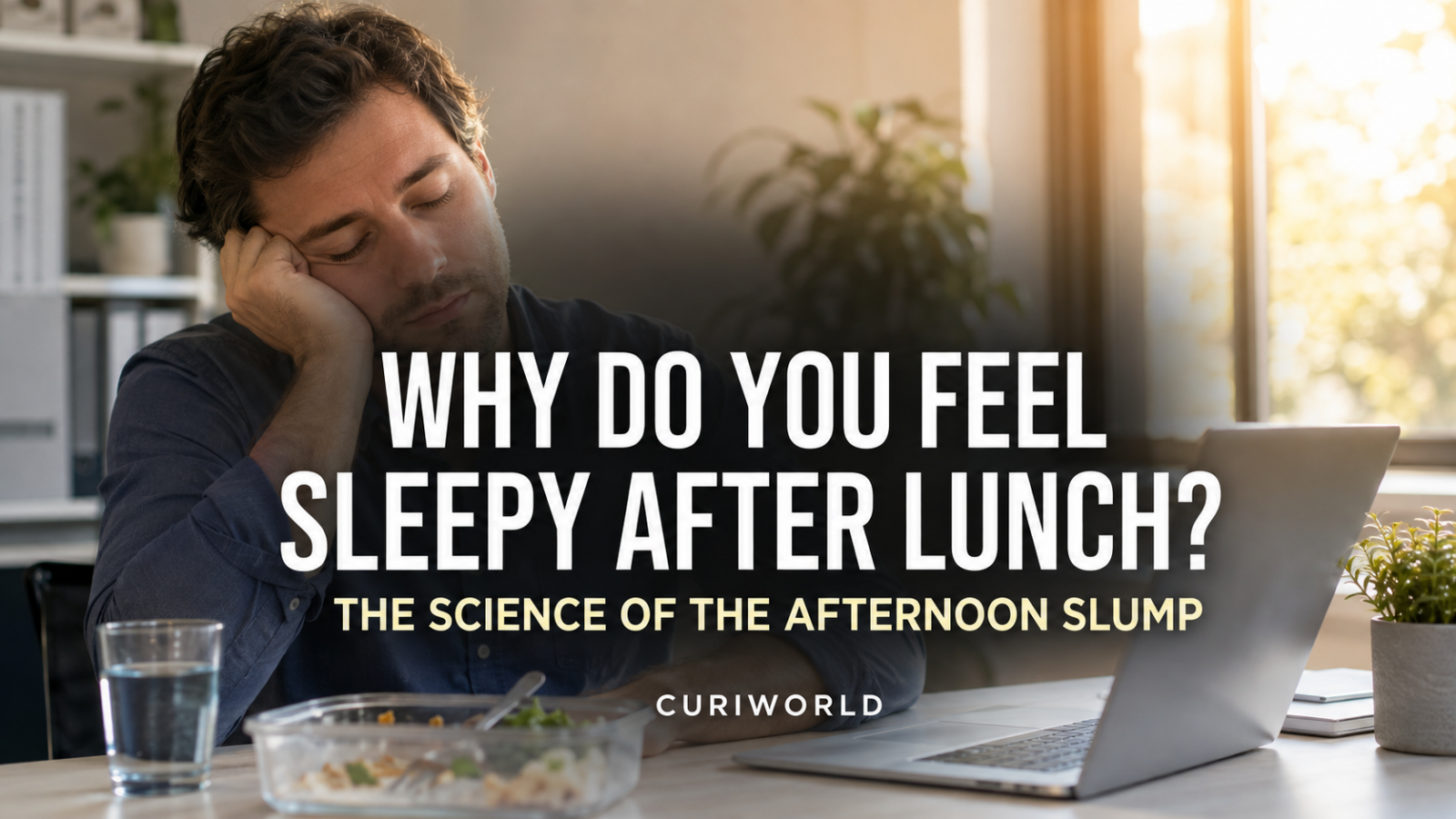
You finish lunch feeling perfectly capable of handling the rest of the day. Then, sometime in the early afternoon, your eyelids grow heavy, concentration slips and even a routine task begins to feel unusually demanding.
The short answer is that the afternoon slump usually comes from two overlapping effects. Your internal body clock temporarily reduces its wake-promoting signal while sleep pressure has been building since morning. Eating can make that natural dip more noticeable, especially after a large or energy-dense meal, but lunch is not the only cause.
The Slump Is Not Caused by Lunch Alone
The name “post-lunch dip” makes food sound like the entire explanation. In reality, the timing matters just as much as the meal.
Alertness does not remain at the same level throughout the day. It rises and falls according to biological rhythms. During the early to mid-afternoon, the circadian system’s drive for wakefulness can temporarily weaken. At the same time, the pressure to sleep has been increasing for every hour you have remained awake.
When the wake-promoting signal dips while sleep pressure continues to rise, drowsiness becomes easier to notice. This is why an afternoon decline in alertness can occur even when someone skips lunch.
The body clock influences much more than bedtime. The interaction between circadian timing, routine and sleep pressure also helps explain why people sometimes wake just before an alarm goes off. The afternoon slump is another everyday sign that alertness is biologically timed rather than controlled entirely by motivation.
What Eating Changes—and What It Does Not
Although lunch is not solely responsible for the slump, eating can deepen it. The medical term for sleepiness after a meal is postprandial somnolence.
After you eat, several systems respond at once. Signals travel between the digestive system and the brain. Hormones and nutrients change in the bloodstream, and the body begins processing the incoming energy. These responses may influence the brain systems that regulate arousal and alertness.
Larger, higher-energy meals tend to produce more noticeable sleepiness than smaller meals. The effect often becomes apparent within the first few hours after eating, which places it directly on top of the body’s natural afternoon dip.
That overlap explains why lunch can seem like an off switch. The meal does not create the entire biological dip; it can turn up the intensity of a dip that was already approaching.
Does Digestion Pull Blood Away From Your Brain?
A familiar explanation claims that you become sleepy because blood is redirected from your brain to your digestive system.
That idea is appealing because it sounds mechanical and simple, but it is not considered an accurate explanation. The brain continues to receive the blood and oxygen it needs after a meal.
The more realistic explanation involves several interacting processes: circadian timing, accumulated sleep pressure, signals from the gut, changes in nutrients and hormones, meal size and the amount of sleep you obtained the previous night.
There is no single “sleep chemical” released at lunch that explains every case of afternoon tiredness.
Is the Afternoon Slump Just a Blood Sugar Crash?
Blood glucose often receives most of the blame. A meal containing carbohydrates raises blood glucose, and the body releases insulin to help move glucose into cells. It is tempting to assume that every episode of post-meal tiredness must therefore be caused by glucose rising and then crashing.
The evidence is more complicated.
Food intake and glucose responses may contribute to sleepiness, but the relationship is not consistent enough to explain every afternoon slump. People can become sleepy without eating, and two people can eat the same lunch yet experience very different levels of fatigue.
Meal composition may matter, but it is rarely useful to blame one nutrient in isolation. A large portion of refined carbohydrates may affect someone differently from a smaller meal containing protein, fiber and less-refined carbohydrates. Sleep duration, usual eating patterns, individual metabolism and meal timing can all change the response.
Occasional tiredness after lunch does not, by itself, prove that someone has hypoglycemia or diabetes. A medical condition cannot be identified from post-meal sleepiness alone.
Why Is the Slump Worse on Some Days?
The same lunch may leave you alert one day and struggling to concentrate on another. Several factors can change how strongly the dip is felt.
- Insufficient sleep: A short or disrupted night increases sleep pressure before lunchtime even arrives.
- A very large meal: Higher-energy meals are more likely to produce noticeable post-meal sluggishness.
- Meal composition: Some people feel more tired after lunches dominated by refined carbohydrates or heavy, rich foods.
- Time of day: Eating during the natural circadian dip can make the meal appear more powerful than it would be at another hour.
- A quiet environment: Warm rooms, dim light, prolonged sitting and repetitive work can make existing sleepiness harder to ignore.
- Personal timing: Work schedules, sleep habits and individual circadian preferences influence when alertness rises and falls.
This is why there is no universal lunch that guarantees perfect afternoon energy. The useful question is not simply “Which food caused this?” but “Which combination of sleep, meal size, timing and environment made today’s dip stronger?”
How to Make the Afternoon Slump Less Intense

You cannot remove your circadian rhythm, but you can avoid adding unnecessary weight to the natural dip.
Protect Nighttime Sleep First
A lunch strategy cannot fully compensate for chronic sleep loss. If the slump is strongest after short nights, improving sleep duration and consistency is likely to matter more than searching for a perfect midday meal.
Test a Smaller, Balanced Lunch
Instead of eliminating an entire food group, experiment with portion size and balance. A lunch containing protein, fiber-rich foods and less-refined carbohydrates may feel steadier than a very large meal dominated by highly processed foods.
Pay attention to your own repeated pattern rather than judging the effect of a meal from one afternoon.
Move After Eating
A short, comfortable walk after lunch can add movement and stimulation to a period otherwise dominated by sitting. It does not need to be an intense workout. Even a brief change of environment may make it easier to remain alert.
Use the Timing Instead of Fighting It
If your schedule is flexible, place routine administrative work in the period when your concentration usually falls. Reserve complex writing, analysis or decision-making for a time when you are normally more alert.
This does not eliminate the slump, but it reduces the cost of trying to perform your hardest task during your least-alert hour.
Consider a Brief Nap When Appropriate
A short nap of around 20 minutes may help some people recover alertness when their schedule and environment allow it. A nap should not become a substitute for sufficient nighttime sleep, and it may not be practical for everyone.
When Is Post-Lunch Sleepiness More Than an Ordinary Slump?
A mild dip that appears after lunch and passes within a few hours is common. More persistent or severe sleepiness deserves closer attention.
Consider discussing it with a healthcare professional if you regularly struggle to stay awake, the sleepiness affects driving or safety, you wake feeling unrefreshed despite allowing enough time for sleep, or the problem has become noticeably worse.
Changes in medication, disrupted sleep, sleep disorders and other health conditions can contribute to excessive daytime sleepiness. The timing after lunch may make the problem more visible without being its true cause.
Never continue driving or operating machinery when you are fighting to keep your eyes open. A familiar afternoon slump can still create a real safety risk.
Lunch May Amplify the Dip, but Your Body Clock Starts It
The afternoon slump is not a sign of laziness, and it is not always evidence that you chose the wrong lunch. It usually appears where two biological processes meet: a predictable decline in circadian wakefulness and sleep pressure accumulated since morning.
Food can strengthen that effect, particularly when the meal is large, but skipping lunch does not necessarily remove it. The most useful response is to look at the whole pattern—nighttime sleep, meal size, food choices, timing and activity—rather than searching for one ingredient to blame.








Join the discussion