Why Do Your Fingers Wrinkle in Water? It May Be More Useful Than You Think
Wrinkled fingertips are not simply waterlogged skin. The response is controlled by your nervous system and blood vessels—and it may even help you grip wet objects more efficiently.
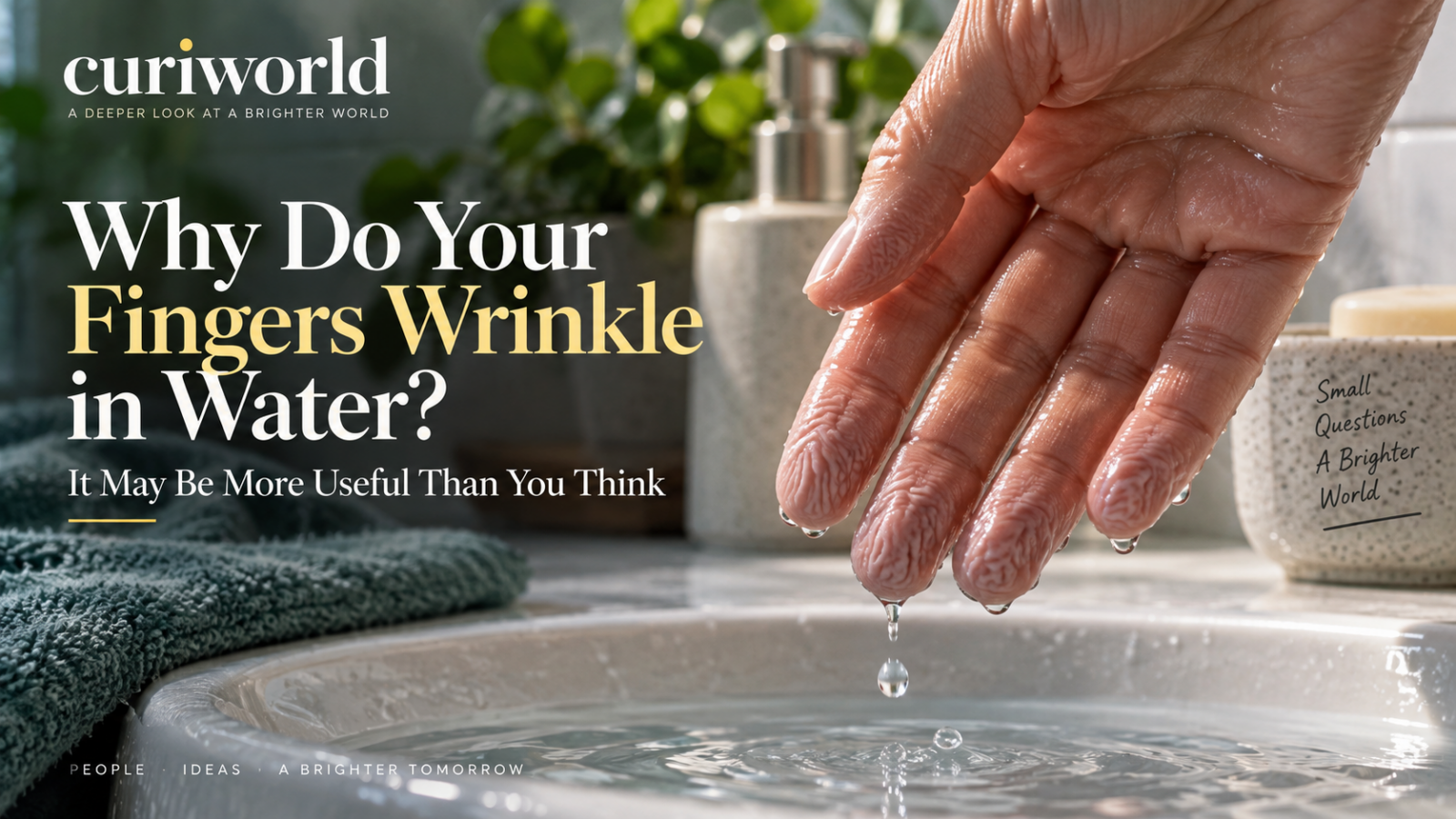
Stay in a pool or bathtub long enough and your fingertips begin to look as though they have suddenly aged several decades.
The pads of your fingers develop deep grooves.
Your toes do it too.
For years, the standard explanation sounded simple: your skin absorbs water, swells, and wrinkles.
That is not the full story.
Water-induced finger wrinkling is an active response involving the autonomic nervous system. Water exposure ultimately triggers blood vessels beneath the skin of the fingertips to constrict. As the tissue volume underneath decreases, the overlying skin folds into the familiar ridges and valleys.
And that immediately raises a more interesting question:
Why would the nervous system bother doing this at all?
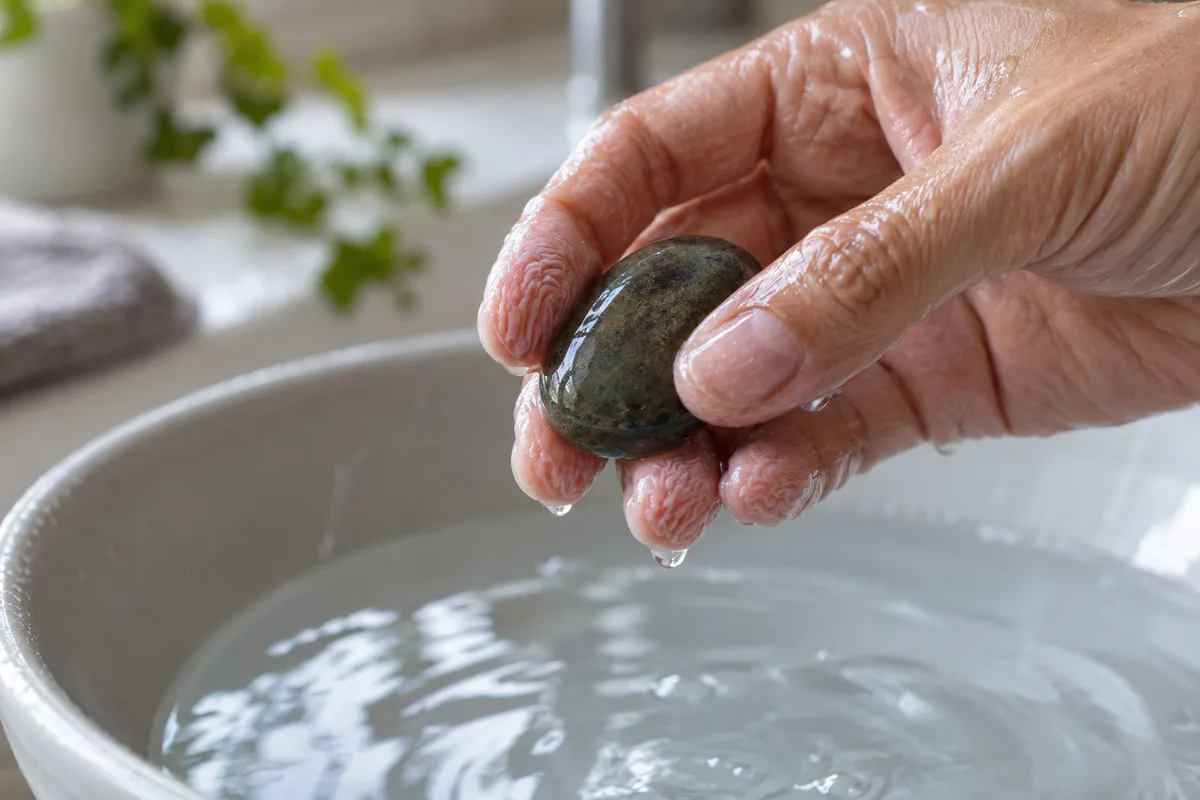
One possibility is that wrinkled fingertips improve our grip in wet conditions.
There is evidence supporting that idea—but the story is not completely settled.
Your Fingers Are Not Simply “Soaking Up Water”
The outer layer of skin does interact with water.
But if water absorption alone caused the distinctive wrinkles on your fingertips, several observations would be difficult to explain.
Most importantly, researchers have known for decades that fingers with certain types of nerve damage may fail to wrinkle normally after immersion.
That points toward the nervous system.
Studies measuring blood flow have since shown that water-induced wrinkling is associated with vasoconstriction—narrowing of the small blood vessels inside the fingers.
As those vessels constrict, the volume of tissue underneath the skin decreases.
The skin surface does not shrink by the same amount.
So it folds.
That produces the pattern we recognize as “pruney fingers.”
Your Autonomic Nervous System Is Doing the Work
You do not consciously decide to wrinkle your fingertips.
The response belongs to the autonomic nervous system, the part of the nervous system that regulates many automatic body functions.
It helps control things such as:
- blood-vessel diameter,
- sweating,
- heart rate,
- digestion,
- and other processes that happen without deliberate thought.
Finger wrinkling depends particularly on sympathetic nerve activity.
Research has repeatedly shown that disrupting sympathetic nerve supply can reduce or prevent the normal wrinkling response.
That is one of the strongest pieces of evidence that this is not merely soggy skin behaving passively.
How Does Water Start the Signal?
This part is more complicated than the simple “water makes blood vessels shrink” version.
The skin on your palms and fingertips contains many sweat ducts.
One proposed mechanism is that water enters or interacts with these ducts and alters local electrolyte conditions in the skin.
That change may influence nearby nerve fibers and trigger increased sympathetic vasoconstrictor activity.
The small digital blood vessels then narrow.
The fingertip loses some internal volume.
And the surface wrinkles.
The broad nerve-and-blood-vessel mechanism is well established.
The exact chain between water contacting the skin and the nervous signal is still more complex than a single switch.
Why Mostly the Fingers, Palms and Toes?
The phenomenon is especially obvious on glabrous skin—the hairless skin found on the palms, fingertips and soles.
These areas are structurally specialized.
They contain dense sensory innervation, large numbers of sweat glands and skin designed for frequent contact and grip.
They are also precisely the surfaces where changing traction in wet conditions could theoretically be useful.
Your forearm does not develop the same dramatic pattern after a bath because its skin is built differently and does not participate in the response in the same way.
Why Does It Take Several Minutes?
The response is not instantaneous.
Water has to interact with the skin.
The nervous response develops.
Blood vessels constrict.
The internal volume of the fingertip changes.
Then the skin gradually folds.
How quickly this happens varies between people and depends partly on water temperature and other conditions.
Research on water-immersion wrinkling has found that temperature can influence the speed and degree of the response.
That is why your fingers may wrinkle noticeably during a warm bath before they do during a brief wash in cold water.
The Wrinkles Look Surprisingly Organized
Look closely at a wrinkled fingertip.
The pattern is not just random crumpling.
The channels form branching grooves around raised areas of skin.
That observation inspired an intriguing idea:
What if the wrinkles function somewhat like the grooves in a tire tread?
When a tire moves across a wet road, channels help move water away from the contact surface.
Perhaps finger wrinkles do something similar.
If water can move into the grooves while the raised portions of skin contact an object, grip might improve.
It is an elegant hypothesis.
Testing it has produced interesting—but not perfectly consistent—results.
The Wet-Grip Experiment That Made Headlines
In a 2013 study published in Biology Letters, researchers asked participants to transfer wet and dry objects with wrinkled and unwrinkled fingers.
Participants handled wet objects faster when their fingers were wrinkled.
The wrinkles did not provide the same advantage with dry objects.
That supported the idea that water-induced wrinkling might be an adaptation that improves handling in wet environments.
It was an appealing result.
Humans or our ancestors moving through wet vegetation, streams or slippery environments might have benefited from slightly better grip.
Wrinkled toes could theoretically have offered a similar benefit on wet ground.
But one study does not settle an evolutionary question.
Later Experiments Complicated the Story
A subsequent 2014 study tested wet-object handling and touch sensitivity and did not find a significant dexterity advantage from wrinkled fingers.
Then a 2021 experiment approached the question differently.
Instead of measuring only how fast people could transfer objects, researchers measured the grip forces used while handling them.
They found that wrinkled fingers allowed participants to hold wet objects using less grip force—bringing the required force closer to what was needed for dry objects.
That again suggested a functional benefit.
So the evidence currently looks more nuanced than:
“Scientists proved wrinkles are rain tires for your fingers.”
A more accurate conclusion is:
Several experiments support a wet-grip benefit, but not every study has found the same performance advantage.
Why Doesn’t the Body Keep Our Fingers Wrinkled All the Time?
This question becomes especially interesting if wrinkles really help in wet conditions.
Why not keep them permanently?
Because a feature that is advantageous in one environment can have costs in another.
Wrinkles change the geometry of the fingertip.
Maintaining permanent vasoconstriction would also affect blood flow.
And experiments have not shown an equivalent benefit when handling dry objects.
Evolution often favors systems that appear only when useful rather than maintaining every possible adaptation continuously.
That fits the temporary nature of the response:
wet environment arrives → fingertips wrinkle → dry conditions return → fingertips return to normal.
Still, because the evolutionary purpose itself remains under investigation, this explanation should not be treated as proven.
Do Wrinkled Fingers Improve Touch?
Apparently not in any simple way.
The 2014 study that failed to find improved wet-object dexterity also tested aspects of touch sensitivity.
The researchers found no meaningful improvement or deterioration in the sensory measurements they used.
So the wrinkles do not appear to function simply by making your fingertips more sensitive.
If there is a useful grip advantage, it is more likely related to the mechanics of the contact surface and the force needed to hold wet objects.
Why Do Your Toes Wrinkle Too?
Your toes share many relevant features with your fingertips.
They have glabrous skin.
They contain dense sensory and sympathetic nerve supply.
And they also experience water-induced wrinkling.
If the grip hypothesis is correct, toes make evolutionary sense too.
Better traction on wet surfaces could potentially have been useful when walking or climbing in damp environments.
Again, this remains a functional hypothesis rather than an experimentally proven story about exactly why the trait evolved.
But fingers and toes responding together is consistent with the idea that wrinkling is related to wet contact surfaces rather than a random property of skin.
Why Does the Wrinkling Disappear After You Dry Off?
Once the water stimulus disappears, the sympathetic response subsides.
Blood flow and tissue volume return toward their ordinary state.
The skin smooths out.
Nothing has permanently changed about your fingerprints.
The process is reversible.
That is very different from the persistent wrinkles caused by long-term structural changes in skin with aging.
“Pruney fingers” may look dramatic, but in healthy skin they are usually temporary.
Are Your Fingerprints Still the Same?
Yes.
Water wrinkles temporarily distort the skin surface, but they do not create a new fingerprint pattern.
Your fingerprints are determined by deeper ridge structures that remain fundamentally intact.
A scanner may occasionally have more difficulty reading very wet or heavily wrinkled skin because the contact surface has changed.
But once your fingers dry, your familiar print remains.
Does Salt Water Make Your Fingers Wrinkle Differently?
The response is influenced by the environment around the skin, including the concentration of dissolved substances.
Research into water-immersion wrinkling has examined distilled water, saline solutions, temperature and other conditions.
That makes sense because the proposed trigger involves water interacting with the skin and sweat-duct environment before the sympathetic response develops.
But for everyday purposes, the important point is simpler:
both ordinary freshwater exposure and many other wet environments can produce the familiar wrinkling response.
You do not need a swimming pool specifically.
Why Do Some People’s Fingers Wrinkle Faster Than Others?
There is normal variation.
Several factors can influence how quickly or strongly the skin wrinkles, including:
- water temperature,
- duration of immersion,
- individual autonomic response,
- skin characteristics,
- circulation,
- and nerve function.
That means one person developing dramatic wrinkles after ten minutes while another shows only mild changes does not automatically indicate that something is wrong.
The response is not a stopwatch-style health test for ordinary home use.
Doctors Have Actually Used Finger Wrinkling to Study Nerve Function
Here is where an everyday bathtub phenomenon becomes medically interesting.
Because water-induced wrinkling depends on sympathetic nerves, researchers and clinicians have investigated the skin-wrinkling test as a way to assess autonomic nerve function.
Reduced wrinkling has been observed in situations where sympathetic nerve pathways are impaired.
A recent review of the technique describes water-induced skin wrinkling as a reversible response produced by vasoconstriction and notes its use as a potential screening measure for disorders affecting small autonomic nerve fibers.
That does not mean you should diagnose yourself by putting your hands in a bowl of water.
There are standardized methods, interpretation problems and many variables that affect the result.
But it demonstrates something remarkable:
the wrinkles that look like a cosmetic side effect of swimming are actually connected to measurable nerve function.
What If Only One Finger Does Not Wrinkle?
An isolated difference after one bath usually tells you very little.
Wrinkling varies.
Water exposure may not have been equal.
Skin conditions, injuries or local differences can also alter appearance.
However, historically, one reason scientists realized the nervous system was involved was that areas with damaged nerve supply sometimes failed to wrinkle normally.
So persistent, clearly asymmetric loss of wrinkling together with numbness, weakness, pain, color changes or other neurological symptoms is a different situation from simply noticing one smoother fingertip after swimming.
Those accompanying symptoms—not the wrinkle pattern alone—are a better reason to seek medical assessment.
Does Too Much Time in Water Damage Your Fingers?
The normal wrinkling response itself is not generally harmful.
But prolonged water exposure can affect the skin barrier.
Repeated soaking, swimming, frequent handwashing and detergent exposure can contribute to dryness or irritation in some people.
That is separate from the nerve-controlled wrinkling mechanism.
If your skin becomes cracked, painful, persistently red or inflamed after water exposure, that is no longer simply normal temporary pruning.
It Is a Small Example of How Much Your Body Does Without Asking You
Your fingers do not wait for your brain to consciously announce:
“The environment is wet. Activate grip mode.”
The response happens automatically.
Water interacts with specialized skin.
Sympathetic nerves respond.
Blood vessels narrow.
The fingertip changes shape.
Then the process reverses when conditions change.
It belongs to the same strange category of automatic reactions explored in Curiworld’s guide to 12 strange things your body does.
The difference is that finger wrinkling deserves more than a single curious fact.
It is a visible sign of a hidden conversation between your skin, nerves and circulation.
So Are Wrinkled Fingers Really More Useful?
Possibly—especially in wet conditions.
Experiments have shown that wrinkling can improve some measures of wet-object handling and reduce the grip force required to hold wet objects.
Other experiments have failed to find a significant dexterity benefit.
That means the popular “tire tread for your fingers” explanation is plausible and supported by some evidence, but it should not be presented as settled evolutionary fact.
What is much more certain is the mechanism.
Your fingers wrinkle in water because your nervous system triggers vasoconstriction beneath the skin.
So the next time you climb out of a pool and look at your fingertips, you are not simply looking at skin that absorbed too much water.
You are looking at an automatic physiological response—one that may have been helping humans handle wet environments for a very long time.
Sources
Muscle & Nerve — Water-Immersion Wrinkling Is Due to Vasoconstriction
Biology Letters — Water-Induced Finger Wrinkles Improve Handling of Wet Objects
PLOS ONE — Water-Immersion Finger-Wrinkling Improves Grip Efficiency in Handling Wet Objects








Join the discussion