Why Does Your Hair Get Greasy So Quickly? What’s Actually Happening
Your hair can look greasy again just hours after washing. The reason starts with scalp sebum — but hair type and your routine determine how quickly you notice it.
You wash your hair in the morning. It feels light, clean and fresh. By the next evening — or sometimes by lunchtime — the roots already look darker, flatter and suspiciously shiny.
That does not necessarily mean your hair is “dirty,” and it does not automatically mean you are washing it incorrectly.
Hair becomes greasy mainly because sebaceous glands in your scalp continually produce sebum, a natural oily substance that helps lubricate the skin and hair. Some scalps produce or accumulate enough sebum for it to become visible much sooner than others. Hair type, washing habits and the products sitting near your roots can make that oiliness more noticeable.
The useful question, then, is not simply “Why is my hair oily?” It is why does the oil become visible so quickly on my hair?
Your Hair Is Not Making the Oil — Your Scalp Is
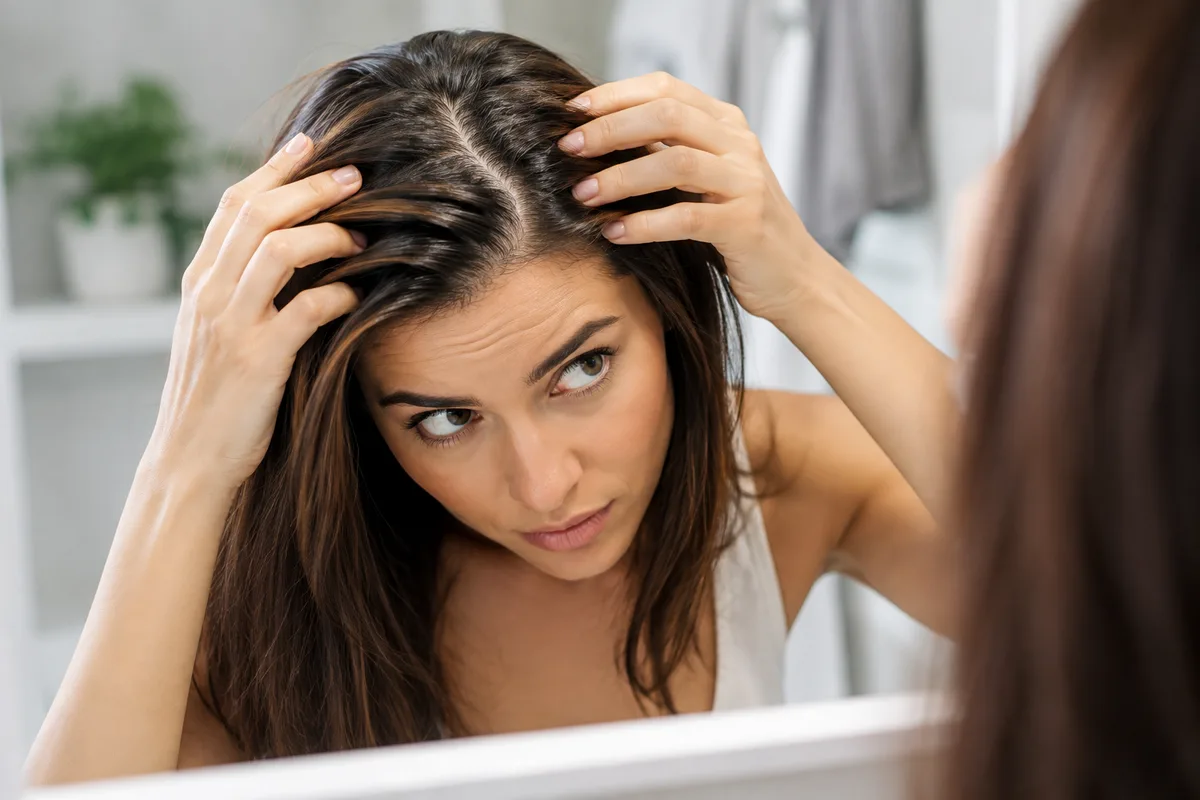
The hair shaft itself does not suddenly start producing grease.
The oil comes from sebaceous glands, which are closely associated with hair follicles. These glands release sebum, a lipid-rich substance that spreads onto the skin and hair.
Sebum has a legitimate biological job. It helps lubricate the hair and skin and contributes to the protective environment at the skin surface. Sebaceous gland activity is also influenced by hormones, particularly androgens. Research has documented major changes in sebum production across different stages of life, including the increase associated with puberty.
So having oil on your scalp is completely normal.
The problem begins only when enough of that oil collects around the roots to create the appearance most people describe as “greasy hair.”
Sebum does not necessarily stay on your scalp, either. Skin and hair oils can transfer to other surfaces and fabrics. That same process helps explain another everyday curiosity Curiworld has covered: why white clothes can turn yellow in storage.
Why Does It Show Up So Fast on Some People?
Two people can wash their hair at the same time with similar shampoos and still look completely different 24 hours later.
There are several reasons.
Your scalp may simply be oilier
Sebum production is not identical from person to person.
Sebaceous glands are biologically regulated, and hormonal signaling plays an important role in how active they are. Some people therefore live with a scalp that becomes visibly oily much faster than others.
That is not something you can necessarily fix by finding a more aggressive shampoo.
Sometimes your normal scalp simply produces enough oil to require more frequent cleansing.
Your hair type changes how noticeable the oil becomes
Hair texture matters too.
Oil is much easier to notice when the roots lose volume, strands begin separating into small sections or the hair develops a darker, shinier appearance.
This is one reason a universal rule such as “wash your hair only twice a week” makes little sense.
The American Academy of Dermatology specifically advises washing according to how quickly the hair becomes dirty or oily. Someone with straight hair and an oily scalp may even choose to shampoo every day, while dry, thick, curly or textured hair often needs a very different routine.
Your ideal schedule should therefore follow your scalp and hair — not somebody else’s seven-day hair routine on social media.
Your Hair Products May Be Adding to the Greasy Look
Not everything that looks like scalp oil actually represents increased sebum production.
Conditioner, styling creams, oils, serums and leave-in products can accumulate near the roots and make hair feel heavier.
That distinction matters.
Your scalp could be producing its usual amount of sebum while your routine makes the result look much oilier.
For fine or straight hair, the American Academy of Dermatology recommends applying conditioner primarily to the ends rather than automatically coating the scalp and roots. Shampoo, meanwhile, should generally be concentrated on the scalp, where excess oil, dead skin and product buildup actually accumulate.
Think of it as treating two different areas differently:
Scalp: where cleansing matters most.
Lengths and ends: where conditioning often matters most.
That small distinction can make a surprisingly large difference when your roots become greasy quickly but your ends still feel dry.
Does Washing Your Hair Too Often Make It Produce More Oil?
This is one of the most persistent oily-hair claims online.
The idea usually goes like this:
Shampoo removes oil → your scalp notices → the scalp panics → it produces even more oil.
That explanation is much too simple.
Sebum production is a biological process involving sebaceous glands and hormonal regulation. There is no universal rule that says washing frequently automatically causes your scalp to respond by dramatically increasing sebum production.
In fact, dermatologists do not tell everyone with an oily scalp to avoid daily washing. The American Academy of Dermatology notes that people with straight hair and an oily scalp may want to shampoo every day.
That does not mean everyone should wash daily.
It means daily washing is not automatically a mistake.
If frequent shampooing leaves your hair dry, brittle or difficult to manage, the routine or product may need adjustment. But forcing yourself to tolerate several days of uncomfortable oiliness simply because you believe your scalp must be “trained” is not a requirement for healthy hair.
Can You Actually Train Your Hair to Become Less Greasy?
You can change habits.
You can change products.
You can reduce unnecessary buildup.
You can find a washing schedule that works better.
But those things are different from permanently retraining sebaceous glands to stop producing their normal amount of oil.
If you extend the time between washes, you may become more comfortable with how your hair looks on later days. Different hairstyles may make oily roots less noticeable. Your routine may also become simpler.
None of that proves that your scalp has been biologically trained to make less sebum.
For people with genuinely oily scalps, longer gaps between washes may simply mean spending more time with oily hair.
What Should You Do If Your Hair Is Greasy Again the Next Day?
Start with the simplest explanation first: your current washing schedule may not match your scalp.
If your roots are clearly oily after 24 hours and regular shampooing does not irritate your scalp or damage your hair, washing more frequently can be reasonable.
A practical routine looks like this:
- Wash according to actual oiliness rather than following a fixed number of days.
- Concentrate shampoo on the scalp instead of aggressively shampooing the full length of the hair.
- Rinse thoroughly so cleansing and styling products do not remain around the roots.
- If you have fine or straight hair, keep heavier conditioners and oils mainly on the lengths and ends unless the product is specifically designed for scalp use.
- Pay attention to whether a new styling product coincided with the greasy appearance.
- Change one part of your routine at a time so you can tell what actually helps.
The goal is not to remove every trace of natural oil.
It is to keep the scalp comfortable while keeping the hair as clean and manageable as you prefer.
When “Greasy Hair” May Be More Than Ordinary Oiliness
There is an important difference between a scalp that simply becomes oily quickly and one that is also irritated.
Persistent itching, obvious redness, significant scaling, crusting, sores or unusual hair shedding should not automatically be blamed on “too much oil.”
Sebaceous glands are involved in several skin and scalp conditions, including seborrheic dermatitis, but looking oily by itself is not enough to diagnose one.
A sudden change is also worth paying attention to.
If your scalp has behaved one way for years and then becomes dramatically oilier while developing other symptoms, a dermatologist can look at the scalp directly and determine whether something beyond ordinary sebum production is involved.
Trying increasingly harsh shampoos without knowing what you are treating can make the situation harder to interpret.
The Real Goal Is Not to Have an Oil-Free Scalp
Completely eliminating scalp oil would not be a victory.
Sebum is part of normal skin and hair biology.
What most people actually want is much simpler: roots that stay comfortable and presentable for a reasonable amount of time without leaving the rest of the hair dry.
For one person, that may mean shampooing every few days.
For someone else with naturally oily roots, it may mean washing daily.
Neither routine is automatically better.
If your hair gets greasy quickly, your scalp is probably not betraying you or waiting to be “detoxed.” It is doing something sebaceous glands are designed to do: producing sebum.
The useful part is figuring out how quickly that oil becomes visible on your hair — and building your routine around that reality rather than around somebody else’s washing schedule.
Sources
Shamloul, G. & Khachemoune, A. — “An Updated Review of the Sebaceous Gland and Its Role in Health and Diseases Part 1: Embryology, Evolution, Structure, and Function of Sebaceous Glands” — Dermatologic Therapy / Wiley View the research source








Join the discussion