Can You Bring Food Through Airport Security? What You Can Actually Pack
Most solid foods can be easier to take through airport security, while soups, sauces, spreads and other semi-liquid foods may be subject to liquid restrictions. Here's what travelers should check before packing.
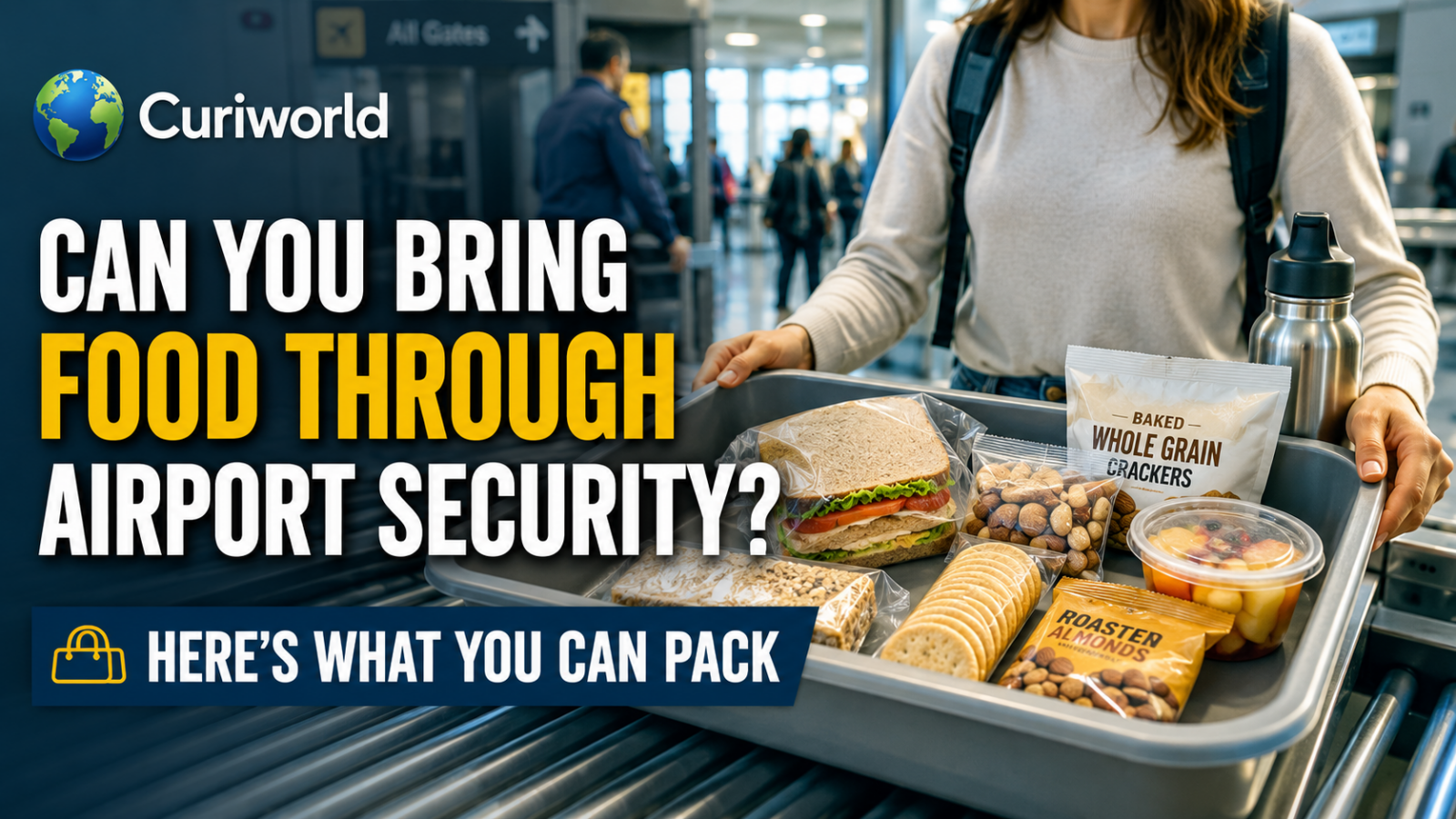
You packed a sandwich for the flight, added a few snacks to your carry-on and then remembered airport security.
Will they let you take the food through?
In many cases, yes.
Solid foods are generally much easier to take through airport security than liquids or semi-liquid foods. The trouble usually starts when something you think of as “food” is treated as a liquid, gel, paste or spread under security rules.
A sandwich and a jar of peanut butter, for example, may both be lunch—but they are not necessarily treated the same way at the checkpoint.
There is another important distinction: getting food through airport security does not automatically mean you are allowed to bring it into your destination country.
Here is how to tell the difference before you pack.
The Short Answer: Solid Food Is Usually the Easy Part
If the food is genuinely solid, it is often permitted in carry-on baggage.
Typical examples can include:
- sandwiches;
- bread and pastries;
- cookies and crackers;
- chips;
- candy;
- nuts;
- granola or protein bars;
- and other solid snacks.
Security officers may still inspect food or ask you to remove it from your bag for additional screening.
Food and powders can sometimes make X-ray images harder to interpret, so packing them where they are easy to reach can make the process smoother.
The more important question is what happens when your food is not really solid.
The “Is It a Liquid?” Test Matters More Than the Meal
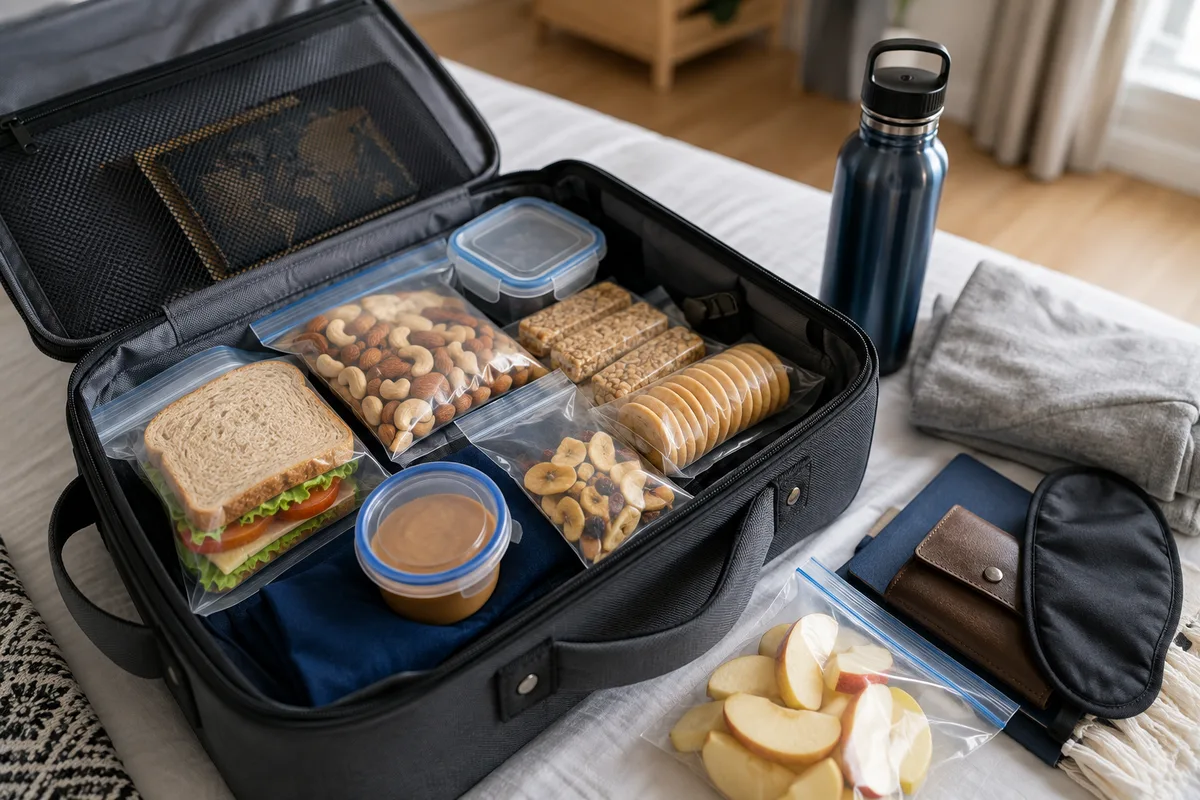
Airport security does not necessarily classify an item according to how you plan to eat it.
Consistency matters.
Soup is food, but it is also a liquid.
Honey is food, but it behaves like a liquid or gel.
Jam may go on toast, but that does not automatically make a large jar acceptable in carry-on baggage.
Depending on the airport’s rules, items such as these can fall under liquid restrictions:
- soup;
- sauces;
- syrups;
- honey;
- jam;
- yogurt;
- dips;
- spreads;
- and other liquid or semi-liquid foods.
This is where many travelers get caught out.
A useful rule of thumb is:
If you can pour it, spread it, squeeze it or scoop it like a gel, check the airport’s liquid rules before packing it in your carry-on.
What About the TSA 3-1-1 Rule in the United States?
For passengers going through TSA screening in the United States, liquids, gels and aerosols in carry-on baggage generally follow the 3-1-1 rule.
That means containers are generally limited to 3.4 ounces (100 milliliters) or less, with qualifying liquids placed in a quart-size clear bag, limited to one bag per passenger.
This matters for foods that fall into liquid or gel-like categories.
So a small compliant container of a spread may be possible while a large jar may not be allowed through the checkpoint in your carry-on.
The easiest mistake is assuming that because something is edible, normal liquid restrictions do not apply.
For the full distinction between liquids, gels, aerosols and borderline items, see our carry-on liquids rules guide.
They can.
Do All Airports Use Exactly the Same Liquid Rules?
No—and this has become increasingly important.
Security technology is changing.
For example, current UK government guidance says that the rules for carrying liquids in hand luggage depend on the airport. At most UK airports, liquids still cannot be taken through security in containers larger than 100 ml, while some airports may allow containers holding up to two liters.
That means an old piece of travel advice—or even something that worked on your last flight—may not accurately describe your next departure.
Check the current rules for:
the airport you are departing from, any airport where you will pass through security during a connection, and your return airport.
Do not assume that the rules at one airport apply everywhere.
Can You Bring a Sandwich Through Security?
Usually, a normal solid sandwich is one of the simpler foods to travel with.
But use common sense with the contents.
A typical sandwich containing ordinary amounts of cheese, meat or other fillings is very different from carrying a separate large container of sauce or spread.
The separate container may be subject to liquid or gel restrictions even though you planned to eat it with the sandwich.
Packaging matters too.
Wrap the sandwich securely or put it in a clean, easy-to-open container. If security wants to inspect it, you do not want loose food scattered throughout your carry-on.
Can You Bring Fruit Through Airport Security?
Getting fruit through the security checkpoint and bringing fruit into another country are two different questions.
A piece of solid fruit may not present the same airport-security issue as a bottle of juice.
But agricultural and customs rules at your destination may restrict fresh fruit, vegetables, meat, dairy products, plants or other agricultural goods.
That means security may allow an item through while customs or border authorities at your destination do not allow you to import it.
This distinction becomes especially important on international flights.
If you are traveling internationally with fresh produce, meat, dairy or other agricultural food, check the destination country’s official customs or agriculture rules before departure.
What About Yogurt, Hummus, Peanut Butter and Dips?
This is where the distinction between “food” and “solid food” becomes useful.
Yogurt, hummus, creamy dips, nut butters and similar products have a spreadable or semi-liquid consistency.
Do not assume they will be treated like crackers or a sandwich.
Depending on where you are flying from, they may fall under the airport’s liquid, gel or paste restrictions.
The same principle can apply to:
- salsa;
- soft spreads;
- creamy cheese products;
- sauces;
- preserves;
- and similar foods.
If you want to carry one of these items through security, check the applicable liquid limit and container requirements for your departure airport.
For a full-size container, checked baggage may be the simpler option when the food and destination rules allow it.
Can You Take an Empty Water Bottle?
An empty reusable bottle is often far easier than trying to carry a full bottle of water through a checkpoint with liquid restrictions.
Where permitted, you can take the empty bottle through security and fill it afterward at a drinking-water station.
This is particularly useful on long travel days and avoids buying another disposable bottle after every security checkpoint.
But once again, follow the rules posted at your particular airport.
The screening rules in force there are what matter.
Baby Food and Milk Can Have Special Exceptions
Traveling with a baby changes some of the normal liquid rules.
Security systems commonly provide exemptions or special procedures for baby food, breast milk, formula and other liquids needed during the journey.
For example, current UK rules allow passengers traveling with a baby to take enough baby food, baby milk and sterilized water for the journey, subject to screening requirements and specific conditions.
Do not try to force these items into the ordinary snack rules without checking.
Look at the official baby-food guidance for your departure airport or security authority before traveling, especially if you need quantities above the standard liquid allowance.
Arriving prepared can make the screening process considerably easier.
Medical and Special Dietary Foods May Also Be Different
Food needed for medical or special dietary reasons may qualify for exceptions that do not apply to an ordinary snack.
UK guidance, for example, provides exemptions for certain essential liquid medicines and liquid dietary foods, although documentation can be required in some circumstances.
If you need medically necessary liquids or special dietary food during your journey, check the applicable rules before packing.
Keep anything that may need to be declared or separately screened easy to reach.
Burying it underneath a week’s worth of clothing only makes the security process harder.
Frozen Food Can Be Complicated
Frozen items are another category where assumptions can cause trouble.
Rules can depend on the airport and on whether an item remains frozen.
UK guidance, for example, generally restricts frozen liquids and frozen items in hand luggage, with specific exceptions for categories such as baby food and certain medical or dietary needs.
Other security systems may apply different procedures.
If you plan to travel with frozen meals, ice packs or food that must remain cold, check the rules for both the food and the cooling method.
The ice or gel pack can have different restrictions from the solid food it is keeping cold.
Security May Still Inspect Food That Is Allowed
“Allowed” does not mean “guaranteed to pass without another look.”
Food and powders can interfere with how a bag appears on an X-ray image.
Security officers may therefore ask to inspect your carry-on manually or examine an item separately.
This does not necessarily mean you packed something prohibited.
Make the process easier by keeping food organized and accessible.
A sealed snack pouch near the top of your bag is easier to inspect than several unmarked containers buried among electronics, cables and clothing.
If you are also trying to decide when to leave for the terminal, Curiworld’s guide to how early you should get to the airport explains why security, baggage and airport size should all be part of your timing.
Airport Security and Customs Are Not the Same Thing
This is probably the most important point for international travelers.
Airport security is primarily concerned with whether you can take an item into the secure area and onto the aircraft.
Customs, agriculture and biosecurity authorities can have a completely different question:
Are you allowed to bring that food into the country?
A food item can therefore make it onto the aircraft legally and still be restricted when you land.
Fresh meat, fruit, vegetables, dairy, seeds and other agricultural products can be particularly sensitive.
If your destination requires food to be declared, declare it.
Do not assume that passing departure security means the item has automatically been approved for import.
What Food Is Easiest to Pack for a Flight?
If you want the least complicated airport-security experience, choose foods that are clearly solid, compact and easy to inspect.
Good practical choices often include:
- a securely wrapped sandwich;
- crackers;
- dry snacks;
- nuts;
- granola bars;
- cookies;
- candy;
- or other foods that do not depend on a separate liquid sauce.
Avoid messy packaging and containers likely to leak.
For international travel, also think about what will remain in your bag when you land. Eating a restricted agricultural product before arrival may avoid an import issue, but you should still follow any declaration requirements that apply at your destination.
A Simple Check Before You Pack Food
Before putting food in your carry-on, ask four questions:
1. Is it genuinely solid?
If yes, security is often simpler.
2. Is it liquid, creamy, spreadable or gel-like?
Check the liquid rules for your departure airport.
3. Does it need ice or a gel pack?
Check the cooling-item rules as well as the food itself.
4. Am I taking it into another country?
Check customs and agricultural restrictions at your destination.
Those four questions are more useful than trying to memorize a huge list of individual foods.
The Bottom Line
Yes, you can often bring food through airport security.
Solid foods are generally the easiest. Sandwiches, crackers, bars and other dry snacks usually create fewer security issues than soups, sauces, spreads, yogurt or other semi-liquid foods.
But there is no single worldwide airport-security rule for every food and every airport.
Liquid limits can vary, security technology is changing, and baby food or medically necessary dietary items may have separate exemptions.
International travelers also have another set of rules to consider after landing: customs and agricultural restrictions.
So pack your food with two checkpoints in mind.
First ask whether security will let it onto the aircraft.
Then ask whether your destination will let it into the country.
A two-minute check before leaving home is much easier than throwing away your lunch at security—or discovering at the border that the snack in your bag should have been declared.






Join the discussion