Why Does Your Phone Charger Get Warm?
A warm phone charger is usually doing exactly what it should. The important question is where normal charging heat ends and a real warning sign begins.
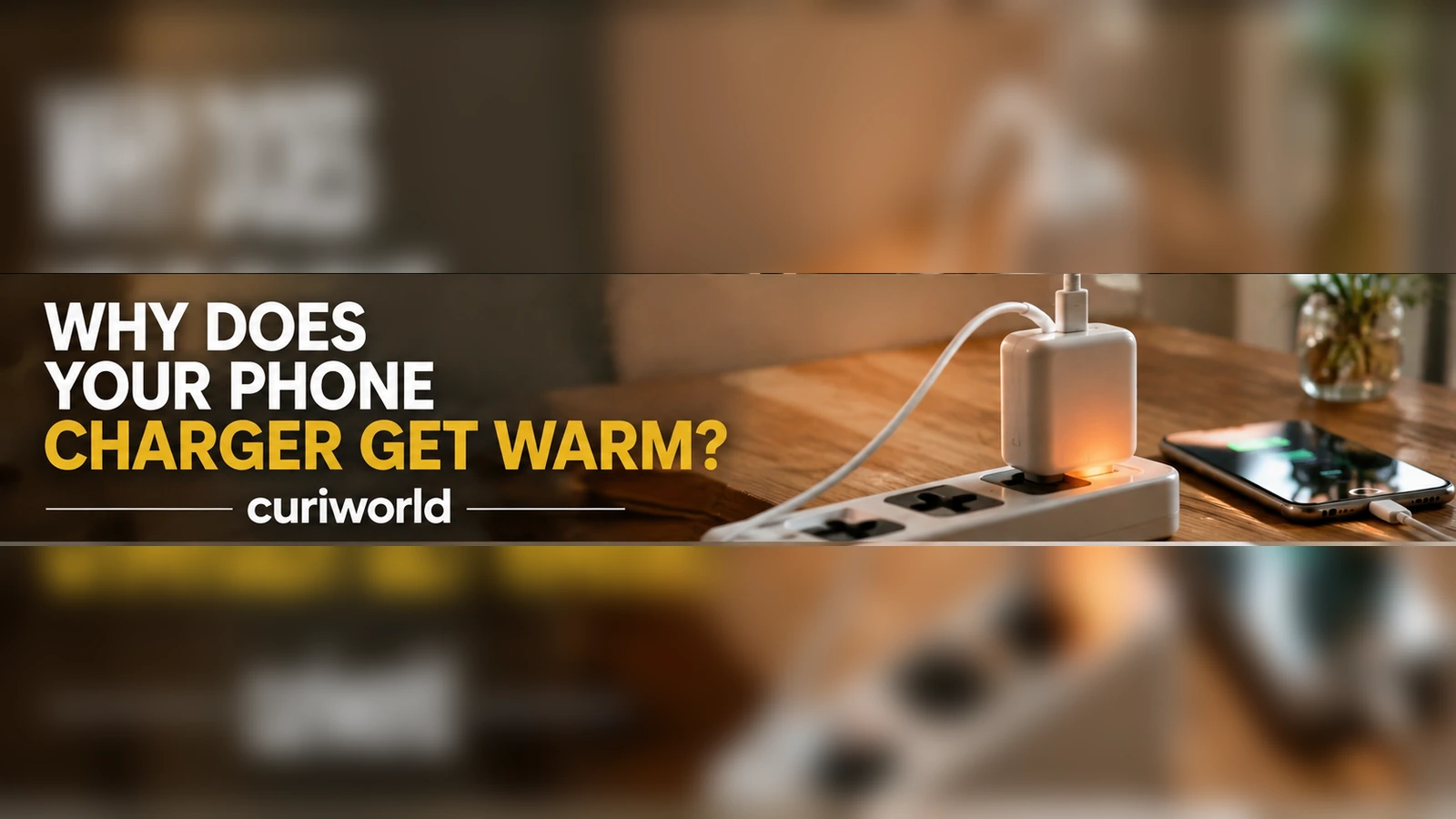
Plug in your phone for half an hour, touch the charging brick, and it may be noticeably warmer than when you started. With a fast charger, the difference can be even more obvious.
In most cases, a phone charger becoming moderately warm during charging is normal. The adapter is converting electricity from the wall into the form your phone can use, and that conversion is never perfectly efficient. A small portion of the electrical energy ends up as heat.
Warm, however, is not the same thing as dangerously hot. Knowing why chargers heat up—and what kind of heat deserves attention—can help you tell normal operation from a cable, adapter, outlet, or charging problem.
Your Charger Is Doing More Than Passing Electricity Through
A wall charger may look like a simple plastic block, but there is a compact power supply inside it.
The electricity coming from a household outlet is alternating current, or AC. Your phone battery cannot simply take that electricity directly. The charger has to convert and regulate the incoming power before sending suitable direct-current power through the cable to the device.
That work happens through electronic components packed into a remarkably small space.
Those components are efficient, but no real power conversion system is 100 percent efficient. Some energy is lost through electrical resistance, switching, and other processes inside the power supply.
Much of that lost energy becomes heat.
The plastic casing then conducts some of that heat outward, which is why the charger feels warm in your hand.
So heat is not necessarily evidence that electricity is being “wasted” because something is broken. A certain amount is an unavoidable consequence of moving and converting electrical power.
Why Fast Chargers Can Feel Warmer
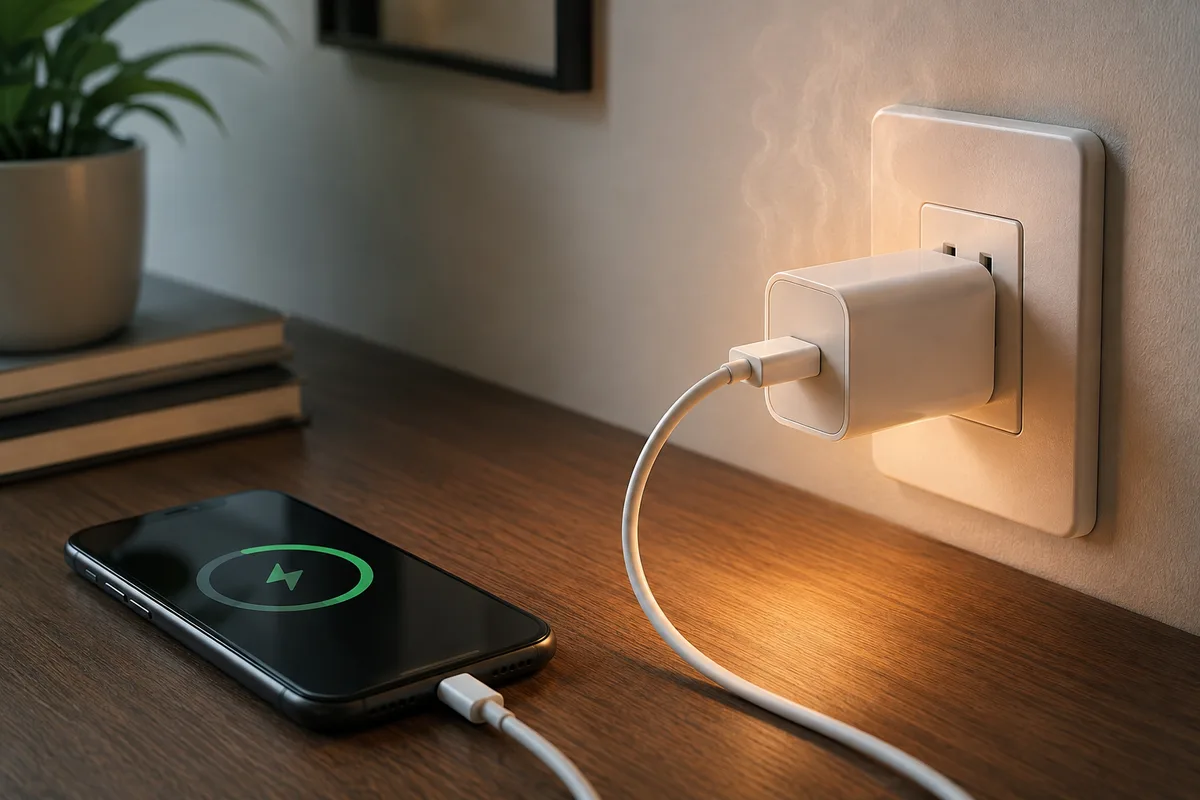
Fast charging makes the effect easier to notice because more power may be moving through the charging system.
Modern USB Power Delivery technology allows compatible devices and chargers to negotiate different power levels rather than supplying every connected device with the same amount of power. The USB Implementers Forum notes that USB Power Delivery supports multiple voltages and power levels, allowing a device to request the amount of power it needs.
That does not mean a high-wattage charger simply forces its maximum output into your phone.
A compatible phone and charger communicate about the appropriate charging conditions.
During periods when the phone can accept a relatively high charging rate—often earlier in the charging session—the charger is doing more electrical work than it may be doing near the end of the session.
More power being converted in a compact enclosure can mean more noticeable heat.
If the charger is not only warm but the phone is also taking unusually long to charge, see what can prevent fast charging from working properly.
This is also why a charger may feel warm after 20 minutes of fast charging but cooler later when the battery is nearly full.
If the charger is warm and the phone is also taking unusually long to charge, see why a phone can charge much more slowly than expected.
Small Chargers Have Less Space to Get Rid of Heat
Modern charging bricks have become surprisingly small.
That is convenient in a backpack, but it creates an engineering challenge: the electronics producing heat are packed close together inside a small case with no fan.
The charger therefore has to lose heat naturally through its casing and the surrounding air.
Put the same charger on an open desk and cover it with a blanket, and its ability to release heat changes dramatically.
Samsung’s current charging guidance confirms that both a phone and its power adapter can rise in temperature during charging and describes this as normal within the device’s operating limits. The company also notes that charging may slow or stop when temperatures move outside an acceptable range.
That automatic response is deliberate. Modern charging systems may reduce power when heat becomes excessive rather than continuing at maximum speed regardless of temperature.
The Room Around the Charger Matters Too
A charger does not start at the same temperature every time you use it.
Charging in a cool bedroom is different from charging:
- beside a sunny window;
- inside a hot car;
- under bedding;
- on a thick rug;
- next to a heater;
- or in another poorly ventilated location.
If the surrounding air is already warm, the charger has a harder time releasing the heat it produces.
That can make an otherwise normal charging session feel much hotter.
Whenever possible, place a charger on a firm, open surface where air can circulate around it.
A bed or sofa may be convenient, but soft materials can trap heat around the adapter. They can also make it easier for the charger to become covered accidentally.
Your Phone Can Affect Charger Temperature
The adapter is only one part of the system.
What the phone is doing while it charges matters too.
A phone that is sitting unused with its screen off typically has a different power demand from one that is simultaneously:
- playing a graphics-heavy game;
- recording high-resolution video;
- running navigation;
- making a video call;
- downloading large files;
- or using several demanding apps.
In those situations, the charger may be providing energy both for the phone’s current activity and for charging the battery.
The phone itself may become warmer at the same time.
Samsung specifically advises that heavy app use while charging can increase heat and may cause charging to slow as the device protects itself.
If both the phone and charger seem unusually warm, stop demanding tasks for a while and see whether the temperature drops.
Sometimes the Cable Is the Real Problem
The hottest part of a charging setup is not always the adapter.
Pay attention to where you feel the heat.
If the charger body is evenly warm during fast charging, that can be normal.
If heat is concentrated around:
- the USB connector;
- the phone’s charging port;
- one end of the cable;
- or the wall plug,
the situation deserves more attention.
Electrical resistance increases heat. A damaged connector, contaminated charging port, worn cable, or poor electrical contact can create heat in a very small area.
Samsung warns that a damaged cable or charging port can cause overheating and recommends replacing damaged charging equipment rather than continuing to use it.
A cable that only works when bent at a particular angle is not something to keep using until it completely fails.
Is a Warm Charger Dangerous?
Usually, no.
A reputable charger operating normally can become warm enough that you clearly notice it when you pick it up.
Temperature by touch is also subjective. Something that feels surprisingly warm to one person may not seem remarkable to another.
More useful than asking whether the adapter feels warm is asking whether its behavior has changed.
A charger that has always become mildly warm during fast charging is different from one that suddenly becomes dramatically hotter than it used to.
Watch for combinations such as:
- heat that becomes uncomfortable or extreme;
- a burning or unusual chemical smell;
- melted or deformed plastic;
- darkening or discoloration;
- crackling or abnormal buzzing;
- visible cable damage;
- a connector that becomes extremely hot;
- repeated charging interruptions;
- or a plug that feels loose in the wall outlet.
If you notice those signs, disconnect the charger and stop using the questionable adapter, cable, or outlet until the cause has been identified.
Do not treat obvious overheating as a normal consequence of fast charging.
Why Cheap or Damaged Charging Equipment Deserves Extra Caution
A USB connector fitting into your phone does not automatically mean every part of the charging setup is equally well made.
USB charging cables now carry considerably more power than early USB accessories were designed around. The USB Implementers Forum’s current Power Delivery specifications support substantially higher power levels across USB-C for compatible equipment.
That makes correct cable and charger design increasingly important.
Damaged insulation, poorly fitting connectors, broken internal wires, and incompatible charging equipment can all introduce problems that have little to do with ordinary charger warmth.
If a cable is frayed, crushed, loose, or visibly damaged, replacing it is a much better choice than wrapping it in tape and continuing to use it.
The same applies to an adapter with cracked casing, bent pins, obvious discoloration, or inconsistent charging behavior.
Does Using a More Powerful Charger Make Your Phone Overheat?
Not automatically.
Seeing “65W” or “100W” printed on an adapter can make it sound as though the charger will continuously push that amount of power into whatever you connect.
Modern USB Power Delivery does not work that way.
Compatible devices negotiate the power they can use. A charger capable of delivering more power does not necessarily deliver its maximum output to a phone with lower requirements.
Compatibility still matters, however.
The charger, cable, and phone all form part of the charging system, which is why using reputable equipment that meets the relevant specifications is preferable to choosing an unknown accessory simply because the connector fits.
Why Does the Charger Cool Down Near 100 Percent?
You may notice that charging often feels most energetic earlier in the process.
Phones do not normally charge their batteries at the same maximum rate from empty all the way to 100 percent.
Charging systems manage current and temperature throughout the session, and the charging rate is commonly reduced as conditions require it—particularly as the battery approaches full charge or becomes warmer.
Less power being transferred generally means less heat being generated in the charging system.
That is why touching the adapter at 30 percent battery and again near 100 percent may give you two very different impressions.
The charger has not necessarily changed.
Its workload has.
Warm Is Normal; A Sudden Change Is More Useful Information
A phone charger is a miniature power converter, and power conversion produces heat.
That is the simple reason your charging brick does not stay at room temperature.
Fast charging, heavy phone use, warm surroundings, compact charger design, and restricted airflow can all make that warmth more noticeable.
The best warning sign is usually not warmth by itself but unusual behavior.
If the same charger you have used for months suddenly becomes extremely hot, develops a smell, shows physical damage, repeatedly disconnects, or creates concentrated heat around a connector, stop assuming that it is simply “fast charging.”
A charger that is comfortably warm and behaving normally is usually doing exactly what it was designed to do.
One that is telling you something has changed is worth listening to.
Sources
Samsung — Charging Tips | Galaxy Battery
https://www.samsung.com/uk/support/galaxy-battery/charging-tips/
USB Implementers Forum — USB Charger (USB Power Delivery)
https://www.usb.org/usb-charger-pd





Join the discussion